Dyspepsia
Learn about dyspepsia (indigestion): common symptoms, possible causes, how doctors diagnose it, treatment options, and warning signs that need urgent care.
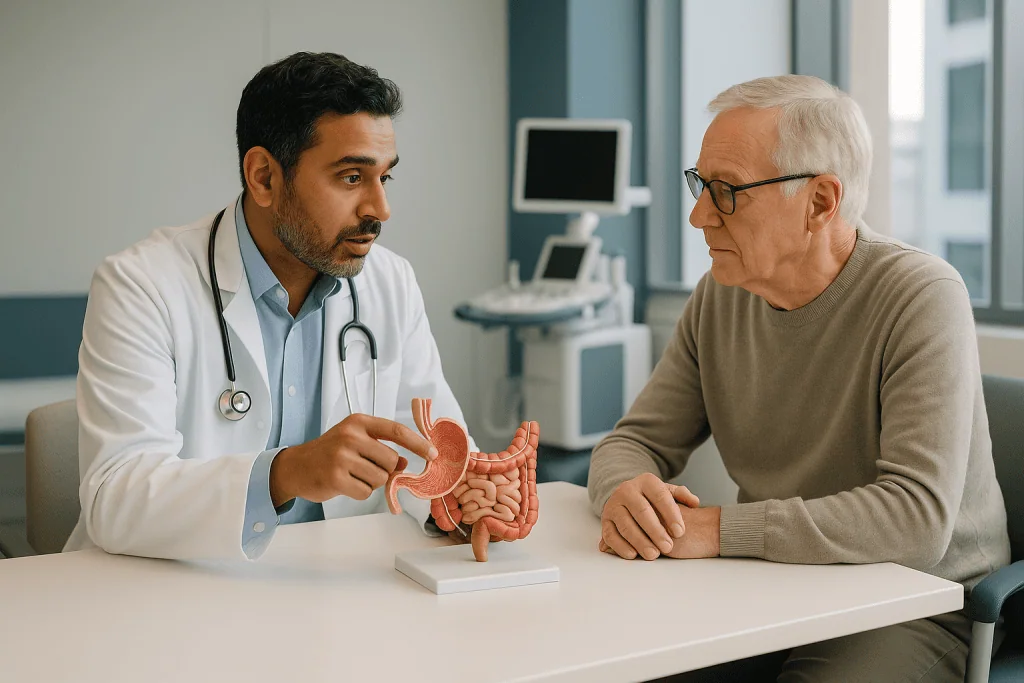
Quick answer
Dyspepsia, also called indigestion, is pain, burning, or uncomfortable fullness in the upper abdomen, usually linked to eating. It can result from lifestyle factors, medicines, H. pylori infection, ulcers, or acid reflux, or it may be functional with no structural cause. Treatment depends on the cause and often includes diet changes and acid-reducing medicines.
What is dyspepsia?
Dyspepsia is the medical name for indigestion. It describes a group of uncomfortable feelings in the upper part of the abdomen (the belly), usually related to eating. People with dyspepsia often describe pain or burning below the breastbone, a sense of being uncomfortably full after a normal-sized meal, or feeling full very quickly after starting to eat. Dyspepsia is a description of symptoms rather than a single disease, and it can have many different causes.
Doctors often divide dyspepsia into two broad groups. In organic dyspepsia, the symptoms can be traced to an identifiable problem, such as a stomach ulcer or acid reflux. In functional dyspepsia, tests do not show any structural damage or disease, yet the symptoms are real and can be persistent. Functional dyspepsia is thought to involve how the stomach moves and empties, how sensitive the stomach nerves are, and how the gut and brain communicate. In many cases, no single trigger is found.
Dyspepsia is very common and affects adults of all ages and both sexes. Most people experience indigestion occasionally, often after a large or rich meal, and it settles on its own. A smaller number of people have symptoms that keep coming back or last for weeks or months. Persistent or recurring dyspepsia is one of the most frequent reasons people are referred to a gastroenterologist, a doctor who specializes in the digestive system. At Acibadem, dyspepsia is generally assessed and managed within the gastroenterology department.
Dyspepsia symptoms
Dyspepsia symptoms center on the upper abdomen and are usually connected to meals. They may come and go, and their pattern can vary from one person to another. Common dyspepsia symptoms include:
- Pain, aching, or a burning feeling in the upper abdomen, below the ribs
- Feeling uncomfortably full after eating a normal amount of food
- Feeling full very soon after beginning a meal (early satiety)
- Bloating, meaning a sense of tightness or swelling in the upper belly
- Belching or burping more than usual
- Nausea, which is the feeling that you might vomit
- Loss of appetite because eating feels unpleasant
- Gurgling or churning in the stomach
Some people also have heartburn, which is a burning feeling rising behind the breastbone and sometimes into the throat. Heartburn is usually a sign of acid reflux rather than dyspepsia itself, but the two conditions often overlap, and it can be hard for a person to tell them apart.
Doctors who study functional dyspepsia sometimes describe two patterns. In the postprandial distress pattern (“postprandial” simply means after eating), the main complaints are fullness and early satiety after meals. In the epigastric pain pattern (the epigastrium is the upper middle part of the abdomen), the main complaint is pain or burning that may not be clearly tied to meals. Many people have features of both. Recognizing the pattern can help a doctor choose which dyspepsia treatment to try first.
Symptoms alone cannot reliably show whether dyspepsia is functional or caused by a specific disease. That is why doctors pay close attention to age, how long symptoms have lasted, and whether any warning signs are present, which are described in the final section of this page.
Causes and risk factors
Dyspepsia causes range from everyday habits to specific digestive diseases. Often more than one factor is involved.
Lifestyle and dietary factors. Eating large meals, eating quickly, eating late at night, and consuming fatty, spicy, or very acidic foods can all trigger indigestion. Caffeine, alcohol, carbonated drinks, and smoking are frequent contributors. Stress and anxiety do not cause structural damage, but they can heighten the way the gut senses discomfort and can make symptoms worse.
Medications. Some common medicines irritate the stomach lining or affect how the stomach works. These include nonsteroidal anti-inflammatory drugs (NSAIDs) such as ibuprofen and aspirin, some antibiotics, iron supplements, potassium supplements, and certain medicines for osteoporosis (a condition of weakened bones). You should not stop a prescribed medicine on your own; instead, mention the possible link to your doctor.
Digestive conditions. A number of diseases can produce dyspepsia symptoms:
- Peptic ulcer disease – open sores in the lining of the stomach or the first part of the small intestine (the duodenum).
- Helicobacter pylori infection – a bacterium that lives in the stomach lining and can cause inflammation and ulcers. It is often shortened to H. pylori.
- Gastroesophageal reflux disease (GERD) – a condition in which stomach acid flows back up into the esophagus, the tube that connects the mouth and stomach.
- Gastritis – inflammation of the stomach lining.
- Gastroparesis – slow emptying of the stomach, which is more common in people with long-standing diabetes.
- Gallstones – hardened deposits in the gallbladder that can cause pain after fatty meals.
- Celiac disease – an immune reaction to gluten that damages the small intestine.
- Pancreatitis – inflammation of the pancreas, an organ that produces digestive juices.
- Less commonly, cancers of the stomach or esophagus, which is why persistent symptoms in older adults are taken seriously.
Functional dyspepsia. When testing finds no underlying disease, the likely explanation is functional dyspepsia. Researchers believe several mechanisms play a role, including the stomach not relaxing normally to hold food, delayed stomach emptying, increased sensitivity of the stomach to stretching or acid, low-grade inflammation, and changes in gut-brain signaling. A past episode of gastroenteritis (a stomach infection) sometimes appears to trigger longer-lasting functional symptoms.
Risk factors. You may be more likely to experience dyspepsia if you smoke, drink alcohol regularly, take NSAIDs frequently, are overweight, live with high levels of stress or anxiety, have a family history of ulcers or H. pylori infection, or have diabetes. Pregnancy also commonly causes indigestion because of hormonal changes and pressure from the growing uterus.
Dyspepsia diagnosis
Dyspepsia diagnosis starts with a careful conversation. Your doctor will ask about where the discomfort is, how it relates to meals, how long it has been going on, what makes it better or worse, and which medicines and supplements you take. They will also ask about warning signs such as weight loss, vomiting, difficulty swallowing, or black stools. A physical examination of the abdomen follows.
Not everyone with dyspepsia needs tests. For younger adults with typical symptoms and no warning signs, a doctor may reasonably begin treatment first and see how symptoms respond. When testing is appropriate, the following are commonly used:
- Testing for H. pylori. This can be done with a breath test (you drink a solution and breathe into a container), a stool test, or a blood test. Detecting and treating this infection is one of the most useful steps in managing dyspepsia.
- Blood tests. These may check for anemia (a low red blood cell count, which could suggest hidden bleeding), inflammation, liver or pancreas problems, and celiac disease.
- Upper endoscopy. A thin, flexible tube with a camera (an endoscope) is passed through the mouth into the esophagus, stomach, and duodenum while you are sedated. It lets the doctor see the lining directly and take small tissue samples (biopsies) to check for inflammation, infection, or abnormal cells. Endoscopy is often recommended for people over a certain age with new symptoms, or for anyone with warning signs.
- Abdominal ultrasound. A painless scan using sound waves that can show gallstones and problems with the liver or pancreas.
- Gastric emptying study. A nuclear medicine test in which you eat a meal containing a small amount of a tracer so the doctor can measure how quickly your stomach empties. It is used when gastroparesis is suspected.
- Other imaging, such as a CT scan, may be used in selected cases when other conditions need to be ruled out.
When these tests are normal and symptoms have been present for several months, doctors may make a diagnosis of functional dyspepsia using internationally agreed symptom criteria (known as the Rome criteria). This is a positive diagnosis based on your symptom pattern, not simply a label given when nothing else fits.
Dyspepsia treatment options
Dyspepsia treatment depends on the underlying cause, the type of symptoms, and how much they affect daily life. Many people improve with a combination of approaches, and treatment is often adjusted over time.
Watchful waiting and lifestyle changes. For mild or occasional indigestion, your doctor may suggest observing symptoms while making practical changes. Eating smaller meals more often, eating slowly, avoiding lying down soon after eating, limiting fatty or spicy foods, cutting back on alcohol and caffeine, and stopping smoking often help. Keeping a food and symptom diary can reveal personal triggers. Because stress can amplify symptoms, techniques such as relaxation exercises, regular physical activity, and adequate sleep are frequently recommended.
Reviewing medications. If a medicine you take may be contributing, your doctor may suggest an alternative, a lower dose, or taking it with food. This should always be done with medical guidance.
Treating H. pylori. If the infection is found, it is treated with a course of two or more antibiotics combined with an acid-reducing medicine, usually for one to two weeks. Your doctor may arrange a follow-up test to confirm the infection has cleared. Clearing H. pylori can heal ulcers and, in some people, relieves dyspepsia symptoms.
Acid-reducing medicines. These are commonly used, particularly when pain or burning is the main symptom.
- Antacids neutralize stomach acid and provide quick, short-lived relief.
- H2 blockers (such as famotidine) reduce acid production.
- Proton pump inhibitors (PPIs) (such as omeprazole) reduce acid production more strongly and are often prescribed for a limited course. Long-term use should be reviewed with your doctor, as it may carry side effects.
Prokinetic medicines. These help the stomach empty more efficiently and may be useful when fullness, bloating, and early satiety dominate. Availability and suitability vary, and your doctor will weigh benefits against possible side effects.
Medicines that act on gut nerves. Low doses of certain antidepressant medicines are sometimes used for functional dyspepsia, not because the symptoms are imagined, but because these drugs can reduce the sensitivity of nerves in the gut. Herbal preparations, such as peppermint oil combinations, are used by some people, though evidence is mixed and you should tell your doctor about anything you take.
Psychological therapies. Cognitive behavioral therapy (a structured talking therapy) and gut-directed hypnotherapy have been studied in functional digestive disorders and can help some people manage persistent symptoms, especially when stress or anxiety is a factor.
Procedures and surgery. Surgery is not a treatment for dyspepsia itself. However, if testing identifies a specific cause such as gallstones, a complicated ulcer, or a tumor, treatment is directed at that condition and may involve endoscopic procedures or surgery. Your care team would explain these options if they became relevant.
Living with dyspepsia and outlook
The outlook for dyspepsia depends largely on its cause. When a treatable condition such as H. pylori infection or an ulcer is identified, symptoms often improve substantially once it is addressed. Reflux-related symptoms usually respond well to lifestyle measures and acid-reducing medicines.
Functional dyspepsia is a long-term condition for many people, but it is not dangerous and does not damage the stomach or shorten life. Symptoms often come in cycles, with better and worse periods, and they may be influenced by stress, diet, illness, and sleep. Some people find that symptoms fade over time, while others need ongoing strategies to keep them under control. Realistic goals are to reduce the frequency and intensity of symptoms and to limit their effect on eating, work, and social life, rather than to eliminate every episode.
Practical steps that many people find helpful include keeping regular mealtimes, avoiding very large or very late meals, identifying personal food triggers without over-restricting the diet, staying physically active, and building in stress-reduction habits. It can also help to have a plan agreed with your doctor for how to use medicines during flare-ups and when to seek review. If your symptoms change in character, become more severe, or are accompanied by any warning signs, a fresh assessment is appropriate even if you have had normal tests in the past.
Frequently asked questions
What is the difference between dyspepsia and heartburn?
Dyspepsia refers to pain, burning, or uncomfortable fullness in the upper abdomen, mainly linked to eating. Heartburn is a burning feeling behind the breastbone that rises toward the throat and is usually caused by acid reflux. The two often occur together, and many people have some of each. Your doctor can help sort out which is dominant, because this influences which dyspepsia treatment is likely to help most.
What are the most common dyspepsia symptoms?
The most frequently reported dyspepsia symptoms are upper abdominal pain or burning, feeling uncomfortably full after a normal meal, feeling full very quickly after starting to eat, bloating, belching, and nausea. Symptoms often vary from day to day. On their own, they do not indicate a particular cause, which is why your doctor considers your age, how long symptoms have lasted, and whether any warning signs are present.
What are the main dyspepsia causes?
Common dyspepsia causes include eating habits, certain foods and drinks, smoking, stress, and medicines such as anti-inflammatory painkillers. Medical causes include H. pylori infection, peptic ulcers, acid reflux, gastritis, gallstones, and slow stomach emptying. When tests find no disease, the diagnosis is usually functional dyspepsia, which relates to how the stomach moves and how sensitive its nerves are. Rarely, persistent symptoms are due to a more serious condition, which is why new symptoms in older adults are investigated.
How is dyspepsia diagnosis made?
Dyspepsia diagnosis begins with your medical history and a physical examination. Depending on your age and symptoms, your doctor may test for H. pylori with a breath or stool test, order blood tests, or recommend an upper endoscopy to look at the stomach lining directly. An ultrasound may be used to check for gallstones. If these tests are normal and symptoms have persisted for months, a diagnosis of functional dyspepsia may be made based on established symptom criteria.
What is the best dyspepsia treatment?
There is no single best dyspepsia treatment, because it depends on the cause. Lifestyle changes help many people. If H. pylori is found, antibiotics are used. Acid-reducing medicines such as PPIs are often tried when pain or burning is the main symptom, while medicines that improve stomach emptying may be preferred for fullness and bloating. For functional dyspepsia, low-dose nerve-modulating medicines and psychological therapies are additional options your doctor may discuss.
Can dyspepsia go away on its own?
Occasional indigestion after a heavy meal usually settles within hours without treatment. Dyspepsia that keeps returning or lasts for weeks is less likely to disappear without some change in diet, habits, or medication, and it should be assessed so that treatable causes are not missed. Functional dyspepsia often follows a pattern of flare-ups and quieter periods, and for some people symptoms gradually lessen over time.
Is dyspepsia a sign of cancer?
In the great majority of people, dyspepsia is not caused by cancer. However, stomach and esophageal cancers can produce indigestion-like symptoms, which is why doctors are more cautious with new or changing symptoms in older adults and with anyone who has warning signs such as unexplained weight loss, difficulty swallowing, vomiting, or signs of bleeding. In these situations an endoscopy is usually recommended to be sure.
When to see a doctor
Occasional mild indigestion that settles quickly does not usually need medical attention. You should arrange to see a doctor if dyspepsia symptoms last more than a couple of weeks, keep returning, are getting worse, interfere with eating or sleeping, or are new and unexplained, particularly if you are over 50 or 55 or take anti-inflammatory painkillers regularly.
Seek urgent medical care if dyspepsia occurs together with any of the following red-flag warning signs:
- Unintentional weight loss
- Difficulty or pain when swallowing
- Persistent vomiting, or vomiting blood or material that looks like coffee grounds
- Black, tarry stools or blood in the stool
- Severe, sudden, or steadily worsening abdominal pain
- Chest pain, pressure, or discomfort spreading to the arm, neck, or jaw, especially with shortness of breath or sweating, which may be a heart problem rather than indigestion
- Yellowing of the skin or eyes (jaundice)
- A lump or swelling you can feel in the abdomen
- Signs of anemia such as unusual tiredness, paleness, or breathlessness
- Symptoms that begin for the first time after age 55
These signs do not mean something serious is definitely present, but they need prompt assessment so that any underlying condition can be identified and treated early.
Medically reviewed by the Acıbadem International Medical Board September 13, 2026
See our medical review board →
Update history
- PublishedSeptember 13, 2026
- Medical review approvedSeptember 13, 2026
- Last content updateSeptember 13, 2026