Eyelid Myokymia
Eyelid myokymia is a common, usually benign eyelid twitch. Learn about its symptoms, likely causes, how doctors diagnose it, treatment options, and warning signs.
Quick answer
Eyelid myokymia is a common, usually harmless condition in which a small part of one eyelid, most often the lower lid, twitches or flutters involuntarily without closing the eye. It is often triggered by fatigue, stress, caffeine, or eye strain, and in most cases it resolves on its own within days to weeks.
What is eyelid myokymia?
Eyelid myokymia is a common, usually harmless condition in which a small part of the eyelid muscle twitches or flutters on its own. The word myokymia (pronounced my-oh-KIM-ee-uh) comes from Greek roots meaning “muscle” and “wave,” and it describes fine, rippling contractions in a muscle that the person cannot control. In the eyelid, these tiny contractions happen in the orbicularis oculi, the ring-shaped muscle that closes the eye.
In eyelid myokymia the twitching is almost always limited to one eyelid, and the lower eyelid is affected more often than the upper eyelid. The twitch does not close the eye. It is different from a blink and different from the forceful eye closure seen in some other movement disorders. Most people notice the fluttering more than anyone looking at them does; the movement is often so small that it is barely visible in a mirror.
Eyelid myokymia can affect people of any age, but it is most often reported by otherwise healthy adults. It is frequently linked to periods of stress, tiredness, or heavy caffeine intake. In many cases it appears for a few days or weeks and then stops without any treatment. Eye specialists, including those in an ophthalmology department, see this condition regularly, and it is one of the more common reasons people ask about eye twitching.
Eyelid myokymia symptoms
The main symptom of eyelid myokymia is a fluttering, quivering, or twitching feeling in one eyelid. The sensation may come and go through the day, and it may be more noticeable when you are tired or concentrating on a screen. Common eyelid myokymia symptoms include:
- Fine, rippling twitches in one eyelid, most often the lower lid
- A fluttering or “crawling” sensation in the eyelid skin
- Twitching that lasts seconds to minutes at a time, then stops
- Episodes that return several times a day for days or weeks
- Twitching that is felt strongly but is hard to see in a mirror
- A tendency for episodes to increase with stress, fatigue, or caffeine
- Mild awareness of the eyelid but no pain
Importantly, eyelid myokymia does not usually cause the eye to close, does not affect vision, and does not spread to other parts of the face. The eye itself normally looks and feels healthy. There is no redness, discharge, or swelling caused by the twitch itself, although a person who also has dry eye or eye strain may notice those separate symptoms at the same time.
Doctors sometimes describe eyelid myokymia by how long it has lasted. Most cases are short-lived and resolve within a few weeks. A smaller number of people have episodes that persist for months. Persistent cases are still usually benign, meaning not caused by serious disease, but they may prompt a more careful examination to rule out other causes. If the twitching changes character over time, for example becoming stronger, involving the whole eye, or spreading to the cheek or mouth, it may no longer be simple eyelid myokymia and should be assessed.
Causes and risk factors
The exact reason eyelid myokymia begins is not fully understood. The leading explanation is that a small group of nerve fibers supplying the eyelid muscle becomes temporarily overactive, sending repeated signals that make individual muscle bundles contract. These signals arise in the nerve endings themselves rather than in the brain. This is why the twitching feels involuntary and why it tends to settle once the nerve fibers calm down.
Several everyday factors are widely recognized as triggers or eyelid myokymia causes:
- Fatigue and lack of sleep, which appear to make nerves more excitable
- Emotional or physical stress, including busy work periods or illness
- Caffeine from coffee, tea, energy drinks, or some medications
- Alcohol, especially in larger amounts
- Eye strain from prolonged screen use, reading, or an outdated glasses prescription
- Dry eye or eye surface irritation, which can increase blinking and eyelid muscle activity
- Some medications, particularly stimulants and certain drugs used for asthma, attention disorders, or nasal congestion
- Bright light or wind exposure that irritates the eye
Risk factors are similar to the triggers above. People who work long hours at a computer, who sleep poorly, or who consume a lot of caffeine tend to report eyelid myokymia more often. Some people also notice episodes during periods of anxiety. Eyelid myokymia is not thought to be inherited, and it is not caused by an infection.
It is worth knowing that eyelid myokymia is only one cause of eyelid twitching. Other conditions can look similar at first but behave differently. Benign essential blepharospasm is a condition in which both eyelids squeeze shut forcefully and repeatedly. Hemifacial spasm involves twitching that starts around the eye and spreads to the cheek and mouth on one side of the face, and is usually caused by a blood vessel pressing on the facial nerve. Facial myokymia affecting wider areas of the face can, rarely, be linked to problems in the brainstem or to conditions such as multiple sclerosis. These are not eyelid myokymia, and part of the doctor’s job is to tell them apart.
Eyelid myokymia diagnosis
Eyelid myokymia diagnosis is made mostly from the history and a physical examination. There is no single laboratory test that confirms it. A doctor will typically ask:
- When the twitching started and how long each episode lasts
- Whether it affects one or both eyelids
- Whether the eye closes fully during an episode
- Whether any other part of the face moves
- About sleep, stress, caffeine, alcohol, and medication use
- Whether there is any change in vision, weakness, numbness, or headache
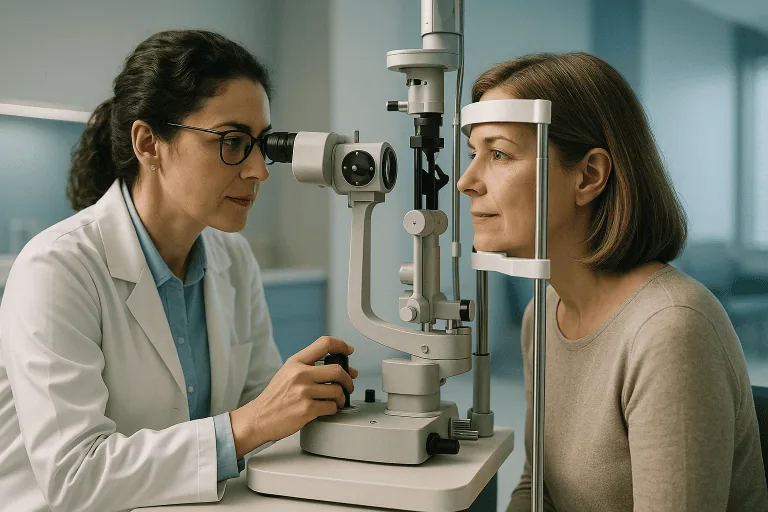
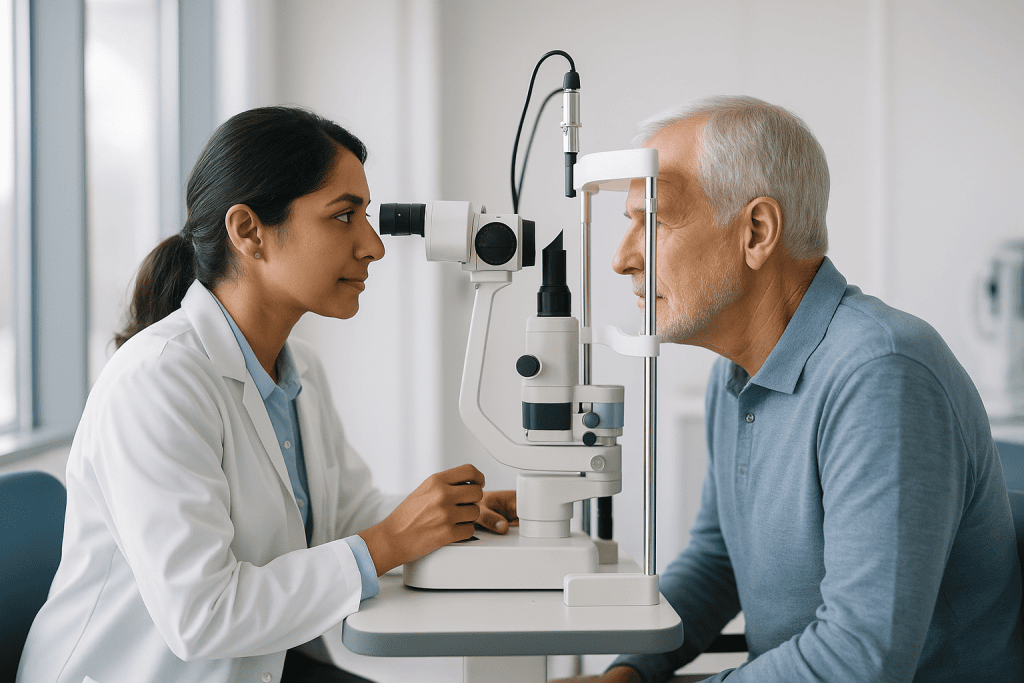
During the examination the doctor looks at the eyelids, often while the twitch is happening, and checks the muscles of the face, eye movements, vision, and the surface of the eye. A slit lamp examination, which is a microscope with a bright light used to look closely at the eye, may be used to check for dry eye, inflammation, or an irritating eyelash. If the pattern is typical, with fine twitching limited to one eyelid, no eye closure, no facial spread, and a normal neurological examination, no further testing is usually needed.
Additional tests are reserved for cases that do not fit the usual pattern. If the twitching involves other facial muscles, has lasted an unusually long time, or comes with other neurological signs, the doctor may recommend:
- Neurological examination by a neurologist, a doctor who specializes in the nervous system
- Magnetic resonance imaging (MRI) of the brain and brainstem, to look for a structural cause if hemifacial spasm or facial myokymia is suspected
- Electromyography (EMG), a test that records the electrical activity of muscles, which can show the characteristic pattern of myokymia and help distinguish it from other movement disorders
- Blood tests in selected cases, for example to check electrolyte or thyroid levels when other symptoms suggest it
For the great majority of people, the diagnosis is straightforward and reassurance is the main outcome of the visit.
Eyelid myokymia treatment options
Because eyelid myokymia usually goes away on its own, the first and most common approach to eyelid myokymia treatment is observation together with attention to triggers. Many people find that the twitching fades within days or weeks once they address the factors that seem to set it off. Doctors commonly suggest:
- Improving sleep, aiming for regular, sufficient rest
- Reducing caffeine from coffee, tea, soft drinks, and energy drinks
- Limiting alcohol
- Managing stress through relaxation techniques, exercise, or other methods that work for you
- Reducing eye strain by taking breaks from screens, adjusting lighting, and keeping glasses prescriptions up to date
- Treating dry eye with lubricating eye drops (artificial tears) if the eye surface is dry or irritated
- Warm compresses on the closed eyelid, which some people find soothing
- Reviewing medications with a doctor if a stimulant or other drug may be contributing
Medication is rarely needed for eyelid myokymia. In persistent cases that are bothersome, a doctor may occasionally consider a short course of medicine, but this is not standard and the evidence supporting oral medication for this condition is limited. Your doctor may discuss the possible benefits and side effects with you before suggesting anything.
For eyelid twitching that continues for many months and significantly affects daily life, botulinum toxin injections are sometimes offered. Botulinum toxin is a purified protein that temporarily weakens the muscle it is injected into, reducing the twitching. Its effect wears off after several months, so injections may need to be repeated. This treatment is used far more often for blepharospasm and hemifacial spasm than for simple eyelid myokymia, and it is generally considered only when the condition is prolonged and troublesome. Possible side effects include temporary eyelid drooping, dry eye, or bruising at the injection site.
Surgery has no routine role in eyelid myokymia. Surgical procedures exist for other causes of facial twitching, such as hemifacial spasm caused by a blood vessel pressing on the facial nerve, but those are different diagnoses. Rehabilitation or physical therapy is likewise not usually needed. In most situations, the most effective approach is patience combined with lifestyle adjustments.
Living with eyelid myokymia and outlook
The outlook for eyelid myokymia is generally good. In most people the twitching stops on its own, often within a few weeks, and does not return or returns only occasionally during stressful or tiring periods. The condition does not damage the eye, does not affect vision, and is not known to lead to more serious disease when it fits the typical pattern.
That said, eyelid myokymia can be annoying and distracting, and some people worry that it signals something serious. Understanding that it is common and usually benign can itself reduce the stress that may be fueling the episodes. Keeping a simple diary of when the twitching occurs, along with notes about sleep, caffeine, and workload, can help you and your doctor identify personal triggers.
A small number of people experience episodes that persist for several months. Even then, the condition is usually still benign, but longer-lasting or changing symptoms are a reasonable reason to be re-examined. Eye specialists in an ophthalmology department, sometimes working with neurologists, manage these cases at Acibadem and similar hospital groups. No treatment can guarantee that twitching will never come back, but most people find it becomes an occasional nuisance rather than an ongoing problem.
Frequently asked questions
What are the most common eyelid myokymia symptoms?
The typical symptom is a fine fluttering or twitching in one eyelid, most often the lower lid, that lasts seconds to minutes and comes and goes over days or weeks. The eye does not close, vision is unaffected, and other parts of the face do not move. Many people feel the twitch more clearly than they can see it.
What are the main eyelid myokymia causes?
The precise cause is not fully known, but eyelid myokymia is thought to result from a small group of overactive nerve fibers in the eyelid muscle. Common triggers include lack of sleep, stress, caffeine, alcohol, eye strain, dry eye, and certain stimulant medications. It is not caused by infection and is not thought to run in families.
How is eyelid myokymia diagnosis made?
Doctors usually diagnose eyelid myokymia from your description and a physical examination of the eyelids, eyes, and facial muscles. If the pattern is typical, no tests are needed. Imaging such as MRI or a muscle test called electromyography is reserved for cases where the twitching spreads to the face, lasts an unusually long time, or comes with other neurological symptoms.
What is the usual eyelid myokymia treatment?
Most cases need no medical treatment because they resolve on their own. Doctors commonly recommend more sleep, less caffeine and alcohol, stress management, regular screen breaks, and lubricating eye drops if the eye is dry. In rare persistent and bothersome cases, botulinum toxin injections may be considered after discussion of benefits and side effects.
How long does eyelid myokymia last?
Episodes often last a few seconds to minutes, and the overall condition commonly settles within a few weeks. Some people have it for longer, occasionally several months, while still having a benign form. If twitching continues beyond a couple of months or changes in nature, a medical review is reasonable.
Is eyelid myokymia a sign of a serious neurological problem?
In the vast majority of cases, no. Eyelid myokymia limited to one eyelid, with no eye closure and no spread to the face, is considered benign. Twitching that spreads across one side of the face, forcefully closes the eye, or occurs alongside weakness, numbness, vision changes, or persistent headache is different and should be evaluated by a doctor.
Can stress really cause eyelid twitching?
Stress is one of the most commonly reported triggers for eyelid myokymia, along with fatigue and caffeine. The exact mechanism is unclear, but stress may increase nerve excitability and often coincides with poor sleep and higher caffeine intake. Many people notice that the twitching eases once a stressful period passes.
When to see a doctor
Simple eyelid myokymia usually does not require a doctor’s visit, and many people wait for it to pass. However, it is sensible to seek medical advice if the twitching lasts longer than a few weeks, becomes more frequent or forceful, or is causing you significant worry. An eye specialist can confirm the diagnosis and check for treatable contributing factors such as dry eye.
Some features suggest a different or more serious condition and should be assessed promptly. Seek medical attention soon if you notice any of the following red flags:
- Twitching that spreads to the cheek, mouth, or other parts of the face
- Eyelid spasms that force the eye completely shut
- Twitching in both eyes at the same time that is strong or frequent
- Drooping of the eyelid or the corner of the mouth
- New weakness or numbness anywhere in the face or body
- Double vision, loss of vision, or other changes in eyesight
- Redness, swelling, pain, or discharge from the eye
- Persistent or severe headache accompanying the twitching
- Difficulty speaking, swallowing, or with balance
- Twitching that has continued for more than two to three months without improvement
Sudden facial weakness, slurred speech, or vision loss can be signs of a medical emergency and require immediate care. For everything else, a routine appointment with an eye doctor or family doctor is an appropriate first step to have your symptoms reviewed.
Medically reviewed by the Acıbadem International Medical Board September 13, 2026
See our medical review board →
Update history
- PublishedSeptember 13, 2026
- Medical review approvedSeptember 13, 2026
- Last content updateSeptember 13, 2026