Hip Fracture
Hip Fracture symptoms, diagnosis and treatment explained in clear language, including surgery, rehabilitation and recovery after a broken hip.
Quick answer
A hip fracture is a break in the upper part of the thigh bone near the hip joint, usually causing sudden pain, difficulty moving, and an inability to bear weight. At Acibadem in Turkey, evaluation typically includes imaging and overall health assessment, with treatment planned according to the fracture type and patient condition, using surgery when needed followed by rehabilitation…
What is hip fracture?
A hip fracture is a break in the upper part of the thigh bone (the femur), close to where it meets the pelvis at the hip joint. Under the medical coding system ICD-10, fractures at the top of the femur are grouped under the code S72.0. When people ask what is hip fracture in everyday terms, the simplest answer is a broken hip: a crack or complete break in the bone near the ball-and-socket joint that lets your leg move.
Doctors usually describe hip fractures by where the break occurs. A femoral neck fracture happens in the narrow section of bone just below the ball of the joint. An intertrochanteric fracture occurs a little lower, between two bony bumps called the trochanters, where major muscles attach. The location matters because it can affect the blood supply to the bone and influence which treatment your doctor may recommend.
Hip fractures most often affect older adults, particularly people over 65, and they are more common in women than in men. This is largely because bone density tends to decrease with age, and women lose bone more quickly after menopause. In older adults, even a simple fall from standing height can be enough to break a weakened hip. Younger people can also fracture a hip, but this usually requires stronger forces, such as a car accident, a fall from a height, or a serious sports injury.
A hip fracture is considered a serious injury at any age. It typically causes severe pain, prevents walking, and in most cases requires surgery followed by a period of rehabilitation. Prompt medical care is important, because early treatment is generally associated with better recovery and fewer complications.
Symptoms of hip fracture
Hip fracture symptoms usually appear suddenly, most often right after a fall or other injury. The most common signs include:
- Severe pain in the hip, groin, or upper thigh
- Inability to stand or put weight on the injured leg
- Inability to walk or get up after a fall
- A leg that looks shorter on the injured side
- A leg turned outward at an unusual angle
- Swelling, stiffness, or bruising around the hip
- Pain that worsens when trying to move or rotate the leg
Not every hip fracture causes dramatic symptoms. Some breaks, especially incomplete or “hairline” fractures, may cause only vague pain in the groin, buttock, or knee, and the person may still be able to walk with discomfort. Pain that is felt in the knee rather than the hip can be misleading, because nerves in the region can transmit pain away from the actual injury site. This is one reason why any new, persistent hip or groin pain after a fall deserves medical attention, even when it seems mild.
Symptoms can also differ by the type of fracture. A displaced fracture, where the broken pieces of bone have shifted out of position, usually causes obvious deformity, a shortened or outwardly turned leg, and an inability to bear any weight. A non-displaced fracture, where the bone has cracked but the pieces remain aligned, may cause less visible change and less dramatic pain, which can delay diagnosis. Stress fractures of the hip, which develop gradually from repeated strain rather than a single injury, often begin as an ache during activity that eases with rest and slowly worsens over days or weeks.
In older adults with memory problems or communication difficulties, a hip fracture may show up indirectly, for example, as a sudden refusal to walk, new agitation, or unexplained distress after a fall. Caregivers should treat these changes as possible warning signs.
Causes and risk factors
The most frequent hip fracture causes are falls, particularly falls from standing height in older adults. In younger people, high-energy trauma such as traffic accidents or falls from a height is the usual cause. In some cases, especially when bones are very weak, a hip can fracture with minimal force, such as twisting while standing, and the fracture itself may then cause the fall rather than the other way around.
Several factors increase the risk of breaking a hip:
- Osteoporosis: a condition in which bones lose density and become fragile. It is the single most important risk factor for hip fracture in older adults.
- Older age: bone strength, muscle mass, balance, and vision all tend to decline with age, raising both fall risk and fracture risk.
- Female sex: women lose bone density faster after menopause because of falling estrogen levels.
- Previous fractures: having broken a bone as an adult after a minor injury suggests weakened bone and a higher risk of future fractures.
- Certain medications: long-term use of corticosteroids (anti-inflammatory steroid medicines) can weaken bone. Medicines that cause drowsiness or dizziness, such as some sedatives and blood pressure drugs, can increase the risk of falls.
- Medical conditions: disorders that affect balance (such as Parkinson’s disease or stroke), conditions that thin bone (such as overactive thyroid or some digestive disorders that reduce nutrient absorption), and low blood pressure on standing can all contribute.
- Nutritional factors: low intake of calcium and vitamin D over many years can reduce bone strength.
- Lifestyle factors: physical inactivity, smoking, and heavy alcohol use are associated with weaker bones and higher fall risk.
- Hazards in the home: loose rugs, poor lighting, clutter, and lack of grab bars make falls more likely.
Many of these risk factors can be reduced. Weight-bearing exercise, adequate calcium and vitamin D, treatment of osteoporosis when it is diagnosed, regular vision checks, medication reviews, and simple home-safety changes can all lower the chance of a fall and a fracture. Your doctor may recommend a bone density test if you have several risk factors.
Diagnosis
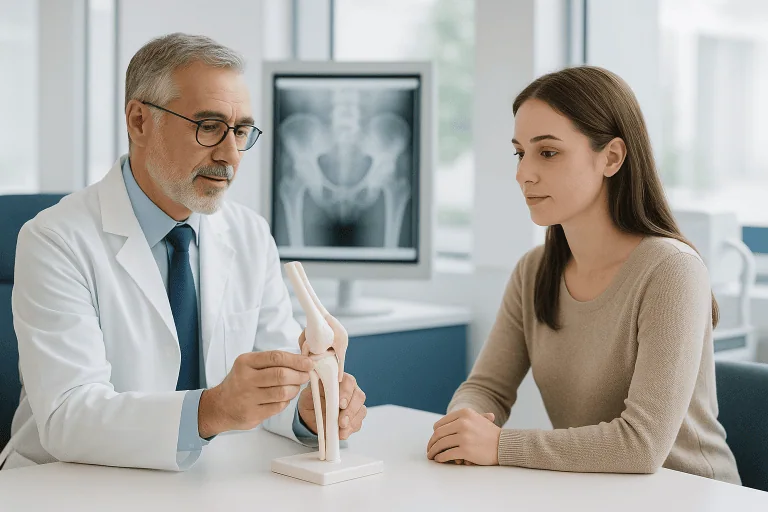
Hip fracture diagnosis usually begins with a physical examination and a description of how the injury happened. A doctor will look at the position of the leg, check for swelling and bruising, and gently assess pain and movement. A shortened, outwardly rotated leg after a fall strongly suggests a hip fracture, but imaging is needed to confirm it.
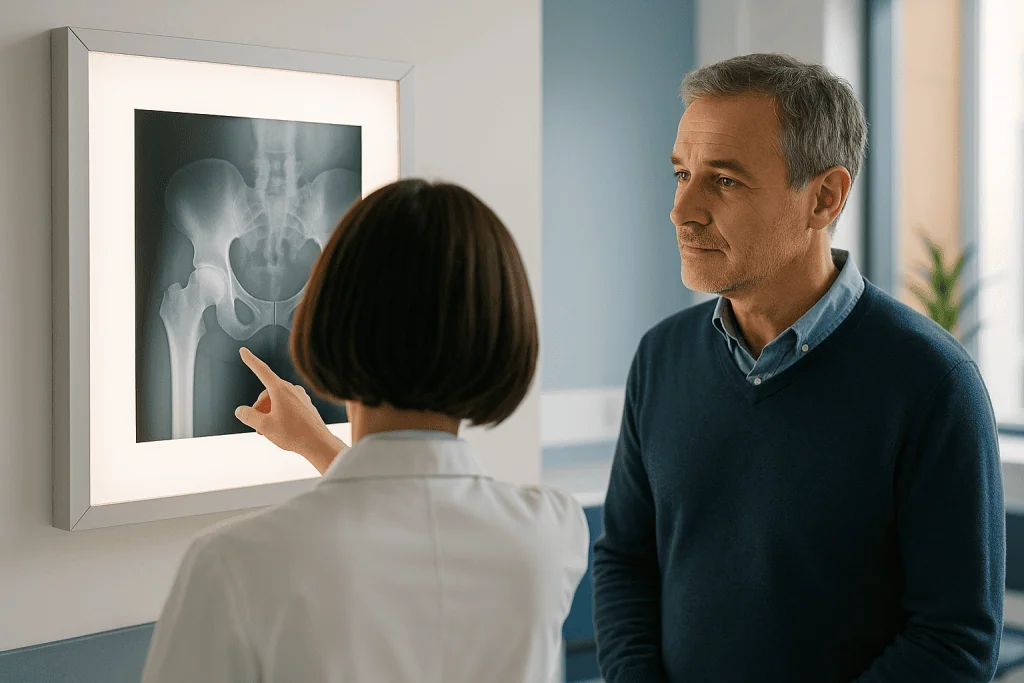
X-ray is the standard first test. In most cases, an X-ray of the hip and pelvis clearly shows the fracture, its location, and whether the bone fragments have shifted. This information guides treatment decisions.
MRI (magnetic resonance imaging) may be used when the X-ray looks normal but symptoms still point to a fracture. MRI uses magnets and radio waves to create detailed images and is very sensitive for detecting hairline or incomplete fractures that X-rays can miss.
CT (computed tomography), a detailed cross-sectional X-ray scan, is sometimes used when MRI is not available or not suitable, for example, for people with certain implanted devices, or to map complex fracture patterns before surgery.
Because hip fractures are usually treated with surgery, doctors also run tests to check overall health and fitness for anesthesia. These commonly include blood tests, an electrocardiogram (a recording of the heart’s electrical activity), and a review of current medications and medical conditions. In older patients, doctors also look for the reason behind the fall, such as a heart rhythm problem, low blood pressure, or an infection, because treating that underlying cause helps prevent future falls.
Treatment options
Hip fracture treatment almost always involves surgery, ideally performed soon after the injury, often within a day or two, once the patient is medically stable. Early surgery is generally associated with less pain, earlier mobility, and a lower risk of complications from prolonged bed rest, such as blood clots, pneumonia, and pressure sores. Care for hip fractures is typically managed by an orthopedic team; at Acibadem, for example, this condition falls under the Orthopedics & Joint Center, often working together with geriatric (older-adult) medicine specialists.
Surgical repair (internal fixation)
When the fracture is well positioned or can be realigned, the surgeon may fix the bone with metal screws, plates, rods, or nails. This approach, called internal fixation, holds the broken pieces in place while the bone heals. It is often used for intertrochanteric fractures and for femoral neck fractures that have not shifted significantly.
Partial hip replacement (hemiarthroplasty)
If the ball of the hip joint is badly broken or its blood supply is damaged, a particular concern with displaced femoral neck fractures, the surgeon may replace the ball with a metal implant while keeping the natural socket. This is called a hemiarthroplasty and is common in older adults with this fracture type.
Total hip replacement
In a total hip replacement, both the ball and the socket are replaced with artificial parts. Your doctor may recommend this option if the joint was already damaged by arthritis before the fracture, or in relatively active patients where a full replacement may provide better long-term function.
Non-surgical treatment
In a small number of cases, surgery may not be appropriate, for example, for some stable, non-displaced fractures, or for people too frail or too ill to undergo an operation safely. Non-surgical care may involve pain control, restricted weight-bearing, and careful monitoring with repeat imaging. This is not simply watchful waiting in the passive sense; it requires close follow-up, because non-displaced fractures can shift and non-surgical management carries its own risks from prolonged immobility. The decision is made individually, weighing the risks of surgery against the risks of not operating.
Medication and supportive care
Medicines play a supporting role at every stage. Pain relievers make movement and rehabilitation possible. Blood-thinning medicines (anticoagulants) are commonly given to reduce the risk of clots forming in the legs or lungs during recovery. After the fracture has been treated, your doctor may prescribe osteoporosis medicines, along with calcium and vitamin D, to strengthen bone and reduce the chance of another fracture. A hip fracture is often the event that first reveals osteoporosis, so bone-health assessment is an important part of complete care.
Rehabilitation
Recovery does not end with surgery. Physical therapy usually begins within a day or two of the operation, starting with sitting, standing, and short assisted walks, then progressing to exercises that rebuild strength and balance. Occupational therapy helps patients relearn daily activities such as dressing, bathing, and moving safely around the home. Rehabilitation may continue for several months, in a hospital, a rehabilitation facility, or at home, depending on individual needs.
Living with hip fracture and outlook
Recovery from a hip fracture takes time and varies widely from person to person. Many people can put some weight on the leg soon after surgery with a walker or crutches, but regaining strength, balance, and confidence often takes several months. Younger, healthier patients frequently return to their previous level of activity. Older adults may recover more slowly, and some do not regain their full previous mobility; a portion of older patients need a cane, walker, or extra help with daily tasks in the longer term.
Honest expectations matter. A hip fracture in an older adult is a major health event, and it can affect independence and overall health, especially when other medical conditions are present. Possible complications include blood clots, pneumonia, urinary tract infections, pressure sores from immobility, and, after some femoral neck fractures, a condition called avascular necrosis, in which part of the bone loses its blood supply and deteriorates. Careful surgical treatment, early mobilization, and good rehabilitation reduce these risks but cannot eliminate them.
Practical steps often help recovery and reduce the risk of another fracture:
- Follow the rehabilitation plan consistently, even when progress feels slow.
- Take osteoporosis treatment as prescribed, and attend follow-up bone health checks.
- Make the home safer: remove loose rugs, improve lighting, add grab bars in the bathroom, and keep walkways clear.
- Wear supportive, non-slip footwear.
- Have vision and hearing checked regularly, and review medications with your doctor to identify any that increase fall risk.
- Eat a balanced diet with adequate protein, calcium, and vitamin D to support bone and muscle healing.
Emotional wellbeing is also part of recovery. Fear of falling again is common and can lead people to move less, which weakens muscles and, paradoxically, increases fall risk. Supervised exercise and balance training can rebuild both strength and confidence. If low mood or anxiety persists, mentioning it to a doctor is worthwhile, as support is available.
Frequently asked questions
What is a hip fracture, exactly?
A hip fracture is a break in the upper end of the thigh bone (femur), near the hip joint. It most often results from a fall in an older adult with weakened bones, though high-energy injuries can cause it at any age. Doctors classify hip fractures by their location, most commonly the femoral neck or the intertrochanteric region, because the location influences how the fracture is treated.
Can a hip fracture heal without surgery?
In most cases, surgery is the recommended treatment because it allows the bone to be stabilized and the patient to start moving quickly, which reduces complications. Some stable, non-displaced fractures may be managed without an operation, and surgery may be avoided in patients too frail to tolerate it, but non-surgical treatment requires close monitoring and carries risks of its own. The decision should always be made with an orthopedic specialist.
How serious is a hip fracture in the elderly?
A hip fracture is a serious injury for an older adult. It usually requires surgery and months of rehabilitation, and it can affect long-term mobility and independence, particularly when other health problems are present. Complications such as blood clots and pneumonia are real risks during recovery. That said, prompt surgery, early mobilization, and structured rehabilitation improve outcomes for many patients, and a meaningful recovery is often possible.
How long does hip fracture recovery take?
Recovery time varies with age, overall health, and the type of fracture and surgery. Many people are up and walking with assistance within days of surgery, but regaining strength and steady walking often takes several months, and full recovery can take longer. Some older adults continue to use a walking aid long term. Consistent participation in physical therapy generally supports a better recovery.
What are the first symptoms of a hip fracture?
The most typical hip fracture symptoms are sudden, severe pain in the hip or groin after a fall, inability to stand or bear weight on the leg, and a leg that appears shortened or turned outward. Milder fractures can cause less obvious symptoms, such as aching in the groin, buttock, or even the knee, sometimes with the person still able to walk. Any new hip or groin pain after a fall should be evaluated by a doctor.
Can you walk on a fractured hip?
Most people with a complete hip fracture cannot walk or bear weight on the injured leg. However, some people with incomplete, non-displaced, or stress fractures can still walk with pain. Being able to walk therefore does not rule out a fracture, and continuing to walk on a cracked hip may cause the bone to shift, making treatment more complicated. Persistent pain after a fall warrants an X-ray.
How can I prevent another hip fracture?
Prevention focuses on strengthening bone and reducing falls. Your doctor may recommend osteoporosis medication, adequate calcium and vitamin D, and weight-bearing and balance exercises. Practical measures include removing home hazards, improving lighting, installing grab bars, wearing supportive shoes, checking vision regularly, and reviewing medications that cause dizziness or drowsiness. Because a first fracture signals higher risk of another, a bone health assessment after any fracture is often advised.
When to see a doctor
Seek emergency medical care right away if you or someone you are with experiences any of the following after a fall or injury:
- Severe pain in the hip, groin, or thigh, especially after a fall
- Inability to stand, walk, or put weight on the leg
- A leg that looks shortened or turned outward compared with the other side
- Visible deformity, rapid swelling, or heavy bruising around the hip
- An older adult who cannot get up after a fall, or who suddenly refuses or is unable to walk
- Numbness, coldness, or color change in the injured leg or foot, which may signal a problem with blood flow or nerves
Do not try to move someone who may have a broken hip; wait for emergency responders unless the person is in immediate danger. Even without these dramatic signs, you should see a doctor promptly for hip or groin pain that persists after a fall, pain that worsens with walking, or any new difficulty bearing weight. Small or incomplete fractures can worsen if they are not identified and treated, and early diagnosis generally leads to simpler treatment and a smoother recovery. If you have already been treated for a hip fracture, contact your care team about new or worsening pain, fever, redness or discharge at the surgical site, sudden leg swelling, chest pain, or shortness of breath, as these may indicate complications that need urgent attention.
Medically reviewed by the Acıbadem International Medical Board September 3, 2026
See our medical review board →
Update history
- PublishedJune 8, 2026
- Medical review approvedSeptember 3, 2026
- Last content updateSeptember 3, 2026