Trauma Surgery
Trauma surgery treats serious injuries such as fractures, joint dislocations, tendon damage, and complex wounds, aiming to restore stability, function, and mobility after accidents or falls.
Quick answer
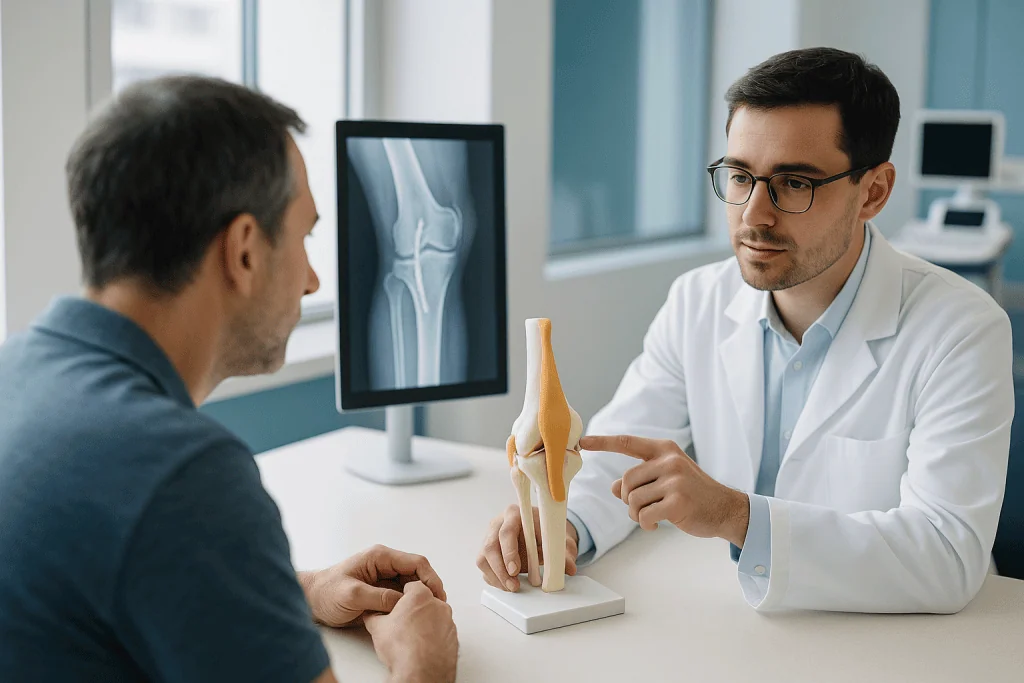
Trauma surgery is the surgical treatment of injuries caused by sudden external force, fractures, joint dislocations, tendon tears, crush injuries and complex wounds. A trauma surgeon realigns and stabilises damaged bone and soft tissue using implants such as plates, screws, rods or external frames, cleans contaminated wounds, and plans staged reconstruction and rehabilitation so the injury heals in a position that supports future movement.
What Is Trauma Surgery?
Trauma surgery is the surgical treatment of injuries caused by sudden external force: road traffic accidents, falls, sports collisions, workplace accidents and crush injuries. Its purpose is to stabilise broken bones, unstable joints, torn tendons and damaged soft tissue so that the body can heal in a position that supports future movement, strength and independence. The work is led by a trauma surgeon, usually within a wider team that can include orthopaedic specialists, plastic surgeons, vascular surgeons, anaesthesiologists, infectious disease physicians, rehabilitation doctors and wound care nurses.
Not every injury needs an operation, and a good trauma surgeon will tell you so plainly. Some fractures heal well in a cast, brace or sling with a controlled rehabilitation programme. Surgery becomes important when bones are displaced or unstable, when a joint will not stay in position, when tendons are fully torn, when wounds are contaminated or leave bone exposed, or when circulation or nerve function is under threat. In those situations, operating is not about the visible injury alone. It is about lowering the long-term risk of stiffness, deformity, chronic pain, infection, weakness and lost independence.
Modern trauma care is a pathway rather than a single operation. It starts with an assessment of your overall condition, pain control, imaging, wound evaluation and a careful check of nerves and blood supply. The surgical plan then depends on the exact injury pattern, the quality of your bone and soft tissue, your medical history and what your daily life demands of the injured limb. A young athlete with a joint fracture, an older adult with a hip fracture, a manual worker with a hand injury and a patient with an open fracture may all need different strategies, and sometimes more than one operation, staged deliberately over days or weeks.
What does a trauma surgeon actually do?
A trauma surgeon assesses acute injuries, decides which ones need an operation and which do not, and then performs the repairs: realigning fractures, fixing them with implants, reducing dislocated joints, repairing tendons, releasing dangerous pressure inside a limb and cleaning contaminated wounds. Much of the role happens outside the operating theatre, reading imaging, examining circulation and nerve function, timing surgery around swelling and the patient’s general condition, and coordinating rehabilitation from the first day. In many hospitals, trauma surgeons trained in general surgery manage chest and abdominal injuries, while orthopaedic trauma surgeons manage bones, joints, tendons and ligaments. In a severely injured patient, both may operate on the same admission, alongside neurosurgeons or vascular surgeons when the injury demands it.
What is the difference between a trauma surgeon and a regular surgeon?
The main difference is timing and predictability. An elective surgeon plans an operation weeks in advance for a diagnosed condition in a prepared patient. A trauma surgeon operates on injuries as they arrive, often at night, often with incomplete information, often on patients whose overall condition is still changing. That shapes the surgical philosophy. Trauma surgeons are trained in damage control: doing what is urgent first, protecting tissue and circulation, and deferring definitive reconstruction until the patient and the soft tissues can tolerate it. A trauma surgeon also differs from an emergency department doctor. The emergency physician resuscitates, diagnoses and stabilises; the trauma surgeon takes surgical ownership of the injury, operates where needed and follows the repair through healing and rehabilitation.
What is traumatology surgery?
Traumatology surgery is the term used in many European and international health systems for the same field: the surgical study and treatment of injuries, particularly injuries to bones, joints and soft tissue. In practice it overlaps almost completely with orthopaedic traumatology, which covers fractures, dislocations and musculoskeletal injuries of the limbs, pelvis and spine. Injuries to the teeth and supporting facial structures sit in their own subspecialty, dental traumatology, and are managed by dental and maxillofacial teams rather than orthopaedic surgeons. If you see different labels on hospital websites, trauma surgery, traumatology, orthopaedic trauma, they usually describe the same clinical work organised under different naming traditions.
When an Injury Suddenly Changes What Your Body Can Do
A serious injury turns an ordinary day into a medical event within seconds. A fall, a traffic accident, a sports collision, a workplace accident or a crush injury can leave you with severe pain, swelling, visible deformity, bleeding, or the frightening sense that a limb no longer works as it should. The first questions are practical and immediate: Is anything broken? Is surgery necessary? Will I walk, work or use my hand again? How quickly does something need to happen?
Trauma surgery exists for exactly these moments. In orthopaedic trauma, that means treating fractures, joint dislocations, tendon and ligament injuries, complex wounds, and injuries where bone, muscle, nerve, blood vessels and skin are all affected at once. The aim is broader than repairing what you can see on the X-ray. Restoring alignment where it matters, protecting blood supply, preventing infection and allowing safe early movement are what determine whether an injury becomes a chapter in your life or a permanent limitation.
A second opinion has a particular place in trauma care. It often becomes relevant after emergency stabilisation elsewhere, after an uncertain initial diagnosis, or when a complex injury needs specialist evaluation. A careful second opinion can clarify whether current treatment is adequate, whether surgery is genuinely indicated, and what kind of recovery plan is realistic for the specific injury pattern.
Who May Need Trauma Surgery?
Trauma surgery is most often needed after high-energy injuries: motor vehicle and motorcycle accidents, falls from height, industrial accidents, sports injuries and crush injuries. It can also follow lower-energy events. In older adults and people with osteoporosis, a fall from standing height can cause a serious fracture of the hip, wrist, shoulder or spine, and these injuries frequently need operative treatment to restore safe mobility.
Certain findings tell clinicians an injury needs urgent surgical assessment: intense pain, visible deformity, inability to bear weight or move a joint, numbness or tingling, coldness or colour change in the limb, an open wound over a fracture, rapidly increasing swelling, or pain that seems out of proportion to the injury. A popping sensation at the moment of injury, sudden loss of strength, or inability to straighten or bend a finger, ankle, knee or elbow can point towards a tendon injury rather than a fracture.
Diagnosis begins with a physical examination, and in trauma this examination has to be thorough, because the most painful injury is not always the only injury. An ankle fracture can occur together with a ligament injury higher in the leg; a wrist fracture can come with nerve compression at the same level. The team evaluates the skin, swelling, wounds, circulation, sensation, muscle strength, joint stability and range of movement before deciding what imaging is needed.
Imaging then defines the injury precisely. X-rays remain the standard first step for fractures and dislocations. Computed tomography is added for complex fractures, fractures that extend into a joint surface, pelvic injuries, or whenever the surgeon needs a three-dimensional understanding of the bone before operating. Magnetic resonance imaging helps when ligament, tendon, cartilage, spinal or hidden bone injuries are suspected but not visible on X-ray. Ultrasound assists in selected tendon and soft-tissue assessments. Blood tests are used before surgery and when infection, blood loss or other medical risks need to be evaluated.
The situations that most commonly lead to an operation are:
- Fractures that are displaced, unstable, open to the environment, or extend into a joint surface.
- Joint dislocations that cannot be safely reduced without anaesthesia, or that remain unstable after reduction.
- Tendon or ligament ruptures that cause loss of function or leave a joint unstable.
- Complex wounds with contamination, tissue loss, exposed bone or a high infection risk.
- Injuries involving nerves or blood vessels that need urgent assessment and possible repair.
- Fractures that have not healed, have healed in poor alignment, or have failed previous treatment.
Conditions and Injuries Trauma Surgery Can Address
Trauma surgery covers a wide spectrum. Some injuries must be treated within hours. Others allow time for planning, and using that time well, letting swelling settle and stabilising the patient’s general condition, is often what separates a good result from a compromised one.
Fractures
Fractures are the most common reason for trauma surgery. They include fractures of the hip, femur, tibia, ankle, foot, shoulder, humerus, elbow, forearm, wrist, hand, pelvis and spine. Surgery is considered when the fracture is displaced, unstable, open, part of a multiple-injury pattern, or located inside a joint where even small irregularities of the healed surface can affect movement for years afterwards.
Hip fractures in older adults deserve special mention because they behave differently from most other fractures. They are common after low-energy falls, they almost always need an operation to restore safe mobility, and the timing of that operation matters: most teams aim to operate promptly once the patient is medically ready, because prolonged bed rest in this age group carries its own serious risks, pneumonia, pressure sores, blood clots and rapid loss of muscle mass. Depending on the exact fracture pattern and bone quality, treatment may involve fixation with screws or a nail, or replacement of part or all of the hip joint. Early standing and walking with support, usually within days of surgery, is a central part of the treatment rather than an optional extra.
Joint dislocations
A dislocation means bones have been forced out of their normal relationship. Shoulders, elbows, fingers, hips, knees, ankles and kneecaps can all dislocate. Some dislocations are treated with closed reduction and immobilisation, without an incision. Others need surgery because of associated fractures, soft tissue trapped inside the joint, cartilage damage, compromised blood vessels or persistent instability after reduction.
Tendon and ligament injuries
Tendon and ligament injuries occur in the hand, wrist, elbow, shoulder, knee, ankle and foot. Surgical repair or reconstruction is considered when a tendon is completely torn, when function is significantly impaired, or when an unstable joint cannot be managed reliably with bracing and therapy alone. Timing matters here: torn tendon ends retract over time, which can turn a straightforward early repair into a more complex reconstruction.
Open fractures and complex wounds
An open fracture means broken bone and deep tissue have been exposed to the outside environment, which raises the infection risk substantially. Treatment includes careful surgical cleaning, removal of devitalised tissue, stabilisation of the bone, antibiotics and soft-tissue coverage. Sometimes wound closure is deliberately delayed until the tissue is healthy enough, and coverage may involve skin grafts or flaps performed with the plastic and reconstructive surgery team.
Crush injuries and compartment syndrome
Crush injuries and compartment syndrome are genuine surgical emergencies. When swelling inside a muscle compartment raises the pressure enough to threaten circulation, urgent surgery is needed to release that pressure and protect nerves and muscle. This is one of the few situations in orthopaedic trauma where hours make a lasting difference to the outcome.
Nonunion and malunion
Nonunion means a fracture has failed to heal; malunion means it has healed in an unacceptable position. Neither is usually an emergency, but both can cause pain, deformity, weakness, a raised long-term risk of arthritis and impaired mobility. Corrective trauma surgery for these problems may involve realignment, new fixation, bone grafting, and treatment of infection if one is present. These are among the injuries for which patients most often seek a specialist second opinion, because the original treatment happened earlier, elsewhere, and the result has fallen short.
How Trauma Surgery Is Performed
Initial assessment and stabilisation
Trauma care begins with a structured assessment of urgent threats to life and limb. If the injury is part of a major accident, the team first evaluates breathing, circulation, neurological status, bleeding and possible injuries to internal organs: the chest, abdomen and head take priority over the skeleton, and specialists such as the neurosurgery or thoracic teams are involved when needed. Pain control, splinting, wound coverage, antibiotics for open injuries, tetanus protection and fluid or blood support may all happen before any definitive operation.
If you arrive after initial care in another hospital, the team reviews your prior records, images, operative notes, medications and any implants already in place. New imaging is arranged if the injury has changed, if the previous images are incomplete, or if a more detailed surgical plan requires it.
Surgical planning
Planning weighs the injury and the person carrying it. The trauma surgeon evaluates the fracture pattern, joint involvement, soft-tissue condition, circulation, nerve function, infection risk, bone quality and the time elapsed since injury. Equally important are your age, medical conditions such as diabetes or heart disease, smoking status, medications that affect bleeding or bone healing, and what you need the limb to do, work, sport, travel, caring for others. In complex cases, the plan is discussed in multidisciplinary meetings, particularly when injuries involve several body systems, open wounds, vascular repair, nerve injury or staged reconstruction. You should receive a clear explanation of the recommended approach, the alternatives, the expected hospital stay, the rehabilitation demands and the realistic risks.
Preparation before the operation
Before surgery you will typically have blood tests, an anaesthesia assessment and a full review of your current medications. Blood thinners, diabetes medications and certain supplements may need adjustment, decisions your treating doctors make and explain, never something to change on your own. You will be given fasting instructions before anaesthesia. The injured limb may be elevated, immobilised or placed in temporary traction, and swelling control can determine the timing of safe surgery, especially around the ankle, foot, elbow and wrist. For open fractures and contaminated wounds, antibiotics start early, the wound is covered with sterile dressings, and detailed exploration happens in the operating room rather than repeatedly at the bedside. If a blood vessel injury is suspected, vascular imaging or a vascular surgery consultation is arranged first.
The procedure itself
The specific operation depends entirely on the injury, but most fracture surgery follows a recognisable sequence:
- Step 1: Anaesthesia and positioning. General anaesthesia, regional anaesthesia or a combination is chosen according to the injury, your health and the planned procedure.
- Step 2: Reduction. The bone fragments or dislocated joint are realigned, either through the skin or through a surgical opening.
- Step 3: Fixation. In open reduction and internal fixation, the realigned bone is held with plates, screws or rods placed under the skin. Some fractures are stabilised with a rod inside the bone itself, which can allow controlled weight-bearing later in recovery. Smaller bones may be fixed with pins, screws or tension-band techniques.
- Step 4: Soft-tissue management. Torn tendons are repaired with specialised suturing; trapped tissue is freed from joints; contaminated wounds are cleaned and either closed, dressed for delayed closure, or covered with grafts or flaps.
- Step 5: Verification. Intraoperative imaging confirms alignment and implant position before the operation ends.
In certain injuries, external fixation is used instead: pins or screws placed into the bone and connected to a frame outside the body. This may be temporary, common in severe open fractures or multiply injured patients, or the definitive treatment in selected cases, stabilising the limb while damaged soft tissues recover. Some operations are short; complex fractures, pelvic injuries, open wounds and multi-limb trauma can take several hours or require more than one operation, with the team monitoring blood loss, temperature and circulation throughout.
Technology used in trauma surgery
Trauma surgery relies on imaging and operating-room tools that improve accuracy rather than replace judgement. Digital X-rays and computed tomography define the fracture pattern before surgery; intraoperative imaging lets the team check alignment and implant position during the operation; three-dimensional planning helps in complex joint and pelvic fractures. If you follow trauma surgery news, you will notice the same themes repeating, better imaging, more anatomical implants, refined damage-control strategies and earlier structured rehabilitation, and these are exactly the areas where technology has genuinely changed practice. For selected wounds, negative-pressure wound therapy systems manage drainage and prepare tissue for closure. In tendon and nerve trauma, magnification and fine instruments allow delicate repair. After surgery, braces, splints and progressive therapy protocols guide safe movement and strengthening.
Hospital stay and early recovery
After the operation you are monitored in a recovery area, then transferred to a hospital room, or to a higher-level unit if the injury or your overall condition needs closer observation. Pain management is tailored to the procedure and may combine regional anaesthesia with oral or intravenous medication in the early period. The team checks circulation, sensation, swelling, the wound and the function of the injured limb at regular intervals.
Early movement is encouraged as soon as it is safe: breathing exercises, sitting, standing with assistance, gentle joint motion, or walking with crutches or a walker. Weight-bearing depends on the injury and the fixation, some patients bear weight within days, others must protect the limb for weeks. Hand and upper-limb injuries often need specialised splints and early controlled therapy to prevent stiffness. Before discharge, you receive instructions on wound care, medications, follow-up appointments, activity restrictions and rehabilitation. If your journey home is a long one, the plan also covers swelling management, blood clot risk during travel, mobility and the timing of follow-up imaging.
Why Acting Early Matters
Timing strongly influences trauma outcomes. Open fractures need early antibiotics and surgical cleaning to reduce infection risk. Dislocations should be reduced promptly to protect cartilage, nerves and blood vessels. Compartment syndrome needs urgent surgery because delay leads to permanent muscle and nerve damage. Even when an operation is not an emergency, avoidable delay makes treatment harder: swelling increases, fracture fragments become more difficult to realign, wounds deteriorate, joints stiffen and tendon ends retract. A fracture that heals in poor alignment may later need corrective surgery instead of the simpler fixation that was possible early on.
Early specialist review also protects you from both undertreatment and overtreatment. A stable fracture may need no surgery at all, while a fracture that looks modest on the first X-ray may extend into a joint and require advanced imaging before anyone can honestly say what it needs. Timely evaluation by an orthopaedic trauma team clarifies the safest path and removes much of the uncertainty that makes these weeks so stressful for patients and families.
When does trauma surgery become emergency surgery?
Emergency surgery is surgery that cannot safely wait, where delay itself causes harm. In trauma, the clearest examples are compartment syndrome, injuries that cut off blood supply to a limb, open fractures with heavy contamination, dislocations pressing on nerves or vessels, and uncontrolled bleeding. Outside these situations, much of trauma surgery is urgent rather than emergent: it should happen within days, planned around swelling and the patient’s overall condition, but a short, deliberate delay improves rather than harms the result. Distinguishing between the two is a core skill of the trauma surgeon, and it is why the same fracture may be operated on within hours in one patient and after five days of swelling control in another.
How Long Does It Take to Become a Trauma Surgeon?
Becoming a trauma surgeon takes well over a decade of training in most countries: medical school, a full surgical residency, and usually subspecialty fellowship training on top. The exact structure varies by health system, but the length is broadly similar everywhere: this is one of the longest training pathways in medicine, which is part of why experience matters so much when complex injuries are being treated.
How long is trauma surgery residency?
A trauma surgery residency is not a separate residency in most systems; trauma surgeons first complete a standard surgical residency. In the United States, general surgery residency typically lasts five years, and orthopaedic surgery residency also typically lasts five years. In many European systems, specialty training in general surgery or orthopaedics and traumatology similarly runs several years after medical school, with traumatology built into the orthopaedic curriculum from the start.
How long is a trauma surgery fellowship?
A trauma surgery fellowship typically lasts one to two years after residency. General surgeons pursuing trauma and surgical critical care usually complete a one- to two-year fellowship; orthopaedic surgeons pursuing orthopaedic trauma usually complete a one-year fellowship focused on complex fractures, pelvic and joint injuries and post-traumatic reconstruction. Counting university, medical school, residency and fellowship together, the road to independent practice as a trauma surgeon commonly takes around fourteen years or more.
Are trauma surgeons highly paid?
In most health systems, trauma surgeons sit among the better-remunerated medical specialists, reflecting the length of training, the on-call burden and the complexity of the work. Actual pay varies enormously by country, by whether the surgeon works in a public or private system, and by subspecialty, so any single figure would be misleading. For you as a patient, the more useful question is not what a surgeon earns but how much of their practice is devoted to injuries like yours.
Benefits of Trauma Surgery
What surgery can achieve depends on the injury, the timing of care and your overall health, but treatment is directed at a consistent set of goals.
| Benefit | What It Means for You |
|---|---|
| Restored alignment and stability | Bones and joints are positioned to heal more appropriately, which may improve comfort, limb shape and future movement. |
| Protection of function | Repairing fractures, tendons or unstable joints can help preserve walking, hand use, strength and daily independence. |
| Reduced risk of complications | Timely wound cleaning, stable fixation and careful soft-tissue management can lower the risk of infection, deformity and chronic instability. |
| Earlier controlled rehabilitation | A stable repair may allow safer movement and therapy, helping reduce stiffness and muscle loss during recovery. |
| A clearer long-term plan | A coordinated surgical and rehabilitation pathway sets out activity limits, follow-up imaging and realistic recovery milestones. |
Recovery Timeline After Trauma Surgery
Recovery varies widely with the injury and the procedure, but most patients can think of healing in these broad phases.
| Time Period | What Patients Can Expect |
|---|---|
| Day 1 | Monitoring after anaesthesia, pain control, checks of circulation and sensation, limb elevation, and early movement or breathing exercises when appropriate. |
| First week | Wound care, swelling control, gradual mobility with assistance, review of weight-bearing limits, and discharge planning once medically stable. |
| First month | Follow-up examination, possible stitch or staple removal, repeat imaging, progression of therapy, and adjustment of splints, braces or walking aids. |
| Longer term | Bone healing, strengthening, balance training, return-to-work planning, and gradual return to sport or demanding activity if cleared by the treating team. |
It helps to understand what the bone itself is doing during these months. Fracture healing moves through overlapping phases: an early inflammatory phase in the first days, when the haematoma around the break organises and healing cells arrive; a soft callus phase over the following weeks, when flexible repair tissue bridges the fragments; a hard callus phase, when that bridge mineralises into new bone; and finally remodelling, in which the bone gradually reshapes itself along the lines of everyday load. Remodelling can continue for a year or longer after the injury, which is why an X-ray taken months after surgery may still look unfinished even when the limb functions well. It is also why weight-bearing instructions change over time: the load a healing bone can safely accept in the second week is very different from what it can accept in the third month, and the rehabilitation plan is built around that biology rather than around the calendar alone.
If your recovery includes a flight home, the journey itself needs planning: seat position, movement during the flight, swelling control and clot prevention all matter after limb surgery, which is why surgeons often recommend compression socks for flying after surgery. The timing of safe travel is set by your treating team based on the injury, the fixation and your overall risk profile.
Factors That Influence Outcomes
A good result after trauma surgery is shaped by the injury, by your general health and by rehabilitation, roughly in that order, and honestly acknowledged in that order. The severity of the trauma matters most. A simple closed fracture usually follows a more predictable course than an open fracture with tissue loss, contamination or nerve and vessel injury. Fractures involving joint surfaces demand particular precision, because even small irregularities in the healed surface can contribute to stiffness or arthritis over the years.
Soft-tissue condition matters just as much as the bone. Skin, muscle, tendon and blood supply are what actually heal an injury; the implants only hold things still while they do. In some cases the responsible plan is staged: stabilise the bone and protect the wound first, then perform definitive fixation or coverage when the tissues can tolerate it. Staged treatment takes longer and can feel frustrating, but rushing definitive surgery through compromised tissue is how infections and failed fixations happen.
Your general health influences healing in measurable ways. Diabetes, smoking, poor nutrition, vascular disease, osteoporosis, immune suppression and certain medications all affect wound and bone healing. Managing these factors improves the body’s capacity to recover: stopping smoking, optimising blood sugar control, maintaining adequate protein intake and following the medication plan your doctors set out. Rehabilitation is the other major determinant. Surgery stabilises the injury, but movement, strength, coordination and confidence return through a structured programme. Too little motion causes stiffness; too much load too early can compromise the repair. Therapy has to be individualised and adjusted as healing progresses, not copied from a generic protocol.
Follow-up is where problems are caught early. X-rays confirm whether the bone is healing and the implants remain in position; wound checks identify infection before it establishes itself. Follow-up plans also spell out which findings the team wants to hear about promptly, fever, new wound drainage, calf swelling, sudden breathlessness, worsening numbness or escalating pain, because these can signal infection, a blood clot or a fixation problem. If you live far from the treating hospital, the follow-up plan should be agreed in advance, in coordination with physicians closer to where you live, so that nothing depends on improvisation.
Expectations should be realistic, and it is fairer to say so before surgery than after. Many patients recover very well after trauma surgery, but healing takes months, not weeks. Some injuries leave residual stiffness, sensitivity, swelling, weakness or weather-related discomfort. Severe joint injuries can raise the long-term risk of arthritis regardless of how well the operation goes. The surgeon’s job is to explain these possibilities plainly while working to restore the highest level of function the injury allows.
Can surgery cause trauma?
Yes, in two distinct senses, and it is worth separating them. Physiologically, every operation is a controlled form of tissue trauma: incisions, retraction and implant placement all trigger the body’s injury response, which is why surgeons operate only when the expected benefit outweighs that cost, and why techniques that limit tissue damage are preferred wherever the injury allows. Psychologically, a serious accident followed by emergency surgery can be genuinely distressing. Some patients experience anxiety, sleep disturbance, flashbacks or low mood in the months after major trauma, and these reactions are common enough that good trauma services treat them as part of recovery rather than an afterthought. Mentioning them to your treating team is legitimate medical information, not weakness, and support exists for exactly this.
Trauma Care at Acibadem
Patients facing trauma surgery usually need more than an operation. They need a reliable diagnosis, timely decision-making, coordinated care and clear communication at a stressful moment. Acibadem hospitals provide trauma evaluation and surgical treatment within a multidisciplinary structure: depending on the injury, a patient may be seen by orthopaedic trauma surgeons, hand surgeons, sports medicine specialists, spine surgeons, plastic and reconstructive surgeons, vascular surgeons, radiologists, anaesthesiologists, rehabilitation physicians, physiotherapists and wound care teams. This collaborative model matters most when an injury affects both bone and soft tissue, or when a patient carries several medical risks at once. Where injuries involve children, treatment is planned together with paediatric surgery specialists, because growing bone follows different rules.
Care is planned according to evidence-based treatment principles, supported by digital imaging, computed tomography, intraoperative imaging, modern fixation systems, microsurgical instruments for delicate soft-tissue work and structured rehabilitation. The purpose of these tools is practical rather than promotional: define the problem accurately, support safer surgery, verify alignment, protect tissue and guide recovery.
Treatment planning itself stays personal: two patients with similar X-rays may need different strategies because their age, bone quality, profession, wound condition and recovery goals differ. A manual worker who needs grip strength back, an older adult focused on safe walking and fall prevention, and a patient with an open fracture needing staged care and infection monitoring each follow a different pathway, and the plan should say so explicitly. Careful coordination of medical records, imaging and previous operative notes is part of that planning, so that decisions rest on the full history of the injury rather than on a single X-ray taken at one point in time.
Moving Forward After a Serious Injury
Trauma surgery happens at a difficult moment, when pain, uncertainty and urgency overlap. The right care begins with an accurate diagnosis and a clear, honest account of the injury: what is damaged, what is at risk, what surgery can realistically restore and what it cannot. From there, treatment focuses on stabilising what is broken, protecting the tissue that remains healthy, preventing the complications that are preventable, and building the path back to movement and daily life through structured rehabilitation and reliable follow-up.
Serious injuries also carry an emotional weight, fear about disability, work, family responsibilities and travel, and that weight is easier to carry when the plan is specific. Clear explanations, realistic timelines and a follow-up structure that does not depend on chance are as much a part of good trauma care as the implants themselves. Whether your injury happened yesterday or months ago and is not healing as expected, understanding the injury pattern, the timing and the realistic options is the foundation on which every good decision about trauma surgery rests.
Preparation
- Trauma cases are assessed urgently with physical examination, X-rays, CT or MRI scans, and blood tests when needed. The surgical plan depends on the injury type, patient stability, and associated trauma. Patients may need fasting, medication review, and anesthesia evaluation before surgery when time allows.
Aftercare
- After surgery, pain control, wound care, antibiotics if indicated, and monitoring for circulation or nerve problems are important. Rehabilitation usually begins early with guided physiotherapy to restore movement and strength. Follow-up imaging may be needed to confirm bone healing and implant position.
Frequently Asked Questions
What factors most affect the cost of trauma surgery?
The final cost depends on the injury type, urgency, imaging needs, surgical technique, implants or fixation materials, anaesthesia, hospital stay, medications, wound care, and rehabilitation. Complex injuries may also require input from several specialists.
How can I get a personalised quote for trauma surgery in Turkey?
You can request a free consultation by sharing medical reports, imaging, photos of wounds when appropriate, and a summary of the injury and previous treatment. A specialist review helps the hospital prepare a personalised treatment plan and cost estimate.
Is trauma surgery usually offered as a package?
For planned international cases or transfers after stabilisation, hospitals may provide package-style estimates. The inclusions should be checked carefully, including consultations, imaging, surgery, anaesthesia, implants, hospital stay, medications, dressings, and early physiotherapy.
Can international patients travel immediately after an accident?
Travel depends on medical stability, the nature of the injury, pain control, wound condition, clotting risk, and the need for urgent care. A doctor should confirm whether travel is safe before any international transfer is arranged.
Will rehabilitation be included in the treatment plan?
Rehabilitation is often an essential part of trauma recovery, especially after fractures, tendon repairs, joint injuries, or complex wounds. The plan may include physiotherapy, splinting, mobility training, wound follow-up, and guidance for continuing therapy after returning home.
Is this information a medical or financial recommendation?
No. This is general educational information only and is not medical or financial advice. A specialist consultation is needed to assess suitability, risks, expected recovery, and a personalised quote.
Medically reviewed by the Acıbadem International Medical Board September 13, 2026
See our medical review board →
Update history
- PublishedJune 8, 2026
- Medical review approvedSeptember 13, 2026
- Last content updateSeptember 12, 2026
Trusted care for international patients
From the Acibadem Blog
How X-Rays and CT Scans Guide Trauma Surgery Decisions After a Serious Injury
After a serious injury, X-rays and CT scans give trauma surgeons a map of what is broken, bleeding or displaced before anyone decides to…

What Does a Trauma Surgeon Do? Stabilizing Fractures, Dislocations and Complex Wounds
A trauma surgeon is a surgeon trained to assess and treat people with sudden, serious physical injuries, such as those from crashes, falls or…

After Trauma Surgery: Circulation and Nerve Checks, Infection Signs and When to Call
After trauma surgery, check the operated limb several times a day for changes in color, warmth, sensation and movement, and look at the wound…