Infective Endocarditis
Infective Endocarditis is a serious heart valve infection. Learn symptoms, causes, diagnosis, treatment options and when to seek care.
Quick answer
Infective endocarditis is a serious infection of the heart’s inner lining or valves, usually caused by bacteria entering the bloodstream and attaching to damaged heart tissue. Treatment depends on the affected valve, the germ involved, and any complications, and may include prolonged intravenous antibiotics, close imaging and laboratory follow-up, and surgery when the valve is severely damaged or infection persists.
What is infective endocarditis?
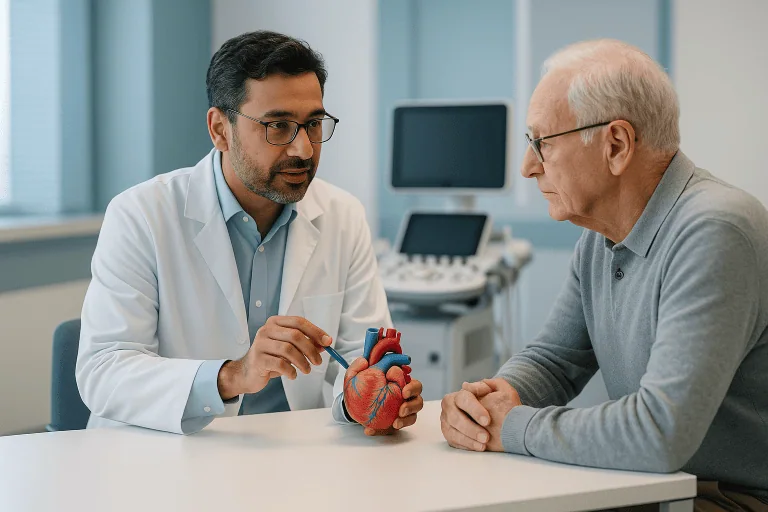
Infective endocarditis is an infection of the inner lining of the heart, called the endocardium. Most often, the infection settles on one or more of the heart valves: the small flaps of tissue that open and close to keep blood flowing in the right direction. Bacteria are the usual cause, although in rarer cases fungi or other microorganisms are responsible. When these germs attach to the heart valve or lining, they can multiply and form clumps made of microbes, blood cells, and clotting proteins. Doctors call these clumps vegetations.
So, in plain terms, what is infective endocarditis? It is a serious infection inside the heart itself, not simply an infection somewhere in the body that affects the heart indirectly. Because the infection sits directly on the structures that keep blood moving, it can damage the valves, interfere with the heart’s pumping, and send small pieces of infected material into the bloodstream, where they may travel to the brain, lungs, kidneys, or other organs.
Infective endocarditis is relatively uncommon in people with entirely healthy hearts. It affects people of all ages, but it is more likely in those who have damaged or artificial (prosthetic) heart valves, certain heart conditions present from birth (congenital heart disease), implanted cardiac devices such as pacemakers, or a previous episode of endocarditis. People who inject drugs are also at increased risk, and the condition is more often seen in older adults, partly because valve disease becomes more common with age. Without treatment, infective endocarditis is usually fatal, which is why prompt recognition matters so much. With modern antibiotics and, when needed, surgery, many people recover, although the illness remains serious and requires careful, prolonged treatment.
Symptoms of infective endocarditis
Infective endocarditis symptoms vary widely from person to person, which is part of what makes the condition difficult to recognize. Some people become severely ill within days, while others develop vague, gradual symptoms over weeks or months. Doctors sometimes describe these two patterns as acute endocarditis (fast and aggressive, often caused by more harmful bacteria) and subacute endocarditis (slow and smoldering, often caused by less aggressive germs). The symptoms overlap, but the pace at which they appear can differ.
Common infective endocarditis symptoms include:
- Fever and chillsoften the earliest and most consistent sign, sometimes with drenching night sweats.
- Fatigue and weaknessfeeling persistently exhausted or unwell, out of proportion to normal daily life.
- A new or changed heart murmuran abnormal sound a doctor hears with a stethoscope, caused by turbulent blood flow across a damaged valve.
- Shortness of breathespecially with activity or when lying flat, which can signal that the heart is struggling.
- Unintentional weight loss and poor appetitemore typical of the slower, subacute form.
- Muscle and joint achesgeneralized pain that can be mistaken for the flu or arthritis.
- Swelling in the legs, ankles, or abdomena possible sign of developing heart failure, meaning the heart cannot pump effectively.
- Skin and nail changessmall red or purple spots on the skin (petechiae), thin dark lines under the fingernails (splinter hemorrhages), and, less commonly, tender or painless bumps on the fingers and toes.
- Blood in the urinesometimes visible, sometimes found only on testing, when the kidneys are affected.
In acute endocarditis, high fever, shaking chills, and rapid deterioration tend to dominate. In subacute endocarditis, the picture is often subtler: low-grade fevers that come and go, tiredness, and weight loss that may initially be blamed on other causes. Because pieces of vegetation can break off and travel through the bloodstream, an event called embolism, some people first come to medical attention with a complication, such as a stroke (sudden weakness, trouble speaking, or vision loss), severe abdominal or back pain, or a cold, painful limb. Anyone with a known heart valve problem who develops an unexplained fever should take that symptom seriously and seek medical advice.
Causes and risk factors
The main infective endocarditis causes involve germs entering the bloodstream and attaching to the heart’s inner surface. Small numbers of bacteria enter the blood fairly often in everyday life, for example, during vigorous tooth brushing, dental procedures, or through cuts and skin infections. In most people, the immune system clears these bacteria quickly and no harm results. Problems arise when bacteria find a place to attach, which is far more likely when the heart’s lining or valves are already roughened, scarred, or artificial.
Common sources of bacteria in the bloodstream include:
- Dental and gum diseasepoor oral health and certain dental procedures can release mouth bacteria into the blood.
- Skin infections and woundsincluding infected surgical sites and severe skin conditions.
- Medical devices and linesintravenous catheters, dialysis access sites, pacemaker or defibrillator leads, and other implanted hardware can serve as entry points or attachment surfaces.
- Injection drug useneedles that are not sterile introduce bacteria directly into veins, and repeated use raises the risk considerably; in these cases the valves on the right side of the heart are often affected.
- Infections elsewhere in the bodysuch as urinary tract, bowel, or bloodstream infections that seed the heart.
Certain conditions make the heart more vulnerable once bacteria are circulating. Important risk factors include:
- Artificial (prosthetic) heart valvesmechanical or tissue valves are among the strongest risk factors.
- A previous episode of infective endocarditisearlier infection leaves the valves more susceptible.
- Congenital heart diseasestructural heart abnormalities present from birth, whether repaired or unrepaired.
- Damaged or diseased native valvesfor example, from rheumatic fever, age-related degeneration, or mitral valve prolapse with leakage.
- Implanted cardiac devicespacemakers and implantable defibrillators.
- Weakened immune system or chronic illnessincluding long-term hemodialysis for kidney failure.
- Older agedegenerative valve disease and more frequent medical procedures increase risk over time.
The bacteria most often involved are staphylococci (including Staphylococcus aureus, a common skin germ), streptococci (often from the mouth), and enterococci (often from the bowel or urinary tract). Fungal endocarditis is uncommon but tends to be more difficult to treat.
Diagnosis
Infective endocarditis diagnosis can be challenging because the symptoms mimic many other illnesses. Doctors therefore combine information from the patient’s history, physical examination, blood tests, and heart imaging, and they often apply a structured set of criteria, commonly known as the modified Duke criteria, to decide how likely the diagnosis is. These criteria weigh major findings (such as positive blood cultures with typical organisms and imaging evidence of infection on a valve) against minor findings (such as fever, risk factors, and signs of embolism).
The key steps in confirming the diagnosis usually include:
- Blood cultures. Several samples of blood are drawn, often from different sites and at different times, and sent to the laboratory to see whether bacteria or fungi grow. Identifying the exact organism is essential, because it guides the choice of antibiotics. Ideally, cultures are taken before antibiotics are started.
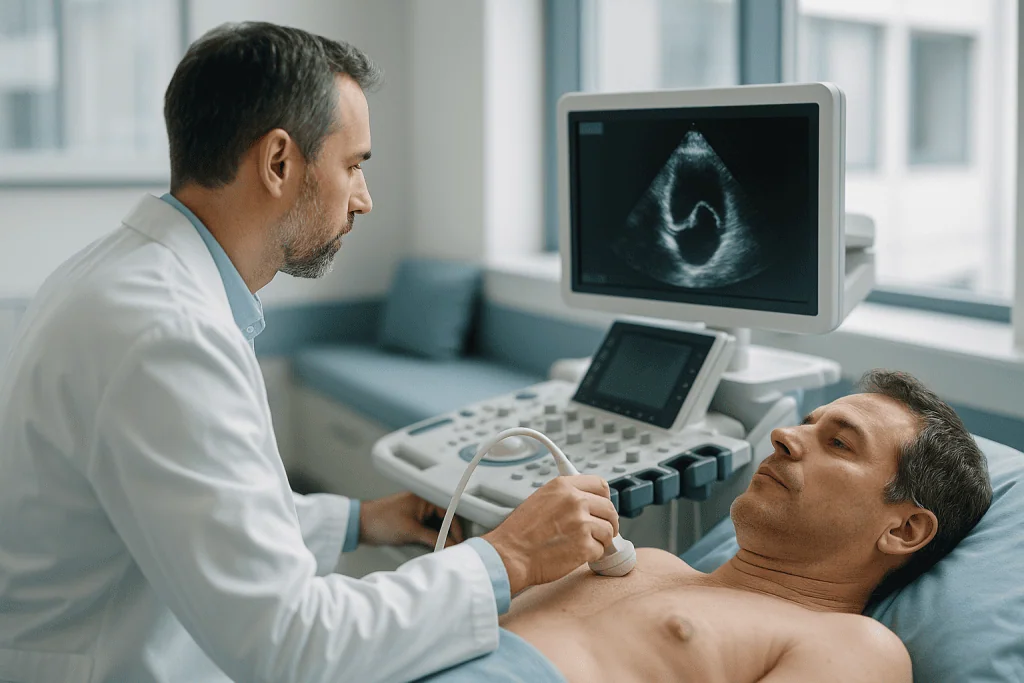
- Echocardiography. This is an ultrasound scan of the heart. A transthoracic echocardiogram (performed with a probe on the chest) is usually done first. In many cases, a transesophageal echocardiogram, in which a thin probe is passed down the food pipe under sedation to obtain much clearer pictures of the valves, is also needed. Echocardiography can show vegetations, valve leakage, abscesses (pockets of pus), and other complications.
- Other blood tests. Tests for inflammation (such as C-reactive protein and erythrocyte sedimentation rate), a complete blood count, and kidney function tests help assess how severe the illness is and how the organs are coping. Anemia (a low red blood cell count) is common in the subacute form.
- Electrocardiogram (ECG). A recording of the heart’s electrical activity, which can reveal rhythm disturbances or conduction problems suggesting the infection has spread deeper into heart tissue.
- Additional imaging when needed. A CT scan (detailed X-ray imaging), MRI of the brain, or specialized nuclear imaging may be used to look for infection around prosthetic valves or for pieces of infected material that have traveled to other organs.
Sometimes blood cultures remain negative even though endocarditis is present, for instance, if antibiotics were given before the cultures were drawn, or if the organism is unusual and hard to grow. In these situations, doctors may use special laboratory techniques and rely more heavily on imaging and clinical judgment. Because the diagnosis has major consequences for treatment, specialists in cardiology, infectious diseases, and often cardiac surgery typically review the findings together.
Treatment options for infective endocarditis
Infective endocarditis treatment aims to eliminate the infection completely, protect or repair the heart valves, and prevent or manage complications. Unlike some milder conditions, watchful waiting is not an appropriate strategy for confirmed endocarditis: an untreated infection inside the heart tends to progress and is life-threatening. Treatment is usually started in the hospital and managed by a multidisciplinary team; in many hospital groups, including Acibadem, care is coordinated through the Cardiology Department together with infectious disease specialists and, when surgery is being considered, cardiac surgeons.
Antibiotic therapy
Antibiotics given directly into a vein (intravenous, or IV, antibiotics) are the foundation of treatment. High doses are needed because vegetations shield the bacteria from the immune system and make them harder to reach. The choice of antibiotic depends on the organism identified in the blood cultures and on laboratory tests showing which drugs it is sensitive to. Treatment courses are long, commonly several weeks, often in the range of four to six weeks, and sometimes longer for infections involving prosthetic valves. Doctors may adjust the regimen as culture results come back. Repeat blood cultures are often taken to confirm that the bloodstream has been cleared of bacteria. In selected, stable patients, part of the course may sometimes be completed outside the hospital or, in carefully chosen cases, with oral antibiotics, but this decision rests with the treating team. Fungal endocarditis requires antifungal medication and very often surgery as well.
Supportive care
Alongside antibiotics, doctors treat the consequences of the infection. This may include medications for heart failure, careful fluid management, treatment of kidney problems, and close monitoring for stroke or other embolic events. Regular echocardiograms track whether the vegetations are shrinking and whether valve function is stable.
Surgery
In a substantial proportion of cases, antibiotics alone are not enough and heart surgery is needed. Surgery may involve repairing a damaged valve or replacing it with an artificial one, removing infected tissue, and draining abscesses. Situations where surgeons are often involved include:
- Heart failure caused by a severely leaking valve that the heart can no longer compensate for.
- Uncontrolled infectionpersistent fever and positive blood cultures despite appropriate antibiotics, or an abscess forming around the valve.
- Large vegetations or repeated embolismto reduce the risk of further pieces breaking off and traveling to the brain or other organs.
- Prosthetic valve infectioninfections on artificial valves are often difficult to cure with antibiotics alone.
- Fungal endocarditiswhich usually responds poorly to medication by itself.
The timing of surgery is an individualized decision that balances the urgency of the heart problem against the risks of operating during active infection. If an implanted device such as a pacemaker is infected, the device and its leads usually need to be removed.
Living with infective endocarditis and outlook
Recovery from infective endocarditis takes time. Even after the infection is cleared, many people feel tired for weeks or months, and the heart may need time to adapt, particularly if a valve was damaged or replaced. Follow-up typically includes repeat echocardiograms, blood tests, and clinic visits to confirm that the infection has not returned and to monitor valve function over the long term.
The outlook depends on many factors: the organism involved, which valve was affected, whether the valve was natural or artificial, how quickly treatment began, the person’s age and other health conditions, and whether complications such as stroke or heart failure occurred. Many people who receive timely, appropriate treatment recover well and return to their normal activities. At the same time, infective endocarditis remains a serious illness with a meaningful risk of complications and death, and honesty about that risk is important. No doctor can guarantee a particular outcome, and some patients require long-term follow-up for residual valve problems.
Having had endocarditis once increases the risk of having it again. For this reason, prevention becomes a lifelong priority:
- Maintain excellent oral hygieneregular brushing, flossing, and dental checkups reduce the amount of bacteria entering the blood from the mouth.
- Tell every healthcare provider about your historyincluding dentists, so they can decide whether preventive antibiotics are advisable before certain procedures. Current guidelines reserve such antibiotics for people at the highest risk, so follow your own doctor’s advice.
- Care for your skinclean and cover cuts, and seek treatment promptly for skin infections.
- Avoid non-sterile injections and unregulated proceduresincluding tattoos or piercings performed in unhygienic settings, and injection drug use.
- Know your warning signstreat any unexplained fever as a reason to seek medical review rather than self-treating with leftover antibiotics, which can mask the diagnosis.
Frequently asked questions
What is infective endocarditis in simple terms?
It is an infection of the inner lining of the heart, most often affecting the heart valves. Germs, usually bacteria, enter the bloodstream, attach to the valve, and form clumps called vegetations that can damage the valve and spread infected material to other organs. It is a serious condition that requires hospital treatment, usually with several weeks of intravenous antibiotics and sometimes surgery.
How serious is infective endocarditis?
It is among the more serious heart conditions. Without treatment it is usually fatal, and even with treatment it carries a real risk of complications such as heart failure, stroke, and the need for valve surgery. That said, outcomes vary widely, and many people who are diagnosed promptly and treated appropriately recover well. Your care team can give you a more personal sense of your situation based on the organism involved and how your heart is functioning.
Can infective endocarditis heal on its own?
No. Infective endocarditis does not resolve without treatment, because the bacteria are protected inside vegetations where the immune system cannot easily clear them. Delaying care allows the infection to destroy valve tissue and spread. If endocarditis is suspected or confirmed, prompt medical treatment is essential.
What are the first symptoms of infective endocarditis?
The earliest infective endocarditis symptoms are often nonspecific: fever, chills, night sweats, fatigue, and aching muscles or joints. In the slower, subacute form, weight loss and a general feeling of being unwell may build over weeks. Because these symptoms resemble the flu or other common illnesses, endocarditis is easy to miss at first, which is why an unexplained, persistent fever in someone with a heart valve problem or an implanted cardiac device should always prompt medical assessment.
How long does infective endocarditis treatment take?
Antibiotic treatment typically lasts several weeks, often around four to six weeks of intravenous therapy, and sometimes longer for prosthetic valve infections or hard-to-treat organisms. If surgery is needed, recovery time is added on top of that. Full recovery of energy and stamina can take additional weeks or months after the antibiotics finish, and follow-up appointments continue afterward to monitor the heart.
Will I need heart surgery for infective endocarditis?
Not everyone does. Many cases are cured with antibiotics alone. However, surgery becomes necessary in a significant proportion of patients, for example, when a valve is badly damaged and causing heart failure, when the infection does not respond to antibiotics, when an abscess forms, or when large vegetations threaten to cause a stroke. Your cardiology and surgical teams will weigh these factors together and discuss the options with you.
Can infective endocarditis come back?
Yes, recurrence is possible, and a previous episode is itself one of the strongest risk factors for a future one. Good dental hygiene, prompt care of skin wounds and infections, informing all your healthcare providers about your history, and following your doctor’s guidance on preventive antibiotics before certain procedures can all help reduce the risk, although no measure eliminates it entirely.
When to see a doctor
See a doctor promptly if you have an unexplained fever lasting more than a few days, especially if you have a known heart valve condition, an artificial valve, a pacemaker or other implanted cardiac device, congenital heart disease, a previous episode of endocarditis, or a history of injection drug use. Persistent fatigue, night sweats, or unintended weight loss in someone with these risk factors also deserves medical review rather than a wait-and-see approach.
Seek urgent or emergency medical care if you or someone with suspected or confirmed infective endocarditis develops any of the following red-flag signs:
- Sudden weakness, numbness, facial drooping, trouble speaking, or loss of visionpossible signs of a stroke.
- Severe shortness of breath, breathlessness when lying flat, or waking at night gasping for airpossible signs of heart failure.
- Chest pain or a rapid, pounding, or irregular heartbeat.
- High fever with shaking chills, confusion, or drowsiness.
- Fainting or near-fainting.
- Sudden severe pain in the abdomen, back, or a limb, or a limb that becomes cold, pale, or painfulpossible signs that infected material has blocked a blood vessel.
- Coughing up blood or blood in the urine.
Infective endocarditis is a medical emergency when these complications occur, and early hospital evaluation can make a meaningful difference to the outcome. If you have already been treated for endocarditis and any of these symptoms return, contact emergency services or go to the nearest emergency department without delay.
Medically reviewed by the Acıbadem International Medical Board September 3, 2026
See our medical review board →
Update history
- PublishedJune 8, 2026
- Medical review approvedSeptember 3, 2026
- Last content updateSeptember 2, 2026