Quick answer
Osteosarcoma is a cancer that starts in bone-forming cells, most often in the long bones, and is usually treated with a combination of chemotherapy and surgery to remove the tumor while preserving limb function when possible. At Acibadem in Turkey, evaluation and treatment are planned by a multidisciplinary team using imaging, biopsy, systemic therapy, and advanced orthopedic oncology surgery tailored…
What is osteosarcoma?
Osteosarcoma is a type of cancer that starts in the cells that make bone. The word breaks down into “osteo,” meaning bone, and “sarcoma,” which is the medical term for a cancer that begins in bone, muscle, or other connective tissue. In osteosarcoma, abnormal cells produce immature, weak bone tissue instead of healthy bone. Over time, the tumor can weaken the bone it grows in and, if untreated, may spread (metastasize) to other parts of the body, most often the lungs.
So, what is osteosarcoma in practical terms? It is the most common cancer that begins in bone itself, as opposed to cancers that spread to bone from somewhere else, such as breast or prostate cancer. Osteosarcoma most often develops in children, teenagers, and young adults, typically during the growth spurt of adolescence, when bones are lengthening quickly. A second, smaller group of patients is diagnosed later in life, often in adults over 60, sometimes in connection with pre-existing bone conditions or earlier radiation treatment.
The tumor usually forms near the ends of long bones, where growth is most active. Common sites include the thigh bone (femur) just above the knee, the shin bone (tibia) just below the knee, and the upper arm bone (humerus) near the shoulder. Less often, osteosarcoma appears in the pelvis, jaw, spine, or other bones. Although it is a serious diagnosis, osteosarcoma is treatable, and modern care combining chemotherapy and surgery has substantially improved outcomes compared with earlier decades.
Symptoms of osteosarcoma
Osteosarcoma symptoms often start gradually and can be easy to mistake for a sports injury, growing pains, or ordinary aches, especially in active teenagers. Because early symptoms overlap with common, harmless problems, diagnosis is sometimes delayed. The most frequent osteosarcoma symptoms include:
- Bone painoften the first sign; it may come and go at first, then become steady, and it frequently worsens at night or with activity
- Swelling or a lump near a bone or joint, which may appear weeks after the pain begins
- Tenderness over the affected area
- Limping or difficulty using the affected limb, if the tumor is in a leg
- Reduced range of motion in a nearby joint
- A broken bone (fracture) after a minor injury, because the tumor has weakened the bone; this is sometimes called a pathologic fracture
Symptoms can vary depending on where the tumor is and how far it has progressed. In early, localized disease, pain and swelling near one bone are usually the only complaints. When the cancer is more advanced or has spread, patients may also notice unexplained tiredness, weight loss, fever, or, if the lungs are involved, cough or shortness of breath. Tumors in the pelvis or spine may cause deeper, harder-to-localize pain, and jaw tumors may cause facial swelling or loose teeth.
There are also different types of osteosarcoma. Most are “conventional” high-grade tumors that grow relatively quickly and cause noticeable pain and swelling within weeks to months. Less common low-grade forms, such as parosteal osteosarcoma, tend to grow more slowly and may present mainly as a painless or mildly uncomfortable lump that enlarges over a longer period. Only medical testing can tell these apart.
Causes and risk factors
In most cases, doctors cannot identify a specific cause. Osteosarcoma causes are believed to involve genetic changes (mutations) that occur in bone-forming cells, often by chance, particularly during periods of rapid bone growth. The disease is not contagious, and it is not caused by an injury: a bump or fall often simply draws attention to pain that was already developing.
Although the exact osteosarcoma causes remain unclear for most patients, several factors are known to increase risk:
- Age and growththe peak risk is during the adolescent growth spurt, roughly between ages 10 and 20, with a second peak in older adulthood
- Rapid bone growth and taller statureosteosarcoma tends to develop where bones grow fastest
- Previous radiation therapybones that were treated with radiation for another cancer have a higher risk, usually many years later
- Certain bone diseasessuch as Paget disease of bone (a disorder of abnormal bone remodeling, mainly in older adults) and some benign bone conditions
- Inherited genetic syndromesincluding hereditary retinoblastoma (an inherited eye cancer), Li-Fraumeni syndrome (an inherited condition linked to changes in the TP53 gene), and Rothmund-Thomson syndrome, among others
It is important for families to understand that nothing a child or parent did, no food, sport, or activity, is known to cause osteosarcoma. Most patients have no identifiable risk factor at all.
Diagnosis of osteosarcoma
Osteosarcoma diagnosis usually begins when persistent bone pain or swelling prompts a medical visit. Because the symptoms resemble common injuries, doctors follow a stepwise process to confirm or rule out cancer.
Medical history and physical examination. The doctor asks about the pain, how long it has lasted, whether it wakes the patient at night, and whether it is getting worse, and examines the area for swelling, tenderness, and limited movement.
Imaging tests. An X-ray is typically the first test and can often show characteristic changes, such as bone destruction and abnormal new bone formation around the tumor. If the X-ray is suspicious, further imaging follows:
- MRI (magnetic resonance imaging)a detailed scan using magnets and radio waves; it shows how far the tumor extends within the bone and into surrounding muscle and soft tissue, which is essential for planning surgery
- CT (computed tomography) scan of the chesta detailed X-ray-based scan used to check whether the cancer has spread to the lungs, the most common site of spread
- Bone scan or PET scanwhole-body scans that use small amounts of radioactive tracer to look for cancer in other bones or elsewhere in the body
Biopsy. Imaging alone cannot confirm the diagnosis. A biopsyremoving a small sample of the tumor so a pathologist (a doctor who examines tissue under a microscope) can study it, is the only way to confirm osteosarcoma and determine its exact type and grade. The biopsy may be done with a needle or through a small surgical procedure. Ideally, it is planned by the same specialized team that will later perform the definitive surgery, because the biopsy path can affect surgical options.
Blood tests. There is no blood test that diagnoses osteosarcoma, but doctors may check levels of certain enzymes, such as alkaline phosphatase and lactate dehydrogenase, along with general blood counts and organ function, to help assess the situation and prepare for treatment.
Once osteosarcoma diagnosis is confirmed, the cancer is stagedmeaning doctors determine its size, grade (how abnormal the cells look), and whether it has spread. Staging guides treatment decisions and helps the care team discuss the outlook.
Treatment options for osteosarcoma
Osteosarcoma treatment almost always involves a combination of approaches planned by a multidisciplinary team, typically orthopedic oncology surgeons, medical oncologists, pediatric oncologists for younger patients, radiologists, and pathologists. In hospital groups such as Acibadem, systemic (drug-based) cancer care for conditions like osteosarcoma is coordinated through the Medical Oncology Department, working alongside surgical teams.
Watchful waiting is generally not appropriate for osteosarcoma. Unlike some slow-growing cancers, high-grade osteosarcoma tends to progress and spread if untreated, so active treatment is recommended in nearly all cases. Rare low-grade forms may sometimes be managed with surgery alone, but this decision belongs to the specialist team.
Chemotherapy. Chemotherapy, medication that kills fast-dividing cancer cells throughout the body, is a cornerstone of osteosarcoma treatment for high-grade tumors. It is usually given in two phases:
- Before surgery (neoadjuvant chemotherapy)typically over several weeks to months, to shrink the tumor, treat any microscopic cancer cells that may have already spread, and make surgery safer and more effective
- After surgery (adjuvant chemotherapy)to destroy any remaining cancer cells and reduce the chance of the cancer returning
Commonly used drugs include methotrexate, doxorubicin, and cisplatin, often given in combination. Chemotherapy has side effects, such as nausea, hair loss, fatigue, lowered blood counts, and infection risk, which the care team monitors and manages closely. After surgery, pathologists examine how much of the tumor the chemotherapy killed; this “tumor response” helps guide the rest of treatment.
Surgery. Surgery aims to remove the entire tumor along with a margin of healthy tissue. In many cases, surgeons can perform limb-salvage surgery, removing the diseased section of bone and reconstructing the limb with a metal implant (endoprosthesis), a bone graft, or a combination. Limb-salvage surgery is now possible for most patients treated at specialized centers. When the tumor involves critical nerves and blood vessels, or in certain other situations, amputationremoval of part or all of the limb, may be the safest option, followed by fitting of a prosthetic (artificial) limb and rehabilitation. If the cancer has spread to the lungs, surgeons may also remove lung tumors when feasible, as this can improve outcomes in selected patients.
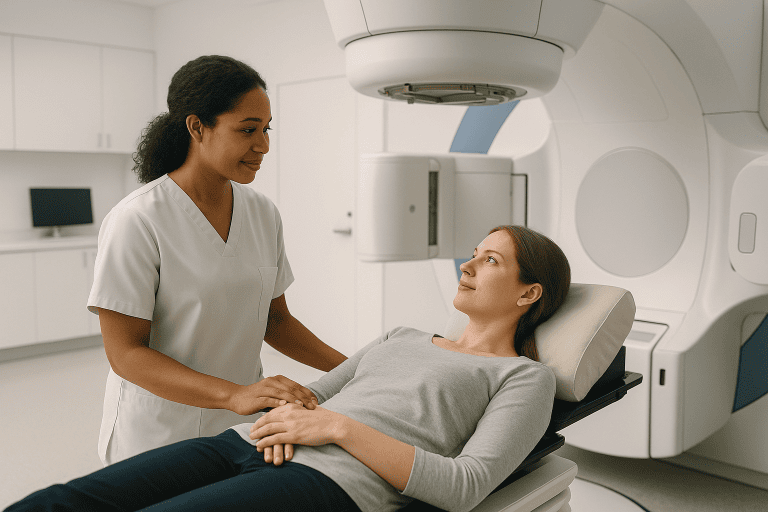
Radiation therapy. Osteosarcoma cells are relatively resistant to radiation, so it is not a routine treatment. However, radiation may be considered when a tumor cannot be fully removed surgically, for example, in some pelvic, spine, or skull tumors, or to help control symptoms.
Other and emerging treatments. For osteosarcoma that returns (recurs) or does not respond to standard therapy, doctors may discuss additional chemotherapy combinations, targeted therapies, or participation in clinical trials, where new treatments are studied under careful supervision. Availability and suitability vary from patient to patient.
Rehabilitation. Physical therapy is an important part of osteosarcoma treatment, especially after limb surgery. Rehabilitation specialists help patients regain strength, mobility, and independence, whether after limb-salvage surgery or amputation.
Living with osteosarcoma and outlook
The outlook for osteosarcoma depends on several factors, including whether the cancer has spread at diagnosis, where the tumor is located, how well it responds to chemotherapy, and whether it can be completely removed with surgery. In general, localized osteosarcoma that responds well to chemotherapy and is fully removed has a considerably better outlook than cancer that has already spread. Modern combined treatment has improved survival substantially compared with the era before chemotherapy, and many patients, particularly children and young adults with localized disease, become long-term survivors. That said, no doctor can guarantee an outcome, and each patient’s situation is different; your care team is the best source of information about your individual prognosis.
Treatment for osteosarcoma is intensive and often lasts many months, which affects school, work, and family life. Practical points that help many patients and families include:
- Follow-up careafter treatment ends, regular checkups with imaging continue for years to watch for recurrence and to monitor the reconstructed limb and the long-term effects of chemotherapy, including heart and hearing checks where relevant
- Physical rehabilitationongoing physical therapy supports recovery of movement and strength; children with limb implants may need further procedures as they grow
- Emotional supportcounseling, support groups, and, for younger patients, child-life and school-reintegration services can make a meaningful difference
- Healthy habitsbalanced nutrition, gradual return to activity as advised, and avoiding smoking support overall recovery
- Fertility considerationsbecause chemotherapy can affect fertility, adolescents and young adults may wish to discuss fertility preservation options before treatment begins
Survivorship also means staying alert to late effects of treatment and reporting new symptoms, especially new bone pain, lumps, or breathing changes, promptly to the care team.
Frequently asked questions
What is osteosarcoma in simple terms?
Osteosarcoma is a cancer that starts in bone-forming cells, most often near the knee or shoulder in growing children, teenagers, and young adults. The abnormal cells make weak, immature bone instead of healthy bone, which causes pain and swelling and can weaken the bone. It is the most common cancer that begins in bone itself, and it is treated with a combination of chemotherapy and surgery in most cases.
Can osteosarcoma be cured?
Many patients with osteosarcoma, especially those whose cancer is localized to one bone and responds well to chemotherapy, can be treated successfully and go on to live long, healthy lives. Doctors are often cautious with the word “cure” and instead speak of long-term remission, because follow-up over many years is needed to confirm the cancer has not returned. Outcomes vary from person to person, so it is best to discuss your specific situation with your oncology team.
How serious is osteosarcoma?
Osteosarcoma is a serious cancer that requires prompt, specialized treatment, because high-grade tumors can spread to the lungs and other bones if left untreated. However, “serious” does not mean untreatable: with modern chemotherapy and surgery, many patients, particularly those diagnosed before the cancer has spread, achieve long-term survival. The stage at diagnosis and the tumor’s response to chemotherapy are among the most important factors influencing the outlook.
What are the first symptoms of osteosarcoma?
The first symptom is usually pain in or near a bone, often around the knee, shoulder, or upper arm. The pain may come and go initially, then become constant, and it often worsens at night or with activity. Swelling or a firm lump may appear later. Because these symptoms resemble sports injuries or growing pains, any bone pain that persists for more than a few weeks, worsens over time, or is accompanied by swelling should be evaluated by a doctor.
What causes osteosarcoma in teenagers?
In most teenagers, no specific cause can be identified. The disease appears to be linked to random genetic changes in bone cells during the rapid bone growth of puberty, which is why it most often develops at the growing ends of long bones. A small number of cases are related to inherited genetic conditions, such as Li-Fraumeni syndrome or hereditary retinoblastoma, or to previous radiation therapy. It is not caused by injuries, diet, or physical activity.
Does osteosarcoma always require amputation?
No. At specialized centers, most patients today can be treated with limb-salvage surgery, in which the diseased section of bone is removed and the limb is reconstructed with a metal implant or bone graft. Amputation is reserved for situations where the tumor involves major nerves and blood vessels or where limb-salvage would not safely remove all the cancer. The surgical team weighs these options carefully for each patient, and rehabilitation supports recovery with either approach.
How long does osteosarcoma treatment and recovery take?
Treatment typically lasts many months. Chemotherapy is often given for roughly two to three months before surgery, followed by the operation and then several more months of chemotherapy afterward, though schedules vary by patient and protocol. Physical recovery from surgery, including rehabilitation to regain strength and mobility, continues alongside and after chemotherapy. Follow-up visits with scans then continue for years, becoming less frequent over time as the risk of recurrence declines.
When to see a doctor
Anyone with symptoms that could suggest a bone problem should be evaluated, particularly children and teenagers, in whom bone pain is often dismissed as growing pains or a minor sports injury. See a doctor promptly if you or your child has:
- Bone pain lasting more than a few weeks, especially if it is getting worse rather than better
- Pain that wakes you or your child at night or persists at rest, not just during activity
- A new lump or swelling on or near a bone or joint, whether or not it is painful
- A limp or reduced use of an arm or leg without a clear injury, or symptoms that persist long after an injury should have healed
- A bone that breaks after only a minor bump or fall
- Unexplained weight loss, persistent fever, or severe fatigue together with bone pain
- New cough, chest pain, or shortness of breath in someone already diagnosed with or treated for osteosarcoma
Most people with these symptoms will not have cancer, injuries, infections, and benign bone conditions are far more common. However, because osteosarcoma is most treatable when found early, persistent or worsening bone symptoms deserve a medical evaluation rather than a wait-and-see approach. If osteosarcoma is suspected, prompt referral to a center experienced in bone tumors gives the diagnostic and surgical teams the best chance to plan treatment correctly from the start.
From the Acibadem Blog

Osteosarcoma in Children: Signs Parents Notice, Diagnosis and Treatment
Osteosarcoma is the most common bone cancer in children and teenagers, usually starting near the knee or shoulder during the adolescent growth spurt. Early…

Metastatic Osteosarcoma: What It Means, What to Expect and When to See a Specialist
Metastatic osteosarcoma is bone cancer that has spread beyond the bone where it began, most often to the lungs and less commonly to other…

Osteosarcoma Prognosis: What Shapes the Outlook and What the Numbers Really Mean
Osteosarcoma prognosis depends mostly on whether the cancer has spread when it is found, where the tumor sits in the skeleton, how thoroughly it…

Osteosarcoma Survival Rate: What the Statistics Mean, Stage by Stage, and What Changes Them
Across mainstream cancer registries, roughly 7 in 10 people whose osteosarcoma is confined to the bone where it started are alive five years after…
Medically reviewed by the Acıbadem International Medical Board September 2, 2026
See our medical review board →
Update history
- PublishedJune 14, 2026
- Medical review approvedSeptember 2, 2026
- Last content updateSeptember 2, 2026