Quick answer
Rosacea is a chronic inflammatory skin condition that mainly affects the face, causing persistent redness, visible blood vessels, flushing, and sometimes acne-like bumps or eye irritation. At Acibadem in Turkey, rosacea is evaluated by dermatology specialists and managed with a personalized plan that may include trigger control, skin-care guidance, topical or oral medicines, and selected laser-based treatments when appropriate.
What is rosacea?
Rosacea is a common, long-term (chronic) skin condition that mainly affects the face. It causes redness, flushing, visible blood vessels, and sometimes small red bumps or pus-filled spots that can look similar to acne. Unlike a temporary rash, rosacea tends to come and go in cycles: symptoms may flare up for weeks or months and then quiet down for a while before returning. Understanding what is rosacea and how it behaves over time is an important first step in managing it, because early recognition and consistent care often make flare-ups milder and less frequent.
Rosacea most often begins between the ages of 30 and 50, although it can appear earlier or later in life. It is diagnosed more frequently in women, but men who develop rosacea often experience more severe forms, particularly the type that causes thickening of the skin on the nose. People with fair skin who blush or flush easily appear to be at higher risk, though rosacea can affect people of all skin tones. In darker skin, the redness may be less obvious, which can delay diagnosis.
Rosacea is not contagious, and it is not caused by poor hygiene. It is also not the same as acne, even though the two conditions can look alike. There is currently no cure, but a range of effective rosacea treatment approaches can control symptoms and help prevent the condition from getting worse.
Symptoms of rosacea
Rosacea symptoms vary widely from person to person. Some people mainly notice redness and flushing, while others develop bumps, eye irritation, or changes in skin texture. Symptoms often start subtly and become more noticeable over time if the condition is not managed.
Common rosacea symptoms include:
- Facial flushing: episodes of sudden warmth and redness, usually across the cheeks, nose, chin, or forehead, that may last longer than ordinary blushing.
- Persistent redness: a lasting red or ruddy appearance in the center of the face that does not fully fade between flares.
- Visible blood vessels: small, broken-looking blood vessels (called telangiectasia) on the cheeks and nose.
- Bumps and pimples: red bumps (papules) and pus-filled spots (pustules) that resemble acne but usually occur without blackheads.
- Burning or stinging: a sensation of heat, tenderness, or sensitivity in the affected skin, especially when applying skincare products.
- Dryness and roughness: the skin may feel dry, tight, or slightly swollen.
- Eye symptoms: red, irritated, gritty, or watery eyes and swollen eyelids, known as ocular rosacea.
- Skin thickening: in advanced cases, the skin, most often on the nose, can thicken and enlarge, a change called rhinophyma.
Doctors often describe rosacea in terms of subtypes or patterns, and symptoms differ depending on which pattern is most prominent. In erythematotelangiectatic rosacea, flushing, persistent redness, and visible blood vessels dominate. In papulopustular rosacea, the acne-like bumps and pustules are the main feature, often on a background of redness. Phymatous rosacea involves gradual thickening and enlargement of the skin, most commonly on the nose, and is more frequent in men. Ocular rosacea affects the eyes and eyelids and can occur before, alongside, or without obvious skin changes. Many people have features of more than one pattern, and the pattern can shift over time.
In the early stage, symptoms may be limited to occasional flushing that people mistake for sensitive skin or sunburn. As the condition progresses, redness can become more persistent and bumps may appear. Without management, some people go on to develop lasting skin changes such as visible vessels or thickened skin, which are harder to reverse. This is one reason early evaluation is generally recommended when rosacea symptoms first appear.
Causes and risk factors
The exact rosacea causes are not fully understood. Research suggests that rosacea results from a combination of factors rather than a single cause. These include:
- Genetics: rosacea often runs in families, suggesting an inherited tendency.
- Immune system responses: the skin’s natural defense system may overreact to normal triggers, producing inflammation (the body’s protective response that causes redness, warmth, and swelling).
- Blood vessel changes: the small blood vessels in facial skin may dilate (widen) too easily and stay dilated longer than normal, causing flushing and persistent redness.
- Skin microorganisms: a microscopic mite called Demodex, which lives harmlessly on most people’s skin, is found in higher numbers on rosacea-affected skin and may contribute to inflammation in some people.
- Environmental damage: long-term sun exposure can damage the skin and its blood vessels, and it is thought to play a role in many cases.
Certain factors increase the likelihood of developing rosacea, including fair skin that burns easily, a family history of rosacea, being between roughly 30 and 50 years of age, and being female (although severe forms are more common in men). Smoking and heavy sun exposure may also contribute in some people.
Separate from underlying causes, many people with rosacea notice specific triggersthings that do not cause the condition itself but can set off a flare. Common triggers include sunlight, hot or cold weather, wind, hot drinks, spicy foods, alcohol (especially red wine), emotional stress, strenuous exercise, hot baths or saunas, and certain skincare products or medications that dilate blood vessels. Triggers vary from person to person, and identifying your own pattern is often a key part of long-term control.
Diagnosis
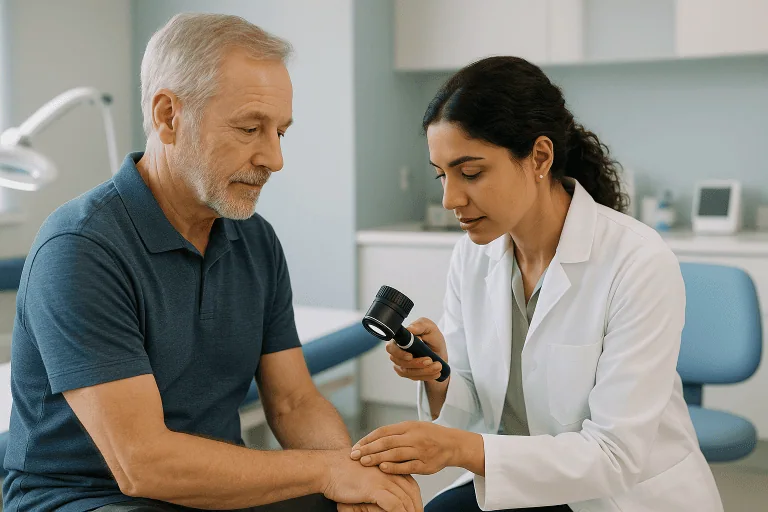
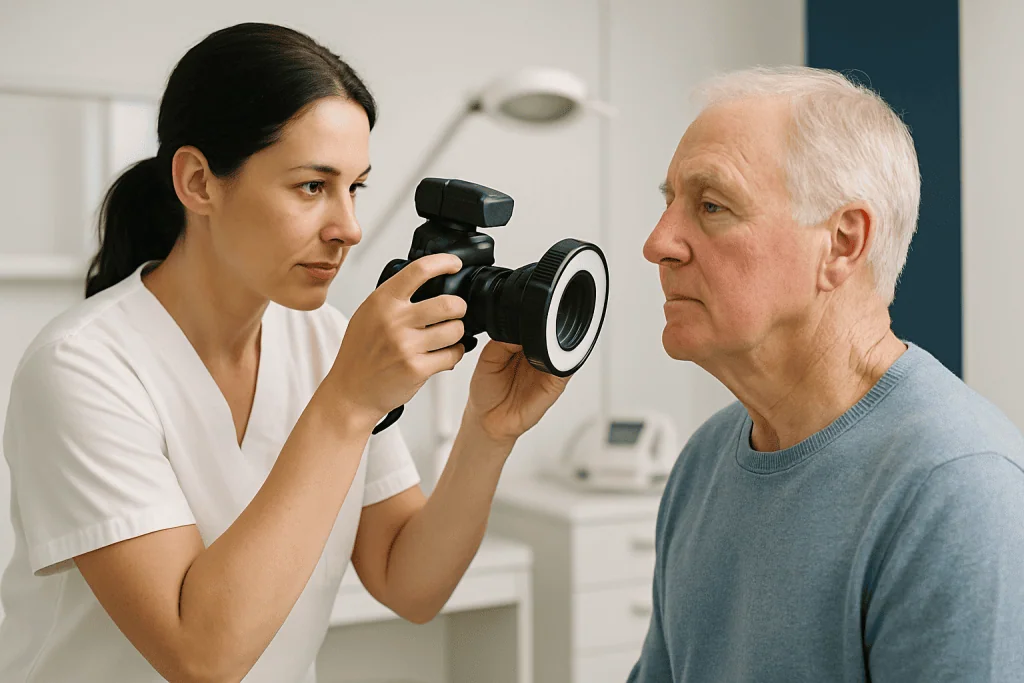
There is no single laboratory test that confirms rosacea. Instead, rosacea diagnosis is a clinical process: a doctor, usually a dermatologist (a physician who specializes in skin conditions), examines your skin and eyes and asks about your medical history. In many cases, the appearance of the skin and the pattern of symptoms are enough to make the diagnosis.
During the evaluation, your doctor will typically ask about:
- When the redness or bumps started and how they have changed over time.
- Whether you experience flushing, burning, stinging, or eye irritation.
- What seems to trigger or worsen your symptoms.
- Your skincare routine, medications, and family history of skin conditions.
Dermatologists generally look for characteristic features, persistent redness in the central face, flushing, papules and pustules, visible blood vessels, thickened skin, or typical eye changes, when applying widely used diagnostic criteria. Certain features on their own, such as fixed central facial redness or phymatous skin changes, are often considered strongly suggestive of rosacea.
Part of the diagnostic process involves ruling out other conditions that can look similar, such as acne, lupus (an autoimmune disease that can cause a facial rash), seborrheic dermatitis (a scaly, flaky skin condition), contact allergies, or the side effects of certain medications. To exclude these, your doctor may occasionally order blood tests or, rarely, take a small skin sample (biopsy) for examination under a microscope. Imaging scans are not usually needed for rosacea. If your eyes are affected, you may be referred to an ophthalmologist (an eye specialist) for a more detailed eye examination.
Treatment options
Rosacea treatment aims to reduce redness and bumps, prevent flares, protect the eyes, and stop the condition from progressing. Because rosacea cannot currently be cured, treatment is usually ongoing and tailored to the type and severity of your symptoms. Many people need a combination of approaches, and it can take several weeks of consistent treatment before improvement is visible. Detailed information about care pathways for rosacea is available on the dedicated condition page, and the condition is typically managed within a dermatology department, including at Acibadem hospitals.
Self-care and trigger management
For very mild rosacea, doctors may first recommend careful skin care and trigger avoidance rather than medication. This usually includes daily use of a broad-spectrum sunscreen, gentle fragrance-free cleansers and moisturizers, avoiding harsh scrubs and alcohol-based products, and keeping a diary to identify personal triggers. These measures remain important even when medication is prescribed.
Topical medications
Medicines applied directly to the skin are often the first line of prescription treatment. Depending on your symptoms, your doctor may prescribe:
- Anti-inflammatory and antimicrobial creams or gels, such as metronidazole, azelaic acid, or ivermectin, which reduce bumps, pustules, and inflammation.
- Vessel-narrowing gels, such as brimonidine or oxymetazoline, which temporarily reduce redness by tightening dilated blood vessels; the effect wears off after some hours.
Oral medications
For moderate or more stubborn rosacea, oral medicines may be added. Low-dose oral antibiotics from the tetracycline family, such as doxycycline, are commonly used, often more for their anti-inflammatory effect than to kill bacteria. In severe or resistant cases, a dermatologist may consider low-dose isotretinoin, a powerful acne medication that requires careful monitoring and must not be used during pregnancy. Your doctor will weigh the benefits and possible side effects of any oral treatment with you.
Laser and light-based procedures
Persistent redness and visible blood vessels often respond poorly to creams and tablets. In these cases, laser therapy or intense pulsed light (IPL) treatment can target and shrink the dilated vessels, reducing redness. Several sessions are usually needed, results vary from person to person, and treated vessels can sometimes return over time.
Treatment for thickened skin (rhinophyma)
When rosacea has caused significant skin thickening, particularly on the nose, procedures to reshape the skin may be considered. Options can include surgical reshaping, laser resurfacing, or dermabrasion (controlled removal of the outer skin layers). These procedures are generally performed by experienced specialists and are reserved for established phymatous changes.
Treatment for eye involvement
Ocular rosacea is usually managed with eyelid hygiene (gentle daily cleaning of the eyelid margins), artificial tears for dryness, and, when needed, antibiotic drops, ointments, or oral antibiotics. Because untreated eye involvement can occasionally affect the cornea (the clear front surface of the eye), eye symptoms should always be mentioned to your doctor.
Living with rosacea and outlook
Rosacea is a chronic condition, which means it tends to persist over years, often alternating between flare-ups and quieter periods. While there is no cure, the outlook for most people is good in the sense that symptoms can usually be controlled with a combination of medical treatment, sensible skin care, and trigger management. In many cases, consistent treatment reduces both the frequency and severity of flares, and early management may help prevent lasting changes such as permanent visible vessels or skin thickening.
Day-to-day strategies that many people find helpful include:
- Applying a gentle, broad-spectrum sunscreen every day and wearing a hat in strong sunlight.
- Using mild, fragrance-free skincare products and avoiding harsh exfoliants, toners, and astringents.
- Keeping a symptom diary to identify and, where practical, avoid personal triggers such as certain foods, drinks, temperatures, or activities.
- Managing stress with techniques that work for you, since emotional stress is a common trigger.
- Using green-tinted or specially formulated cosmetics to camouflage redness if it affects your confidence.
- Continuing prescribed treatments as directed, even when the skin looks calm, if your doctor advises maintenance therapy.
It is honest to say that rosacea can affect emotional well-being. Facial redness is visible to others, and some people feel self-conscious or anxious about flares. If rosacea is affecting your mood, relationships, or daily life, it is reasonable to discuss this with your doctor, as good symptom control often improves quality of life, and additional support is available when needed.
Frequently asked questions
What is rosacea and how is it different from acne?
Rosacea is a chronic inflammatory skin condition that causes facial redness, flushing, visible blood vessels, and sometimes acne-like bumps. Unlike acne, rosacea usually does not involve blackheads, tends to start in adulthood rather than the teenage years, and is often accompanied by flushing and skin sensitivity. Because the two conditions can look similar and require different treatments, a dermatologist’s assessment is the most reliable way to tell them apart.
Can rosacea be cured or does it go away on its own?
There is currently no cure for rosacea, and it rarely disappears permanently on its own. However, this does not mean nothing can be done. With appropriate treatment and trigger management, many people achieve long periods with few or no symptoms. Some people find their rosacea becomes milder over time, while in others it may gradually progress without treatment, so ongoing care is generally recommended.
How serious is rosacea?
Rosacea is not life-threatening and does not turn into skin cancer. For most people, it is primarily a cosmetic and comfort issue. That said, it can become more significant if it is left unmanaged: eye involvement can occasionally threaten vision if untreated, and long-standing rosacea can cause permanent visible blood vessels or thickened skin. Early evaluation and treatment usually keep the condition well controlled.
What triggers rosacea flare-ups?
Common triggers include sun exposure, hot or cold weather, wind, hot drinks, spicy foods, alcohol, stress, vigorous exercise, hot baths, and certain skincare products or medications. Triggers are highly individual, what causes a flare in one person may not affect another. Keeping a simple diary of symptoms and possible triggers for a few weeks can help you and your doctor identify your personal pattern.
How is rosacea diagnosed?
Rosacea diagnosis is based on a clinical examination of your skin and eyes, together with your medical history. There is no specific blood test or scan that confirms it. Doctors look for characteristic features such as persistent central facial redness, flushing, papules and pustules, and visible vessels. Occasionally, blood tests or a small skin sample may be used to rule out conditions that can look similar, such as lupus or seborrheic dermatitis.
How long does rosacea treatment take to work?
Improvement is usually gradual rather than immediate. Topical treatments often need several weeks of consistent use before results are visible, and oral medications may also take weeks to reach their full effect. Laser or light-based treatments for redness typically require multiple sessions. Because rosacea is a long-term condition, many people continue some form of maintenance treatment even after their skin improves, as advised by their doctor.
Can rosacea affect the eyes?
Yes. Ocular rosacea can cause redness, dryness, a gritty or burning sensation, watering, and swollen or crusted eyelids. It can occur before, alongside, or without obvious skin symptoms. Eye involvement is usually manageable with eyelid hygiene, lubricating drops, and medication when needed, but it should always be reported to a doctor, because untreated inflammation can occasionally affect the cornea and vision.
When to see a doctor
It is a good idea to see a doctor, ideally a dermatologist, if you notice persistent facial redness, frequent flushing, or acne-like bumps that do not improve with gentle skin care, especially if they appear in adulthood. Early diagnosis allows treatment to start before permanent skin changes develop.
Seek medical attention promptly if you experience any of the following warning signs:
- Eye symptoms: red, painful, gritty, or light-sensitive eyes, blurred vision, or swollen eyelids, which may indicate ocular rosacea affecting the cornea.
- Rapidly worsening skin changes: sudden spreading redness, severe swelling, or pain in the face.
- Signs of infection: increasing warmth, tenderness, pus, or fever accompanying a facial rash.
- Skin thickening: noticeable enlargement or thickening of the nose or other areas, since early treatment is more effective than waiting.
- A rash with other symptoms: facial redness accompanied by joint pain, mouth ulcers, unexplained fatigue, or fever, which may suggest a different condition such as lupus that needs separate evaluation.
- Treatment problems: symptoms that worsen despite prescribed treatment, or suspected side effects from your medication.
Even when symptoms are mild, a professional evaluation can confirm whether you have rosacea or another skin condition, and help you start a management plan suited to your skin. Because rosacea behaves differently in each person, regular follow-up allows your doctor to adjust treatment as your needs change over time.
Medically reviewed by the Acıbadem International Medical Board September 2, 2026
See our medical review board →
Update history
- PublishedJune 14, 2026
- Medical review approvedSeptember 2, 2026
- Last content updateSeptember 2, 2026