Small Intestine Cancer
Small Intestine Cancer is a rare cancer of the small bowel. Learn symptoms, causes, diagnosis, treatment options, and when to see a doctor.
Quick answer
Small intestine cancer is a rare malignancy that begins in the small bowel and may cause symptoms such as abdominal pain, bleeding, weight loss, or bowel obstruction. At Acibadem in Turkey, evaluation typically combines imaging, endoscopy, and biopsy, and treatment is planned by a multidisciplinary team using surgery, chemotherapy, targeted therapies, or supportive care according to the tumor type and…
What is small intestine cancer?
Small intestine cancer is a disease in which abnormal cells grow out of control in the small intestine, the long, coiled tube that connects the stomach to the large intestine (colon). The small intestine, also called the small bowel, is where most of the digestion and absorption of food takes place. Although it makes up the largest portion of the digestive tract by length, cancer starting in the small intestine is uncommon compared with cancers of the stomach or colon. Understanding what is small intestine cancer, how it is found, and how it is treated can help patients and families feel more prepared when facing this diagnosis.
There are several types of small intestine cancer, and the type matters because it influences both symptoms and treatment. The main types include:
- Adenocarcinomacancer that starts in the gland cells lining the inside of the intestine. This is one of the most common forms and often develops in the duodenum, the first part of the small intestine.
- Neuroendocrine tumors (carcinoid tumors)tumors that begin in hormone-producing cells of the intestinal wall. They often grow slowly and may release hormones that cause distinct symptoms.
- Lymphomacancer of the immune system cells (lymphocytes) that can arise in the wall of the intestine.
- Gastrointestinal stromal tumors (GISTs)tumors that develop from specialized cells in the muscle layer of the digestive tract.
- Sarcomacancer arising from muscle or other connective tissue in the intestinal wall.
Small intestine cancer is diagnosed more often in adults over the age of 60, and it appears to be slightly more common in men than in women, although anyone can develop it. Because the small intestine is difficult to see with standard endoscopy (a camera examination of the digestive tract) and symptoms are often vague, the disease is sometimes found at a later stage than cancers in other parts of the digestive system.
Symptoms of small intestine cancer
Small intestine cancer symptoms are often subtle at first and can be mistaken for more common digestive problems, such as irritable bowel syndrome, ulcers, or food intolerance. Many people have symptoms for months before the cause is found. Common symptoms include:
- Abdominal painoften crampy pain in the middle of the belly that may come and go, sometimes worse after eating.
- Unexplained weight losslosing weight without trying, often because eating becomes uncomfortable or absorption of nutrients is impaired.
- Nausea and vomitingespecially if the tumor is narrowing the intestine and slowing the passage of food.
- Blood in the stoolstool may look dark or tarry, or bleeding may be hidden (occult) and detected only by tests.
- Anemiaa low red blood cell count caused by slow, ongoing blood loss, which can lead to tiredness, weakness, and shortness of breath.
- A lump in the abdomenin some cases, a mass can be felt.
- Yellowing of the skin or eyes (jaundice)if a tumor in the duodenum blocks the bile duct, the tube that drains bile from the liver.
- Bloating and changes in bowel habitsincluding diarrhea or a feeling of fullness after small meals.
Symptoms can vary by stage and by tumor type. In the early stage, many small intestine cancers cause no symptoms at all, or only mild, intermittent discomfort. As the tumor grows, it may partially or completely block the intestine, causing severe cramping pain, vomiting, and a swollen abdomen: a situation called bowel obstruction, which is a medical emergency. Neuroendocrine (carcinoid) tumors can behave differently: if they release hormones into the bloodstream, they may cause episodes of facial flushing, diarrhea, and wheezing, a pattern known as carcinoid syndrome. Lymphomas of the small intestine may cause fever, night sweats, and more pronounced weight loss in some cases.
None of these symptoms proves that a person has cancer, most people with abdominal pain or bloating have a much less serious condition. However, symptoms that persist, worsen, or come with warning signs such as bleeding or weight loss deserve medical evaluation.
Causes and risk factors
As with many cancers, the exact small intestine cancer causes are not fully understood in every individual. Cancer generally develops when changes (mutations) in a cell’s DNA allow it to grow and divide uncontrollably. Why these changes happen in the small intestine in a particular person is often unclear, but researchers have identified several factors that increase risk:
- Agerisk increases with age, and most cases occur in people over 60.
- Inherited genetic conditionscertain inherited syndromes raise risk, including familial adenomatous polyposis (FAP), Lynch syndrome (hereditary nonpolyposis colorectal cancer), and Peutz-Jeghers syndrome. People with these conditions may benefit from regular surveillance.
- Crohn’s diseaselong-standing inflammation of the small intestine from this inflammatory bowel disease increases the risk of adenocarcinoma in the affected areas.
- Celiac diseasean immune reaction to gluten that damages the small intestine lining; long-standing or untreated celiac disease is linked to a higher risk of intestinal lymphoma and adenocarcinoma.
- Weakened immune systempeople with immune deficiencies or those taking long-term immune-suppressing medication may have a higher risk of intestinal lymphoma.
- Diet and lifestylesome studies suggest that diets high in red or processed meat, smoking, and heavy alcohol use may contribute to risk, although the evidence is less firm than for colon cancer.
- History of other cancerspeople who have had colorectal cancer or certain other cancers may have a somewhat higher risk.
It is important to remember that having one or more risk factors does not mean a person will develop small intestine cancer, and many people diagnosed with the disease have no identifiable risk factor at all.
Diagnosis of small intestine cancer
Small intestine cancer diagnosis can be challenging because the small bowel is long, mobile, and hard to reach with standard scopes. Doctors usually combine several tests to confirm the diagnosis and determine how far the disease has spread (a process called staging). Depending on your symptoms, your doctor may recommend:
- Blood testsa complete blood count can reveal anemia from hidden bleeding; liver function tests and other blood work help assess overall health. For suspected neuroendocrine tumors, specific hormone-related tests may be ordered.
- Stool teststo check for hidden (occult) blood.
- Upper endoscopya thin, flexible tube with a camera passed through the mouth to examine the esophagus, stomach, and duodenum. Tissue samples (biopsies) can be taken during the procedure.
- Capsule endoscopythe patient swallows a small camera capsule that takes thousands of pictures as it travels through the small intestine, allowing doctors to see areas ordinary scopes cannot reach.
- Balloon-assisted enteroscopya specialized endoscope that can be advanced deep into the small intestine, allowing both direct viewing and biopsy of suspicious areas.
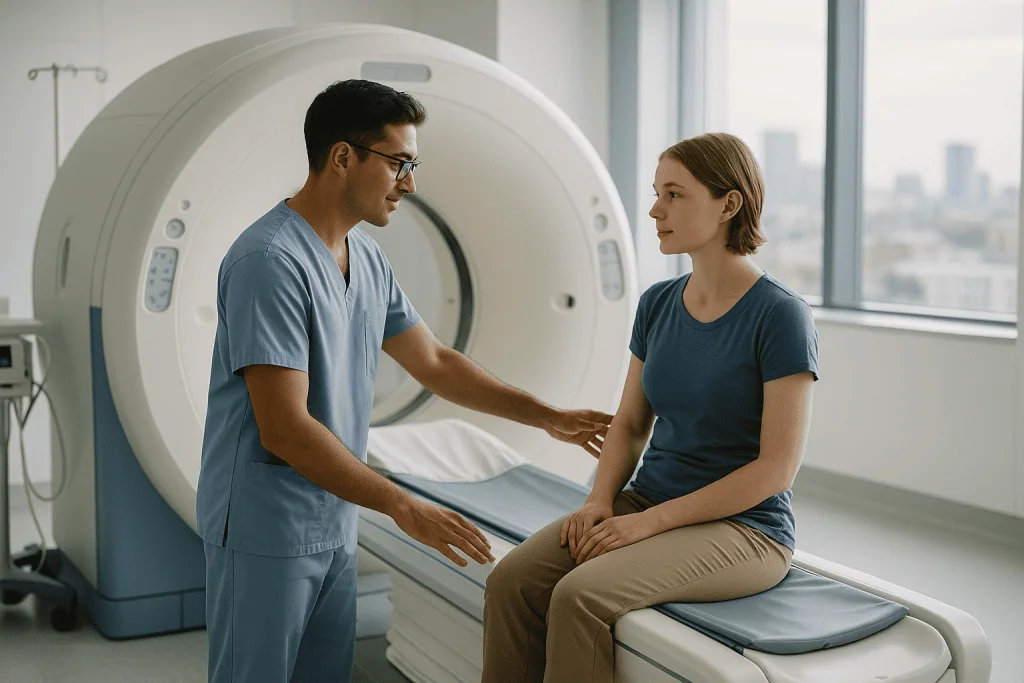
- Imaging studiesa computed tomography (CT) scan, which uses X-rays to create detailed cross-sectional pictures, is commonly used. Magnetic resonance imaging (MRI), CT or MR enterography (scans designed specifically to show the small bowel), and sometimes positron emission tomography (PET) scans help locate tumors and check for spread to lymph nodes or other organs.
- Barium X-ray studiesthe patient drinks a contrast liquid that coats the intestine, making abnormalities visible on X-rays; this is used less often today but can still be helpful.
- Biopsythe definitive test. A pathologist (a doctor who examines tissue under a microscope) confirms whether cancer is present and identifies the exact type, which guides treatment.
In some cases, when the tumor cannot be reached by endoscopy, the diagnosis is confirmed only during surgery. Once cancer is confirmed, doctors assign a stage, usually from stage I (small and confined to the intestinal wall) to stage IV (spread to distant organs such as the liver). Staging is central to planning small intestine cancer treatment.
Treatment options for small intestine cancer
Small intestine cancer treatment depends on the type of tumor, its location, the stage of the disease, and the patient’s overall health. Care is usually planned by a multidisciplinary team that includes surgeons, medical oncologists (cancer physicians who oversee drug-based treatment), radiation specialists, and gastroenterologists. At many centers, including Acibadem hospitals, drug-based cancer care is coordinated through the Medical Oncology Department. The main treatment approaches are:
Surgery
Surgery is the primary treatment for most small intestine cancers when the tumor can be removed. The surgeon removes the segment of intestine containing the tumor, along with nearby lymph nodes, and reconnects the healthy ends of the bowel. For tumors in the duodenum near the pancreas, a more extensive operation called a Whipple procedure (pancreaticoduodenectomy) may be needed; this removes part of the duodenum, part of the pancreas, and nearby structures. When a tumor cannot be fully removed but is blocking the intestine, surgery or the placement of a stent (a small tube that holds the passage open) may be used to relieve the obstruction and improve comfort.
Chemotherapy
Chemotherapy uses medicines that kill rapidly dividing cells or stop them from multiplying. It may be given after surgery to lower the chance of the cancer returning, or as the main treatment when the cancer has spread and surgery is not possible. Chemotherapy is a standard part of treatment for small intestine lymphoma and is often used for advanced adenocarcinoma. Side effects vary by drug but can include fatigue, nausea, hair thinning, and lowered blood counts; your care team can often manage these with supportive medications.
Targeted therapy and immunotherapy
Targeted therapies are drugs that act on specific molecular features of cancer cells. They play an important role in treating gastrointestinal stromal tumors (GISTs), which often respond to drugs that block a particular growth signal. Certain neuroendocrine tumors may be treated with hormone-blocking medications or other targeted agents. Immunotherapy, treatment that helps the immune system recognize and attack cancer cells, may be an option for some patients whose tumors have specific genetic features; testing the tumor tissue helps determine whether these approaches are suitable.
Radiation therapy
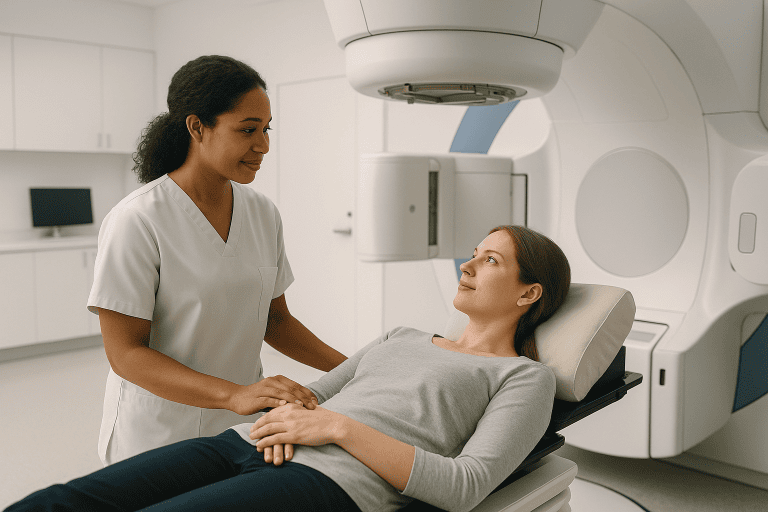
Radiation therapy uses high-energy beams to destroy cancer cells. It is used less often for small intestine cancer than for some other cancers, but it may help control symptoms such as pain or bleeding, or be part of treatment for certain lymphomas or tumors that cannot be removed.
Watchful waiting and supportive care
For some slow-growing neuroendocrine tumors, doctors may recommend a period of careful observation with regular scans and check-ups rather than immediate treatment, especially in older patients or when treatment risks outweigh likely benefits. At every stage, supportive (palliative) care, treatment focused on relieving symptoms such as pain, nausea, and poor appetite, can be combined with cancer-directed therapy to protect quality of life. Palliative care is not the same as end-of-life care; it can benefit patients at any point in treatment.
Living with small intestine cancer / outlook
The outlook for people with small intestine cancer varies widely and depends on the tumor type, the stage at diagnosis, whether the tumor can be completely removed, and the person’s general health. In general, cancers found early and removed surgically have a better outlook than cancers that have spread to lymph nodes or distant organs. Slow-growing neuroendocrine tumors often have a more favorable course than aggressive adenocarcinomas, and many people with GISTs respond well to targeted drugs for extended periods. No doctor can predict the future for an individual patient, and statistics describe groups of people rather than any single person, so it is best to discuss your own situation with your treatment team.
Life after treatment often includes regular follow-up visits, blood tests, and imaging to watch for recurrence. Some people who have had part of the intestine removed experience changes in digestion, such as diarrhea, cramping, or difficulty absorbing certain nutrients; a dietitian can help adjust eating habits, and vitamin or mineral supplements may be advised. Fatigue is common during and after treatment and usually improves gradually. Emotional support matters as much as physical care: many patients find counseling, support groups, or honest conversations with family helpful in coping with uncertainty. Keeping a record of symptoms and questions between appointments can make follow-up visits more productive.
Frequently asked questions
What is small intestine cancer in simple terms?
Small intestine cancer is a growth of abnormal cells in the small bowel, the tube between the stomach and the colon where food is digested and absorbed. It is a relatively rare cancer, and there are several types, including adenocarcinoma, neuroendocrine tumors, lymphoma, and GIST, each of which behaves and is treated somewhat differently.
Can small intestine cancer be cured?
In many cases, small intestine cancer that is found early and completely removed with surgery can be cured, meaning the cancer does not return. When the disease has spread beyond the intestine, a cure is less likely, but treatments such as chemotherapy and targeted therapy can often control the cancer, ease symptoms, and extend life. Outcomes depend heavily on the type and stage of the tumor, so your doctors are the best source of information about your individual outlook.
How serious is small intestine cancer?
Small intestine cancer is a serious condition that requires prompt evaluation and treatment. Because early symptoms are often vague, it is sometimes diagnosed at a later stage, which can make treatment more complex. However, seriousness varies considerably: some tumor types grow slowly and can be managed for many years, while others are more aggressive. A thorough staging workup helps doctors explain how serious the disease is in your specific case.
What are the first symptoms of small intestine cancer?
The earliest small intestine cancer symptoms are often mild and nonspecific, crampy abdominal pain, bloating, nausea, or feeling full quickly after meals. Some people first notice tiredness caused by anemia from slow, hidden bleeding, or unexplained weight loss. Because these symptoms overlap with many common digestive conditions, persistent or worsening symptoms should be checked by a doctor rather than assumed to be cancer.
How is small intestine cancer diagnosed?
Small intestine cancer diagnosis usually involves a combination of blood tests, imaging such as CT or MRI scans, and endoscopic examinations, including capsule endoscopy or balloon-assisted enteroscopy to view deep parts of the small bowel. The diagnosis is confirmed by a biopsy, in which a small tissue sample is examined under a microscope to identify the exact type of cancer.
What is the recovery like after surgery for small intestine cancer?
Recovery depends on the extent of the operation. After removal of a segment of intestine, many patients spend several days to a week or more in the hospital while bowel function returns, followed by weeks of gradual recovery at home. Larger operations, such as the Whipple procedure, generally require a longer recovery. Some people notice changes in digestion afterward, such as looser stools, which often improve over time and can be managed with diet adjustments and medication.
Who treats small intestine cancer?
Care usually involves a team: gastroenterologists who perform endoscopic tests, surgeons who remove tumors, medical oncologists who plan chemotherapy and targeted therapy, and radiation specialists when needed. In hospital systems such as Acibadem, medical oncologists typically coordinate drug-based treatment and long-term follow-up alongside the surgical team.
When to see a doctor
See a doctor promptly if you have digestive symptoms that persist for more than a few weeks, keep coming back, or steadily worsen, especially if you have a condition that raises your risk, such as Crohn’s disease, celiac disease, or an inherited polyp syndrome. Seek medical attention urgently if you experience any of the following red-flag warning signs:
- Severe, worsening abdominal pain with vomiting and inability to pass stool or gas, possible signs of a bowel obstruction, which is an emergency.
- Black, tarry stools or visible blood in the stoolsigns of bleeding in the digestive tract.
- Vomiting blood or material that looks like coffee grounds.
- Unexplained weight losslosing weight without changing your diet or activity.
- Yellowing of the skin or eyes (jaundice), dark urine, or pale stools.
- Persistent nausea, vomiting, or feeling full after very small meals.
- Ongoing fatigue, weakness, or shortness of breath that could indicate anemia.
Most of these symptoms are more often caused by conditions other than cancer, but they should never be ignored. Early evaluation gives doctors the best chance to find the cause, whatever it may be, and, if small intestine cancer is present, to treat it at the most manageable stage.
Medically reviewed by the Acıbadem International Medical Board September 3, 2026
See our medical review board →
Update history
- PublishedJune 9, 2026
- Medical review approvedSeptember 3, 2026
- Last content updateSeptember 3, 2026