Thyroid Disease
Learn about thyroid disease, including common symptoms of an underactive or overactive thyroid, likely causes, how doctors diagnose it, and treatment options.

Quick answer
Thyroid disease is any condition that stops the thyroid gland in the neck from working normally, most commonly an underactive thyroid (hypothyroidism) or an overactive thyroid (hyperthyroidism). Autoimmune conditions are frequent causes. It is diagnosed mainly with blood tests and, when needed, ultrasound, and is usually managed with medication, radioactive iodine, or surgery.
What is thyroid disease?
The thyroid is a small, butterfly-shaped gland at the front of the neck, just below the voice box. It makes thyroid hormones, chemical messengers that help control how fast the body uses energy, how the heart beats, how warm the body feels, and how many other organs work. Thyroid disease is a general term for any condition that stops the thyroid gland from working normally or changes its structure.
Understanding what is thyroid disease starts with knowing that it is not one single illness. The main groups are:
- Hypothyroidism (underactive thyroid): the gland makes too little hormone, so body processes slow down.
- Hyperthyroidism (overactive thyroid): the gland makes too much hormone, so body processes speed up.
- Goiter: an enlarged thyroid gland, which may or may not affect hormone levels.
- Thyroid nodules: lumps that form inside the gland. Most are not cancer, but some need further checks.
- Thyroiditis: inflammation of the thyroid, which can temporarily raise or lower hormone levels.
- Thyroid cancer: a less common condition in which abnormal cells grow in the gland.
Thyroid disease can affect people of any age, including children and older adults. It is diagnosed more often in women than in men, and it becomes more common with age. Many people live with a mild form for years before it is recognized, because the early signs can be subtle and easy to mistake for stress, aging, or other common problems.
Thyroid disease symptoms
Thyroid disease symptoms depend largely on whether the gland is underactive or overactive, and on how long the problem has been present. Because thyroid hormones influence almost every organ, the symptoms can be wide-ranging and often develop gradually.
Common symptoms of an underactive thyroid (hypothyroidism) include:
- Tiredness and low energy that does not improve with rest
- Weight gain without a clear change in eating habits
- Feeling cold when others are comfortable
- Dry skin, brittle nails, and thinning hair
- Constipation
- Slowed thinking, poor memory, or low mood
- A slow heart rate
- Heavy or irregular menstrual periods
- A puffy face or a hoarse voice
Common symptoms of an overactive thyroid (hyperthyroidism) include:
- Unintended weight loss despite a normal or increased appetite
- A fast, pounding, or irregular heartbeat
- Feeling anxious, irritable, or restless
- Trembling hands
- Sweating and heat intolerance
- Difficulty sleeping
- More frequent bowel movements
- Lighter or less frequent menstrual periods
- Bulging eyes or eye irritation, particularly in Graves’ disease
Some thyroid conditions cause few or no hormone-related symptoms. A goiter or a thyroid nodule may be noticed only as a swelling at the front of the neck, a feeling of pressure, difficulty swallowing, or a change in the voice. In many cases, nodules are found by chance during imaging done for another reason.
Symptoms also change with stage. Early or mild thyroid disease may cause only vague tiredness or small changes in weight. Long-standing, untreated hypothyroidism can lead to very slow heart rate, low body temperature, and confusion. Long-standing, untreated hyperthyroidism can strain the heart and weaken the bones. In older adults, symptoms are sometimes less obvious and may appear mainly as heart rhythm problems, memory changes, or falls.
Causes and risk factors
Thyroid disease causes vary by type. In most parts of the world where iodine intake is adequate, the most common cause of both underactive and overactive thyroid is an autoimmune problem. This means the body’s immune system, which normally fights infection, mistakenly attacks the thyroid gland.
Recognized causes include:
- Hashimoto’s thyroiditis: an autoimmune condition that gradually damages the gland and is the leading cause of hypothyroidism in many countries.
- Graves’ disease: an autoimmune condition that overstimulates the gland and is the most common cause of hyperthyroidism.
- Iodine imbalance: too little iodine in the diet can cause goiter and hypothyroidism, while excess iodine can trigger problems in susceptible people.
- Thyroid nodules that produce hormone: some nodules make hormone on their own, leading to an overactive thyroid.
- Thyroiditis: inflammation caused by a viral infection, pregnancy, or certain medicines can temporarily disturb hormone levels.
- Medical treatment: surgery to remove the thyroid, radioactive iodine therapy, or radiation to the neck can lead to hypothyroidism.
- Medicines: some drugs, including certain heart rhythm medicines and psychiatric medicines, can affect thyroid function.
- Pituitary problems: rarely, a disorder of the pituitary gland in the brain, which signals the thyroid, causes low thyroid hormone.
- Congenital hypothyroidism: some babies are born with a thyroid that is missing or does not work properly.
Risk factors that make thyroid disease more likely include being female, being over 60, having a family history of thyroid or autoimmune disease, having another autoimmune condition such as type 1 diabetes or celiac disease, having had radiation to the head or neck, recent pregnancy, and smoking, which is linked in particular to Graves’ eye disease. Having one or more risk factors does not mean a person will develop thyroid disease, and some people with no known risk factors are affected.
Thyroid disease diagnosis
Thyroid disease diagnosis usually begins with a conversation about symptoms and a physical examination. The doctor may feel the neck for swelling or lumps, check the pulse, look at the skin and eyes, and test the reflexes. Because symptoms alone are not specific, laboratory tests are needed to confirm the diagnosis.
The main tests include:
- TSH blood test: TSH (thyroid-stimulating hormone) is released by the pituitary gland to tell the thyroid how much hormone to make. A high TSH usually suggests an underactive thyroid; a low TSH usually suggests an overactive thyroid. This is typically the first and most useful test.
- Free T4 and T3 blood tests: these measure the actual thyroid hormones in the blood and help confirm how severe the problem is.
- Thyroid antibody tests: these look for immune proteins that point to autoimmune conditions such as Hashimoto’s thyroiditis or Graves’ disease.
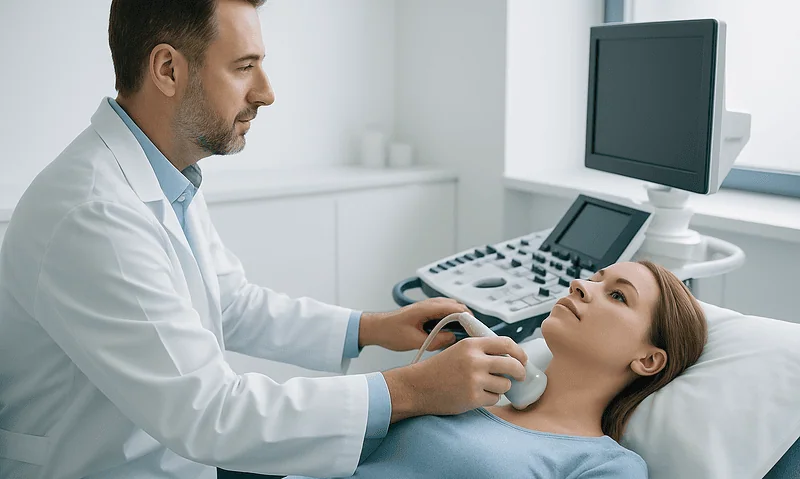
- Thyroid ultrasound: a painless scan using sound waves that shows the size of the gland and the appearance of any nodules.
- Radioactive iodine uptake scan: a small dose of radioactive iodine is taken, and a camera shows how the gland absorbs it. This helps explain the cause of hyperthyroidism and shows whether a nodule is producing hormone.
- Fine-needle aspiration biopsy: a thin needle removes a few cells from a nodule so they can be checked under a microscope for cancer. This is often guided by ultrasound.
Doctors interpret these results together with the clinical picture. A single mildly abnormal result may be repeated after several weeks, because illness, pregnancy, and certain medicines can temporarily change thyroid levels. The term subclinical thyroid disease is used when TSH is abnormal but the actual hormone levels are still within the normal range; in these cases, monitoring rather than treatment may be recommended.
Thyroid disease treatment options
Thyroid disease treatment options depend on the type of condition, its cause, its severity, the person’s age, and any other health problems. Treatment is usually managed by an endocrinologist, a doctor who specializes in hormone disorders, sometimes together with a surgeon or a nuclear medicine specialist.
Observation and monitoring. Mild or subclinical thyroid problems, small non-cancerous nodules, and some forms of temporary thyroiditis may not need immediate treatment. Your doctor may suggest repeat blood tests or ultrasound at set intervals to see whether the condition changes.
Medication for an underactive thyroid. Hypothyroidism is most often treated with levothyroxine, a tablet that replaces the missing hormone. The dose is adjusted gradually based on blood tests, and treatment is usually lifelong. Taking the tablet consistently, typically on an empty stomach and apart from certain supplements such as iron or calcium, helps the body absorb it properly.
Medication for an overactive thyroid. Antithyroid medicines such as methimazole reduce the amount of hormone the gland produces. Beta-blockers, which slow the heart, may be used for a short period to ease palpitations, trembling, and anxiety while other treatments take effect. Some people with Graves’ disease go into remission after a course of antithyroid medicine, while others need longer-term treatment or a more definitive option.
Radioactive iodine therapy. A capsule or liquid containing radioactive iodine is taken by mouth. The thyroid absorbs the iodine, and the radiation gradually shrinks overactive tissue. It is commonly used for hyperthyroidism and, at higher doses, after surgery for certain thyroid cancers. It often leads to hypothyroidism afterward, which is then treated with levothyroxine.
Surgery. Removing part or all of the thyroid, called a thyroidectomy, may be recommended for thyroid cancer, large goiters that press on the windpipe or food pipe, nodules that are suspicious or growing, or hyperthyroidism that has not responded to other treatments. Surgery is performed by specialists in endocrine or general surgery, depending on the hospital; at Acibadem, thyroid operations are managed within the general surgery and endocrine surgery teams. After total thyroidectomy, lifelong hormone replacement is needed. Risks that the surgical team will discuss include changes to the voice from nerve injury and low calcium levels from disturbance of the nearby parathyroid glands.
Treatment for thyroid cancer. Most thyroid cancers are treated with surgery, sometimes followed by radioactive iodine and long-term hormone therapy. Less common types may need additional treatments such as targeted medicines or external radiation. The treatment plan depends on the exact type and extent of the cancer.
Supportive care and rehabilitation. After surgery or radioactive iodine, recovery may include voice exercises, calcium and vitamin D supplements for a period, and regular follow-up blood tests to fine-tune hormone doses. People with Graves’ eye disease may also need eye lubricants, steroid treatment, or eye specialist input.
Living with thyroid disease and outlook
For most people, thyroid disease is a long-term condition that can be controlled rather than cured. With the right dose of medication and regular monitoring, many people with hypothyroidism feel well and live normal lives. Symptoms often improve within weeks of starting treatment, although it may take several months to find the ideal dose, and some people notice that tiredness or weight changes settle more slowly.
Hyperthyroidism is often controlled effectively, but the course varies. Some people achieve lasting remission with medicine, while others eventually need radioactive iodine or surgery, after which hormone replacement is usually required. Regular follow-up is important because thyroid needs can change with age, pregnancy, weight changes, and new medicines.
Most thyroid nodules remain harmless, and the majority of thyroid cancers, particularly the most common types, respond well to treatment when found early. However, outcomes depend on the type and stage, and follow-up is generally continued for many years.
Day-to-day, people living with thyroid disease are often advised to take medication at the same time each day, attend scheduled blood tests, tell every healthcare provider about their condition, and report new symptoms rather than adjusting doses on their own. Women who are pregnant or planning pregnancy usually need closer monitoring, because thyroid hormone requirements often rise during pregnancy and untreated thyroid disease can affect the baby.
Frequently asked questions
What is thyroid disease and is it serious?
Thyroid disease is any condition that affects the thyroid gland’s structure or its ability to produce the right amount of hormone. Many forms are mild and easily managed with medication. Untreated or severe disease can, over time, affect the heart, bones, mood, and fertility, so it is worth having symptoms assessed rather than ignored.
What are the first thyroid disease symptoms people notice?
Early thyroid disease symptoms are often vague. People with an underactive thyroid may first notice tiredness, feeling cold, or unexplained weight gain. People with an overactive thyroid may notice a racing heart, anxiety, or weight loss. Because these symptoms overlap with many other conditions, a blood test is needed to know whether the thyroid is responsible.
What are the most common thyroid disease causes?
In many countries, the most common thyroid disease causes are autoimmune conditions, mainly Hashimoto’s thyroiditis for an underactive thyroid and Graves’ disease for an overactive thyroid. Iodine deficiency, nodules, inflammation, previous thyroid treatment, and certain medicines are other recognized causes. In some cases, no specific cause is identified.
How is thyroid disease diagnosis confirmed?
Thyroid disease diagnosis is confirmed with blood tests, usually starting with TSH and often followed by free T4, T3, and antibody tests. If the gland is enlarged or a lump is felt, an ultrasound is commonly performed, and a nodule may be sampled with a fine needle. Your doctor may repeat a borderline result before making a diagnosis.
What thyroid disease treatment options are available without surgery?
Most thyroid disease treatment options do not involve surgery. An underactive thyroid is usually treated with daily hormone tablets, and an overactive thyroid is often treated with antithyroid medicines or radioactive iodine. Surgery is generally reserved for cancer, large goiters, suspicious nodules, or hyperthyroidism that has not responded to other approaches.
Can thyroid disease go away on its own?
Some forms, such as thyroiditis after a viral infection or after pregnancy, can resolve on their own within months. Autoimmune hypothyroidism is usually permanent and needs lifelong treatment. Some people with Graves’ disease go into remission after medication, but relapse is possible, so ongoing monitoring is typically advised.
Does thyroid disease affect weight, and will treatment change it?
Thyroid hormone affects how the body uses energy, so an underactive thyroid can contribute to modest weight gain and an overactive thyroid to weight loss. Correcting hormone levels often helps, but the effect on weight is usually limited, and treatment alone does not guarantee a return to a previous weight.
When to see a doctor
It is reasonable to arrange a medical review if you notice persistent tiredness, unexplained weight change, a swelling or lump in the neck, changes in heart rate, or other symptoms described above, especially if you have a family history of thyroid problems. Some situations need urgent medical attention. Seek emergency care if you or someone else has:
- A very fast or irregular heartbeat with chest pain, breathlessness, or fainting
- High fever, severe agitation, or confusion together with a known or suspected overactive thyroid, which can signal a rare emergency called thyroid storm
- Extreme drowsiness, very low body temperature, or unresponsiveness in someone with known hypothyroidism, which can signal a rare emergency called myxedema coma
- A neck swelling that is rapidly enlarging or causing difficulty breathing or swallowing
- Sudden severe eye pain, double vision, or loss of vision in someone with Graves’ disease
- Fever or severe sore throat while taking antithyroid medicine, which may indicate a dangerous drop in white blood cells
For non-urgent concerns, a primary care doctor can arrange the initial blood tests and, if needed, refer you to an endocrinologist. At Acibadem, thyroid conditions are assessed by endocrinology, with surgical cases managed by the general surgery department.
From the Acibadem Blog

T3 vs T4: The Two Thyroid Hormones and What Each Test Shows
T4 (thyroxine) is the thyroid's main product, a stable hormone that circulates for about a week; T3 (triiodothyronine) is the shorter-lived, more potent active…
TSH Normal Range: How to Read Your Thyroid Test Without Panic
For most adults, a TSH between roughly 0.4 and 4.0 mIU/L is considered normal, though the exact reference range varies by lab, age, and…
Medically reviewed by the Acıbadem International Medical Board September 9, 2026
See our medical review board →
Update history
- PublishedSeptember 9, 2026
- Medical review approvedSeptember 9, 2026
- Last content updateSeptember 9, 2026