Quick answer
Vitiligo is a long-term skin condition in which pigment-producing cells are lost, causing well-defined white patches on the skin and sometimes changes in hair color. Treatment focuses on restoring or evening skin color and may include topical medicines, light-based therapies, and selected procedural options, with care tailored after dermatologic evaluation at Acibadem in Turkey.
What is vitiligo?
Vitiligo is a long-term skin condition in which patches of skin lose their natural color and turn lighter than the surrounding skin, often appearing milky white. This happens because the cells that produce skin pigment, called melanocytes, stop working or are destroyed. The pigment they normally make is called melanin, which gives skin, hair, and eyes their color. When melanocytes are lost in an area of skin, that area can no longer produce melanin, and a pale or white patch develops.
For many people, the first question is simply: what is vitiligo, and is it dangerous? Vitiligo is not contagious, meaning it cannot be passed from person to person through touch, and it is not a form of skin cancer. It is generally considered a chronic autoimmune condition, which means the body’s own immune system mistakenly attacks healthy cells, in this case, the pigment-producing cells of the skin.
Vitiligo can affect people of any age, sex, or skin type, and it occurs in populations around the world. It often begins before the age of 30, although it can start at any point in life. The patches may be more noticeable in people with darker skin because of the greater contrast between affected and unaffected skin, but the condition itself occurs at similar rates across skin tones. Vitiligo is usually managed by a dermatologist, a doctor who specializes in conditions of the skin, hair, and nails.
Symptoms of vitiligo
The main sign of vitiligo is the loss of skin color in patches. These patches are usually painless and do not itch in most cases, although some people notice mild itching before or during the appearance of a new patch. Recognizing vitiligo symptoms early can help you and your doctor track how the condition is behaving over time.
Common vitiligo symptoms include:
- White or light-colored patches of skin that often start small and may slowly enlarge or spread
- Patches with fairly clear borders between the lighter skin and the normally colored skin around it
- Early graying or whitening of hair on the scalp, eyebrows, eyelashes, or beard
- Loss of color inside the mouth or nose, on the moist tissue called mucous membranes
- Patches that appear symmetrically on both sides of the body, such as both hands or both knees, in the most common form of the condition
- Increased sensitivity to sunburn in the affected areas, because they lack the protective pigment melanin
Vitiligo often first appears on areas that are exposed to the sun or experience friction, such as the hands, face, arms, feet, and around body openings like the eyes, mouth, and nose. It can also affect the armpits, groin, and areas around the genitals.
How symptoms differ by type
Doctors generally describe two broad types of vitiligo, and the pattern of symptoms differs between them. In non-segmental vitiligo, the most common type, patches usually appear on both sides of the body in a roughly mirror-image pattern. This type may progress in cycles, with periods of new patches appearing followed by periods of stability. In segmental vitiligo, the patches appear on only one side or one segment of the body. This type often begins at a younger age, tends to spread for a limited time, and then usually stabilizes. Some people have only a few small patches (sometimes called focal or localized vitiligo), while in rare cases the condition affects most of the body surface, which doctors call universal vitiligo.
The course of vitiligo is hard to predict. In some people the patches remain stable for years; in others they spread gradually or in bursts. Occasionally, small areas of pigment return on their own, especially around hair follicles, but complete natural repigmentation of large patches is uncommon.
Causes and risk factors
The exact vitiligo causes are not fully understood, but research points to a combination of factors rather than a single cause. The most widely accepted explanation is that vitiligo is an autoimmune condition: the immune system, which normally defends the body against infection, mistakenly targets and destroys melanocytes, the pigment-producing cells in the skin.
Factors that are believed to contribute to vitiligo include:
- Autoimmune activity: The immune system attacks melanocytes. People with vitiligo also have a somewhat higher chance of having other autoimmune conditions, such as autoimmune thyroid disease, type 1 diabetes, pernicious anemia (a vitamin B12–related blood condition), or alopecia areata (an autoimmune form of hair loss).
- Genetics: Vitiligo can run in families. Having a close relative with vitiligo or another autoimmune disease modestly increases the chance of developing it, although most children of people with vitiligo never develop the condition.
- Triggering events: In some people, a specific event seems to set off the first patches or a period of spread. Reported triggers include significant sunburn, skin injury, severe emotional stress, or certain chemical exposures. A related phenomenon, called the Koebner response, describes new vitiligo patches appearing at sites of skin trauma such as cuts, scrapes, or friction.
- Oxidative stress: Some research suggests that an imbalance of damaging molecules inside melanocytes may make these cells more vulnerable, contributing to their loss.
It is important to know what does not cause vitiligo. It is not caused by an infection, and it is not the result of poor hygiene or anything a person did wrong. Diet alone does not cause vitiligo, and no specific food has been proven to cure it. Because it is not contagious, there is no risk of “catching” vitiligo from another person.
Diagnosis
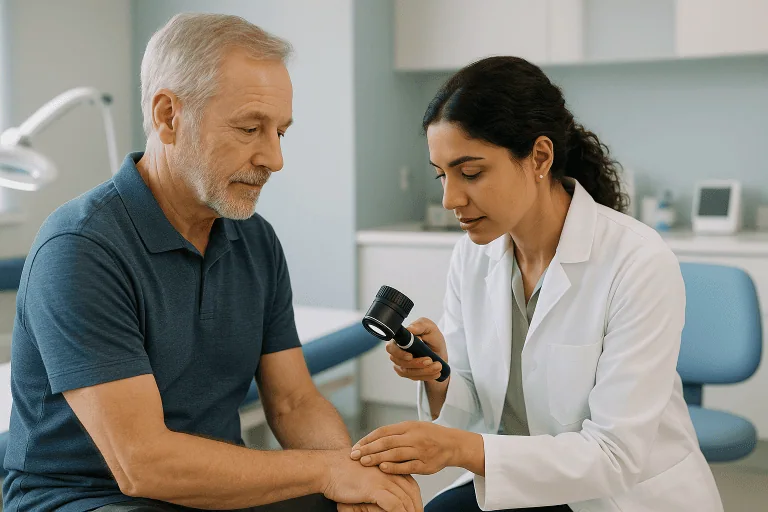
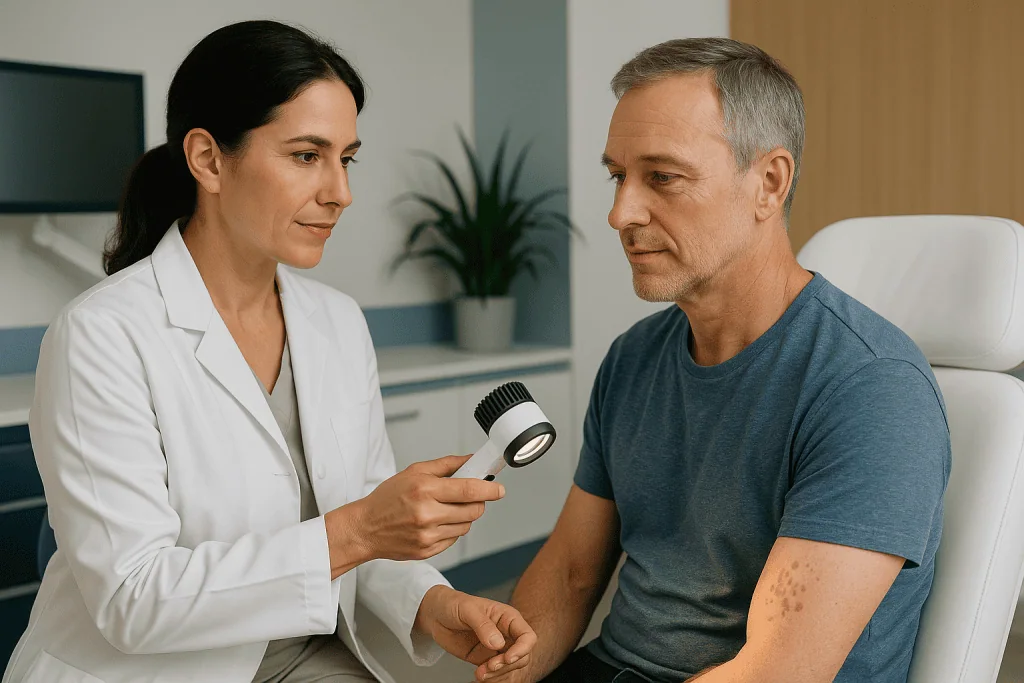
Vitiligo diagnosis is usually straightforward for an experienced dermatologist and is based primarily on a careful examination of the skin combined with your medical history. There is no single blood test that confirms vitiligo, but several steps help doctors confirm the diagnosis and rule out other conditions that can cause light patches on the skin.
A typical diagnostic process may include:
- Medical history: Your doctor will ask when the patches first appeared, whether they have spread, whether anyone in your family has vitiligo or autoimmune diseases, and whether you have noticed any triggers such as sunburn or skin injury.
- Physical examination: The doctor examines the pattern, borders, and distribution of the patches across the body, including areas you may not have noticed.
- Wood’s lamp examination: This is a handheld ultraviolet (UV) light used in a darkened room. Under this light, vitiligo patches typically glow a bright bluish-white, which helps the doctor distinguish vitiligo from other causes of light skin patches, such as fungal infections, post-inflammatory pigment loss (lightening after a rash or injury), or a common harmless condition called pityriasis alba.
- Blood tests: Because vitiligo is associated with other autoimmune conditions, your doctor may order blood tests to check thyroid function, blood sugar, vitamin B12 levels, or certain antibodies. These tests do not diagnose vitiligo itself; they screen for related conditions.
- Skin biopsy (occasionally): In rare or unclear cases, the doctor may take a very small sample of skin to examine under a microscope. In vitiligo, the sample typically shows an absence of melanocytes in the affected skin.
Imaging tests such as X-rays or scans are not needed to diagnose vitiligo. During follow-up visits, doctors often photograph the patches or use scoring tools to measure how much of the body is affected and whether the condition is stable, spreading, or repigmenting. This monitoring guides treatment decisions over time.
Treatment options
There is currently no cure that reliably and permanently restores pigment for everyone, but a range of vitiligo treatment options can slow the spread of patches, restore color in many cases, or even out skin tone. The best approach depends on the type and extent of the vitiligo, how active it is, its location on the body, your age, your skin tone, and your personal goals. It is also completely reasonable to choose no medical treatment at all, since vitiligo does not harm physical health in most cases; treatment is a personal choice.
Detailed information about how this condition is evaluated and managed is available on the dedicated vitiligo page, and care is typically coordinated through a dermatology department.
Watchful waiting and sun protection
For small, stable patches, doctors may recommend monitoring the skin without active treatment. Regardless of whether treatment is used, sun protection is important: vitiligo patches lack melanin and burn easily, and sunburn can trigger new patches in some people. Daily broad-spectrum sunscreen, protective clothing, and avoiding intense midday sun are standard advice. Cosmetic camouflage products, such as tinted creams or self-tanning lotions, can help blend patches with surrounding skin and are safe for most people.
Topical medications
Medications applied directly to the skin are often the first active treatment, especially for limited areas. These may include corticosteroid creams (anti-inflammatory medicines that calm immune activity in the skin) and calcineurin inhibitors such as tacrolimus or pimecrolimus, which also reduce local immune activity and are often preferred for delicate areas like the face and eyelids. In some regions, newer topical medicines that target specific immune signaling pathways, known as JAK inhibitors, have been approved for vitiligo; availability varies by country. Topical treatments generally require months of consistent use, and results vary from person to person.
Phototherapy (light treatment)
Phototherapy uses controlled doses of ultraviolet light to stimulate remaining pigment cells and calm immune activity in the skin. Narrowband UVB phototherapy is a widely used option for more widespread vitiligo and is usually given in a clinic two to three times per week over several months. For smaller patches, a targeted device called an excimer laser or lamp can deliver similar light to limited areas. Repigmentation, when it occurs, often begins around hair follicles and appears as small dots of returning color that gradually merge. Areas such as the face often respond better than the hands and feet.
Oral and systemic medications
When vitiligo is spreading quickly, doctors may use short courses of oral medicines that calm the immune system, such as corticosteroids taken by mouth, to help stabilize the condition. These are typically used for limited periods because of potential side effects, and always under medical supervision.
Surgical options
For vitiligo that has been stable for a long period, usually at least six to twelve months without new or growing patches, surgical techniques may be considered. These procedures move healthy pigment cells or small pieces of pigmented skin from an unaffected area into a vitiligo patch. Techniques include skin grafting (transplanting thin pieces of skin), blister grafting (transferring the top layer of skin raised by suction), and cellular transplantation (transferring a suspension of melanocytes). Surgery is generally reserved for stable, limited patches, often works best for segmental vitiligo, and is not suitable for actively spreading disease.
Depigmentation
In rare cases where vitiligo affects most of the body, some adults choose depigmentation, a treatment that gradually removes the remaining pigment so the skin tone becomes uniform. This is a permanent decision that requires careful counseling, because the resulting skin is highly sensitive to the sun for life.
Psychological support
Because visible skin changes can affect self-esteem, mood, and social life, emotional support is a recognized part of vitiligo care. Counseling or support groups can help, and this aspect of care should not be overlooked.
Living with vitiligo and outlook
Vitiligo is a chronic condition, and its course varies widely from person to person. Some people have a few patches that never change; others experience gradual or episodic spread over the years. With treatment, many people regain some pigment, particularly on the face and trunk, but repigmentation is rarely complete, and patches can sometimes return after treatment stops. No doctor can guarantee a specific outcome, and honest expectations are an important part of choosing a treatment plan.
Physically, vitiligo itself does not cause pain or damage internal organs. The main medical considerations are protecting depigmented skin from sunburn and screening for associated autoimmune conditions, especially thyroid disease, which your doctor may check periodically. People with vitiligo affecting the areas around the eyes or ears occasionally have related changes in eye pigment or hearing, so mention any vision or hearing changes to your doctor.
The emotional impact of vitiligo can be significant, particularly when patches affect the face or hands. Feelings of self-consciousness, anxiety, or low mood are common and valid. Many people find it helpful to connect with patient support communities, learn camouflage techniques, or speak with a mental health professional. Over time, many people adapt well and live full, healthy lives with vitiligo. Public awareness of the condition has grown considerably, which has helped reduce stigma in many communities.
Practical everyday measures include using sunscreen daily on exposed patches, moisturizing regularly, avoiding harsh friction or trauma to the skin where possible, and keeping follow-up appointments so your care team can track whether the condition is stable or active.
Frequently asked questions
What is vitiligo in simple terms?
Vitiligo is a condition in which the immune system attacks the cells that give skin its color, causing white or light patches to appear. It is not an infection, it is not contagious, and it is not skin cancer. It can affect anyone, at any age, and on any part of the body, and it is usually diagnosed and managed by a dermatologist.
Can vitiligo go away on its own?
Occasionally, small areas of pigment return without treatment, often appearing as tiny dots of color around hair follicles. However, complete natural recovery of larger patches is uncommon, and in many people the condition remains stable or slowly spreads. Because the course is unpredictable, doctors usually recommend monitoring the skin over time rather than assuming it will resolve by itself.
Is vitiligo dangerous or a sign of something serious?
Vitiligo itself is not dangerous and does not shorten life expectancy. The main physical concern is that depigmented skin sunburns easily, so sun protection is important. Because vitiligo is linked to other autoimmune conditions such as thyroid disease, your doctor may recommend occasional blood tests to check for these, but many people with vitiligo have no other health problems.
What is the most effective vitiligo treatment?
There is no single treatment that works best for everyone. Topical medicines, phototherapy, and, in selected stable cases, surgical pigment transfer can all restore color in many patients, and combinations are often more effective than a single approach. The face and trunk generally respond better than the hands and feet. Your doctor can help you weigh the options based on the extent, activity, and location of your patches.
Does vitiligo spread, and can spreading be stopped?
Vitiligo can spread, sometimes slowly and sometimes in more active bursts, although some people’s patches stay unchanged for years. When the condition is actively spreading, doctors may use medications or phototherapy to help stabilize it, and this is often successful in slowing or halting new patches. Avoiding sunburn and skin trauma may also help, since injured skin can develop new patches in some people.
Is vitiligo hereditary, will my children get it?
Genetics play a role, and vitiligo can run in families, but inheritance is not straightforward. Most children of a parent with vitiligo never develop the condition. Having a family history modestly raises the chance, but many other factors are involved, so a family history should not be a cause for alarm.
How long does vitiligo treatment take to show results?
Repigmentation is a slow biological process. Topical treatments and phototherapy typically require several months of consistent use before meaningful color returns, and full courses of light therapy often continue for six to twelve months or longer. Results vary by individual and by body area, and your doctor will usually reassess progress periodically to decide whether to continue, adjust, or change the approach.
When to see a doctor
You should see a doctor whenever you notice new areas of skin losing color, so the diagnosis can be confirmed and other conditions ruled out. Early evaluation is also useful because actively spreading vitiligo may respond better when treatment starts sooner. Specialist assessment is typically provided through a dermatology service, such as the one at Acibadem, or an equivalent skin clinic in your area.
Seek medical advice promptly if you notice any of the following:
- Rapidly spreading white patches or many new patches appearing over weeks
- A light patch that changes texture, becomes raised, scaly, bleeds, or develops a sore that does not heal: these features are not typical of vitiligo and need evaluation to exclude other skin conditions, including skin cancer
- Severe or blistering sunburn on depigmented skin
- Symptoms of possible thyroid or other autoimmune problems, such as unexplained fatigue, weight change, palpitations, or persistent weakness
- New vision changes, eye pain, or hearing changes, which should always be assessed by a doctor
- Significant emotional distress, anxiety, or low mood related to the skin changes, psychological support is a legitimate part of care
Vitiligo is a manageable condition, and a dermatologist can help you understand your specific pattern, monitor its activity, and choose an approach, whether that means active treatment, camouflage, or simply informed observation, that fits your health and your preferences.
Medically reviewed by the Acıbadem International Medical Board September 2, 2026
See our medical review board →
Update history
- PublishedJune 14, 2026
- Medical review approvedSeptember 2, 2026
- Last content updateSeptember 2, 2026