Quick answer
Vulvar cancer is a malignancy that starts in the external female genital area, often involving the labia or surrounding skin, and is treated according to its type and stage. At Acibadem in Turkey, care typically includes gynecologic oncology evaluation, imaging and biopsy-based diagnosis, followed by surgery and, when needed, radiotherapy, chemotherapy, or targeted supportive care.
What is vulvar cancer?
Vulvar cancer is a type of cancer that starts in the vulva, which is the outer part of the female genitals. The vulva includes the inner and outer lips of the vagina (called the labia), the clitoris, and the opening of the vagina. Most vulvar cancers begin in the labia, especially the outer lips. When people ask what is vulvar cancer, the simplest answer is that it is an abnormal growth of cells in the skin or tissue of the vulva that can spread to nearby areas if it is not treated.
Vulvar cancer is uncommon compared with many other cancers. It most often affects women after menopause, and the average age at diagnosis is typically in the sixties or seventies. However, it can also occur in younger women, particularly when it is linked to infection with human papillomavirus (HPV), a common virus that spreads through skin-to-skin and sexual contact.
The most frequent type is squamous cell carcinoma, which develops in the thin, flat cells that cover the surface of the vulvar skin. Less common types include melanoma (a cancer of the pigment-producing cells), adenocarcinoma (a cancer that starts in gland cells, such as the Bartholin glands near the vaginal opening), and, rarely, sarcoma (a cancer of connective tissue) or basal cell carcinoma. Vulvar cancer often develops slowly over years, and in many cases it is preceded by a precancerous skin change called vulvar intraepithelial neoplasia (VIN), in which abnormal cells are present but have not yet become invasive cancer.
Symptoms of vulvar cancer
Vulvar cancer symptoms can be subtle at first and are sometimes mistaken for common, harmless conditions such as yeast infections or skin irritation. Because of this, many women live with symptoms for months before seeing a doctor. Recognizing persistent changes early is important, because vulvar cancer is generally easier to treat when it is found at an early stage.
Common vulvar cancer symptoms include:
- Persistent itching of the vulva that does not go away with usual creams or treatments
- A lump, wart-like growth, or open sore (ulcer) on the vulva that does not heal
- Skin changes, such as an area that looks thicker, raised, or a different color (red, white, or darker than the surrounding skin)
- Pain, burning, or tenderness in the vulvar area, sometimes worse when urinating
- Bleeding or discharge that is not related to a menstrual period
- Pain during sexual intercourse
- A mole on the vulva that changes in size, shape, or color, which may suggest melanoma
Symptoms can differ depending on the stage and type of the cancer. In the early or precancerous stage (VIN), there may be only mild itching or a small patch of changed skin, and some women have no symptoms at all. As an invasive cancer grows, a visible lump or sore usually becomes more obvious, and pain or bleeding may develop. In more advanced disease, the cancer can spread to lymph nodes in the groin, which are small glands that filter fluid in the body; this may cause a swelling or lump in the groin. Vulvar melanoma often appears as a dark or irregular spot, while adenocarcinoma of a Bartholin gland may feel like a lump near the vaginal opening that can be confused with a harmless cyst.
Having one or more of these symptoms does not mean you have cancer, since infections, skin conditions such as lichen sclerosus (a chronic inflammatory skin disease), and benign cysts can cause similar problems. However, any change that lasts more than a few weeks should be checked by a doctor.
Causes and risk factors
Like most cancers, vulvar cancer develops when cells acquire changes (mutations) in their genetic material that make them grow in an uncontrolled way. The exact vulvar cancer causes are not fully understood in every case, but doctors have identified two main pathways that lead to the disease, along with several factors that raise the risk.
The first pathway is linked to human papillomavirus (HPV). Certain high-risk strains of HPV, particularly HPV 16, can cause long-lasting infection of the vulvar skin. Over time, this can lead to precancerous changes (VIN) and eventually invasive cancer. HPV-related vulvar cancer tends to occur in younger women. The second pathway is not related to HPV and usually occurs in older women. It is often associated with chronic inflammatory skin conditions of the vulva, especially lichen sclerosus, which causes long-term itching, thinning, and whitening of the vulvar skin.
Known risk factors for vulvar cancer include:
- Older age, with risk rising after menopause
- HPV infection, especially persistent infection with high-risk strains
- Vulvar intraepithelial neoplasia (VIN), a precancerous condition
- Lichen sclerosus and other chronic vulvar skin conditions
- Smoking, which increases risk on its own and further raises risk in women with HPV
- A weakened immune system, for example due to HIV infection or medicines that suppress immunity after an organ transplant
- A history of cervical cancer or precancerous cervical changes, because these share HPV as a cause
Having risk factors does not mean a woman will develop vulvar cancer, and some women who develop it have no clear risk factors. HPV vaccination, which protects against the strains most likely to cause cancer, and quitting smoking are two steps that can lower risk. Treating and monitoring conditions such as lichen sclerosus may also help catch precancerous changes early.
Diagnosis
Vulvar cancer diagnosis begins with a careful conversation about your symptoms and medical history, followed by a physical examination. The doctor will examine the vulva, vagina, and often the cervix, and will feel the groin for enlarged lymph nodes. In some cases, the doctor uses a colposcope, a magnifying instrument with a light, to look closely at any suspicious area. This examination of the vulva is sometimes called vulvoscopy.
The only way to confirm vulvar cancer is with a biopsy, in which a small sample of tissue is removed from the abnormal area and examined under a microscope by a pathologist (a doctor who studies tissue samples). A biopsy of the vulva can usually be done in the clinic using local anesthetic, which numbs the area. The biopsy shows whether cancer is present, what type it is, and how deeply it has grown into the tissue.
If cancer is confirmed, further tests help determine the stagehow large the tumor is and whether it has spread. Staging is essential because it guides treatment. Depending on the situation, your doctor may recommend:
- Imaging tests, such as computed tomography (CT), magnetic resonance imaging (MRI), or positron emission tomography (PET) scans, to look for spread to lymph nodes or other organs
- Examination under anesthesia, in which the doctor examines the vulva, vagina, bladder, or rectum while you are asleep, to assess how far the tumor extends
- Cystoscopy or proctoscopy, which use thin viewing instruments to check the inside of the bladder or rectum if spread to these organs is suspected
- Sentinel lymph node biopsy, a procedure that identifies and removes the first lymph node or nodes the cancer would be likely to reach, to check whether cancer cells have spread there
Doctors describe the stage using an internationally accepted system, ranging from early-stage disease confined to the vulva to advanced disease that has spread to lymph nodes or distant organs. Understanding the stage allows the care team to recommend a treatment plan tailored to your situation.
Treatment options for vulvar cancer
Vulvar cancer treatment depends on the type of cancer, its stage, its location on the vulva, and your overall health and preferences. Care is usually planned by a multidisciplinary team, meaning specialists from different fields, such as gynecologic oncology (surgeons who specialize in cancers of the female reproductive organs), radiation oncology, and medical oncology, who work together. In many hospital groups, systemic drug treatment is coordinated through a medical oncology department, while surgery is performed by gynecologic oncology surgeons.
Surgery
Surgery is the main treatment for most vulvar cancers, especially in early stages. The goal is to remove the cancer completely while preserving as much normal tissue and function as possible. Options include:
- Local excision, which removes the tumor along with a margin of healthy tissue around it; this is often sufficient for small, early cancers
- Partial or radical vulvectomy, which removes part or all of the vulva when the cancer is larger or involves several areas
- Lymph node surgery, either a sentinel lymph node biopsy for selected early cancers or removal of the groin lymph nodes (lymphadenectomy) when spread is suspected or confirmed
For precancerous changes (VIN), doctors may use less extensive treatments, such as removing or destroying the abnormal skin with surgery or laser therapy, or in some cases applying a prescription cream that stimulates the immune system. Close follow-up rather than immediate surgery, a form of careful monitoring, may be appropriate for some low-grade precancerous changes, but true watchful waiting is generally not recommended once invasive cancer has been diagnosed.
Radiation therapy
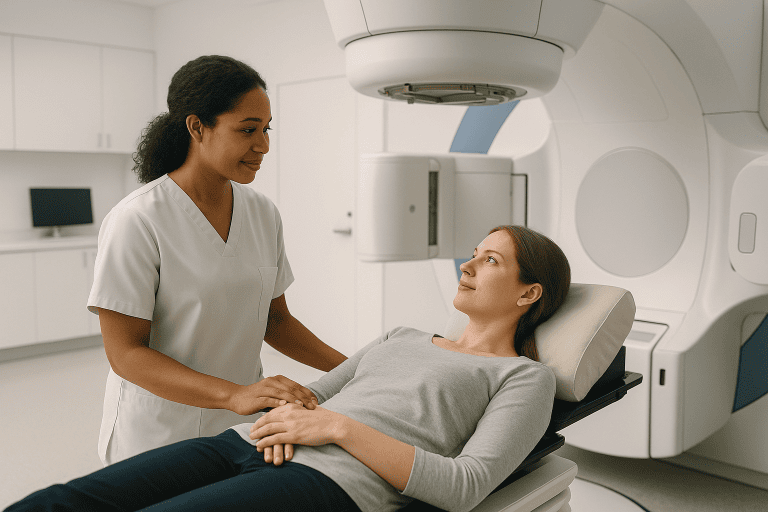
Radiation therapy uses high-energy beams to destroy cancer cells. It may be recommended after surgery if there is a higher risk of the cancer returning, for example when cancer is found in lymph nodes. It can also be used before surgery to shrink a large tumor, or instead of surgery when an operation is not possible. Radiation to the vulva and groin can cause skin irritation, fatigue, and other side effects, which the care team helps to manage.
Chemotherapy and other medicines
Chemotherapy uses drugs that kill rapidly dividing cells. In vulvar cancer, it is often combined with radiation (chemoradiation) to make the radiation more effective, particularly for locally advanced tumors. Chemotherapy may also be used when the cancer has spread to distant parts of the body. For some advanced cancers, doctors may consider newer approaches such as immunotherapy, which helps the body’s immune system recognize and attack cancer cells; whether these options are suitable depends on the specific features of the tumor and is decided case by case.
Follow-up care
After treatment, regular follow-up visits are important because vulvar cancer can come back, most often in the first few years. Follow-up usually includes physical examinations at set intervals and imaging tests if new symptoms appear. More detailed information about how this condition is evaluated and managed is available on the vulvar cancer treatment page.
Living with vulvar cancer / outlook
The outlook for vulvar cancer varies widely and depends mainly on the stage at diagnosis, whether lymph nodes are involved, the type of cancer, and a woman’s overall health. In general, early-stage vulvar cancer that has not spread to lymph nodes has a favorable outlook in many cases, while cancer that has spread to lymph nodes or distant organs is more difficult to treat. No doctor can promise a specific outcome, but your care team can explain what your stage and test results mean for your individual situation.
Treatment for vulvar cancer can affect daily life in ways that go beyond the physical. Surgery may change the appearance and sensation of the vulva, which can affect body image, sexual function, and intimate relationships. Removal of groin lymph nodes can lead to lymphedema, a chronic swelling of the legs caused by fluid buildup, which is often manageable with compression garments, exercises, and specialized physical therapy. Many women also experience anxiety about the cancer returning.
Support is available for these challenges. Depending on your needs, your care team may involve pelvic floor physical therapists, wound care nurses, sexual health counselors, psychologists, or lymphedema specialists. Talking openly with your partner and your doctors about symptoms, pain, or emotional difficulties often makes them easier to address. Attending all follow-up appointments, not smoking, and reporting any new lumps, sores, or swelling promptly give the best chance of catching a recurrence early, when it is most treatable.
Frequently asked questions
What is vulvar cancer in simple terms?
Vulvar cancer is a cancer that starts in the outer part of the female genitals, most often in the labia. It usually begins in the skin cells of the vulva and tends to grow slowly. It most commonly affects women after menopause, though younger women can develop it too, particularly when it is linked to HPV infection.
What are the first signs of vulvar cancer?
The earliest signs are often persistent itching, a small lump or sore that does not heal, or a patch of skin that changes color or texture. Some women notice pain, burning, or bleeding that is not related to their period. Because these symptoms overlap with common infections and skin conditions, any change that lasts more than a few weeks should be examined by a doctor rather than treated repeatedly with over-the-counter creams.
Can vulvar cancer be cured?
In many cases, especially when the cancer is found early and has not spread to the lymph nodes, treatment can remove the cancer completely and long-term remission is possible. When the cancer is more advanced, treatment can still control the disease and relieve symptoms, though a full cure becomes less likely. Outcomes vary from person to person, so it is best to discuss your individual outlook with your treating doctor.
How serious is vulvar cancer?
Vulvar cancer is a serious diagnosis that requires prompt treatment, but its seriousness depends heavily on the stage. Early-stage cancers confined to the vulva often have a good outlook after surgery. Cancers that have spread to the groin lymph nodes or beyond are harder to treat and generally have a less favorable prognosis. This is one reason doctors encourage women not to delay seeking care for persistent vulvar symptoms.
Is vulvar cancer caused by HPV?
Some, but not all, vulvar cancers are linked to human papillomavirus (HPV), a common sexually transmitted virus. HPV-related vulvar cancers tend to occur in younger women. Other vulvar cancers, more common in older women, are not related to HPV and are often associated with chronic skin conditions such as lichen sclerosus. HPV vaccination can reduce the risk of the HPV-related type.
What is recovery like after vulvar cancer surgery?
Recovery depends on the extent of the operation. After a small local excision, healing may take a few weeks, while more extensive surgery, especially with lymph node removal, requires a longer recovery and careful wound care, since the vulvar area can be slow to heal. Some women experience swelling in the legs (lymphedema), changes in sensation, or effects on sexual function. Your care team can suggest wound care routines, physical therapy, and counseling to support recovery.
Can vulvar cancer come back after treatment?
Yes, vulvar cancer can return, either near the original site or in the lymph nodes, most often within the first few years after treatment. This is why regular follow-up examinations are recommended. Recurrences found early are often treatable, so it is important to report any new lump, sore, itching, or groin swelling to your doctor without delay, even years after your original treatment.
When to see a doctor
Vulvar symptoms are common and usually have harmless causes, but persistent changes should never be ignored. See a doctor promptly if you notice any of the following warning signs:
- A lump, growth, or sore on the vulva that lasts more than a few weeks or does not heal
- Persistent itching, burning, or pain in the vulvar area that does not improve with standard treatment
- Bleeding or unusual discharge that is not related to your menstrual period
- A patch of vulvar skin that changes colorbecoming red, white, or darker, or feels thickened or rough
- A mole on the vulva that changes in size, shape, or color
- A new lump or swelling in the groin
- Pain when urinating or during intercourse that is new and persistent
Women with known risk factors, such as lichen sclerosus, a history of VIN or cervical precancer, HPV infection, or a weakened immune system, should be especially attentive to these changes and should keep regular gynecologic checkups. If you have already been treated for vulvar cancer, contact your care team about any new symptom in the vulva or groin, even if your last follow-up visit was normal. Early evaluation does not mean you have cancer, but it gives doctors the best chance to find and treat any problem at its most manageable stage.
Medically reviewed by the Acıbadem International Medical Board September 2, 2026
See our medical review board →
Update history
- PublishedJune 14, 2026
- Medical review approvedSeptember 2, 2026
- Last content updateSeptember 2, 2026