A Spot — Explained by Medical Evidence, Not Myths

A spot is a general term for many types of skin changes, not a diagnosis by itself. Common causes include acne, irritation, insect bites, eczema, infections, moles, and sun-related pigment changes.
Key Takeaways
- A spot is a general term for many types of skin changes, not a diagnosis by itself.
- Common causes include acne, irritation, insect bites, eczema, infections, moles, and sun-related pigment changes.
- Warning signs include a spot that changes quickly, bleeds, does not heal, becomes very painful, or looks very different from others.
- Doctors diagnose a spot mainly by examining the skin and sometimes using dermoscopy, swabs, or a biopsy.
- Treatment depends on the cause and may range from simple skin care to prescription medicines or minor procedures.
- Sun protection and avoiding picking or irritating the skin can help prevent many spots from worsening.
A spot usually refers to a small visible change on the skin, such as a pimple, red mark, mole, dark patch, or scaly area. Many spots are harmless and temporary, but some can signal infection, inflammation, sun damage, or, less commonly, skin cancer and should be assessed by a doctor.
Overview: what “a spot” usually means
In everyday language, “a spot” usually means a small visible mark or bump on the skin. It is not a specific medical diagnosis. The term may describe a pimple, red patch, blister, mole, freckle, insect bite, scab, darkened area, or a dry, scaly patch. Because the word is broad, the meaning depends on how the spot looks, how long it has been present, and whether it causes symptoms.
Many spots are harmless and improve on their own. Common examples include acne, mild irritation, heat rash, or temporary discoloration after a minor skin injury. Other spots may reflect an underlying skin condition such as eczema, psoriasis, fungal infection, or rosacea. A small number can represent precancerous change or skin cancer, which is why persistent or changing spots deserve attention.
A careful description can help make sense of a spot. Doctors often consider color, size, shape, texture, border, location, and whether the area is itchy, painful, crusted, or bleeding. A flat brown spot suggests a different cause than a tender pus-filled bump or a scaly red patch. Looking at the whole picture is more useful than focusing on one feature alone.
This evidence-based approach matters because myths about skin spots are common. Not every dark spot is dangerous, and not every painful bump is “just acne.” The safest approach is to monitor new or changing skin findings and seek medical review when a spot is unusual, persistent, or concerning.
Common types of spots and their symptoms
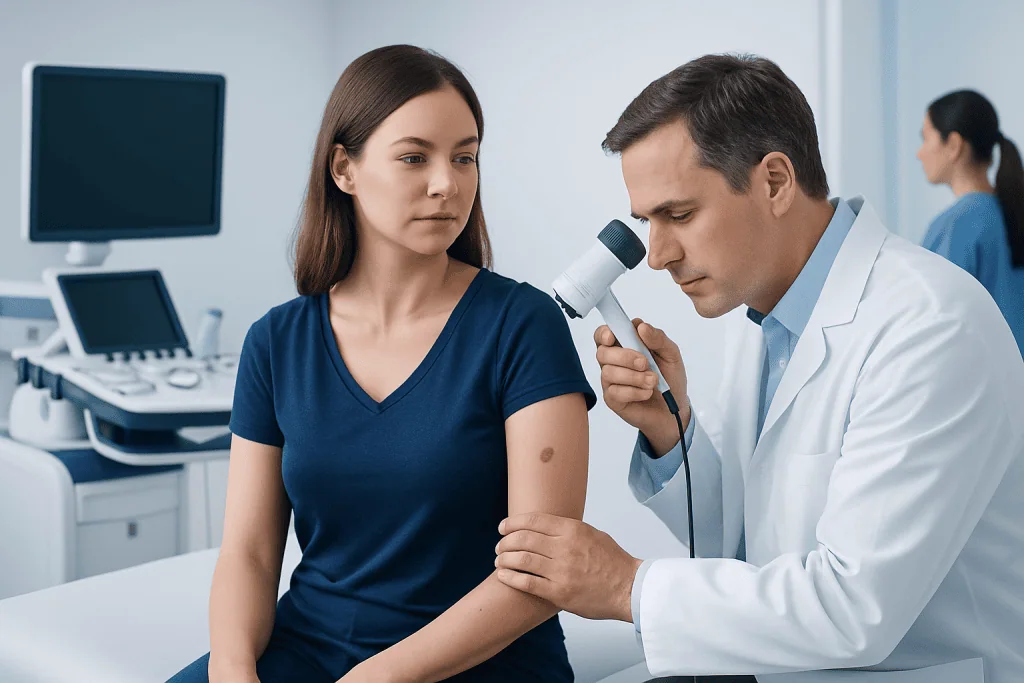
Spots can be flat or raised, smooth or rough, pale or deeply pigmented. Acne spots often appear as whiteheads, blackheads, red inflamed bumps, or pus-filled lesions, commonly on the face, chest, and back. Insect bites are often itchy and raised, while eczema tends to cause dry, itchy, inflamed patches. Fungal infections may create ring-shaped or scaly spots, and viral skin lesions can appear as clustered blisters or wart-like growths.
Pigmented spots include freckles, sunspots, and moles. Freckles usually darken with sun exposure and are often harmless. Sunspots, also called age spots or solar lentigines, are flat brown areas linked to long-term ultraviolet exposure. Moles can be present from childhood or appear later. Most are benign, but a changing mole should be assessed because melanoma can begin as a new or altered pigmented spot.
Symptoms can offer clues, though they do not always identify the cause by themselves. Itching may suggest eczema, allergy, or an insect bite. Pain or tenderness may be seen with inflamed acne, boils, shingles, or bacterial infection. A rough scaly texture can occur with dermatitis, psoriasis, or actinic keratosis, a sun-related precancerous change. Bleeding, crusting, or failure to heal may point to more serious conditions.
- Red, itchy spots may be caused by irritation, eczema, allergy, or bites.
- White or pus-filled spots may suggest acne or infection.
- Brown or black spots may be freckles, moles, or sun damage.
- Scaly spots may be due to dermatitis, psoriasis, or fungal infection.
- Blistering spots may happen with friction, infection, or allergy.
Causes and risk factors

The skin can develop a spot for many reasons. Inflammation is one of the most common. This includes acne, eczema, contact dermatitis, and psoriasis. Infections are another major cause and may be bacterial, viral, or fungal. For example, a boil may start as a tender red spot, while ringworm often causes a circular scaly lesion. Pigment changes can follow sun exposure, hormonal shifts, healing after a rash, or skin injury.
Environmental and lifestyle factors also matter. Heat, sweating, friction, cosmetic products, shaving, and harsh soaps can trigger or worsen spots. Sun exposure increases the chance of freckles, sunspots, actinic keratoses, and skin cancers over time. People with acne-prone skin may notice flares related to oil production, stress, certain skin products, or hormonal changes.
Personal risk factors include skin type, age, immune status, and family history. People with fair skin may be more likely to develop sun-related spots, while those with darker skin tones may experience more noticeable post-inflammatory hyperpigmentation after acne or irritation. A weakened immune system can increase the risk of infections and some skin cancers. A personal or family history of atypical moles or melanoma raises concern when a new pigmented spot appears.
Sometimes a spot is a sign of a known skin disorder rather than an isolated problem. Conditions such as skin cancer or psoriasis may begin with subtle skin changes. Because many different problems can look similar at first, diagnosis is best based on examination rather than assumption.
How doctors evaluate a spot
Diagnosis usually begins with a clinical history and skin examination. A doctor may ask when the spot first appeared, whether it is changing, and whether it itches, hurts, bleeds, or crusts. They may also ask about recent illness, new medicines, sun exposure, personal skin history, and family history of skin disease or skin cancer.
The appearance of the spot guides the next steps. Doctors assess size, symmetry, color variation, borders, and texture. A handheld dermatoscope may be used to examine pigmented or suspicious lesions more closely. This can help distinguish benign patterns from features that need biopsy. In some cases, photos are taken for monitoring over time.
Additional tests are only needed when the cause is uncertain or the spot appears concerning. A skin swab or scraping may help identify bacterial or fungal infection. Allergy patch testing may be useful if contact dermatitis is suspected. If there is concern for cancer or another condition that cannot be confirmed visually, a small skin biopsy may be recommended.
This stepwise approach helps avoid unnecessary worry while ensuring serious causes are not missed. If a spot appears suspicious, referral to dermatology evaluation or to a specialist experienced in skin lesion assessment can be helpful.
Treatment options depend on the cause
There is no single treatment for “a spot” because treatment depends on the diagnosis. Benign, short-lived spots may need only observation and gentle skin care. Acne may improve with non-comedogenic products and prescription topical medicines. Eczema or dermatitis may be treated with trigger avoidance, moisturizers, and anti-inflammatory creams. Fungal infections usually need antifungal treatment, while bacterial infections may require antiseptic care or antibiotics prescribed by a clinician.
Pigment-related spots are treated differently. Sunspots and post-inflammatory marks may gradually fade, especially with strict sun protection. Some cases are managed with lightening creams, chemical peels, or laser-based treatments after professional assessment. Moles are usually left alone unless they are symptomatic, cosmetically bothersome, or suspicious. A changing or abnormal lesion may need removal and laboratory analysis.
If a spot is due to a chronic condition, longer-term management may be needed. For example, people with recurring acne may benefit from acne treatment, while persistent inflammatory skin disease may need specialist care. Certain suspicious lesions may require skin cancer treatment or minor surgical removal.
Near the end of the care pathway, some people seek comprehensive assessment if the cause is unclear or recurrent. Acibadem International’s multidisciplinary specialists and JCI-accredited hospitals diagnose and treat skin conditions for international patients, especially when a spot needs coordinated dermatology, pathology, or surgical evaluation.
Self-care and prevention
Good skin habits can help prevent many common spots or stop them from getting worse. Gentle cleansing, regular moisturizing, and avoiding harsh scrubs or fragranced products are practical steps for sensitive skin. Picking, squeezing, or scratching a spot can increase inflammation, delay healing, and raise the risk of infection or scarring.
Sun protection is one of the most important preventive measures. Daily use of broad-spectrum sunscreen, protective clothing, shade, and avoiding intense midday sun can reduce the risk of sunspots, premature skin aging, and skin cancer. Sun protection is especially important if a person has fair skin, many moles, or a history of significant sun exposure.
People prone to acne or irritation may benefit from non-comedogenic skin products and clean makeup tools. Those who get recurrent rashes should note possible triggers such as new cosmetics, metals, detergents, or tight clothing. If fungal infections are a problem, keeping skin folds dry and not sharing personal items may help.
- Clean the skin gently and avoid aggressive rubbing.
- Do not squeeze or pick a spot.
- Use sunscreen daily on exposed skin.
- Choose skin products suited to the skin type and condition.
- Seek advice before using strong over-the-counter treatments on an unexplained spot.
When to seek medical care
Most small skin spots are not urgent, but some need professional assessment. A doctor should review a spot that persists for several weeks, keeps returning, or does not respond to simple self-care. Medical advice is also important if a spot is spreading, becoming increasingly painful, or associated with fever or swelling.
Pigmented spots deserve attention if they change in size, shape, color, or height. A mole or dark spot that becomes asymmetrical, develops irregular borders, shows multiple colors, or starts bleeding should be checked promptly. A sore that does not heal, especially on sun-exposed skin, also needs evaluation because it may represent a precancerous lesion or skin cancer.
Urgent medical care is warranted if a spot is accompanied by severe swelling, difficulty breathing, rapidly spreading redness, or signs of serious infection. It is also wise to seek prompt advice for spots in babies, people with diabetes, or those with a weakened immune system, since complications may develop more easily in these groups.
When in doubt, it is reasonable to have a spot examined rather than self-diagnose. Early assessment can provide reassurance when the spot is harmless and can also support timely treatment when it is not.
Frequently asked questions
What does “a spot” mean medically?
Medically, a spot is a general description rather than a diagnosis. It can refer to many skin changes, including pimples, rashes, moles, bites, blisters, scaly patches, or areas of discoloration.
Is a spot usually harmless?
Many spots are harmless and may come from acne, mild irritation, or temporary pigment change. However, a spot that changes, bleeds, does not heal, or looks unusual should be examined by a doctor.
How can someone tell if a spot might be serious?
Warning signs include rapid change, irregular borders, several colors in one spot, bleeding, crusting, persistent pain, or a sore that does not heal. A doctor can assess these features more accurately, especially for pigmented spots.
Should a spot be squeezed or picked?
No. Picking or squeezing can worsen inflammation, increase the risk of infection, and cause scarring or darker marks after healing. Gentle skin care is usually safer while the cause is being monitored or treated.
Can stress cause a spot?
Stress does not cause every kind of spot, but it can worsen some skin conditions, especially acne, eczema, and psoriasis. Stress may also contribute indirectly by affecting sleep, skin care habits, and inflammation.
When should a child’s skin spot be checked by a doctor?
A child should be seen if a spot is painful, infected-looking, spreading, associated with fever, or not improving. Pigmented spots that change significantly or any unusual lesion that worries a parent also deserve medical advice.
This article is for general information only and is not a substitute for professional medical advice. Please consult a qualified doctor about your individual situation.
Oncology care in Turkey — second opinion and treatment plan
JCI-accredited · board-certified surgeons · reply within 24h
Add us as a Preferred Source to see more of our trusted health content across Google Search, AI Overviews and Discover.

More from the Health Library

Scleral Buckle: What Patients Need to Know

Agenesis of the Corpus Callosum: An Evidence-Based Guide for Patients

Ferber Method — Explained by Medical Evidence, Not Myths

Turmeric Face Mask: A Complete Medical Overview

Gavilyte-g Solution — Explained by Medical Evidence, Not Myths