Achenbach Syndrome Explained: Common Triggers and Red Flags

Achenbach syndrome causes sudden pain and bruise-like discoloration, most often in a finger. It is generally self-limited and does not usually lead to lasting damage.
Key Takeaways
- Achenbach syndrome causes sudden pain and bruise-like discoloration, most often in a finger.
- It is generally self-limited and does not usually lead to lasting damage.
- The exact cause is not fully understood, but tiny blood vessel leakage under the skin is likely involved.
- Diagnosis is mainly clinical and focuses on excluding circulation problems, blood clots, infection, or inflammatory disease.
- New numbness, severe coldness, persistent symptoms, or repeated unexplained episodes should be assessed by a doctor.
Achenbach syndrome is a usually benign condition that causes sudden blue-purple discoloration, pain, or swelling in one finger, often without a clear injury. Although it can look alarming, it commonly settles on its own; the main medical goal is to rule out more serious causes of a painful or discolored finger.
Overview
Achenbach syndrome is a condition in which a finger suddenly becomes painful and develops a blue, purple, or bruise-like patch, often over minutes to hours. It is also called paroxysmal finger hematoma. The color change usually reflects a small amount of bleeding under the skin from fragile tiny blood vessels rather than a dangerous blockage of blood flow.
For many people, the episode begins without a major injury. A person may notice a sudden sting, burning, tingling, or pressure in one finger, followed by swelling and discoloration. The appearance can be striking, but the condition is usually temporary and resolves without permanent harm.
Because achenbach syndrome can resemble other causes of a blue or painful finger, it is important not to assume every episode is harmless. Doctors may consider circulation problems, Raynaud disease, inflammatory conditions, or less commonly a clotting or vascular disorder before confirming the diagnosis.
How Achenbach Syndrome Usually Presents
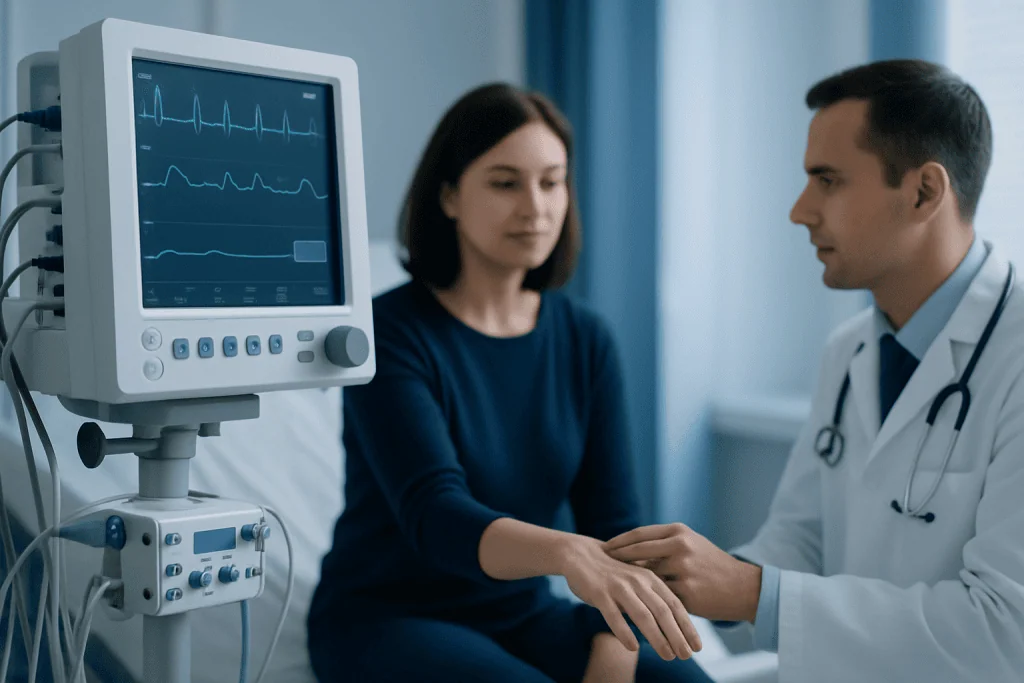
The typical pattern is sudden onset in a single finger, often on the palm side near the middle joint or base of the finger. The affected area may feel tender, tight, mildly swollen, or warm. Pain is often moderate rather than severe, and some people describe a short sharp sensation before the color change appears.
The discoloration may range from blue-purple to dark red and can spread slightly over several hours. In many cases, the fingertip itself is spared, and the pulse and overall warmth of the hand remain normal. This is one clue that the problem may be bleeding under the skin rather than an interruption of blood supply.
Symptoms often improve within a few days and the bruise fades over one to two weeks, much like an ordinary bruise. Some people have only one episode in their lifetime, while others may have occasional recurrences separated by months or years.
- Sudden bruise-like color change in one finger
- Localized pain, burning, or tingling
- Mild swelling or a feeling of fullness
- Tenderness to touch
- Usually no major trauma and no lasting weakness
Common Triggers and Possible Causes

The exact cause of achenbach syndrome is not fully established. The leading explanation is spontaneous leakage from very small blood vessels in the finger, causing a localized hematoma under the skin. In other words, a tiny vessel may break or become more permeable, leading to sudden discoloration and discomfort.
Episodes may follow minor, everyday hand movements that would not normally be considered injuries. Reported triggers include gripping a shopping bag, opening a jar, gardening, typing, twisting, carrying objects, or briefly bumping the hand. In many cases, however, there is no identifiable trigger at all.
Achenbach syndrome has been reported more often in middle-aged adults and appears to be more common in women, though it can occur in anyone. It is not clearly linked to smoking, high cholesterol, or major artery disease in the way some other circulation problems are. Still, if a person has repeated episodes, widespread bruising, or symptoms in multiple body areas, a doctor may look for other explanations such as a bleeding tendency, medication effect, or vascular condition.
How It Differs From More Serious Conditions
A key part of understanding achenbach syndrome is recognizing what it is not. A painful blue finger can also be caused by reduced blood flow, a blood clot, vasospasm, inflammatory vessel disease, infection, or trauma. Some of these conditions need urgent treatment, so doctors focus first on whether the finger is still getting enough circulation.
In achenbach syndrome, the finger is often still warm, the hand pulse is usually normal, and symptoms are limited to a localized bruise-like area. In contrast, a finger with severely reduced blood flow may become very cold, pale or deeply blue, numb, weak, or intensely painful. If the fingertip is involved or the color change affects several fingers, other diagnoses may need closer attention.
Doctors may also consider disorders such as vasculitis or evaluate the hand with a vascular surgery team if there are signs of a circulation problem. When symptoms are unusual, severe, or recurrent, assessment may include conditions affecting the blood vessels, nerves, or connective tissues rather than achenbach syndrome alone.
Diagnosis
Diagnosis is usually based on the story of the episode and a physical examination. A doctor will ask when the discoloration began, whether there was any injury, how quickly it spread, and whether there are associated symptoms such as numbness, coldness, chest pain, shortness of breath, fever, or easy bruising elsewhere. Medication history is also important, especially blood thinners, antiplatelet medicines, and supplements that may increase bleeding.
Examination typically looks at skin color, temperature, capillary refill, sensation, finger movement, pulses, and the pattern of bruising. In a typical case, tests may not be needed. If the presentation is not classic, blood tests or imaging can help rule out other problems such as clotting disorders, arterial disease, inflammatory disease, or structural injury.
Depending on symptoms, a clinician may request blood work, Doppler ultrasound, or other diagnostic services to confirm normal blood flow and exclude urgent causes. The purpose of testing is usually not to prove achenbach syndrome itself, but to make sure a more serious disorder is not being missed.
Treatment and Recovery
There is no specific treatment required for most episodes of achenbach syndrome. Because the condition is usually self-limiting, care focuses on comfort, observation, and reassurance once serious causes have been excluded. The discoloration generally fades on its own and normal hand function returns.
Simple supportive measures may help during recovery. Resting the hand, avoiding heavy gripping for a short time, and elevating the hand if it feels swollen can be useful. A cool compress may reduce discomfort in the early phase. Pain relief, if needed, should be discussed with a healthcare professional, especially in people who bruise easily or take medicines that affect bleeding.
If symptoms do not follow the usual pattern, treatment depends on the underlying cause found during evaluation. For example, a doctor may investigate vascular disease, inflammation, nerve compression, or trauma. In selected situations, referral to hand surgery or a vascular specialist may be appropriate if a structural or circulation-related problem is suspected rather than achenbach syndrome.
Prevention, Self-care, and When to Seek Medical Care
Because the exact cause is uncertain, there is no proven way to prevent every episode of achenbach syndrome. Still, some people find it helpful to reduce repeated strain on the hands, use gloves for tasks that involve strong gripping, and avoid minor hand trauma when possible. Keeping a record of episodes, possible triggers, duration, and photos can also help a doctor evaluate recurrent events.
Self-care should stay simple. The main goal is to monitor whether the symptoms behave like a typical bruise that gradually improves. Repeated episodes do not necessarily mean a dangerous disease, but they do justify medical review, especially if they are becoming more frequent, involve several fingers, or occur together with easy bruising in other areas.
Medical care should be sought promptly if the finger becomes very cold, very pale or blackish, numb, difficult to move, or severely painful; if the discoloration follows a significant injury; or if there is fever, spreading redness, or swelling of the whole hand. A medical assessment is also important if symptoms last longer than expected, affect blood flow, or if there is uncertainty about the diagnosis. Near the end of the care pathway, patients may be reassured to know that Acibadem International’s multidisciplinary specialists in JCI-accredited hospitals evaluate vascular and hand symptoms for international patients when further assessment is needed.
Frequently asked questions
Is achenbach syndrome dangerous?
Achenbach syndrome is usually not dangerous and often resolves on its own without lasting damage. The main concern is that other conditions can look similar, so a first episode or unusual symptoms should be assessed by a clinician.
How long does achenbach syndrome last?
The sudden pain and discoloration usually improve over several days, and the bruise-like mark often fades within one to two weeks. Recovery time can vary slightly from person to person.
What triggers achenbach syndrome?
Many episodes happen without a clear trigger. When a trigger is noticed, it is often a minor hand movement or light strain such as gripping, twisting, carrying, or a small unnoticed bump.
Can achenbach syndrome come back?
Yes, some people have recurrent episodes. Recurrence does not automatically mean a serious disorder, but repeated unexplained attacks should be discussed with a doctor to rule out other causes.
Is achenbach syndrome the same as poor circulation?
Not usually. Achenbach syndrome is thought to involve small bleeding under the skin rather than a major reduction in blood flow, although the symptoms can resemble circulation problems at first.
Do tests always need to be done?
Not always. In a classic, mild presentation, a doctor may diagnose it clinically, but tests may be recommended if symptoms are severe, recurrent, affect blood flow, or do not fit the typical pattern.
References
- National Organization for Rare Disorders
- Cleveland Clinic
- Merck Manual Consumer Version
- American Academy of Dermatology
- Mayo Clinic
This article is for general information only and is not a substitute for professional medical advice. Please consult a qualified doctor about your individual situation.
Explore treatments in Turkey — costs, top hospitals & a free quote
JCI-accredited · board-certified surgeons · reply within 24h
Add us as a Preferred Source to see more of our trusted health content across Google Search, AI Overviews and Discover.
Check your numbers in seconds
BMI, calories, due date, blood pressure and 30+ more clinical calculators — free, instant, doctor-reviewed ranges.