ACL Injury: Symptoms, MRI Diagnosis, and Reconstruction Recovery
The ACL helps stabilize the knee, especially during pivoting, cutting, jumping, and sudden stops. Typical ACL tear symptoms include a popping sensation, rapid swelling, pain, limited motion, and knee giving way.
Key Takeaways
- The ACL helps stabilize the knee, especially during pivoting, cutting, jumping, and sudden stops.
- Typical ACL tear symptoms include a popping sensation, rapid swelling, pain, limited motion, and knee giving way.
- MRI is commonly used to confirm the diagnosis and identify associated injuries such as meniscus or cartilage damage.
- Treatment may be non-surgical or surgical depending on age, activity level, knee instability, and injury pattern.
- ACL reconstruction recovery requires progressive rehabilitation and often takes several months before return to sport.
- Early medical evaluation is important after a significant knee twist, swelling, or repeated instability.
An ACL injury is a common knee ligament injury that can cause pain, swelling, instability, and difficulty returning to sports or active work. Accurate diagnosis, often including MRI, and a structured treatment plan help patients recover safely and reduce the risk of future knee problems.
Overview
The anterior cruciate ligament, commonly called the ACL, is one of the main stabilizing ligaments inside the knee. It connects the thigh bone to the shin bone and helps prevent the shin from sliding too far forward. It also supports rotational control, which is important during movements such as turning, pivoting, landing from a jump, and changing direction quickly.
An ACL injury can range from a partial sprain to a complete tear. It is frequently seen in sports such as football, basketball, skiing, volleyball, and tennis, but it can also occur during daily activities, falls, or accidents. Some people can walk after an ACL tear, while others feel the knee is too painful or unstable to bear weight comfortably.
Because the ACL works closely with other knee structures, an ACL tear may occur together with meniscus tears, cartilage injury, bone bruising, or damage to other ligaments. For this reason, a careful orthopedic assessment and appropriate imaging are important. The goal is not only to identify the ACL injury, but also to understand the whole knee problem and plan safe recovery.
ACL Tear Symptoms
Many people describe a sudden twisting movement followed by a popping sound or popping sensation in the knee. Pain usually starts immediately, and swelling often develops within the first few hours. The knee may feel tight, stiff, or difficult to bend and straighten because of swelling inside the joint.
A key symptom of ACL injury is instability. Patients may feel that the knee gives way, shifts, or cannot be trusted, especially when turning, walking on uneven ground, going downstairs, or trying to return to sport. Some people are able to walk in a straight line but struggle with side-to-side movements or sudden direction changes.
Common symptoms may include:
- A pop at the time of injury
- Rapid swelling of the knee
- Pain or tenderness around the knee joint
- Reduced range of motion
- Difficulty bearing weight or walking normally
- A feeling of looseness, buckling, or giving way
Symptoms vary from person to person. A partial ACL injury may cause milder pain and swelling, while a complete tear can produce clear instability. However, symptoms alone cannot reliably determine the severity of the injury, so medical evaluation is recommended after a significant knee twist or swelling episode.
Causes and Risk Factors
ACL injuries often happen without direct contact. A typical mechanism is a sudden stop, pivot, or landing with the knee turned inward and the foot planted. The ligament can also tear during a collision, tackle, fall, or skiing accident when the knee is forced beyond its normal range of motion.
Several factors may increase the risk of ACL injury. These include participation in pivoting sports, poor landing mechanics, muscle imbalance, reduced hip and core control, fatigue, previous knee injury, and playing on surfaces where the foot grips strongly. Anatomy, ligament laxity, and hormonal factors may also influence risk in some athletes.
Female athletes have a higher risk of ACL injury in certain sports, but prevention programs can help reduce risk for all athletes. Neuromuscular training focuses on safe jumping, landing, cutting, strengthening, balance, and coordination. Good technique and conditioning are especially important before returning to high-demand sports after any knee injury.
MRI Diagnosis and Orthopedic Evaluation
Diagnosis begins with a detailed history and physical examination. The doctor will ask how the injury happened, whether there was a pop, how quickly swelling appeared, and whether the knee feels unstable. During the examination, specific tests may be used to assess ACL stability and compare the injured knee with the uninjured side.
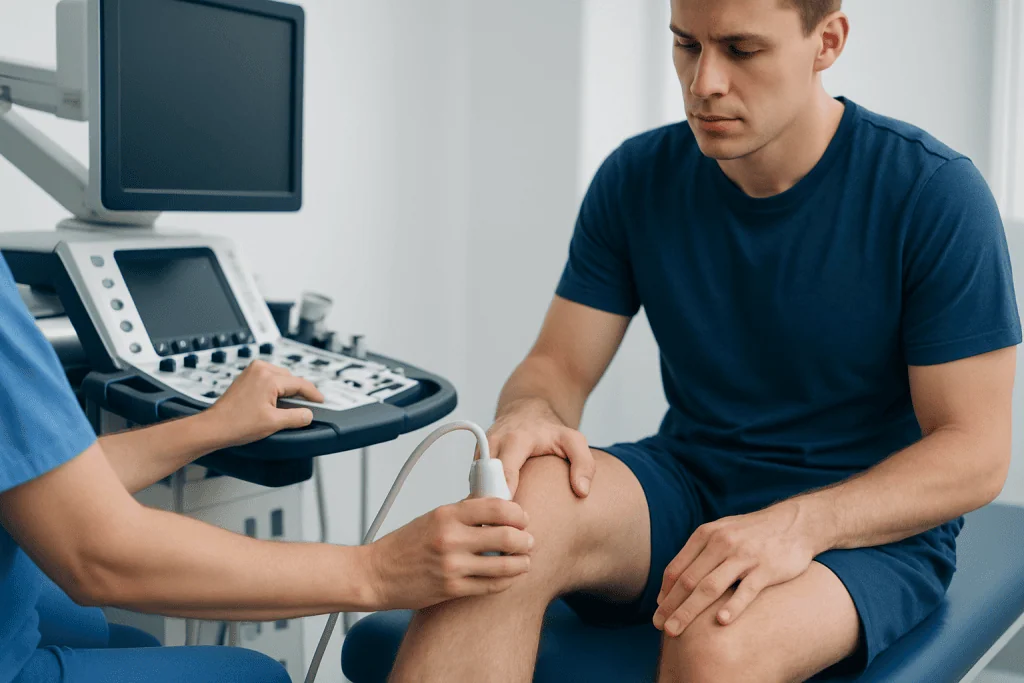
X-rays do not show the ACL directly, but they may be ordered to check for fractures, joint alignment, or bone injuries. MRI is the most useful imaging test for seeing the ACL and surrounding soft tissues. It can help confirm whether the ACL is partially or completely torn and can identify associated meniscus tears, cartilage damage, bone bruises, or injuries to other ligaments.
An MRI report should always be interpreted together with symptoms and examination findings. Occasionally, imaging findings may not fully match the patient’s symptoms. The orthopedic specialist uses the complete clinical picture to recommend treatment, because a stable partial injury may be managed differently from a complete tear with repeated giving way.
In some cases, additional assessment may be needed, especially for complex multi-ligament injuries, previous ACL surgery, or persistent symptoms despite treatment. A precise diagnosis helps guide decisions about rehabilitation, bracing, activity modification, or surgery.
Treatment Options
Treatment for ACL injury depends on several factors: the patient’s age, activity goals, degree of knee instability, associated injuries, occupation, sports participation, and overall health. Not every ACL tear requires surgery. Some patients with lower activity demands, good knee control, and no significant associated injuries may do well with structured rehabilitation and activity modification.
Non-surgical treatment usually includes a supervised physiotherapy program focused on reducing swelling, restoring motion, strengthening the thigh and hip muscles, and improving balance and neuromuscular control. A knee brace may be used in selected cases. Patients are often advised to avoid pivoting sports or activities that trigger instability unless the knee has regained reliable control.
ACL reconstruction may be recommended for patients with complete tears who want to return to pivoting sports, have repeated knee giving way, perform physically demanding work, or have associated injuries that require surgical treatment. Reconstruction means the torn ligament is replaced with a graft, commonly taken from the patient’s own hamstring tendon, patellar tendon, or quadriceps tendon, or in selected cases from donor tissue.
The choice of graft and surgical technique is individualized. Arthroscopic surgery, using small incisions and a camera, is commonly used. The aim is to restore knee stability, protect the meniscus and cartilage from repeated giving-way episodes, and support a safe return to desired activities. Surgery is usually followed by a detailed rehabilitation plan, which is essential for a good functional outcome.
ACL Reconstruction Recovery and Rehabilitation
Recovery after ACL reconstruction is gradual and should be guided by the surgeon and physiotherapist. In the early phase, the focus is on controlling pain and swelling, achieving full knee extension, improving bending, and reactivating the quadriceps muscle. Walking support, a brace, or crutches may be used depending on the surgical plan and any additional meniscus or cartilage procedure.
As healing progresses, rehabilitation becomes more active. Exercises usually include strengthening, balance training, gait correction, stationary cycling, controlled squats, step exercises, and later jogging and sport-specific drills. Progression is based on healing, strength, movement quality, swelling response, and confidence, rather than time alone.
Many patients return to normal daily activities within weeks, but return to pivoting sport takes much longer. A typical return-to-sport pathway often requires several months of rehabilitation and objective testing. Returning too early, before strength and neuromuscular control have recovered, may increase the risk of re-injury.
Emotional readiness also matters. Some patients feel anxious about trusting the knee again, even when physical recovery is progressing well. Clear communication with the care team, realistic milestones, and a structured return-to-activity plan can help patients regain confidence safely.
Prevention and Self-care
Not all ACL injuries can be prevented, but risk can be reduced. Prevention programs are especially helpful for athletes in sports that involve jumping, landing, cutting, and pivoting. These programs typically include strength training, balance exercises, landing technique, agility drills, and coaching to avoid positions where the knee collapses inward.
After a knee injury, self-care in the first days may include rest from painful activity, ice, compression, elevation, and avoiding movements that cause the knee to buckle. Over-the-counter pain relief may be appropriate for some people, but it should be used according to medical advice, especially for patients with stomach, kidney, heart, bleeding, or medication-related concerns.
Patients should avoid testing the knee by running, pivoting, or returning to sport too soon. Swelling and instability are signs that the knee needs assessment and protection. Gentle motion within comfort may help prevent stiffness, but exercise should be guided by a qualified professional when an ACL tear is suspected.
When to See a Doctor
A medical evaluation is recommended after a knee injury that causes a pop, rapid swelling, significant pain, inability to bear weight, loss of motion, or a feeling that the knee gives way. Early assessment can identify injuries that need timely treatment and can reduce the chance of further damage from repeated instability.
Patients should also seek care if knee swelling persists, walking remains abnormal, or the knee feels unreliable during daily activities. Even if pain improves, an untreated ACL tear may still cause instability during twisting movements. A sports medicine or orthopedic specialist can advise whether physiotherapy, imaging, bracing, or surgical consultation is appropriate.
For international patients seeking evaluation, Acibadem International’s multidisciplinary orthopedic, radiology, and rehabilitation teams in JCI-accredited hospitals can diagnose and treat ACL injuries, including MRI assessment and reconstruction when indicated. Individual treatment recommendations should always be based on a personal examination and medical history.
Frequently asked questions
Can a person walk with a torn ACL?
Yes, some people can walk after an ACL tear, especially in a straight line. However, being able to walk does not mean the ligament is intact or the injury is mild. Swelling, a pop at injury, or a knee that gives way should be assessed by a doctor.
Is MRI always needed for an ACL injury?
MRI is commonly used because it shows the ACL, meniscus, cartilage, bone bruising, and other ligaments. In some clear cases, the examination strongly suggests the diagnosis, but MRI helps confirm the injury and plan treatment. The decision depends on symptoms, examination findings, and the doctor’s assessment.
Can an ACL tear heal without surgery?
A completely torn ACL usually does not heal back to its original strength on its own. Some patients can function well without surgery if they do not have significant instability and are willing to modify activities. Others, especially those returning to pivoting sports or physically demanding work, may benefit from reconstruction.
How long does ACL reconstruction recovery take?
Daily activities often improve within weeks, but full recovery for sport is much longer. Return to running, cutting, and competitive sport depends on strength, balance, movement quality, absence of swelling, and surgeon approval. Many return-to-sport plans take several months and should not be rushed.
What happens if an ACL tear is left untreated?
Some people adapt well with rehabilitation and activity changes. However, repeated knee giving way may increase the risk of meniscus or cartilage injury over time. Ongoing instability should be discussed with an orthopedic specialist.
Is ACL reconstruction painful?
Pain is expected after surgery, but it is managed with a planned approach that may include medication, icing, elevation, and early rehabilitation. Pain usually improves gradually as swelling decreases and movement returns. Patients should follow their surgical team’s instructions and report severe or worsening symptoms.
When can athletes return to sport after an ACL injury?
Return to sport depends on the type of treatment, associated injuries, rehabilitation progress, and objective testing. Athletes should have good strength, stability, landing control, and confidence before returning. Clearance should come from the surgeon or sports medicine team rather than from a fixed date alone.
References
- American Academy of Orthopaedic Surgeons
- Mayo Clinic
- National Health Service
- British Orthopaedic Association
- International Olympic Committee
This article is for general information only and is not a substitute for professional medical advice. Please consult a qualified doctor about your individual situation.
Joint and spine care in Turkey — expert assessment & treatment
JCI-accredited · board-certified surgeons · reply within 24h
Add us as a Preferred Source to see more of our trusted health content across Google Search, AI Overviews and Discover.

Orthopedics & Spine
Care for bones, joints and the musculoskeletal system, including joint replacement, sports injuries and trauma.
125 specialists in this unit