

Acl surgery vs Conservative treatment: Which Is Right for You?
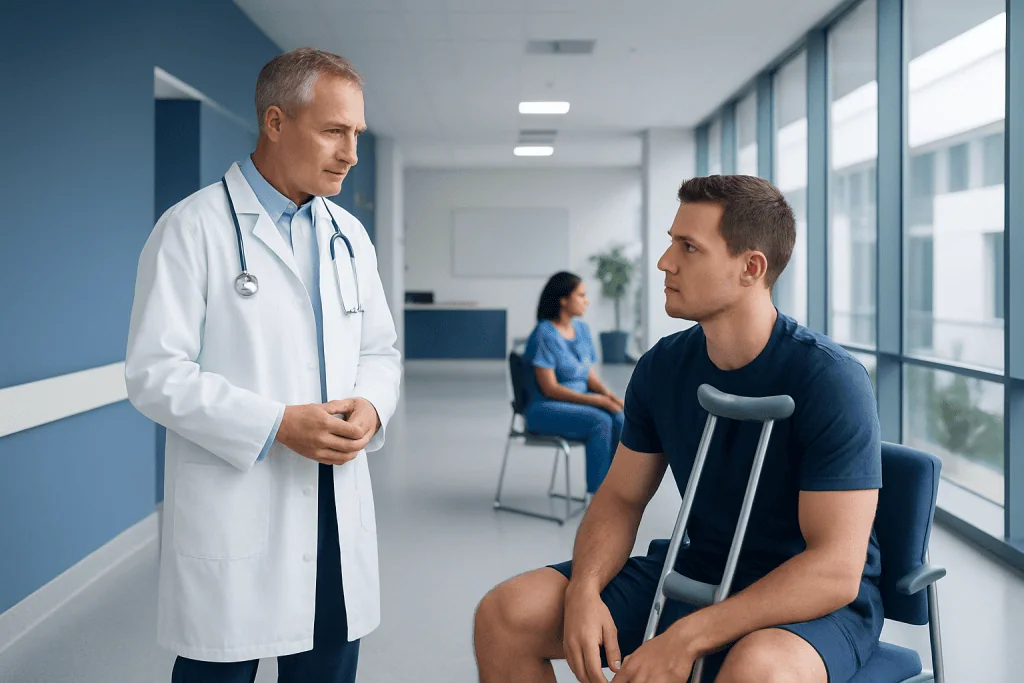
A complete ACL tear does not automatically require surgery; structured rehabilitation can be appropriate for selected people. Repeated giving-way episodes, pivoting sports and associated meniscus or cartilage injuries may make reconstruction more suitable.
Key Takeaways
- A complete ACL tear does not automatically require surgery; structured rehabilitation can be appropriate for selected people.
- Repeated giving-way episodes, pivoting sports and associated meniscus or cartilage injuries may make reconstruction more suitable.
- Both approaches usually require a committed rehabilitation program focused on strength, movement control and gradual return to activity.
- ACL reconstruction replaces the torn ligament with a graft; it does not simply stitch the ACL back together.
- The decision should reflect knee stability, personal goals, occupation, age, other injuries and willingness to follow rehabilitation.
- Urgent assessment is important after major trauma, a locked knee, severe swelling, inability to bear weight or new numbness.
ACL surgery vs conservative treatment is not a one-size-fits-all decision. Some people regain stable, confident knee function with structured rehabilitation, while others are more likely to benefit from ACL reconstruction because of ongoing instability, sport demands or additional knee damage.
Overview: how to choose between ACL surgery and conservative treatment
ACL surgery vs conservative treatment is decided mainly by how stable the knee feels during daily life and desired activities, whether other structures are injured, and how well the person progresses with rehabilitation. Surgery is often considered for people with recurrent knee giving-way, those returning to pivoting or contact sports, or those with repairable meniscus injuries; conservative care may be reasonable for people with lower-demand goals and a stable knee after rehabilitation.
The anterior cruciate ligament (ACL) is a strong band of tissue inside the knee that helps control forward movement and rotation of the shin bone. It can tear during a sudden change of direction, awkward landing, collision or twist. The immediate aim after an ACL injury is to reduce swelling, restore comfortable movement and assess the whole knee rather than deciding on surgery immediately in every case.
A specialist can help interpret scan findings alongside symptoms and functional testing. An MRI may show an ACL tear, but the image alone cannot determine which path is right; some people function well without a reconstructed ACL, while others experience instability despite excellent rehabilitation.
Understanding the two treatment pathways
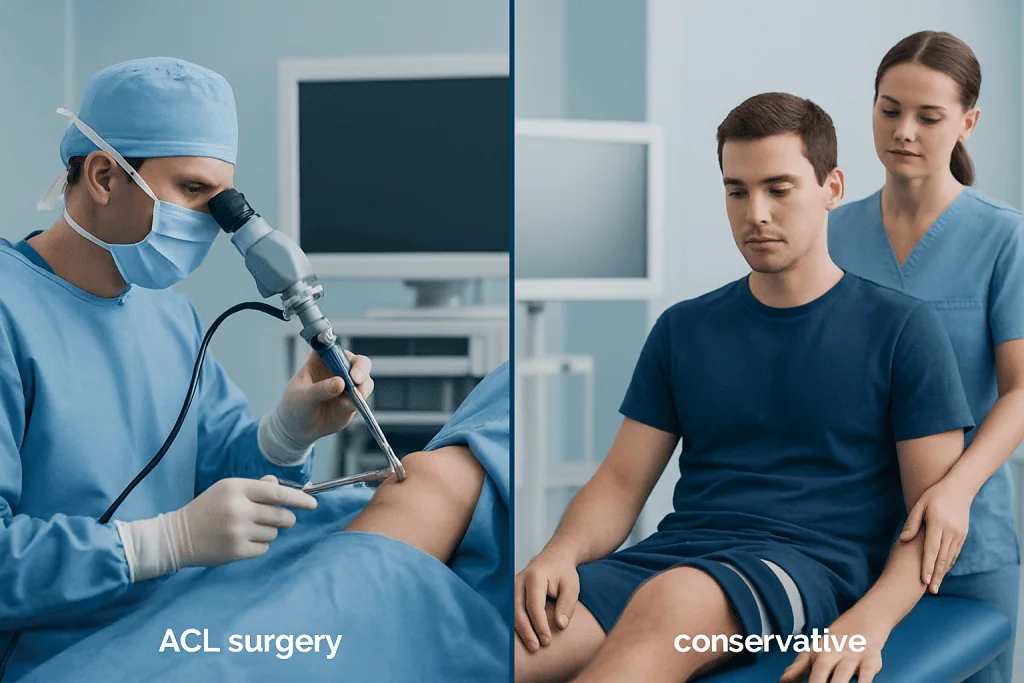
Conservative treatment, also called non-operative management, is an active treatment plan rather than simply resting the knee. It usually includes guided physiotherapy, temporary activity modification, progressive strength training, balance and landing-control exercises, and a planned return to chosen activities. A brace may be recommended in selected situations, but it does not replace rehabilitation or restore a torn ACL.
The goal is to develop enough strength, coordination and confidence for safe daily function and, for some people, recreational exercise. Rehabilitation commonly focuses on the quadriceps, hamstrings, hips and trunk, as well as control during stepping, squatting, turning and landing. People who avoid high-demand pivoting activities and do not have giving-way episodes may be good candidates for this approach.
ACL reconstruction surgery creates a new ligament using a tendon graft, often from the person’s own hamstring, patellar tendon or quadriceps tendon. Donor grafts may be considered in particular circumstances. The graft is placed through bone tunnels and fixed to allow it to heal and gradually function as a new ACL. More detail about the operation is available in ACL surgery information.
Reconstruction is generally followed by a longer, carefully staged rehabilitation program. Surgery may be performed together with treatment of a meniscus tear or other knee injury when appropriate, which can influence both the recommended treatment and the recovery plan.
Who may benefit from each option
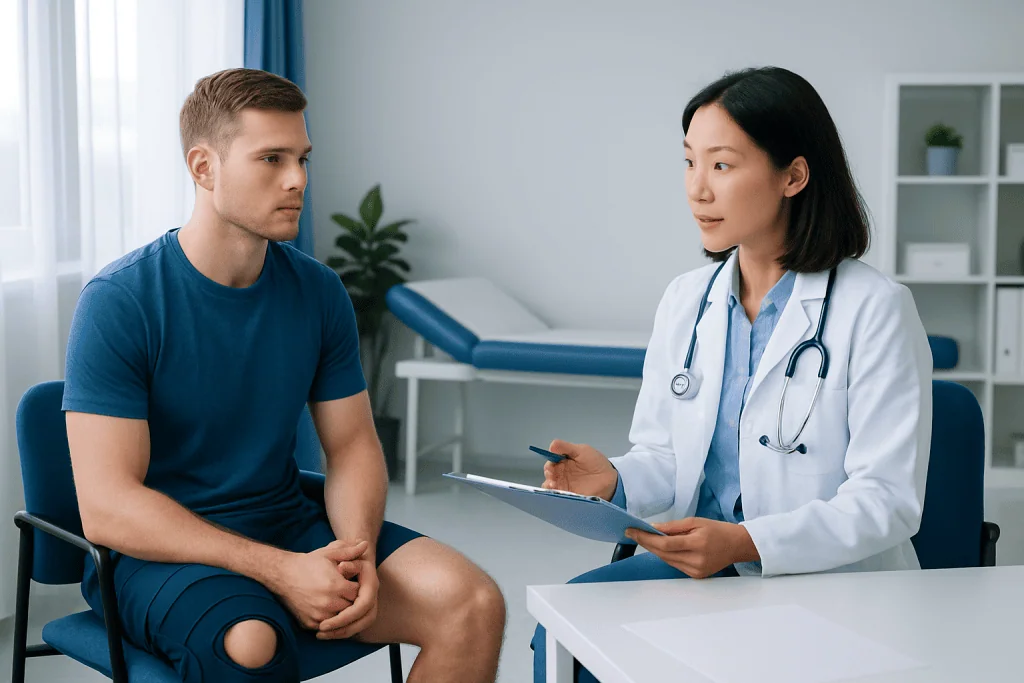
Conservative management may be considered when the knee becomes stable with rehabilitation, the person has no repeated episodes of buckling, and their work and recreational activities do not require frequent cutting, rapid turning, jumping or contact. It may also suit someone who prefers to avoid surgery and understands the importance of ongoing exercise and follow-up. Some people begin with rehabilitation and later choose reconstruction if instability continues.
ACL reconstruction may be more strongly considered for athletes who wish to return to sports involving pivoting, cutting or sudden stops; people whose jobs require similar movements; and those who have persistent functional instability. It may also be advised when an ACL tear occurs alongside a meniscus injury that needs repair, significant cartilage damage, or injuries to other ligaments. The best choice remains individual and should be made with an orthopaedic specialist and physiotherapist.
Age alone does not decide treatment. A younger person with low activity demands may do well without surgery, while an older but highly active person may have goals that support reconstruction. Important considerations include overall health, prior knee problems, the type of tear, exercise access, recovery time available and the person’s confidence with each pathway.
- Questions to discuss include: What activities matter most? Does the knee give way? Are the meniscus or other ligaments injured?
- It is also helpful to ask what rehabilitation will involve, what restrictions may be needed, and what signs would prompt a change in plan.
What ACL reconstruction involves: preparation, procedure and benefits
Before ACL reconstruction, clinicians usually work to reduce substantial swelling and restore near-normal knee straightening and bending. This preparation, sometimes called prehabilitation, can improve readiness for the operation and early recovery. The surgical team will review medical history, medications, imaging, anaesthesia considerations and the most appropriate graft option.
During arthroscopic surgery, the surgeon makes small incisions and uses a camera to inspect the knee. Any associated injuries may be assessed and treated as planned. The torn ACL is replaced with the chosen graft, which is positioned in the thighbone and shinbone and secured with fixation devices. Most procedures are performed under anaesthesia, and the exact approach varies according to the injury and the individual.
The potential benefit of reconstruction is improved rotational knee stability, which may help a person return to activities that require pivoting or rapid direction changes. It can also reduce episodes of giving way that may otherwise place the meniscus and joint surfaces at further risk. However, surgery cannot guarantee return to a previous level of sport, and rehabilitation is essential to the outcome.
For people with complex knee injuries, a treatment plan may include knee surgery evaluation only when clinically appropriate; ACL reconstruction and knee replacement are different operations used for different problems. A specialist can explain which procedure, if any, matches the underlying condition.
Recovery timeline and rehabilitation for both approaches
Recovery is based on functional progress, not the calendar alone. After ACL reconstruction, early rehabilitation usually aims to manage pain and swelling, regain full knee extension, restore walking mechanics and activate the thigh muscles. Crutches may be used temporarily, depending on the procedure and any additional meniscus repair. Follow-up appointments help the team monitor wound healing, movement and strength.
Over subsequent months, rehabilitation progresses to resistance exercise, balance work, cycling or other low-impact conditioning, then running and sport-specific drills when appropriate. Return to pivoting sports is typically considered only after the knee has recovered strength, movement quality, confidence and functional performance. This often takes many months, and may take longer when there are associated injuries or setbacks.
Conservative rehabilitation also progresses in stages. A physiotherapist may first address swelling, range of motion and basic strength, then introduce increasingly demanding tasks such as single-leg control, hopping, changing direction and activity-specific training. A person who remains stable and meets functional goals may continue without surgery; ongoing giving way should be reassessed.
Whether surgery is chosen or not, rushing back to sport before the knee is ready can increase the chance of another injury. A rehabilitation team should guide progression using symptoms, examination findings and practical functional tests rather than relying only on a target date.
Risks, limitations and everyday self-care
Conservative treatment avoids the immediate risks of an operation and anaesthesia, but it may not provide sufficient stability for every person. Repeated instability episodes can injure the meniscus or cartilage, particularly during twisting or pivoting movements. For this reason, people following a non-operative plan should attend follow-up reviews and report any giving way, locking or worsening swelling.
ACL reconstruction carries surgical risks, including infection, bleeding, blood clots, stiffness, ongoing pain, numbness around the incision, graft failure and injury to nearby structures. Some people have discomfort at the graft-harvest site. Although serious complications are uncommon, they should be discussed clearly before surgery. Careful rehabilitation helps reduce stiffness and supports safe recovery, but it cannot remove every risk.
Until a clinician advises otherwise, practical self-care after an ACL injury includes avoiding movements that trigger buckling, using prescribed supports or crutches correctly, following a tailored exercise plan and maintaining general fitness through safe options. Rest, ice, compression and elevation may ease early swelling for some people, but they are supportive measures rather than a substitute for assessment and rehabilitation.
A healthy diet, adequate sleep and avoiding tobacco products can support general healing. Pain medicines should be used only as advised by a qualified clinician, particularly for people with stomach, kidney, heart or bleeding conditions or those taking other medicines.
When to seek medical care
Medical assessment is recommended after a knee injury that causes a pop, rapid swelling, loss of movement, inability to continue activity or a feeling that the knee has shifted out of place. An orthopaedic clinician can assess for ACL injury as well as meniscus, cartilage, bone and other ligament problems. Early evaluation is especially helpful when the knee repeatedly buckles or does not improve as expected.
Prompt medical care is important for a knee that is visibly deformed, cannot bear weight after a significant injury, is locked and cannot straighten, becomes increasingly swollen or painful, or has numbness, a cold foot or colour changes below the knee. Fever, spreading redness or drainage after surgery also need urgent clinical advice.
People who are deciding between pathways may benefit from a shared assessment involving an orthopaedic surgeon and physiotherapist. Acibadem International’s multidisciplinary specialists and JCI-accredited hospitals diagnose and treat ACL injuries for international patients, with treatment plans based on the individual’s knee findings and goals.
Frequently asked questions
Can an ACL tear heal without surgery?
The ACL has limited ability to heal in the same way as some other tissues, especially after a complete tear. However, some people can achieve good knee function without reconstruction through structured rehabilitation, activity modification and strong movement control. The key question is whether the knee remains stable during the activities that matter to the individual.
Is ACL surgery always better than conservative treatment?
No. ACL reconstruction can improve stability for people with recurrent giving way or high-demand pivoting goals, but it also involves surgery and a long rehabilitation period. Conservative treatment may be an appropriate, effective option when the knee is stable and the person can meet their functional goals without surgery.
How long does recovery take after ACL reconstruction?
Recovery varies according to the graft used, associated injuries, rehabilitation progress and the person’s goals. Everyday walking and basic activities often improve earlier, while return to running, jumping and pivoting sports generally requires many months of progressive rehabilitation. A clinician should confirm readiness based on strength and functional testing.
What happens if a torn ACL is left untreated?
Some people manage well without reconstruction, particularly when they have no instability and modify activities as needed. Others develop repeated giving-way episodes, which can increase the risk of meniscus or cartilage injury. Regular review is important if symptoms persist or activity goals change.
Can physiotherapy replace ACL surgery?
For selected people, physiotherapy-led rehabilitation can provide enough strength and stability to avoid or defer surgery. It does not recreate the torn ligament, so it may not meet the needs of people who continue to experience instability or who want to return to demanding pivoting sports. Progress should be assessed with a qualified physiotherapist and orthopaedic clinician.
When can someone return to sport after an ACL injury?
Return to sport depends on the type of sport, whether surgery was performed, and objective recovery of strength, balance, movement quality and confidence. It should be a gradual, supervised decision rather than a date-based decision. Returning too early may raise the risk of reinjury.
References
- American Academy of Orthopaedic Surgeons
- National Institute of Arthritis and Musculoskeletal and Skin Diseases
- OrthoInfo, American Academy of Orthopaedic Surgeons
- National Health Service
- International Olympic Committee
This article is for general information only and is not a substitute for professional medical advice. Please consult a qualified doctor about your individual situation.
Joint and spine care in Turkey — expert assessment & treatment
JCI-accredited · board-certified surgeons · reply within 24h
Add us as a Preferred Source to see more of our trusted health content across Google Search, AI Overviews and Discover.

More from the Health Library



Related Specialists
Dr. Ömer Feyyaz Kadıoğlu
Ophthalmology
Dt. Aydın Akçakoca
Oral & Dental Health
Fzt. Perihan Yıldız
Physical Medicine & Rehabilitation
Assoc. Prof. Dr. Onur Dülgeroğlu
General Surgery