Acromioclavicular Joint: What Patients Need to Know

The acromioclavicular joint connects the collarbone to the shoulder blade at the top of the shoulder. Common acromioclavicular joint problems include sprains, separation injuries, arthritis, and overuse irritation.
Key Takeaways
- The acromioclavicular joint connects the collarbone to the shoulder blade at the top of the shoulder.
- Common acromioclavicular joint problems include sprains, separation injuries, arthritis, and overuse irritation.
- Symptoms often include pain on top of the shoulder, tenderness, swelling, and discomfort when reaching across the body.
- Diagnosis usually involves a physical exam and sometimes X-rays or other imaging tests.
- Many people improve with rest, ice, activity changes, pain relief, and guided rehabilitation.
- Medical assessment is important after trauma, severe pain, visible deformity, or ongoing symptoms.
The acromioclavicular joint is the small joint at the top of the shoulder where the collarbone meets part of the shoulder blade. It helps the shoulder move smoothly, and problems such as sprains, arthritis, or overuse can cause pain, swelling, and difficulty lifting the arm.
Overview: what the acromioclavicular joint does
The acromioclavicular joint, often called the AC joint, is the small joint at the top of the shoulder where the clavicle, or collarbone, meets the acromion, which is part of the shoulder blade. Although it is small, it plays an important role in how the shoulder works. It helps transfer force from the arm to the rest of the skeleton and allows coordinated movement when a person lifts, reaches, pushes, or pulls.
This joint is supported by cartilage, a joint capsule, and strong ligaments. These structures help keep the bones aligned while still allowing controlled motion. Because the shoulder is used so often in daily life, sports, work, and exercise, the AC joint can become irritated or injured.
Patients often hear about the acromioclavicular joint after a fall onto the shoulder, during evaluation of pain at the top of the shoulder, or when imaging shows wear-and-tear changes. Problems may be sudden, such as a sprain or separation, or gradual, such as osteoarthritis. In some people, AC joint pain can overlap with other shoulder conditions, including shoulder impingement syndrome, which is why careful assessment matters.
How acromioclavicular joint problems feel
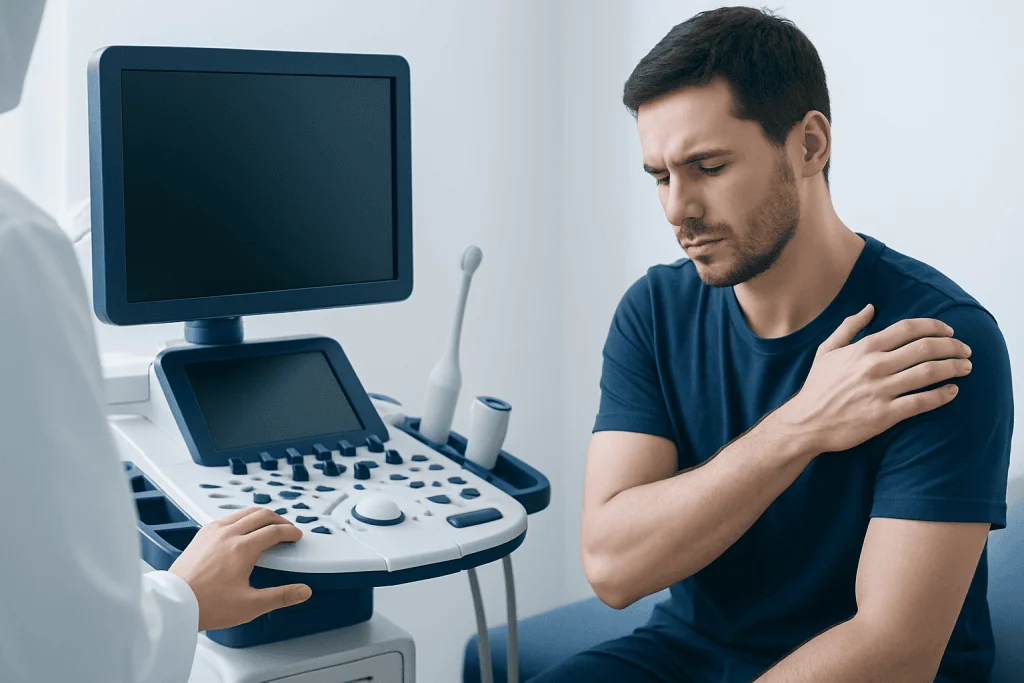
Symptoms from the acromioclavicular joint usually appear at the very top of the shoulder rather than deep in the arm. Many people describe a localized ache, soreness, or sharp pain that becomes more noticeable with certain movements. The area may feel tender when touched, especially directly over the end of the collarbone.
Pain often increases when reaching across the body, lifting the arm overhead, carrying heavy items, or sleeping on the affected side. Some people notice a clicking sensation, mild swelling, or a feeling that the shoulder is weak or unstable. After an injury, there may also be bruising or a visible bump at the top of the shoulder.
Symptoms can range from mild irritation to significant limitation in daily activities. In arthritis, discomfort may build up slowly over time. In a separation injury, pain is often more sudden and follows trauma. Because other shoulder conditions can cause similar symptoms, persistent pain should not be self-diagnosed without proper evaluation.
Common causes and risk factors

Acromioclavicular joint problems generally fall into a few main groups. One is trauma, especially a direct fall onto the shoulder during sports, cycling, skiing, or everyday accidents. This can stretch or tear the ligaments that stabilize the joint, leading to an AC joint sprain or separation.
Another common cause is degeneration over time. As people age, the cartilage in the joint can wear down, causing AC joint osteoarthritis. Repetitive use may also contribute, particularly in activities that involve overhead movement, heavy lifting, bench pressing, throwing, or repeated pushing.
Inflammation, prior injuries, and shoulder mechanics can also play a role. In some patients, AC joint symptoms appear alongside other shoulder disorders such as rotator cuff tear or tendon irritation. Risk factors may include:
- Contact sports or high-impact falls
- Repetitive overhead work or exercise
- Previous shoulder injury
- Age-related joint wear
- Poor movement patterns or muscle imbalance around the shoulder
Not every painful shoulder involves the AC joint, but pain focused at the top of the shoulder makes it an important possibility for clinicians to consider.
How doctors diagnose AC joint conditions
Diagnosis starts with a clinical history and physical examination. A doctor will ask when the pain began, whether there was an injury, which movements make symptoms worse, and whether there is clicking, weakness, or night pain. The location of pain is particularly helpful, since AC joint discomfort is usually quite specific.
During the examination, the clinician may press on the top of the shoulder to check for tenderness and perform movements that stress the AC joint, such as bringing the arm across the chest. They will also assess shoulder range of motion, strength, stability, and signs of other causes of pain, including neck-related symptoms or problems deeper in the shoulder.
Imaging may be used when needed. X-rays can show alignment changes after injury, joint narrowing, bone spurs, or arthritis. Ultrasound or MRI may help if soft tissue damage is suspected or if symptoms do not fit a simple AC joint problem. In complex cases, assessment by a specialist in orthopedics and traumatology can help clarify the diagnosis and guide treatment.
Treatment options and recovery
Treatment depends on the cause, the severity of symptoms, and the patient’s activity level. Many acromioclavicular joint problems improve without surgery. For mild sprains, overuse irritation, or arthritis flare-ups, first-line care often includes rest from aggravating activities, ice, short-term pain relief medicines if appropriate, and gradual return to movement.
Physical therapy is often an important part of recovery. A rehabilitation plan may focus on restoring shoulder motion, improving posture, and strengthening the muscles around the shoulder blade and rotator cuff. This can reduce strain on the AC joint and improve function during daily tasks and sports. In some patients, a broader physical therapy and rehabilitation program supports safer recovery.
If symptoms persist, a doctor may consider other options such as targeted injections to reduce inflammation and confirm the source of pain. More significant AC joint separations or severe structural problems may require surgical treatment, particularly when pain, deformity, or instability is ongoing. In selected cases, procedures within shoulder surgery may be discussed after careful evaluation.
Recovery time varies. Mild injuries may settle within weeks, while more serious separations or surgery recovery can take longer. Following medical advice and a structured rehabilitation plan usually gives the best chance of a steady return to activity.
Self-care, prevention, and daily activity tips
Self-care can ease symptoms and help protect the acromioclavicular joint from further strain. During painful periods, it is usually helpful to avoid movements that clearly trigger symptoms, especially repeated overhead reaching, heavy carrying on one side, or exercises that load the top of the shoulder. Ice may be soothing after activity or after a recent injury.
Longer term, prevention focuses on shoulder mechanics and balanced strength. Warm-up before sports, use good technique during weight training, and increase exercise intensity gradually. Strengthening the upper back, shoulder blade stabilizers, and rotator cuff can help distribute forces more evenly across the shoulder.
At work and at home, small adjustments can also help. Keeping frequently used items within easy reach, avoiding prolonged awkward positions, and sharing loads between both arms may reduce irritation. Patients with known arthritis may benefit from pacing activities and planning regular breaks rather than pushing through pain.
Self-care is useful, but it should not replace medical assessment when symptoms are severe, recurrent, or linked to trauma. Ongoing pain deserves attention so that other shoulder problems are not missed.
When to seek medical care
Medical care is advisable after a direct shoulder injury, especially if there is severe pain, a visible bump or deformity, marked swelling, bruising, or difficulty moving the arm. These features can suggest a more significant AC joint injury or another shoulder problem that needs prompt assessment.
Patients should also arrange a medical review if shoulder pain lasts more than a short period, keeps returning, interrupts sleep, or limits work, exercise, or daily tasks. Numbness, tingling, fever, or pain that spreads from the neck or chest should also be evaluated, since these symptoms may point to causes beyond the AC joint.
A specialist assessment can help distinguish AC joint pain from rotator cuff conditions, shoulder instability, or referred pain from nearby structures. For international patients, Acibadem International’s multidisciplinary specialists in JCI-accredited hospitals evaluate and treat shoulder and joint conditions with individualized care planning.
Frequently asked questions
What is the acromioclavicular joint?
The acromioclavicular joint is the joint at the top of the shoulder where the collarbone meets the acromion of the shoulder blade. It helps the shoulder move in a coordinated way during lifting, reaching, and carrying.
What causes acromioclavicular joint pain?
Common causes include a fall onto the shoulder, repetitive overhead activity, arthritis, and joint wear over time. Pain can also occur alongside other shoulder problems, so a proper examination is important.
How can someone tell if the AC joint is injured?
Pain is usually felt directly on top of the shoulder and may worsen when reaching across the body or lifting the arm. After trauma, there may be swelling, bruising, or a noticeable bump near the end of the collarbone.
Do all acromioclavicular joint injuries need surgery?
No. Many AC joint sprains and mild separations improve with rest, activity changes, pain control, and rehabilitation. Surgery is usually considered only for selected cases with ongoing pain, instability, or more severe structural injury.
What is the difference between AC joint arthritis and a shoulder sprain?
AC joint arthritis tends to develop gradually from wear and tear and often causes pain during repeated use or certain movements. A sprain usually happens after an injury and may cause more sudden pain, swelling, and tenderness.
When should a person see a doctor for AC joint symptoms?
A doctor should be seen after a significant injury, if there is visible deformity, or if the arm is hard to move. Medical advice is also important when pain does not improve, keeps returning, or interferes with sleep or daily life.
References
- American Academy of Orthopaedic Surgeons
- National Institute of Arthritis and Musculoskeletal and Skin Diseases
- American Society for Surgery of the Hand
- Mayo Clinic
- NHS
This article is for general information only and is not a substitute for professional medical advice. Please consult a qualified doctor about your individual situation.
Joint and spine care in Turkey — expert assessment & treatment
JCI-accredited · board-certified surgeons · reply within 24h
Add us as a Preferred Source to see more of our trusted health content across Google Search, AI Overviews and Discover.

More from the Health Library

Ethmoid sinus: Symptoms, Causes, and Treatment — Complete Patient Guide

Cassia Cinnamon: What Patients Need to Know

Antiseptic: A Complete Medical Overview

Peyer’s Patches: A Complete Medical Overview

Moodiness: What Patients Need to Know

Threatened Miscarriage: What Patients Need to Know
Orthopedic Surgery & Traumatology Specialists at Acibadem

Dr. Ali Osman Çiçek
Orthopedic Surgery & Traumatology
Assoc. Prof. Dr. Ali Şahin
Orthopedic Surgery & Traumatology
Dr. Alp Er Tunga Bölükbaşı
Orthopedic Surgery & Traumatology
Dr. Alper Gölpınar
Orthopedic Surgery & Traumatology