Actigraphy for Sleep Disorders: How This Wearable Test Helps Diagnosis

Actigraphy uses a wrist-worn device to estimate sleep and wake patterns over several days or weeks. It helps diagnose and monitor insomnia, circadian rhythm sleep disorders, and some sleep-related symptoms.
Key Takeaways
- Actigraphy uses a wrist-worn device to estimate sleep and wake patterns over several days or weeks.
- It helps diagnose and monitor insomnia, circadian rhythm sleep disorders, and some sleep-related symptoms.
- The test is painless, noninvasive, and usually performed at home during normal daily routines.
- Actigraphy does not replace all sleep studies, but it can complement sleep diaries and polysomnography.
- Results are interpreted together with symptoms, medical history, and sometimes other sleep tests.
Actigraphy is a simple wearable test that records movement over time to help doctors understand a person’s sleep and wake patterns in daily life. It is especially useful for evaluating insomnia, circadian rhythm sleep disorders, and sleep habits when a longer-term picture is needed.
Overview: What Is Actigraphy?
Actigraphy is a noninvasive sleep assessment method that uses a small wearable device, usually worn on the wrist, to record body movement over time. By analyzing patterns of movement and rest, the device estimates when a person is likely asleep and when they are awake. This gives doctors a practical picture of sleep habits in the home environment rather than only during a single night in a sleep lab.
The test is often used when a doctor needs to understand sleep over many days or weeks. Unlike a one-night laboratory study, actigraphy can show bedtime patterns, wake times, naps, irregular schedules, and differences between weekdays and weekends. This makes it especially helpful when symptoms may be linked to lifestyle, work schedule, or body clock timing.
Actigraphy does not directly measure brain waves, breathing, or oxygen levels. For that reason, it is not the same as a full sleep study. Instead, it is best understood as a tool that adds useful real-world information to the overall evaluation of sleep disorders.
How the Test Works
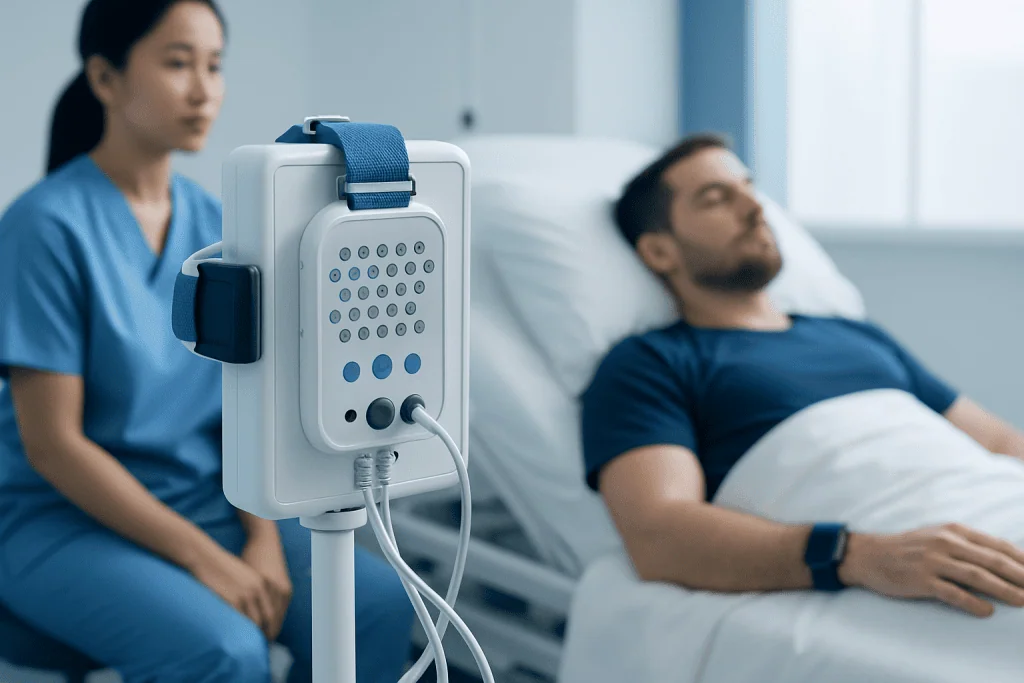
The actigraphy device contains a motion sensor that detects movement throughout the day and night. Software analyzes this data and uses established algorithms to estimate periods of sleep and wakefulness. Many devices also record light exposure or event markers, which can provide added information about daily routines and circadian timing.
Most people wear the device continuously for at least several days, and sometimes for two weeks or longer. The aim is to capture usual sleep patterns, not just a single night. During the testing period, the person is often asked to keep a sleep diary that notes bedtime, wake time, naps, work shifts, caffeine use, and any symptoms during the night.
The test is painless and does not usually interfere much with daily life. Because it is worn during normal activities, it can reveal patterns that might not appear during in-hospital testing. This long-term recording is one reason actigraphy is widely used in sleep medicine.
When Actigraphy Is Used for Sleep Disorders

Actigraphy for sleep disorders is commonly used when a doctor suspects insomnia or a circadian rhythm sleep-wake disorder. In insomnia, the device can help compare the person’s impression of sleep with their actual rest-activity pattern over time. In circadian disorders, it can show delayed sleep timing, advanced sleep timing, irregular sleep schedules, or disrupted rhythms related to shift work.
It may also be helpful in children, older adults, and people with neurological or psychiatric conditions when sleep-wake patterns are difficult to describe accurately. In some cases, actigraphy supports evaluation of excessive daytime sleepiness, fragmented sleep, or poor sleep habits. It can also help monitor response to treatment, such as behavioral sleep therapy or schedule adjustments.
Doctors may use actigraphy alongside assessments for related conditions such as sleep apnea or persistent insomnia. Although the device can suggest disturbed sleep, it cannot on its own diagnose all causes of poor sleep. The results are most useful when interpreted together with symptoms, examination, and other tests if needed.
What to Expect Before, During, and After the Test
Before starting actigraphy, the doctor explains how long the device should be worn and whether it should stay on during bathing, exercise, or sleep. The person may receive a paper or digital sleep diary to complete each day. Clear instructions are important because accurate timing notes improve how the data is interpreted.
During the test period, most people continue their normal routine as much as possible. The goal is to record usual sleep and wake behavior, so sudden changes to bedtime or daily habits are generally not recommended unless the doctor advises otherwise. If the device has a button to mark bedtime or awakening, the person may be asked to use it at specific times.
After the recording period, the device is returned and the data is downloaded for review. A sleep specialist compares the movement pattern with the sleep diary and the person’s symptoms. If the findings suggest a more complex disorder, the doctor may recommend further testing such as a polysomnography sleep study or other evaluations.
Benefits and Limitations of Actigraphy
One of the main advantages of actigraphy is convenience. It is simple, portable, and performed at home, allowing sleep to be measured in a familiar setting over many days. This can make it more representative of everyday life than a single-night study in a laboratory. It is also useful for tracking changes over time and for assessing sleep patterns before and after treatment.
Another strength is that actigraphy can uncover schedule-related problems that may otherwise be missed. For example, it can help document delayed sleep timing in teenagers or irregular patterns in people who work night shifts. When combined with a sleep diary, it can provide a clearer picture of how behavior, routine, and body clock timing affect sleep.
At the same time, actigraphy has important limits. Because it estimates sleep from movement, it may mistakenly label quiet wakefulness as sleep or restless sleep as wakefulness. It cannot diagnose breathing-related disorders, seizures during sleep, or some movement disorders by itself. In those situations, a doctor may recommend more detailed testing such as electroencephalography or an overnight sleep study, depending on the symptoms.
How Doctors Interpret the Results
Actigraphy results are not read in isolation. A doctor reviews the timing and regularity of rest and activity, total estimated sleep time, sleep efficiency, nighttime awakenings, and daytime naps. These findings are then compared with the person’s medical history, medications, mood, work schedule, and the information recorded in the sleep diary.
For example, someone with difficulty falling asleep may show a consistently delayed sleep schedule rather than true inability to sleep. Another person may appear to spend enough time in bed but have frequent awakenings or irregular habits that reduce sleep quality. This broader interpretation helps guide treatment, which may include sleep hygiene changes, behavioral therapy, or further diagnostic testing.
In some cases, actigraphy is used as part of follow-up rather than first-line diagnosis. It can help show whether a treatment plan is improving sleep regularity or whether symptoms are persisting despite interventions. This is one reason it is valued as both a diagnostic and monitoring tool in neurological sleep medicine.
Treatment Planning After Actigraphy
The next step after actigraphy depends on what the pattern suggests. If the results point to insomnia, treatment may focus on behavioral strategies, regular sleep timing, and evaluation of contributing factors such as stress, pain, medications, or mental health symptoms. If the issue appears to be linked to body clock timing, treatment may center on light exposure, schedule adjustments, and specialist guidance for circadian rhythm management.
When the findings raise concern for another sleep disorder, actigraphy may be followed by targeted testing. A person with loud snoring, pauses in breathing, or marked daytime sleepiness might need sleep apnea treatment after further evaluation. Others may benefit from broader sleep disorders treatment tailored to the specific diagnosis.
Near the end of the evaluation process, some patients may seek care in specialized centers. Acibadem International’s multidisciplinary specialists and JCI-accredited hospitals diagnose and treat sleep-related conditions for international patients when more comprehensive assessment is needed.
When to See a Doctor About Sleep Problems
A doctor should be consulted if sleep problems are frequent, last for several weeks, or begin to affect mood, concentration, school, work, or daily functioning. Persistent trouble falling asleep, waking too early, sleeping at unusual hours, or feeling unrefreshed despite enough time in bed are all reasonable reasons to seek medical advice. A professional evaluation can help distinguish temporary sleep disruption from a diagnosable sleep disorder.
Medical review is especially important if sleep symptoms occur with loud snoring, choking during sleep, unusual movements, confusion at night, severe daytime sleepiness, or sudden sleep episodes. These features may point to conditions that need more than actigraphy alone. Prompt evaluation can help determine the safest and most appropriate next steps.
Actigraphy can be a helpful part of that assessment because it is easy to use and provides objective information over time. Still, it works best as one part of a complete sleep evaluation led by a qualified doctor who can match test results to symptoms and medical history.
Frequently asked questions
Is actigraphy the same as a sleep study?
No. Actigraphy is a wearable test that estimates sleep and wake patterns based on movement, while a full sleep study measures additional functions such as brain activity, breathing, heart rate, and oxygen levels. The two tests can complement each other, but they are not interchangeable.
What sleep disorders can actigraphy help diagnose?
Actigraphy is especially helpful for insomnia and circadian rhythm sleep-wake disorders, such as delayed sleep phase or irregular sleep schedules. It may also support evaluation of fragmented sleep, daytime napping, and treatment response. A doctor decides whether it is the right test based on the symptoms.
How long does someone need to wear an actigraphy device?
The device is often worn continuously for several days to two weeks, and sometimes longer. The exact duration depends on the reason for testing and how variable the sleep pattern is. Longer monitoring can give a clearer picture of typical routines.
Can actigraphy diagnose sleep apnea?
Actigraphy alone cannot diagnose sleep apnea. It may show disturbed or irregular sleep, but it does not directly measure breathing pauses or oxygen levels. If sleep apnea is suspected, a doctor usually recommends a dedicated sleep study or other appropriate testing.
Is actigraphy uncomfortable or invasive?
Actigraphy is generally comfortable and noninvasive. The device is usually worn like a wristwatch and does not involve needles, radiation, or hospital admission. Most people can continue their normal daily routine while wearing it.
Do sleep diaries still matter if actigraphy is used?
Yes. A sleep diary helps explain what was happening at certain times, such as bedtime, awakenings, naps, work shifts, or caffeine use. When combined with actigraphy, it gives doctors a more accurate and clinically useful understanding of sleep patterns.
References
- American Academy of Sleep Medicine
- National Institutes of Health
- National Institute of Neurological Disorders and Stroke
- Centers for Disease Control and Prevention
- World Health Organization
This article is for general information only and is not a substitute for professional medical advice. Please consult a qualified doctor about your individual situation.
Explore treatments in Turkey — costs, top hospitals & a free quote
JCI-accredited · board-certified surgeons · reply within 24h
Add us as a Preferred Source to see more of our trusted health content across Google Search, AI Overviews and Discover.