Acute respiratory failure: Common Causes, Warning Signs, and When to Worry

Acute respiratory failure is a medical emergency, not just ordinary shortness of breath. Common warning signs include severe breathlessness, fast breathing, bluish lips or fingertips, confusion, and extreme sleepiness.
Key Takeaways
- Acute respiratory failure is a medical emergency, not just ordinary shortness of breath.
- Common warning signs include severe breathlessness, fast breathing, bluish lips or fingertips, confusion, and extreme sleepiness.
- It can be caused by lung infections, asthma or COPD flare-ups, heart problems, blood clots, injury, or drug effects.
- Doctors diagnose it using symptoms, oxygen measurements, blood gas testing, imaging, and evaluation of the underlying cause.
- Treatment focuses on supporting breathing quickly while treating the condition that triggered the episode.
- People with sudden breathing trouble should seek emergency care without delay.
Acute respiratory failure happens when the lungs suddenly cannot move enough oxygen into the blood, remove enough carbon dioxide, or both. It is a serious condition that needs urgent medical attention, especially when breathing becomes difficult, oxygen levels fall, or confusion develops.
What acute respiratory failure means
Acute respiratory failure means the breathing system is no longer keeping the body in balance. In practical terms, the lungs may not be bringing in enough oxygen, clearing out enough carbon dioxide, or both. This can develop quickly over minutes to hours, or sometimes over a short period of days depending on the cause.
Doctors often describe two main patterns. In hypoxemic respiratory failure, oxygen levels fall too low. In hypercapnic respiratory failure, carbon dioxide builds up because the body cannot breathe deeply or effectively enough. Some people have features of both at the same time.
This is different from feeling briefly winded after exercise or during anxiety. Acute respiratory failure reflects a breakdown in normal breathing function and can affect the brain, heart, kidneys, and other organs if not treated promptly. Early recognition matters because treatment is most effective when started quickly.
Warning signs that should not be ignored
The clearest symptom is breathing difficulty that feels more severe, more sudden, or more persistent than usual. A person may be breathing very fast, struggling to speak full sentences, using neck or chest muscles to breathe, or feeling as though they cannot get enough air. Some people describe chest tightness, air hunger, or a sense of panic that comes from low oxygen.
Other signs can point to worsening oxygen or carbon dioxide levels. These include bluish lips or fingertips, unusual sweating, a racing heartbeat, restlessness, confusion, new drowsiness, headache, or poor concentration. In more serious cases, a person may become very sleepy, less responsive, or collapse.
Symptoms can look different depending on the cause. A person with pneumonia may have fever and cough, while someone with an asthma attack may wheeze and struggle to exhale. A person with opioid-related breathing suppression may seem unusually sleepy before obvious breathing distress appears.
- Severe shortness of breath at rest
- Fast, shallow, or labored breathing
- Blue or gray lips, nails, or skin
- Confusion, agitation, or fainting
- Inability to speak normally because of breathlessness
- Extreme sleepiness or reduced alertness
Common causes and who is at higher risk

Acute respiratory failure is not a disease by itself but a result of another serious problem. Common causes include pneumonia and other severe lung infections, acute respiratory distress syndrome, asthma attacks, chronic obstructive pulmonary disease flare-ups, pulmonary embolism, fluid in the lungs from heart failure, chest trauma, and inhalation of smoke or toxic substances. Problems affecting the brain, nerves, or breathing muscles can also interfere with normal ventilation.
Some medicines and substances can slow breathing. Opioids, sedatives, alcohol, and certain drug interactions may reduce the drive to breathe, especially in older adults or people with sleep-related breathing disorders. Conditions that weaken the muscles involved in breathing can also raise the risk of carbon dioxide retention.
Risk tends to be higher in people with existing lung or heart disease, reduced immunity, major infections, recent surgery, obesity hypoventilation, or advanced age. People with chronic lung conditions such as COPD or severe asthma may be more vulnerable to sudden worsening, particularly during infections or exposure to smoke and air pollutants.
How doctors identify the problem quickly
Doctors diagnose acute respiratory failure by combining the person’s symptoms, physical examination, and urgent testing. Pulse oximetry gives a quick estimate of oxygen saturation through a finger sensor. An arterial blood gas test provides more detailed information by measuring oxygen, carbon dioxide, and blood acidity, which helps define the type and severity of respiratory failure.
Imaging often helps find the cause. A chest X-ray may show pneumonia, fluid buildup, or collapsed lung, while a CT scan may be needed when a blood clot, complex infection, or other serious condition is suspected. Heart testing, including an electrocardiogram and blood tests, may be used if a cardiac cause is possible.
Additional tests depend on the situation. These may include infection-related blood work, cultures, ultrasound, or evaluation for underlying neurological or muscular causes. The immediate goal is to identify why breathing has failed so that supportive care and cause-specific treatment can begin at the same time.
Treatment: supporting breathing and treating the cause
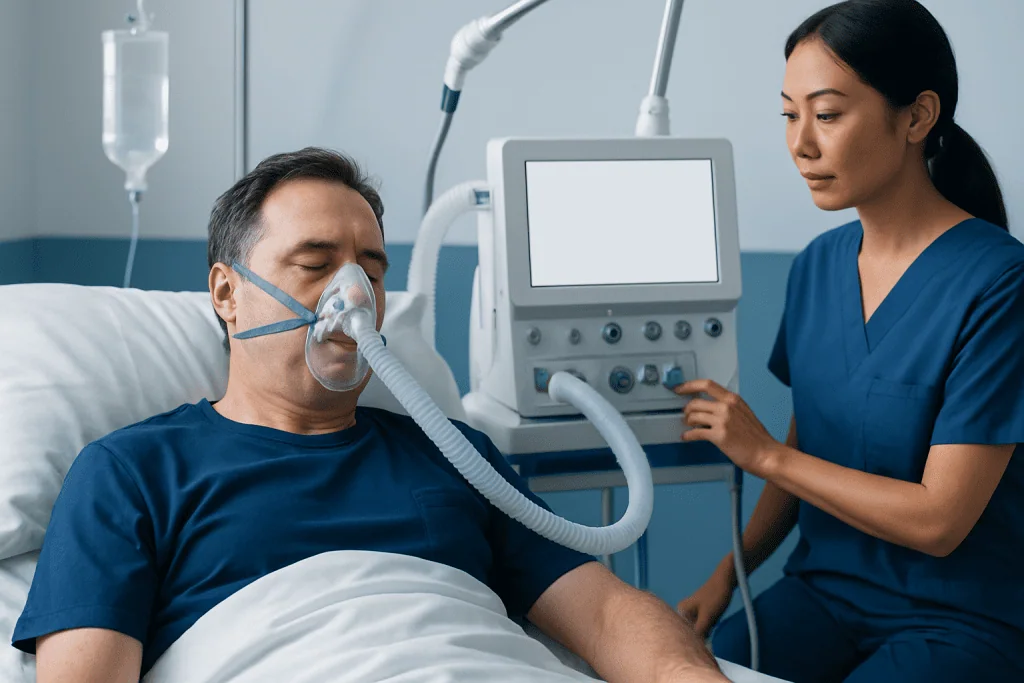
Treatment usually starts with oxygen and close monitoring. Depending on the severity, oxygen may be delivered through a nasal cannula, face mask, or high-flow system. If breathing is still not adequate, doctors may use noninvasive ventilation such as a tight-fitting mask that helps move air in and out. In more severe cases, a breathing tube and mechanical ventilator may be needed to protect the airway and support gas exchange.
At the same time, doctors treat the trigger. Antibiotics may be used for bacterial pneumonia, bronchodilator therapy for asthma or COPD flare-ups, blood thinners for pulmonary embolism, diuretics for fluid overload from heart failure, or antidotes and supportive care when medicines or substances have slowed breathing. In some situations, care in an intensive care unit is required.
The right treatment depends on the underlying diagnosis and the person’s overall health. Some patients may also need advanced respiratory assessment, imaging, and specialist care through services such as bronchoscopy or intensive care support when airway evaluation or critical monitoring is necessary.
Prevention and self-care after recovery
Not every case can be prevented, but many risk factors can be reduced. Good control of chronic lung or heart disease is one of the most important steps. Taking prescribed medications correctly, attending follow-up visits, avoiding tobacco smoke, and getting recommended vaccines for influenza and pneumonia may lower the risk of severe respiratory illness.
People who have inhalers for asthma or COPD should know when and how to use them and should have an action plan from their doctor. Early treatment of chest infections, attention to worsening cough or wheeze, and avoiding known triggers such as smoke, dust, or chemical fumes can help prevent escalation.
Recovery may take time, especially after hospitalization. Fatigue, weakness, and reduced exercise tolerance are common for a period afterward. A doctor may recommend breathing exercises, pulmonary rehabilitation, nutrition support, and careful monitoring of oxygen needs or related conditions such as sleep apnea treatment if nighttime breathing problems are contributing factors.
When to seek medical care
Emergency care is needed for sudden or rapidly worsening breathing difficulty, blue lips or fingertips, confusion, chest pain, fainting, or unusual sleepiness. A person who cannot speak normally because of breathlessness, appears distressed, or is breathing very fast should be evaluated immediately. If available, very low oxygen readings on a home pulse oximeter can support concern, but a normal reading does not rule out serious illness.
Medical attention is also important if a known lung condition is getting worse despite usual treatment, or if fever, cough, and breathlessness are increasing together. Children, older adults, pregnant people, and anyone with chronic heart or lung disease should be assessed promptly when symptoms escalate.
For international patients who need specialist assessment, Acibadem International’s multidisciplinary teams and JCI-accredited hospitals diagnose and treat serious respiratory conditions, including advanced evaluation with lung transplant services when appropriate for selected severe chronic cases. However, sudden breathing emergencies should always be treated without delay at the nearest emergency facility first.
Frequently asked questions
Is acute respiratory failure the same as shortness of breath?
No. Shortness of breath is a symptom, while acute respiratory failure is a serious medical condition in which the lungs cannot maintain healthy oxygen and carbon dioxide levels. A person may feel short of breath for many reasons, but respiratory failure requires urgent medical evaluation and treatment.
Can acute respiratory failure happen suddenly?
Yes, it can develop very quickly, especially with severe asthma, pneumonia, pulmonary embolism, overdose, or major heart and lung problems. In some cases it progresses over hours or a few days. Because it can worsen fast, sudden breathing trouble should never be ignored.
What are the first warning signs of acute respiratory failure?
Common early signs include severe breathlessness, very fast breathing, trouble speaking because of lack of air, and a feeling of chest tightness or air hunger. Confusion, blue lips, and unusual drowsiness are particularly concerning signs that need emergency attention.
How is acute respiratory failure treated in the hospital?
Doctors first support breathing with oxygen and close monitoring. Some people need noninvasive ventilation or a ventilator, while others improve with oxygen and treatment of the cause, such as antibiotics, inhaled medications, or therapy for heart or blood clot problems.
Can someone recover fully from acute respiratory failure?
Many people do recover, especially when treatment starts early and the underlying cause can be controlled. Recovery time varies depending on age, overall health, and how severe the episode was. Some patients need follow-up care, rehabilitation, or long-term management of chronic heart or lung disease.
Who is more likely to develop acute respiratory failure?
Risk is higher in people with COPD, asthma, heart failure, severe infections, sleep-related breathing disorders, weakened immunity, or certain neurological and muscular conditions. Older adults and people taking medications that slow breathing may also be at increased risk.
References
- American Thoracic Society
- National Heart, Lung, and Blood Institute
- Centers for Disease Control and Prevention
- World Health Organization
- Merck Manual Professional Edition
This article is for general information only and is not a substitute for professional medical advice. Please consult a qualified doctor about your individual situation.
Explore treatments in Turkey — costs, top hospitals & a free quote
JCI-accredited · board-certified surgeons · reply within 24h
Add us as a Preferred Source to see more of our trusted health content across Google Search, AI Overviews and Discover.