

All-on-4 vs All-on-6: Which Full-Arch Implant Option Is Right for You?

All-on-4 uses four implants to support a full arch, while All-on-6 uses six implants for broader support. Neither option is automatically better for everyone; the right choice depends on individual anatomy and function.
Key Takeaways
- All-on-4 uses four implants to support a full arch, while All-on-6 uses six implants for broader support.
- Neither option is automatically better for everyone; the right choice depends on individual anatomy and function.
- Bone volume, sinus position, gum health, and bite force all influence treatment planning.
- A temporary fixed bridge is often placed first, followed by a final prosthesis after healing.
- Careful hygiene and regular follow-up are essential for long-term implant success.
All-on-4 and All-on-6 are full-arch dental implant approaches used to replace all teeth in the upper or lower jaw with a fixed prosthesis. Both can restore chewing, appearance, and confidence, but the better option depends on bone quality, jaw anatomy, bite strength, oral health, and long-term treatment goals.
Overview: What All-on-4 and All-on-6 Mean
All-on-4 and All-on-6 are treatment concepts for people who need all teeth replaced in one upper or lower arch. Instead of placing one implant for every missing tooth, a dentist or oral surgeon places four or six implants in strategic positions, then attaches a full-arch fixed prosthesis. This approach can provide a more stable alternative to removable dentures and may improve comfort, chewing ability, and appearance.
In an All-on-4 design, two implants are usually placed in the front part of the jaw and two are angled toward the back to use available bone efficiently. In an All-on-6 design, six implants are distributed across the arch, which may provide broader load distribution. The exact implant position varies from person to person based on bone shape, nerve location, sinus anatomy, and the planned prosthesis.
Both options are part of modern dental implant treatment and are commonly used when many teeth are missing, badly damaged, or affected by advanced dental disease. Some patients can receive implants and a temporary fixed bridge on the same day, while others need preparatory care such as tooth removal, gum treatment, or bone-related procedures before the final restoration process can begin.
How the Two Options Differ
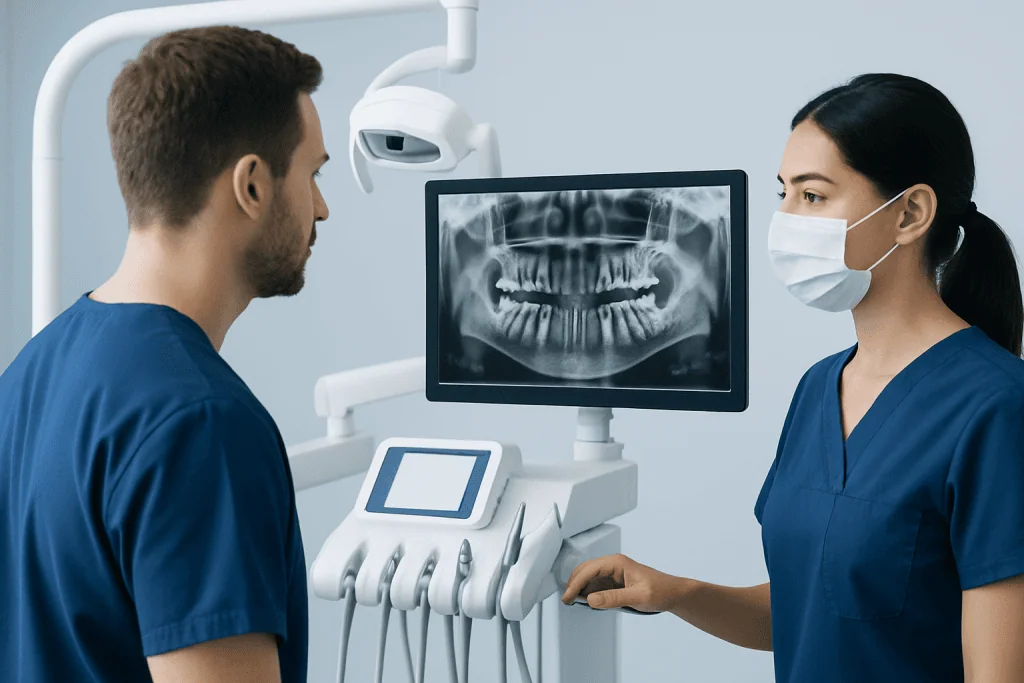
The main difference is the number of implants used to support the full arch. Four implants can be enough in carefully selected patients, especially when bone is limited in the back of the jaw and angled implants can help avoid more invasive grafting. Six implants provide two additional anchoring points, which may be useful when the goal is to spread biting forces over a wider area.
All-on-6 may be considered when a person has stronger chewing forces, a larger jaw, or bone conditions that allow additional implants to be placed safely. In some cases, the extra implants can offer more prosthetic flexibility and may support a longer arch or different bridge design. However, this does not mean All-on-6 is always superior; it can involve more surgical sites, higher treatment complexity, and different space requirements.
From the patient perspective, both options aim to create a fixed set of teeth that feels secure and natural in daily life. The choice is usually less about a simple preference for “more implants” and more about matching the treatment plan to the person’s anatomy, oral function, and long-term maintenance needs.
Who May Be a Candidate

People may be candidates for either All-on-4 or All-on-6 if they have multiple missing teeth, failing teeth, severe wear, or advanced damage that makes saving each tooth impractical. These treatments are also considered for patients who are unhappy with loose dentures and want a more fixed, stable solution. Good general health and the ability to heal after oral surgery are important for both approaches.
Oral health also matters. Active gum disease, untreated infection, and poor oral hygiene can reduce the chance of implant success and usually need to be addressed first. Problems such as bleeding gums or significant plaque buildup may signal inflammation that should be managed before implant placement. A full evaluation often includes examining the gums, jawbone, bite, and the condition of any remaining teeth.
Patients who smoke, clench or grind their teeth, or have certain chronic medical conditions may still be eligible, but they often need closer planning and follow-up. For example, heavy bite forces from teeth grinding can affect the design of the prosthesis and the long-term protection of implants. A consultation with a team experienced in comprehensive dental care helps clarify whether a fixed full-arch option is suitable and which design is most appropriate.
What Dentists Consider When Choosing All-on-4 or All-on-6
The amount and quality of jawbone are among the most important factors. If the back of the jaw has less bone, an All-on-4 approach with tilted posterior implants may allow treatment without extensive grafting in some patients. If there is enough bone across the arch, six implants may be placed to improve support and distribute forces more evenly.
Bite force and jaw function are also important. Patients with strong chewing muscles, a history of tooth grinding, or a wide arch may benefit from additional support. The dentist will also look at how the upper and lower jaws meet, whether there is enough restorative space for the bridge, and how the future prosthesis will be cleaned and maintained.
Advanced imaging and digital planning often guide the decision. Cone-beam CT scans help show bone dimensions, sinus position, and nearby nerves, while digital workflows can improve the precision of planning and surgical execution. In some centers, digital dentistry tools are used to simulate implant positions and design the temporary and final teeth before surgery.
Cost, treatment time, and patient priorities are also part of the discussion. Some patients prioritize the least invasive option, while others prefer the additional support that may come with more implants. A balanced treatment plan considers medical safety, function, aesthetics, hygiene access, and long-term durability rather than focusing on implant number alone.
Diagnosis and Treatment Planning
Planning begins with a detailed dental and medical assessment. The clinician examines remaining teeth, gum condition, jaw relationships, and signs of infection or inflammation. X-rays and three-dimensional scans help determine whether implants can be placed immediately after extractions or whether healing, grafting, or other preparatory steps are needed first.
The dentist also reviews the smile line, lip support, speech, and facial proportions because a full-arch prosthesis affects more than chewing. The shape and position of the future teeth and gums are designed to look natural and function comfortably. Temporary teeth may be used to test appearance and bite before the final bridge is made.
In some cases, teeth can be removed and implants placed in the same visit, with a fixed temporary bridge attached soon after. In other cases, treatment is staged to improve healing and predictability. The plan may include extractions, periodontal care, and replacement of damaged teeth with restorations such as dental crowns in arches that do not need full replacement.
Benefits, Limitations, and Recovery
Both All-on-4 and All-on-6 can offer important benefits. They may improve stability compared with removable dentures, help restore confidence during speaking and smiling, and allow many patients to eat a wider variety of foods. Because the prosthesis is fixed, many people also appreciate the sense of security it provides in social situations.
There are also limitations to understand. Implants require healthy healing, good daily cleaning, and regular professional maintenance. Even when a bridge is fixed, it is not the same as natural teeth and still needs careful design and long-term monitoring. Complications can include implant failure, prosthesis wear or fracture, gum inflammation around implants, and dissatisfaction with aesthetics or speech if planning is incomplete.
Recovery varies by case. Swelling, mild discomfort, and temporary changes in chewing are common after surgery. Patients are usually advised to follow a softer diet for a period while the implants integrate with bone and the temporary bridge protects healing tissues. The final prosthesis is typically placed after sufficient healing, once fit, bite, and appearance can be refined more precisely.
Long-Term Care, Prevention, and When to Seek Professional Advice
Long-term success depends heavily on home care and follow-up. Full-arch implant restorations must be cleaned every day, including under the bridge, using tools recommended by the dental team. Regular checkups allow the clinician to evaluate the implants, gums, bite, and the condition of screws, acrylic, ceramic, or other restorative materials.
Patients should contact a dentist if they notice persistent pain, swelling, a bad taste, bleeding around implants, looseness of the bridge, difficulty chewing, or changes in how the teeth meet. These symptoms do not always mean a serious problem, but they do need evaluation. Early treatment may prevent minor issues from becoming more complex.
Anyone considering full-arch implants should ask about alternatives, expected maintenance, healing timelines, and what kind of final bridge is planned. Seeking care from an experienced multidisciplinary team can make treatment safer and more predictable. Acibadem International’s multidisciplinary dental specialists in JCI-accredited hospitals diagnose and treat full-arch implant cases for international patients, with planning tailored to individual anatomy and oral health needs.
Most importantly, the choice between All-on-4 and All-on-6 should be made after a personalized examination rather than general comparison alone. The best option is the one that offers stable support, respects the patient’s anatomy, and can be maintained comfortably for years to come.
Frequently asked questions
Is All-on-6 better than All-on-4?
Not necessarily. All-on-6 uses more implants and may provide broader support in some patients, but All-on-4 can also work very well when it is carefully planned. The better option depends on bone volume, jaw shape, bite force, and the design of the prosthesis.
Which option lasts longer, All-on-4 or All-on-6?
Longevity depends more on case selection, surgical quality, prosthesis design, oral hygiene, and regular maintenance than on implant number alone. Both can last many years when implants integrate well and the restoration is properly cared for. A dentist can explain the expected maintenance needs for each option.
Can full-arch implants be done in one day?
In some cases, yes. Some patients receive implants and a temporary fixed bridge on the same day or shortly after surgery. However, not everyone is a candidate, and the final bridge is usually placed only after healing is complete.
Do All-on-4 and All-on-6 require bone grafting?
Not always. One reason All-on-4 is popular is that angled implants may help use available bone and sometimes reduce the need for grafting. Still, some patients with significant bone loss may need additional procedures before implants can be placed safely.
Are these implants removed for cleaning?
The prosthesis is fixed in the mouth and is not removed by the patient for routine cleaning. Daily home care is still essential, especially cleaning under the bridge and around the gums. The dental team may remove the prosthesis during professional maintenance visits when needed.
How painful is the procedure?
Most patients have the procedure with local anesthesia and, when appropriate, sedation options recommended by their clinician. Some soreness, swelling, and bruising can occur afterward, but these effects are usually temporary and manageable with the care plan provided. Recovery experience varies depending on extractions, the number of implants, and general health.
References
- American Dental Association
- International Team for Implantology
- American Academy of Implant Dentistry
- European Association for Osseointegration
- National Institute of Dental and Craniofacial Research
This article is for general information only and is not a substitute for professional medical advice. Please consult a qualified doctor about your individual situation.
Explore treatments in Turkey — costs, top hospitals & a free quote
JCI-accredited · board-certified surgeons · reply within 24h
Add us as a Preferred Source to see more of our trusted health content across Google Search, AI Overviews and Discover.

Dental & Oral Health
Full-scope dental care from implants and aesthetics to oral and maxillofacial surgery.
158 specialists in this unitRelated Treatments
More from the Health Library



Related Specialists

Assoc. Prof. Dr. Ferit Bayram
Oral & Dental Health
Assoc. Prof. Dr. Yeliz Çavuşoğlu Yüce
Oral & Dental Health
Assoc. Prof. Dr. Mutlu Keskin
Oral & Dental Health
Prof. Dr. Ülkü Noyan
Oral & Dental Health