ALS Symptoms in Women Explained: Common Triggers and Red Flags

ALS symptoms in women often begin subtly, such as hand weakness, tripping, cramps, or changes in speech. The disease affects motor nerve cells, so symptoms usually involve movement, strength, swallowing, or breathing rather than sensation.
Key Takeaways
- ALS symptoms in women often begin subtly, such as hand weakness, tripping, cramps, or changes in speech.
- The disease affects motor nerve cells, so symptoms usually involve movement, strength, swallowing, or breathing rather than sensation.
- Symptoms are not caused by everyday stress or routine activity, but certain factors may make existing symptoms more noticeable.
- A diagnosis requires clinical assessment and tests to rule out other neurological or muscular conditions.
- Early medical review is important if weakness is progressive, one-sided at first, or associated with speech, swallowing, or breathing changes.
ALS symptoms in women usually start with gradual muscle weakness, clumsiness, cramps, twitching, speech changes, or swallowing difficulty rather than sudden severe illness. Because early symptoms can resemble more common conditions, a careful neurological evaluation is important when weakness progresses or starts affecting daily life.
Overview: what ALS symptoms in women can look like
ALS symptoms in women often begin with subtle, progressive changes in strength and muscle control. A woman may first notice that her grip is weaker, her foot catches on the floor, her speech sounds slightly slurred, or everyday tasks feel unexpectedly difficult. These symptoms usually develop gradually over time rather than appearing all at once.
Amyotrophic lateral sclerosis, also called ALS or motor neuron disease in some settings, affects the nerve cells that control voluntary muscles. Because of this, the main symptoms are related to movement, coordination, speech, swallowing, and breathing. It does not typically begin with numbness, tingling, or severe pain, although discomfort from muscle cramps or stiffness can happen.
Women can develop ALS at various ages, though it is more common in later adulthood. The condition does not have a completely different form in women, but symptom patterns can be overlooked if early changes are mild or mistaken for fatigue, overuse, menopause-related concerns, joint problems, or another neurological condition. This is one reason persistent or worsening weakness deserves medical attention.
Common early symptoms and red flags
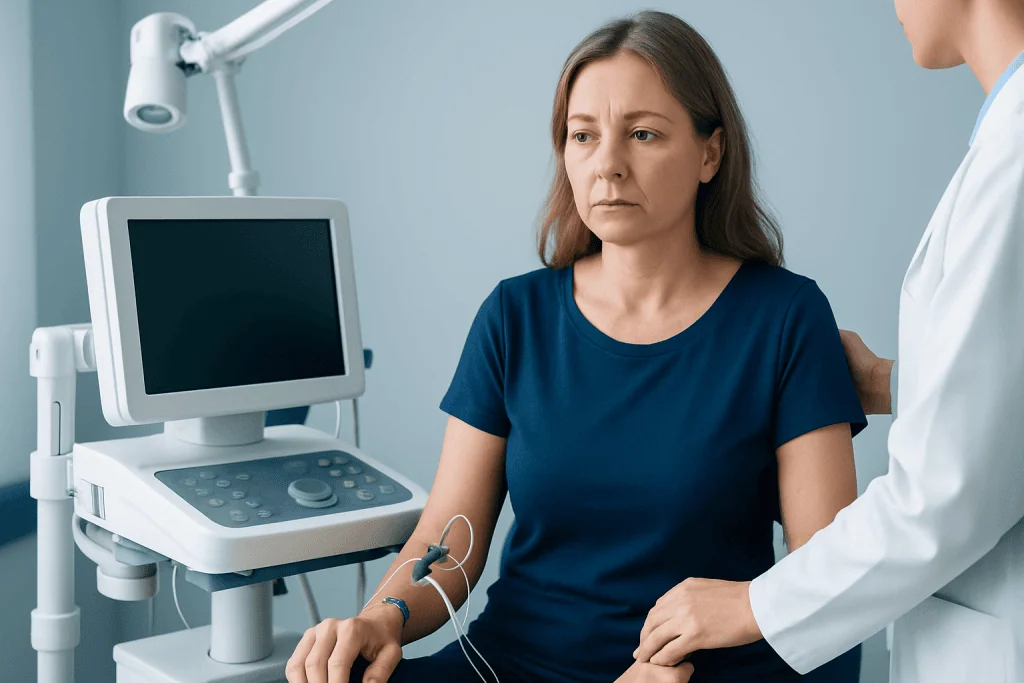
The earliest ALS symptoms in women may affect one area first. For some, this is a hand that feels clumsy during writing, buttoning clothes, or opening jars. Others notice leg weakness, frequent tripping, difficulty climbing stairs, or a sense that one foot is dragging. Muscle twitching, called fasciculations, and cramping may also occur, especially in the arms, shoulders, legs, or tongue.
Another common pattern involves speech and swallowing. A woman may develop slightly slurred speech, a weaker voice, choking on liquids, or trouble chewing and swallowing. This form can be easy to dismiss at first, especially if symptoms come and go or seem mild, but progression is an important clue that should not be ignored.
Red flags that make medical review more urgent include symptoms that continue to worsen, spread from one body region to another, or start interfering with walking, hand function, communication, eating, or breathing. Unexplained muscle wasting, persistent weakness without sensory loss, or new shortness of breath during routine activity should also prompt evaluation.
- Progressive weakness in one hand, arm, foot, or leg
- Frequent tripping or falls
- Muscle twitching or cramps that come with weakness
- Slurred speech or a weak voice
- Difficulty swallowing or choking episodes
- Shortness of breath, especially when lying flat or during mild activity
Why symptoms can be harder to recognize in women

ALS is not a women-only condition, but in women early signs may be mistaken for more common explanations. Hand pain may be blamed on arthritis, fatigue on stress or poor sleep, gait changes on back problems, and voice changes on reflux or a recent infection. When symptoms are subtle, this overlap can delay recognition.
Another challenge is that ALS often starts asymmetrically, meaning one side or one limb is affected first. A person may adapt without realizing how much function has changed. Switching hands for tasks, avoiding stairs, or taking longer to eat can become quiet compensations that reduce the sense of urgency.
It is also important to know what ALS usually does not cause early on. It does not typically begin with significant numbness, loss of bladder control, confusion, or eye pain. If those symptoms are prominent, doctors may look more closely for another diagnosis. Because several disorders can resemble ALS, specialist assessment is essential before drawing conclusions.
Possible causes, risk factors, and what people mean by triggers
ALS is a neurodegenerative disease that damages motor neurons, but in most people there is no single clear cause. A small proportion of cases are linked to inherited genetic changes, while many are considered sporadic, meaning they occur without a known family history. Age, family history, and certain environmental exposures are studied as possible risk factors, but risk factors do not guarantee that someone will develop the disease.
People often ask about triggers. Everyday activities, exercise, emotional stress, or minor injuries do not cause ALS. However, fatigue, overexertion, illness, poor sleep, and emotional stress can make existing symptoms more noticeable. For example, mild weakness may become clearer after a long day, or speech may sound more strained when a person is tired.
Because symptoms can overlap with other neurological illnesses, doctors may also consider conditions such as multiple sclerosis, peripheral neuropathy, cervical spine disease, myasthenia gravis, thyroid disorders, or muscle disease. This step is important because some conditions that mimic ALS are treatable and have a very different outlook.
How ALS is diagnosed
There is no single blood test that confirms ALS. Diagnosis is based on a detailed medical history, a neurological examination, and tests that support the diagnosis while ruling out other causes of weakness. A neurologist looks for signs affecting both upper and lower motor neurons, such as increased reflexes together with muscle wasting, weakness, or twitching.
Common tests may include electromyography and nerve conduction studies, blood tests, and imaging such as MRI. EMG can help show patterns of nerve and muscle involvement, while MRI may be used to exclude structural problems in the brain or spine. Depending on the symptom pattern, swallowing or breathing tests may also be recommended.
Because ALS can resemble other disorders early on, diagnosis may take time and sometimes requires follow-up over several visits. This can feel frustrating, but a careful process is valuable. It helps reduce the chance of missing another explanation and guides the most appropriate treatment plan. If needed, a person may also be evaluated in a specialized neurology service or multidisciplinary clinic.
Treatment, supportive care, and living with symptoms
Although there is currently no cure for ALS, treatment focuses on slowing disease progression where possible, easing symptoms, preserving independence, and supporting nutrition and breathing. Care is often multidisciplinary and may involve neurologists, rehabilitation specialists, speech and language therapists, dietitians, respiratory specialists, and mental health support.
Supportive treatment can make an important difference in quality of life. Physical and occupational therapy may help with mobility, stretching, energy conservation, and adaptive equipment. Speech and swallowing support can improve communication safety and comfort with meals. If swallowing becomes difficult, doctors may discuss nutritional support options. Breathing symptoms may be assessed with pulmonary testing and managed step by step as needs change.
Some people with ALS may benefit from physical therapy and rehabilitation to maintain function and reduce stiffness. If speech or swallowing symptoms are present, referral to speech and language therapy can be useful. In selected situations, respiratory support may also become part of treatment planning. Near the end of the diagnostic and care pathway, Acibadem International’s multidisciplinary specialists and JCI-accredited hospitals diagnose and treat ALS and related neurological conditions for international patients.
Self-care and daily strategies
Self-care does not replace medical treatment, but it can help women manage symptoms more comfortably. Pacing activity, taking planned rest breaks, and avoiding exhaustion may reduce the impact of weakness and fatigue. Gentle exercise guided by a clinician can support flexibility and comfort, while overexertion is usually discouraged.
Practical adaptations at home can also help preserve independence. Examples include hand rails, supportive footwear, utensils with easier grips, voice-saving strategies, and planning meals that are easier to chew or swallow if needed. Loved ones often play an important role, especially when symptoms affect mobility, communication, or safety.
Emotional support matters too. A new diagnosis or even the evaluation process can be stressful. Counseling, patient support groups, and honest discussions with the care team can help people and families understand what to expect and how to plan ahead. Women who are also navigating other health conditions may benefit from coordinated care across specialties.
When to seek medical care
Medical care should be sought if a woman develops progressive weakness, repeated tripping, hand clumsiness, visible muscle wasting, frequent unexplained cramps with weakness, or changes in speech or swallowing that do not improve. These signs do not always mean ALS, but they should be assessed promptly, especially if they are getting worse over weeks or months.
More urgent care is needed for shortness of breath, choking, aspiration, rapidly worsening swallowing problems, or falls causing injury. Sudden symptoms such as facial drooping, one-sided numbness, or abrupt inability to speak may suggest a different emergency, including stroke, and need immediate attention.
If there is concern about ALS or another neurological condition, early specialist review is the safest approach. In some cases, doctors may evaluate for related neuromuscular problems or for disorders such as Parkinson’s disease when symptoms overlap in the early stages. Prompt assessment does not confirm a diagnosis on its own, but it can speed up answers and appropriate care.
Frequently asked questions
What are the first ALS symptoms in women?
The first ALS symptoms in women are often mild and gradual. Common early signs include hand weakness, tripping, muscle twitching, cramps, slurred speech, or trouble swallowing. The key feature is progression over time rather than a brief isolated symptom.
Are ALS symptoms different in women than in men?
The core symptoms of ALS are broadly similar in women and men because the disease affects motor neurons in the same way. However, early symptoms in women may be attributed to more common causes such as fatigue, joint problems, or stress, which can make recognition less straightforward.
Can muscle twitching alone mean ALS?
Muscle twitching by itself is not enough to diagnose ALS. Fasciculations can happen with stress, caffeine, exercise, medication effects, or benign nerve irritability. Twitching becomes more concerning when it occurs together with progressive weakness, muscle wasting, speech changes, or swallowing difficulty.
Does ALS cause pain or numbness in women?
ALS is mainly a disease of movement and muscle control, so numbness is not usually a prominent early symptom. Some women may have discomfort from cramps, stiffness, immobility, or strain on weakened muscles. If numbness is significant, doctors often investigate other possible causes as well.
What conditions can be mistaken for ALS?
Several conditions can mimic ALS, especially early on. These include multiple sclerosis, cervical spine disease, myasthenia gravis, neuropathy, thyroid disorders, and some muscle diseases. This is why diagnosis usually involves a neurologist, examination, and tests rather than symptoms alone.
When should a woman see a doctor about possible ALS symptoms?
A woman should see a doctor if weakness, clumsiness, speech changes, swallowing difficulty, or frequent falls are persistent or getting worse. Shortness of breath, choking, or rapidly progressive symptoms should be assessed urgently. Early evaluation is important even when the symptoms turn out to have another cause.
References
- National Institute of Neurological Disorders and Stroke
- Centers for Disease Control and Prevention
- Mayo Clinic
- National Health Service
- Muscular Dystrophy Association
This article is for general information only and is not a substitute for professional medical advice. Please consult a qualified doctor about your individual situation.
Explore treatments in Turkey — costs, top hospitals & a free quote
JCI-accredited · board-certified surgeons · reply within 24h
Add us as a Preferred Source to see more of our trusted health content across Google Search, AI Overviews and Discover.