Am I a Candidate for Acl surgery? Eligibility Criteria

ACL surgery is not necessary for every ACL tear; some people do well with structured rehabilitation and activity changes. Repeated giving-way episodes, high-demand sports or work, and combined ligament or meniscus injuries can make reconstruction more appropriate.
Key Takeaways
- ACL surgery is not necessary for every ACL tear; some people do well with structured rehabilitation and activity changes.
- Repeated giving-way episodes, high-demand sports or work, and combined ligament or meniscus injuries can make reconstruction more appropriate.
- An orthopedic assessment considers knee stability, range of motion, swelling, overall health, activity goals and readiness for rehabilitation.
- ACL reconstruction usually uses a tendon graft to create a new ligament rather than stitching the torn ACL back together.
- Recovery requires a structured rehabilitation program and commonly takes many months before return to pivoting sports is considered.
- A pre-assessment with an orthopedic team helps determine suitability, expected recovery and the safest treatment plan.
People with an ACL tear may be candidates for surgery when the knee remains unstable, they wish to return to pivoting activities, or they have associated knee injuries. The decision is individual and depends on symptoms, goals, examination findings, imaging and response to rehabilitation.
Am I a Candidate for ACL Surgery?
A person may be a candidate for ACL surgery if an anterior cruciate ligament (ACL) tear causes ongoing knee instability, limits important work or sporting activities, or occurs alongside other injuries in the knee. However, surgery is not automatically required after every ACL tear. Some people can regain good day-to-day function with rehabilitation, strength training and appropriate changes to activity.
The decision is based on the individual rather than age alone or an MRI result alone. An orthopedic specialist considers how often the knee gives way, the person’s goals, the type of activities they want to return to, associated damage to the meniscus or other ligaments, and whether the knee has responded to non-surgical care. A personalized orthopedic pre-assessment is the appropriate next step for anyone considering ACL surgery.
The ACL is one of the main ligaments that helps control forward-and-rotational movement of the shinbone beneath the thighbone. It can tear during a sudden change of direction, awkward landing, twisting injury or direct impact. A complete tear may make the knee feel unreliable during turning, pivoting or stopping movements.
What ACL Reconstruction Involves
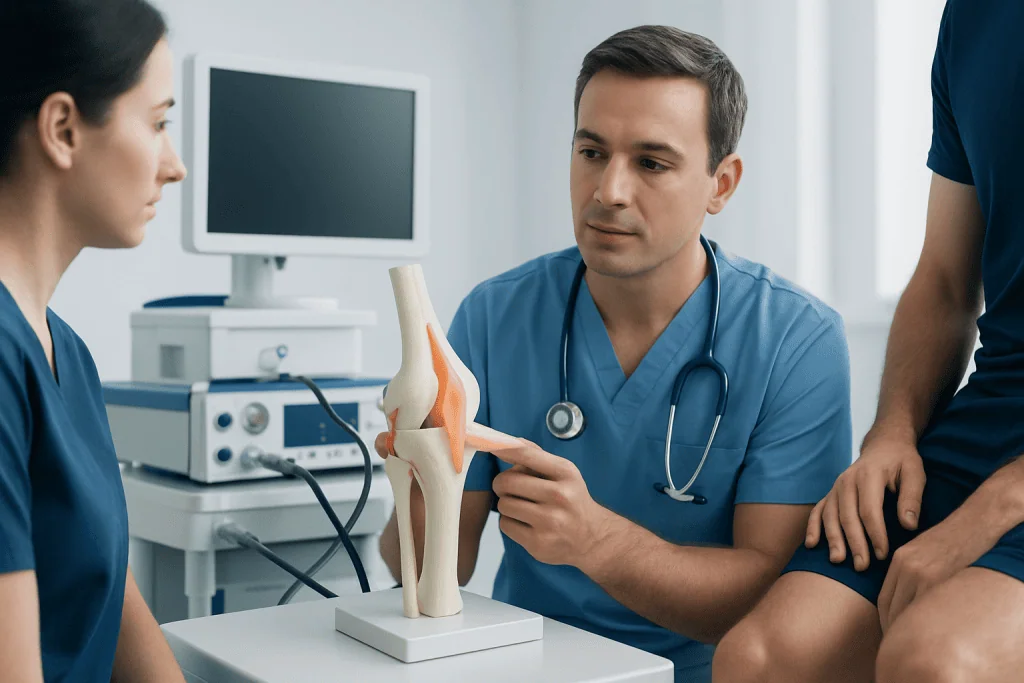
ACL surgery is usually called ACL reconstruction. In most cases, the torn ligament cannot simply be sewn back together reliably. Instead, the surgeon creates a new ACL using a graft: a piece of tendon taken from the patient’s own body or, in selected circumstances, donor tissue. Common autograft sources include the patellar tendon, hamstring tendons and quadriceps tendon.
The procedure is generally performed using arthroscopy. The surgeon makes small incisions, uses a camera to view the inside of the knee, treats any relevant meniscus or cartilage injury, and creates carefully positioned bone tunnels for the graft. The graft is secured so that it can gradually incorporate into the body and function as a new ligament.
Graft selection and surgical planning are individualized. Factors may include skeletal maturity, sport or occupational demands, previous surgeries, tissue quality and the presence of other injuries. The detailed procedure, alternatives and anticipated rehabilitation should be discussed with the orthopedic surgeon before consent is given.
Who Is More Likely to Benefit From Surgery?

ACL reconstruction may be recommended when instability persists despite a well-planned rehabilitation program. Instability often means the knee repeatedly buckles, shifts or gives way, particularly with turning, stairs, uneven ground, rapid stopping or direction changes. Recurrent episodes can raise the risk of further injury to the meniscus or joint cartilage.
People who participate in pivoting, cutting or contact sports may be more likely to choose reconstruction if they want to return to these activities. This can include sports such as football, basketball, skiing, handball or tennis. Similar considerations may apply to individuals whose jobs require frequent climbing, heavy physical work, uneven terrain or rapid movements.
Other features that can support surgery include a combined ACL injury with a repairable meniscus tear, damage to another knee ligament, or knee instability that prevents normal daily function. Younger and very active people are often assessed carefully because recurrent instability may be particularly disruptive, but chronological age alone does not determine eligibility.
- Recurrent episodes of knee giving way
- A wish to return to pivoting, contact or high-demand sport
- Work demands that require a stable knee
- Associated meniscus, cartilage or ligament injuries
- Persistent functional limits after appropriate rehabilitation
When Non-Surgical Care May Be Reasonable
Many people with an ACL tear can consider a non-surgical pathway, especially if they do not have significant instability and are willing to avoid high-risk pivoting activities. This approach generally includes supervised physiotherapy, progressive strength and balance training, swelling management, and guidance on returning to suitable daily activities.
Non-surgical care may be a reasonable choice for someone with lower physical demands, good knee control after rehabilitation, or health factors that make surgery less suitable. A brace may be advised in selected situations, but it does not replace muscle conditioning or restore the ACL itself. Regular reassessment is useful because needs can change over time.
Choosing rehabilitation first does not necessarily prevent surgery later. If the knee remains unstable, goals change, or new associated injuries are identified, an orthopedic surgeon can review the plan. Treatment decisions should take account of the individual’s symptoms and priorities rather than pressure to return to sport quickly.
How Eligibility Is Assessed Before ACL Surgery
A preoperative evaluation begins with a detailed history. The clinician asks how the injury occurred, whether the knee swells or gives way, what activities are difficult, and what the person hopes to return to. Past knee injuries, general health conditions, smoking status, medications and previous treatments are also important.
The physical examination assesses swelling, range of motion, muscle strength, walking pattern and signs of ligament instability. X-rays may be used to evaluate bone alignment or associated injury. Magnetic resonance imaging (MRI) is often helpful for confirming an ACL tear and identifying meniscus, cartilage or additional ligament damage, although clinical findings remain important.
Before reconstruction, the knee usually needs to be as calm and mobile as possible. Significant swelling, limited ability to straighten the knee, and poor quadriceps control may increase the risk of postoperative stiffness. Prehabilitation, often called “prehab,” may therefore be advised to improve movement, strength and confidence before surgery.
People considering treatment can ask their orthopedic team for a structured eligibility assessment or pre-assessment form. This helps clarify health information, activity goals, rehabilitation arrangements and any factors that may need attention before an operation.
Procedure Steps and Recovery Timeline
On the day of surgery, the patient is assessed by the surgical and anesthesia teams. ACL reconstruction is commonly performed under general anesthesia, sometimes with additional regional pain control. During arthroscopy, the surgeon examines the knee, prepares the selected graft, positions it within the knee and secures it. If a meniscus tear requires repair, this may be addressed during the same operation.
Early recovery focuses on pain and swelling control, safe walking, restoring full knee extension and activating the quadriceps muscles. Crutches may be used initially. The exact plan differs depending on the graft, surgical findings and whether other procedures, such as meniscus repair, were performed.
Rehabilitation progresses through stages over several months. Early stages restore movement and basic strength; later stages build single-leg control, running tolerance, jumping mechanics and sport-specific skills. Return to running and return to pivoting sport are not based on a calendar alone. They require clinical review, functional testing, adequate strength and movement quality, and confidence in the knee. For many people, return to demanding pivoting sport is considered only after a prolonged rehabilitation period, often around nine months or longer.
Benefits, Risks and When to Seek Medical Care
The potential benefit of ACL reconstruction is improved stability for the activities that matter to the individual. It may help reduce giving-way episodes and support a return to selected sports or demanding work when combined with thorough rehabilitation. It cannot guarantee a return to the same level of activity, prevent all future arthritis, or eliminate the possibility of another knee injury.
As with any operation, there are risks. These can include infection, blood clots, bleeding, stiffness, persistent pain, numbness near the incision, graft failure, ongoing instability, injury to nearby structures and the possible need for further treatment. Rehabilitation itself is essential; a technically successful operation without consistent rehabilitation may not restore expected function.
Medical care should be sought promptly after a knee injury if there is severe pain, a visibly deformed joint, inability to bear weight, a locked knee, marked swelling, numbness or a cold foot. After surgery, urgent assessment is needed for fever, worsening redness or drainage from the wound, severe calf pain or swelling, chest pain, shortness of breath, or pain that is not controlled as advised.
For international patients, Acibadem International’s multidisciplinary orthopedic specialists and JCI-accredited hospitals assess and treat ACL injuries with individualized surgical and rehabilitation planning.
Frequently asked questions
Is everyone with a torn ACL a candidate for surgery?
No. Some people achieve stable, comfortable daily function with rehabilitation and changes to higher-risk activities. Surgery is more often considered when instability continues, activity goals require a highly stable knee, or there are associated injuries.
Can an ACL heal without surgery?
A complete ACL tear has limited ability to heal in a way that reliably restores normal stability. Even so, some people can function well without reconstruction by building strength, balance and movement control. The best option depends on instability symptoms and personal goals.
Does an MRI alone determine whether ACL surgery is needed?
No. MRI can confirm an ACL injury and show related damage, but it does not by itself determine treatment. The decision also depends on examination findings, knee function, activity demands, health status and response to rehabilitation.
What should someone do before ACL surgery?
Before surgery, clinicians often recommend reducing swelling, restoring as much knee motion as possible and strengthening the quadriceps and surrounding muscles. This prehabilitation can help prepare the knee for surgery and the rehabilitation that follows. The care team will also review medical history, medications and practical support during recovery.
How long does recovery from ACL reconstruction take?
Recovery varies with the graft used, associated injuries, rehabilitation progress and the activities the person plans to resume. Daily activities improve gradually in the first weeks to months, while return to running, jumping and pivoting sports requires later-stage testing and rehabilitation. Full return to demanding sport often takes many months.
What if the knee gives way after an ACL tear?
A giving-way episode can indicate knee instability and should be discussed with an orthopedic clinician or physiotherapist. Repeated instability may increase the chance of meniscus or cartilage injury. Activity modification and a timely assessment can help protect the knee while treatment options are reviewed.
References
- American Academy of Orthopaedic Surgeons
- National Institute of Arthritis and Musculoskeletal and Skin Diseases
- OrthoInfo, American Academy of Orthopaedic Surgeons
- National Health Service
- American Orthopaedic Society for Sports Medicine
This article is for general information only and is not a substitute for professional medical advice. Please consult a qualified doctor about your individual situation.
Joint and spine care in Turkey — expert assessment & treatment
JCI-accredited · board-certified surgeons · reply within 24h
Add us as a Preferred Source to see more of our trusted health content across Google Search, AI Overviews and Discover.