Am I a Candidate for All on 4 dental implants? Eligibility Criteria

All on 4 uses four strategically positioned implants to support a fixed full-arch tooth replacement. A detailed dental examination and 3D imaging are needed to confirm whether the jaw can support implants safely.
Key Takeaways
- All on 4 uses four strategically positioned implants to support a fixed full-arch tooth replacement.
- A detailed dental examination and 3D imaging are needed to confirm whether the jaw can support implants safely.
- Active gum infection, uncontrolled health conditions and heavy tobacco use may need to be addressed before treatment.
- Temporary fixed teeth may be placed on the day of surgery for selected patients, while healing continues for several months.
- Long-term success depends on professional follow-up, daily cleaning and avoiding habits that overload the restoration.
Many people with multiple missing or failing teeth may be candidates for All on 4 dental implants, including some who have experienced jawbone loss. Eligibility depends on an individual assessment of oral health, bone structure, general health, smoking status and treatment goals.
Am I a Candidate for All on 4 Dental Implants?
People who are missing most or all teeth in an upper or lower jaw, or whose remaining teeth cannot be predictably restored, may be candidates for All on 4 dental implants. The approach can also suit some people with reduced jawbone volume because the back implants are often placed at an angle to use available bone.
Only an in-person dental assessment can determine suitability. A dental implant specialist considers the condition of the gums and jawbone, overall health, medicines, smoking or vaping habits, bite forces and expectations for treatment. The main All on 4 dental implants treatment page provides a broader overview of this full-arch rehabilitation option.
All on 4 is not automatically the best choice for every person with tooth loss. In some situations, saving natural teeth, using a removable denture, placing more implants, rebuilding bone first, or choosing another restorative plan may offer a better long-term outcome.
How All on 4 Dental Implants Work
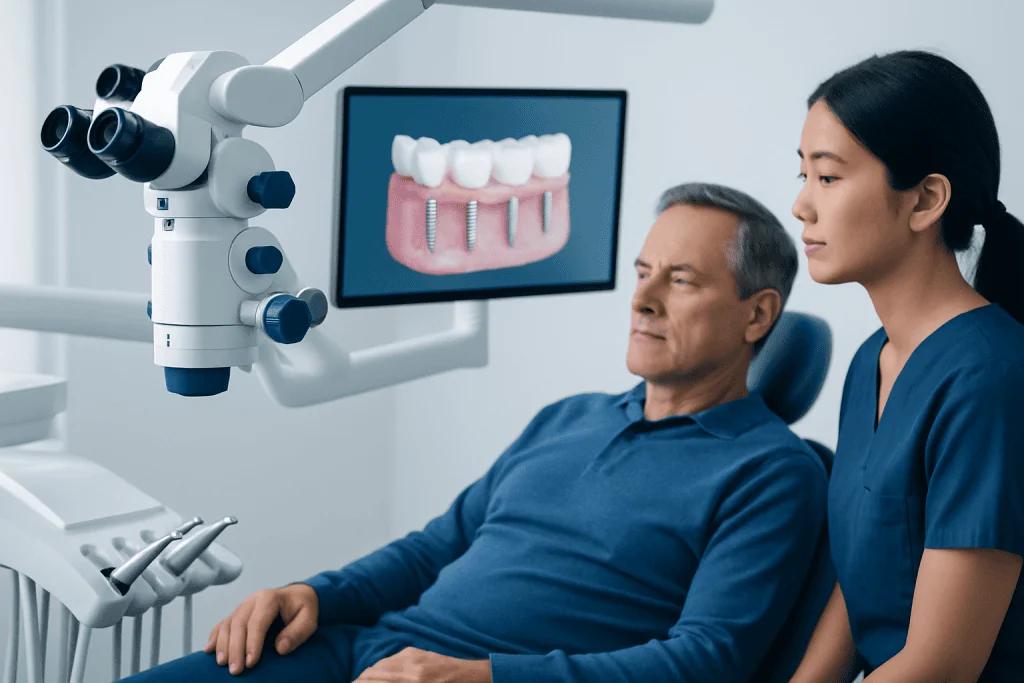
All on 4 is a full-arch tooth replacement method. Four titanium implants are placed in the jaw and serve as anchors for a fixed bridge that replaces all teeth in that arch. The implants gradually bond with living bone through a process called osseointegration.
Two implants are commonly positioned toward the front of the jaw, where bone is often denser. Two posterior implants are commonly angled to maximize contact with available bone and avoid important anatomical structures, such as the maxillary sinus in the upper jaw or the nerve canal in the lower jaw. This design can reduce the need for bone grafting in selected cases, but it does not eliminate the need for careful planning.
Depending on implant stability and the person’s bite, a fixed temporary bridge may be attached soon after surgery. A final bridge is usually made after the gums and bone have healed and the bite can be assessed more accurately. The treatment may be completed for one arch or both arches.
Eligibility Criteria: What Dentists Assess
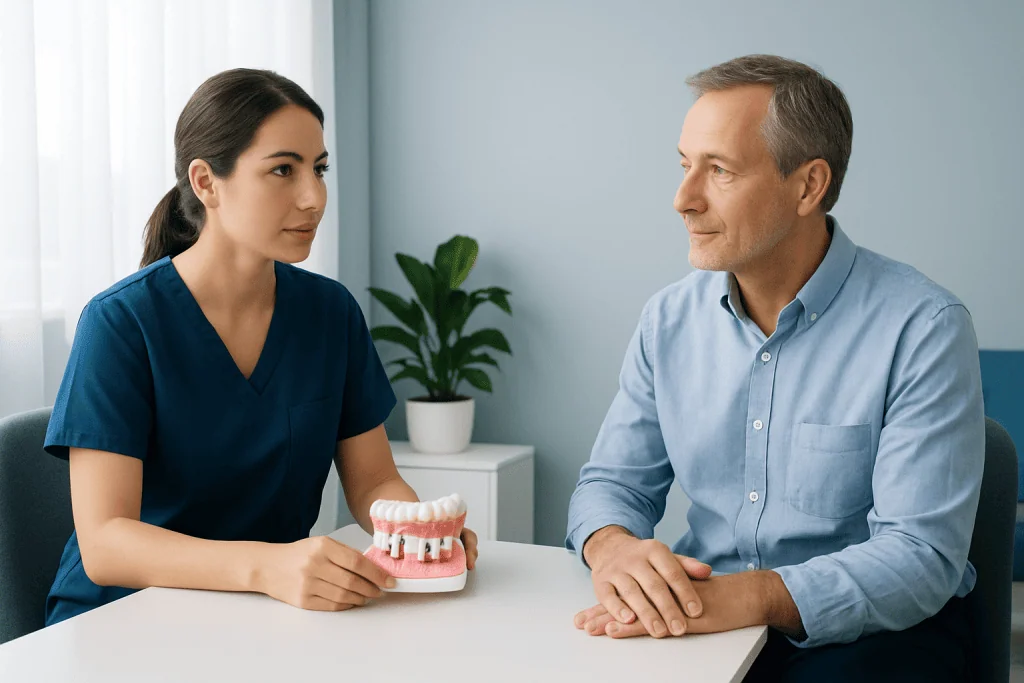
A suitable candidate usually has extensive tooth loss, loose or severely damaged teeth, or teeth affected by advanced decay or gum disease that cannot reasonably be maintained. The person should also be willing and able to follow oral hygiene instructions and attend regular review appointments.
The jaw must have enough healthy bone in appropriate areas to achieve initial implant stability. A cone beam CT scan helps the dental team measure bone volume and quality and map nearby nerves and sinus spaces. Even when bone is limited, alternatives such as grafting, sinus procedures, different implant positions or another prosthetic design may be considered.
General health is also important. Well-managed chronic conditions do not necessarily prevent implant treatment, but poorly controlled diabetes, immune suppression, active cancer treatment, bleeding disorders or medications that affect bone healing may require additional coordination with a physician. Previous head-and-neck radiation can substantially affect planning and should be discussed openly.
- Good candidates understand that implants require lifelong care rather than being maintenance-free.
- Healthy or treatable gums are important because active infection should be controlled first.
- People who grind or clench their teeth may still be eligible, but may need bite management and a protective night guard.
- Smoking and nicotine use can impair healing and raise the risk of implant complications.
When All on 4 May Need to Be Delayed or Modified
All on 4 treatment may be postponed when there is untreated gum infection, dental abscess, poor oral hygiene, uncontrolled medical illness or a temporary condition that affects healing. Treating infection, improving gum health and stabilizing general health first can make surgery safer and improve the likelihood of a lasting result.
People who smoke, vape nicotine or use tobacco are not always excluded, but they should understand that nicotine constricts blood vessels and can interfere with tissue healing and bone integration. A dentist may recommend stopping before surgery and remaining nicotine-free afterward. Support from a primary care professional or smoking-cessation service can be helpful.
Some people may not be ideal candidates for an immediately loaded fixed bridge, even if implants can be placed. For example, low implant stability, severe clenching, limited bone support or complex bite relationships may mean that a healing period with a different temporary restoration is safer. The treatment plan should be individualized rather than based on a single standard protocol.
What Happens During Assessment and Treatment
The process begins with a consultation that includes medical and dental history, examination of the teeth and gums, photographs, digital scans or impressions, and dental X-rays. A 3D cone beam CT scan is commonly used to plan implant position. The team also evaluates facial support, smile appearance, speech, chewing needs and the desired shape and shade of the final teeth.
Before surgery, teeth that cannot be retained may be removed. Any infection is cleaned, and the implants are placed using the pre-planned positions. Local anesthesia is standard, while sedation options may be considered when appropriate. If the implants achieve sufficient stability, a temporary fixed bridge may be fitted on the same day or shortly afterward.
During the healing phase, the temporary teeth are designed to limit excessive pressure on the implants. After integration, the dentist takes new records for the final bridge, adjusts the bite carefully and explains how to clean around the bridge and implants. A pre-assessment form can help the team understand medical history and initial eligibility questions, but it does not replace examination and imaging.
Recovery Timeline and Everyday Care
After surgery, mild swelling, bruising, tenderness and temporary changes in speech or chewing are common. These symptoms often improve over the first several days, although healing varies. The dental team provides individualized instructions about pain relief, mouth rinsing, brushing, activity and signs that need review.
A soft-food diet is usually advised initially to protect the healing implants and temporary bridge. Foods that are very hard, sticky or chewy should generally be avoided until the dentist confirms that stronger chewing forces are appropriate. The biological integration phase commonly takes several months, and follow-up visits are important throughout this period.
Long-term care includes brushing the bridge and gumline, using interdental cleaning tools recommended by the dental team, and attending professional hygiene and maintenance appointments. Fixed full-arch bridges need access underneath the teeth for cleaning, since plaque accumulation can cause inflammation around implants if not removed effectively.
Benefits, Risks and Realistic Expectations
For an appropriate candidate, All on 4 can provide a stable, non-removable alternative to a conventional removable full denture. Potential benefits include improved chewing function, clearer speech for some people, enhanced denture stability and a fixed appearance that may support confidence in daily life. Outcomes differ according to oral health, anatomy, habits and aftercare.
Like any surgical procedure, implant treatment has risks. These include pain, swelling, bleeding, infection, delayed healing, temporary or persistent altered sensation, sinus-related complications in the upper jaw, implant failure and fracture, loosening or wear of bridge components. A poorly balanced bite, clenching and inadequate cleaning can increase stress on implants and restorations.
Natural teeth and implants are not identical. The final bridge may require maintenance, repair or replacement over time, and implants can develop inflammatory disease around them. Asking about the proposed materials, the temporary phase, cleaning access, expected reviews and alternatives helps a person make an informed decision.
When to Seek Medical Care
Anyone considering All on 4 should arrange an assessment with a qualified dentist or oral and maxillofacial specialist, especially if they have loose teeth, persistent gum bleeding, pain when chewing, recurrent dental infection or difficulty wearing dentures. Early assessment may allow infection and gum disease to be treated before tooth loss becomes more extensive.
After implant surgery, urgent dental advice is appropriate for worsening rather than improving pain or swelling, persistent bleeding, fever, pus or foul-tasting drainage, a loose temporary bridge, or new numbness that does not improve as expected. Emergency care is needed for difficulty breathing or swallowing, severe facial swelling or signs of a serious allergic reaction.
Acibadem International’s multidisciplinary dental specialists and JCI-accredited hospitals assess and treat dental implant needs for international patients. A personalized consultation can clarify whether All on 4, another implant approach or a non-implant option is most suitable.
Frequently asked questions
Can someone with bone loss be a candidate for All on 4 dental implants?
Possibly. All on 4 may use angled posterior implants to make use of available jawbone, which can reduce the need for grafting in selected people. A 3D scan is still necessary because the amount, quality and location of bone vary from person to person.
Is there an age limit for All on 4 dental implants?
There is no single upper age limit. Overall health, healing ability, oral hygiene, bone availability and treatment goals are generally more important than chronological age. Implant treatment is usually considered only after jaw growth is complete.
Can a person with diabetes have All on 4 dental implants?
Many people with well-controlled diabetes may be eligible for dental implants. However, uncontrolled blood glucose can increase the risk of infection and delayed healing. The dentist may request medical information and coordinate care with the person’s physician.
Do smokers qualify for All on 4 dental implants?
Smoking or nicotine use does not always rule out treatment, but it increases the risk of healing problems and implant complications. Dentists commonly advise stopping nicotine before surgery and continuing to avoid it during healing and afterward. The individual treatment decision is based on overall risk.
Are teeth placed on the same day as All on 4 surgery?
Some patients receive a fixed temporary bridge on the day of surgery or shortly afterward. This depends on whether the implants are stable enough, the condition of the bone and gums, and the bite forces expected on the restoration. The final bridge is commonly fitted after healing.
How long do All on 4 dental implants last?
Implants and the bridge can function for many years with appropriate planning, hygiene and professional maintenance, but no outcome can be guaranteed. The bridge components may wear, loosen or require repair over time. Regular reviews help detect inflammation and mechanical issues early.
References
- American Dental Association
- American Academy of Periodontology
- International Team for Implantology
- National Institute of Dental and Craniofacial Research
This article is for general information only and is not a substitute for professional medical advice. Please consult a qualified doctor about your individual situation.
Dental Implants in Turkey — costs, top hospitals & a free quote
JCI-accredited · board-certified surgeons · reply within 24h
Add us as a Preferred Source to see more of our trusted health content across Google Search, AI Overviews and Discover.

Dental & Oral Health
Full-scope dental care from implants and aesthetics to oral and maxillofacial surgery.
158 specialists in this unit