Amblyopia Surgery: When Is an Operation Considered for Lazy Eye?
Amblyopia itself is most often treated with glasses, patching, eye drops, and vision therapy rather than surgery. Surgery may help when a structural or alignment problem, such as strabismus or cataract, contributes to lazy eye.
Key Takeaways
- Amblyopia itself is most often treated with glasses, patching, eye drops, and vision therapy rather than surgery.
- Surgery may help when a structural or alignment problem, such as strabismus or cataract, contributes to lazy eye.
- Operating can improve eye alignment or remove an obstacle to vision, but it does not automatically restore normal sight in the weaker eye.
- Early diagnosis and treatment in childhood usually offer the best chance for visual improvement.
- A pediatric ophthalmologist can determine whether surgery is appropriate and what results to realistically expect.
Amblyopia, often called lazy eye, is usually treated without surgery. An operation may be considered when an underlying problem such as eye misalignment, cataract, or drooping eyelid is limiting normal visual development or preventing other treatments from working well.
Overview: What Amblyopia Surgery Means
Amblyopia is a condition in which vision does not develop normally in one eye, and sometimes in both eyes, during childhood. It happens because the brain begins to favor one eye and pays less attention to the other. Over time, the weaker eye may not learn to see clearly even if the eye itself looks normal from the outside.
Many parents are surprised to hear that there is no single operation that directly “fixes” amblyopia in the way surgery can remove a cataract or repair an injury. In most cases, treatment focuses on helping the brain use the weaker eye. This often includes glasses, patching the stronger eye, special eye drops, and close follow-up with an eye specialist. General information about amblyopia (lazy eye) can help families understand why treatment often takes time and consistency.
When doctors talk about “amblyopia surgery,” they usually mean surgery for the cause associated with lazy eye, not for the reduced vision itself. For example, a child may need surgery to straighten the eyes if strabismus is present, or surgery to remove a cataract that blocks visual input. In these situations, the operation can support amblyopia treatment by giving the weaker eye a better chance to develop.
When Is an Operation Considered for Lazy Eye?
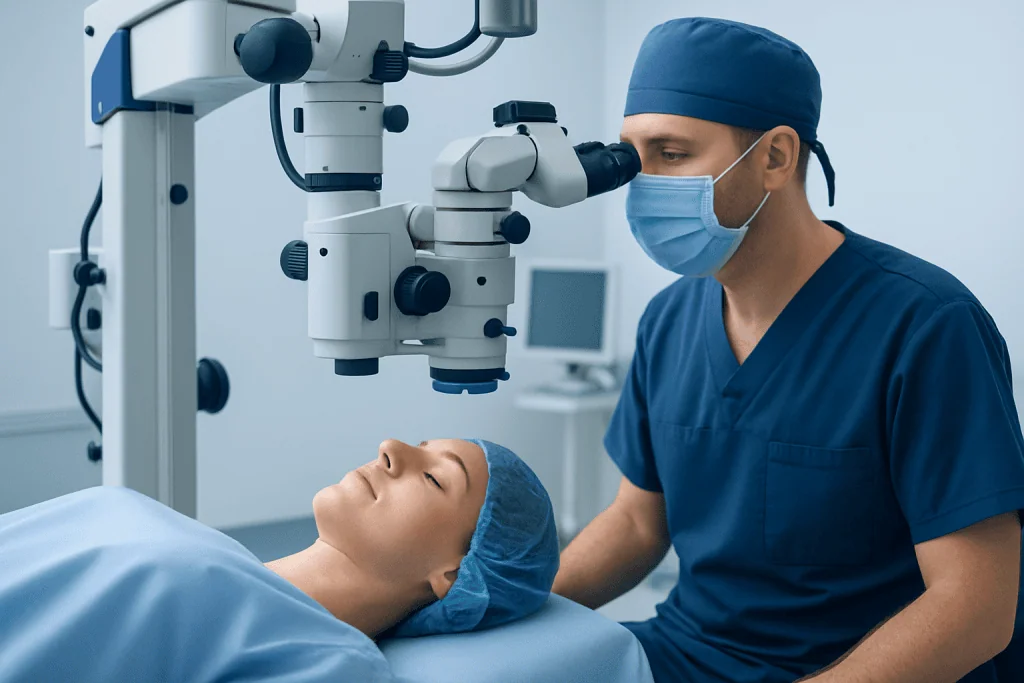
Surgery is considered when there is an eye problem that interferes with normal vision or alignment and cannot be corrected well enough with non-surgical treatment alone. The most common example is strabismus, in which the eyes do not point in the same direction. If the eyes remain noticeably misaligned despite glasses or other treatment, an operation on the eye muscles may help align them better.
Other situations may also call for surgery. A cataract in infancy or childhood can block clear images from reaching the retina, which may lead to amblyopia if it is not treated promptly. A significantly drooping eyelid that covers the pupil, certain corneal problems, or other structural conditions may also require an operation so the eye can receive clear visual input.
Even when surgery is recommended, doctors usually explain that the operation is one part of a larger treatment plan. A child may still need glasses, patching, or drops afterward to help the brain learn to use the weaker eye. In many cases, care is coordinated through pediatric ophthalmology services because timing, visual development, and follow-up are especially important in children.
Common Conditions That May Lead to Surgery

The condition most often linked to surgical treatment in children with amblyopia is strabismus. Misaligned eyes can cause the brain to suppress the image from one eye to avoid double vision, which may contribute to lazy eye. Surgery on the eye muscles can improve alignment, appearance, and sometimes binocular function, although additional amblyopia treatment is still commonly needed.
Another important cause is a cataract that prevents a clear image from reaching the eye. In a young child, this needs timely specialist evaluation because visual development is very sensitive in the early years. If a cataract is responsible, cataract surgery may be part of treatment to remove the blockage to vision.
Less commonly, surgery may be considered when there is:
- a drooping eyelid severe enough to cover the pupil
- a scar or other corneal problem that disrupts clear vision
- a problem inside or around the eye affecting visual development
- a neurological or complex eye movement disorder needing specialist assessment through neuro-ophthalmology or related eye care
Not every child with these conditions develops amblyopia, and not every child with amblyopia needs an operation. The key question is whether a specific treatable problem is blocking vision or preventing the eyes from working together properly.
How Doctors Decide If Surgery Is Appropriate
An eye specialist begins with a thorough evaluation to determine why the vision is reduced and whether the cause is reversible. This usually includes checking visual acuity in each eye, measuring refractive error, examining how the eyes align and move, and looking closely at the front and back of the eye. In babies and young children, doctors use age-appropriate tools to assess vision and eye health as accurately as possible.
Doctors also consider the child’s age, how long the problem has been present, whether previous treatment has helped, and whether there is a risk of permanent visual delay if treatment is postponed. Early childhood is a particularly important period because the visual system is still developing. For this reason, suspected amblyopia or eye misalignment should not be ignored, even if the child does not complain.
Before recommending surgery, the care team usually addresses treatable refractive problems with glasses and may start amblyopia therapy first. If the eyes remain misaligned, if a visual obstruction is present, or if examination reveals a condition that clearly needs an operation, surgery may then become part of the plan. Families are often advised that surgery can improve the conditions needed for vision development, but visual recovery still depends on ongoing therapy and follow-up.
What Surgery Can and Cannot Do
It is important to have realistic expectations. Surgery can correct or improve the underlying problem that contributes to amblyopia, such as poor eye alignment or a cloudy lens. This may help the two eyes work together better, improve appearance, and remove obstacles to normal visual development.
However, surgery does not directly retrain the brain to see normally with the weaker eye. If amblyopia is already established, the child will often still need treatment afterward. Patching the stronger eye, using prescribed drops, and wearing glasses consistently may remain essential to encourage the weaker eye to develop better vision.
The amount of visual improvement varies from child to child. Outcomes depend on factors such as the cause of amblyopia, the age at treatment, how severe the vision reduction is, and how closely the treatment plan is followed. Some children need more than one procedure for alignment over time, especially if the eyes change as they grow.
Treatment Options Before and After Surgery
Non-surgical treatment is usually the foundation of amblyopia care. Corrective glasses are often prescribed first if the child has refractive error such as farsightedness, nearsightedness, or astigmatism. In some children, vision improves significantly with glasses alone once each eye receives a clearer image.
If needed, doctors may recommend patching the stronger eye for part of the day or using atropine drops to temporarily blur it. These methods encourage the brain to use the weaker eye more actively. Some children may also benefit from targeted visual activities, depending on the specialist’s recommendations and the child’s age.
When surgery is part of treatment, these same therapies often continue afterward. Follow-up appointments are essential so the doctor can check alignment, healing, and visual progress. Families are usually guided by general ophthalmology and pediatric eye specialists on how to balance recovery from surgery with ongoing amblyopia treatment.
Recovery, Risks, and Outlook
Recovery depends on the type of operation performed. After eye muscle surgery for strabismus, children may have temporary redness, mild soreness, and irritation for a short time. After other procedures, such as cataract surgery, recovery plans can be more involved and may include medications, protective measures, and frequent follow-up visits.
As with any operation, there are risks, although serious complications are uncommon when surgery is done by experienced specialists. Risks vary by procedure and may include infection, bleeding, undercorrection or overcorrection of eye alignment, scarring, inflammation, or the need for further treatment. The surgeon explains these risks in the context of the child’s specific diagnosis and age.
The outlook is usually best when treatment begins early and families are able to follow the full care plan. Many children achieve meaningful improvement in alignment and vision, but progress may be gradual. Near the end of the care pathway, some families may seek support from centers experienced in complex pediatric eye conditions; Acibadem International’s multidisciplinary specialists in JCI-accredited hospitals diagnose and treat eye disorders for international patients.
When to See a Doctor
Parents should arrange an eye examination if a child’s eyes seem to cross or drift, one eyelid droops, the child squints often, tilts the head to look at objects, or seems to favor one eye. A child may also struggle with depth perception, reading, or hand-eye coordination, although some children have no obvious symptoms. Routine vision screening is valuable because amblyopia can be missed without a formal check.
Prompt evaluation is especially important in infants and young children because the brain’s visual pathways are still developing. Waiting to “see if it gets better” can reduce the chance of full improvement in some cases. Any sudden change in eye position, a white reflex in the pupil, eye pain, significant light sensitivity, or an apparent drop in vision deserves urgent medical attention.
A pediatric ophthalmologist can explain whether treatment should begin with glasses, patching, or another approach, and whether surgery has any role. Clear diagnosis is the most important step, because “lazy eye” is a broad everyday term that may reflect several different underlying conditions.
Frequently asked questions
Can amblyopia be cured with surgery alone?
Usually not. Surgery may correct a related problem such as eye misalignment or a cataract, but amblyopia itself often still needs treatment with glasses, patching, or drops. The goal is to improve the conditions for visual development and then continue therapy as advised.
What is the most common surgery linked to lazy eye?
The most common operation is strabismus surgery, which adjusts the eye muscles to improve alignment. This can help the eyes point in the same direction, but it does not automatically restore normal vision in the weaker eye. Additional amblyopia treatment is often needed afterward.
At what age is surgery considered for amblyopia-related problems?
There is no single age that applies to every child. Timing depends on the cause, how severe the problem is, and whether it is interfering with visual development. Some conditions, such as congenital cataract, may need very early treatment, while others are assessed over time.
Does surgery improve vision in the weaker eye?
It can help indirectly by removing a barrier to normal vision or improving eye alignment. However, the amount of vision improvement varies, and surgery alone may not be enough. Ongoing treatment and regular follow-up are usually important for the best result.
Is lazy eye surgery safe for children?
Eye surgery in children is commonly performed by specialized ophthalmic teams, and it is generally considered safe when recommended appropriately. As with any procedure, there are risks, and these depend on the exact operation. The surgeon will explain expected benefits, alternatives, and possible complications before treatment.
Can adults have surgery if they had amblyopia as a child?
Adults may still have surgery for associated problems such as strabismus if eye alignment is affecting comfort, appearance, or binocular function. However, improving long-standing amblyopia itself is often more limited than in childhood because visual development is most flexible at a younger age. An ophthalmologist can advise what improvement is realistic in each case.
This article is for general information only and is not a substitute for professional medical advice. Please consult a qualified doctor about your individual situation.
Explore treatments in Turkey — costs, top hospitals & a free quote
JCI-accredited · board-certified surgeons · reply within 24h
Add us as a Preferred Source to see more of our trusted health content across Google Search, AI Overviews and Discover.

Ophthalmology
Comprehensive eye care from laser vision correction to retina, cornea and cataract surgery.
75 specialists in this unitRelated Treatments
More from the Health Library

LASIK Vision Institute Alternatives: Choosing a Surgeon

Who Is a Good Candidate for Femto LASIK?

Strabismus: Crossed Eyes, Double Vision, and Treatment

Cataract Surgery Recovery: Vision Changes, Activity Limits, and Healing Timeline

How Expensive Is LASIK? Cost Compared With Glasses