How Long Does LASIK Take? Procedure and Recovery Time

The full LASIK visit often takes 1 to 2 hours, but the laser portion is usually only minutes per eye. Most patients notice vision improvement within 24 to 48 hours, although full stabilization can take weeks to months.
Key Takeaways
- The full LASIK visit often takes 1 to 2 hours, but the laser portion is usually only minutes per eye.
- Most patients notice vision improvement within 24 to 48 hours, although full stabilization can take weeks to months.
- Recovery is usually fast, but temporary dryness, glare, halos, and fluctuating vision can occur during healing.
- Not everyone is a good LASIK candidate; a detailed eye exam is needed to assess corneal thickness, prescription stability, and eye health.
- Following aftercare instructions carefully helps support healing and lowers the risk of complications.
LASIK is a quick outpatient vision correction procedure, and the laser treatment itself usually takes only a few minutes per eye. Most people go home the same day, with early recovery over the first few days and vision continuing to stabilize over the following weeks.
Overview: How Long Does LASIK Take?
LASIK is a type of laser vision correction used to reduce dependence on glasses or contact lenses. It is commonly performed for nearsightedness, farsightedness, and astigmatism. For many people, one of the first questions is how long the process takes from arrival to recovery.
The LASIK procedure itself is brief. The laser treatment often lasts less than a minute per eye, although the full time in the procedure room is longer because the eye is prepared, positioned, and checked carefully. From entering the laser suite to finishing both eyes, many patients spend around 10 to 20 minutes.
The total appointment is usually longer than the procedure alone. Pre-operative checks, preparation, consent review, and a short rest period afterward often make the visit last about 1 to 2 hours. LASIK is typically done as an outpatient procedure, so patients usually return home the same day.
Recovery also has a timeline. Many people can resume light daily activities within 24 to 48 hours, but the eyes continue to heal over several weeks. Vision may improve quickly, yet subtle fluctuations are normal while the cornea stabilizes.
What Happens During the LASIK Procedure?
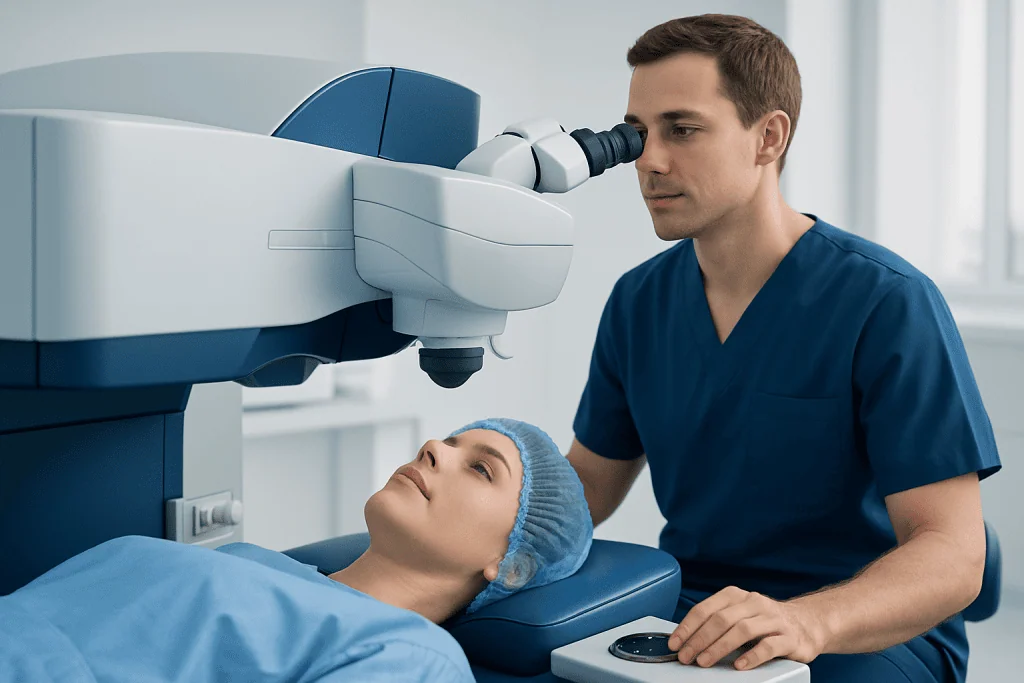
Before LASIK begins, numbing eye drops are placed in the eyes to improve comfort. The eye area is cleaned, and a device is used to keep the eyelids gently open so the person does not need to worry about blinking. The surgeon then centers the eye under the laser and asks the patient to focus on a target light.
In standard LASIK, a very thin flap is created in the cornea. This may be done with a femtosecond laser or a microkeratome, depending on the technique used. The flap is lifted, and an excimer laser reshapes the underlying corneal tissue to correct the refractive error. The flap is then carefully repositioned, where it naturally adheres without stitches.
The laser portion is extremely fast, but careful alignment and safety checks are essential. Some patients notice pressure for a few seconds when the flap is created, and they may hear clicking sounds from the laser. These sensations are expected and usually short-lived.
Advanced laser-based options such as iLASIK or other ophthalmic laser treatments may be discussed depending on the person’s eye measurements and goals. The exact method does not usually change the fact that LASIK is a relatively short procedure overall.
How Long Does Recovery Take After LASIK?

LASIK recovery usually begins quickly. Many patients rest for a few hours after going home and notice early visual improvement by the next day. Mild burning, tearing, grittiness, light sensitivity, or blurry vision can happen on the day of surgery, but these symptoms often ease within 24 to 48 hours.
In the first week, most people can return to work, reading, screen use, and other routine activities fairly soon, often within a day or two depending on the type of work and the doctor’s advice. Vision can still fluctuate during this time, especially in dim light or after long periods of visual concentration.
Although everyday recovery is quick, complete healing takes longer. The cornea continues to settle over weeks to months, and dryness or nighttime glare may temporarily persist. Follow-up visits are important so the surgeon can monitor healing and confirm that vision is stabilizing as expected.
Some people who are not ideal LASIK candidates may be better suited to alternatives such as PRK or LASEK. These procedures can be effective, but they usually involve a different healing timeline, often with slower early visual recovery than LASIK.
Factors That Can Affect Procedure and Healing Time
Several factors can influence how long LASIK takes and how quickly recovery progresses. These include the amount and type of refractive error, the thickness and shape of the cornea, tear film quality, and whether both eyes are treated on the same day. The surgeon’s technique and the technology used can also affect the exact timing.
Dry eye is one of the most common reasons recovery may feel slower. When the eye surface is dry, vision can fluctuate and the eyes may feel irritated or tired. Treating dryness before and after surgery helps support comfort and clearer vision during healing.
General eye health matters as well. Conditions such as corneal disease, untreated inflammation, or certain lens problems may affect candidacy or expected outcomes. For example, LASIK is not a treatment for cataracts, and blurred vision caused by cataracts usually requires a different approach.
Age, healing response, and following aftercare instructions also play a role. People who use prescribed eye drops correctly, avoid rubbing their eyes, and attend follow-up appointments often have a smoother recovery experience.
Who Is a Good Candidate for LASIK?
LASIK is not the right choice for everyone, which is why a full eye evaluation is essential before surgery. In general, good candidates are adults with a stable glasses or contact lens prescription, healthy corneas, and no active eye disease. The surgeon also checks whether the refractive error falls within a treatable range.
Important parts of the pre-operative assessment include corneal mapping, thickness measurement, pupil evaluation, tear film testing, and a detailed review of medical history. Certain conditions may make LASIK less suitable, such as very thin corneas, severe dry eye, unstable vision, pregnancy-related vision changes, or autoimmune disorders that may affect healing.
Some corneal conditions require special caution. For example, people with irregular corneal shape may need further assessment for keratoconus or other issues before any laser vision correction is considered. In these cases, a surgeon may recommend a different treatment strategy for safety.
A consultation with an ophthalmologist helps clarify whether LASIK is appropriate and what results are realistic. A thorough evaluation is especially important for patients who have complex prescriptions or other eye concerns that may benefit from broader ophthalmology assessment.
Aftercare, Self-Care, and Practical Recovery Tips
Good aftercare supports healing and comfort. Patients are usually advised to use prescribed eye drops exactly as directed, wear protective shields while sleeping for a short period, and avoid rubbing the eyes. Sunglasses can help with temporary light sensitivity outdoors.
During the first days after LASIK, it is usually wise to avoid swimming pools, hot tubs, eye makeup, dusty environments, and contact sports until the doctor says these are safe. Showering is generally fine, but care should be taken to keep water, soap, and shampoo out of the eyes.
Screen use, reading, and driving may be resumed based on comfort and the surgeon’s guidance. Because dryness is common, taking breaks during near work and using lubricating drops when recommended may help. Patients should not drive until their vision is clear enough and they have been advised that it is safe to do so.
Near the end of recovery planning, some patients value care in centers with coordinated eye services. Acibadem International’s multidisciplinary specialists and JCI-accredited hospitals diagnose and treat vision conditions for international patients, including refractive surgery assessment and follow-up care.
When to See a Doctor After LASIK
Some symptoms are expected after LASIK, including mild discomfort, watery eyes, blurry vision, glare, halos, and dryness. These often improve steadily over the first days and weeks. Even when recovery seems smooth, scheduled follow-up visits are important to make sure the cornea is healing properly.
Patients should contact their doctor promptly if they develop worsening pain, significant redness, sudden drop in vision, marked light sensitivity, increasing discharge, or any symptom that feels unusually severe or does not improve. These signs do not always mean something serious, but they should be assessed without delay.
It is also important to speak with a doctor if vision remains unstable longer than expected or if dryness becomes difficult to manage. Sometimes additional treatment, more frequent lubricating drops, or more time is simply needed. In some cases, further assessment may be recommended.
Seeking timely medical advice helps protect long-term eye health. Anyone considering LASIK should have a detailed conversation with a qualified eye specialist about expected timing, risks, benefits, and whether another form of vision correction may be more suitable.
Frequently asked questions
How long does the LASIK procedure take per eye?
The laser treatment itself usually takes less than a minute per eye. However, preparation, positioning, and final checks mean the full procedure room time is often around 10 to 20 minutes for both eyes.
How long does the whole LASIK appointment take?
The entire visit is often about 1 to 2 hours. This includes pre-operative checks, the procedure, and a short recovery period before going home.
When will vision improve after LASIK?
Many people notice better vision within 24 to 48 hours. Vision may continue to sharpen and stabilize over several weeks, and mild fluctuations can be normal during healing.
How many days does it take to recover from LASIK?
Early recovery is usually a matter of days, and many patients return to normal light activities quickly. Complete healing and full visual stability can take weeks to months depending on the individual eye and healing response.
Is LASIK painful?
LASIK is usually not painful because numbing eye drops are used before the procedure. Some people feel pressure during part of the treatment and mild burning, irritation, or watering afterward, but this often improves within a day or two.
Can everyone have LASIK?
No. A person needs a full eye examination to determine whether LASIK is safe and appropriate. Corneal thickness, prescription stability, dry eye, age, and other eye or medical conditions all affect candidacy.
This article is for general information only and is not a substitute for professional medical advice. Please consult a qualified doctor about your individual situation.
LASIK in Turkey — costs, top hospitals & a free quote
JCI-accredited · board-certified surgeons · reply within 24h
Add us as a Preferred Source to see more of our trusted health content across Google Search, AI Overviews and Discover.

Related Treatments
More from the Health Library

What Does LASIK Eye Surgery Correct?

Side Effects of LASIK Eye Surgery You Should Know
Chalazion: Why Eyelid Lumps Form and When They Need Treatment
Is LASIK Eye Surgery Safe? What the Evidence Shows

Pink Eye in Adults and Children: When Urgent Care Can Help