Oculoplastic Surgery: What It Treats and When It Is Recommended

Oculoplastic surgery addresses both medical and cosmetic concerns around the eyes. Common reasons for treatment include drooping eyelids, blocked tear ducts, eyelid lumps, and orbital problems.
Key Takeaways
- Oculoplastic surgery addresses both medical and cosmetic concerns around the eyes.
- Common reasons for treatment include drooping eyelids, blocked tear ducts, eyelid lumps, and orbital problems.
- Some procedures are recommended to protect vision or relieve irritation, not just to improve appearance.
- Diagnosis usually includes an eye examination and, when needed, imaging or tear drainage tests.
- Treatment can range from observation and medication to minor office procedures or more complex surgery.
- A specialist evaluation is important when eyelid or tear duct symptoms affect comfort, vision, or eye health.
Oculoplastic surgery is a specialized field focused on the eyelids, tear drainage system, eye socket, and nearby facial structures. It may be recommended to improve vision, protect the eye, treat disease or injury, and in some cases enhance appearance.
Overview of oculoplastic surgery
Oculoplastic surgery, also called ophthalmic plastic and reconstructive surgery, is a subspecialty of eye care that focuses on the tissues around the eye. This includes the upper and lower eyelids, the tear drainage system, the eye socket (orbit), and nearby areas of the face. The goal is not only to improve appearance when needed, but also to protect the eye, preserve vision, and restore normal function.
Many people associate oculoplastic surgery with cosmetic eyelid procedures, but the field is much broader. Specialists diagnose and treat conditions such as drooping eyelids, inward- or outward-turning eyelids, blocked tear ducts, eyelid tumors, injuries, and problems affecting the orbit. Because these issues can interfere with blinking, tear drainage, or the visual field, treatment is often medically important.
An oculoplastic surgeon typically works closely with ophthalmologists, neurologists, radiologists, ENT specialists, dermatologists, and plastic surgeons when needed. A complete eye examination is often the first step to understand whether symptoms are related mainly to the eyelids and surrounding tissues or to the eye itself.
What conditions does it treat?
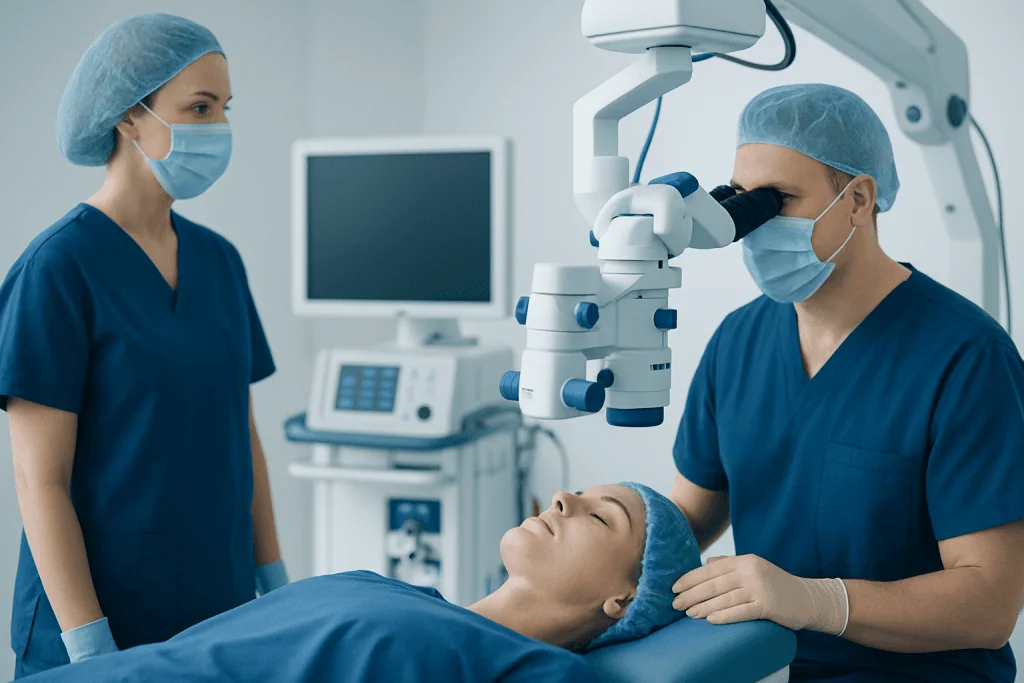
Oculoplastic surgery treats a wide range of conditions. One common group involves eyelid position problems. Ptosis, or drooping of the upper eyelid, may block part of the visual field and make a person raise the eyebrows or tilt the head to see better. Entropion causes the eyelid to turn inward, so the lashes rub against the eye. Ectropion turns the eyelid outward, which can lead to irritation, tearing, and exposure of the eye surface.
Another common area is the tear drainage system. If tears cannot drain normally, the eyes may water constantly and infections may develop. A blocked tear duct may affect children or adults and can sometimes require a procedure after conservative measures fail. People with persistent tearing may be evaluated for blocked tear duct treatment when symptoms are troublesome or recurrent.
Oculoplastic specialists also treat lumps and growths around the eyelids. These may include benign cysts, recurrent inflammations, or skin cancers that need removal and reconstruction. For example, a persistent or recurrent chalazion may need a minor procedure if warm compresses and medicines do not solve the problem.
Problems involving the orbit are another important part of this field. These include fractures after trauma, inflammation, thyroid eye disease, tumors, and conditions that cause the eye to bulge, sink, or move abnormally. Some patients are also referred to oculoplastic care after eye removal or severe damage, where rehabilitation may include ocular prosthetics to support comfort and appearance.
Symptoms that may suggest a need for evaluation

Certain symptoms may point to a condition that falls within oculoplastic care. Drooping eyelids can make the eyes feel heavy, limit upward vision, and cause fatigue by the end of the day. Some people notice that they need to lift the eyelid with a finger, arch the eyebrows, or tilt the chin upward to see clearly. These signs can suggest ptosis or excess eyelid skin.
Persistent watering, sticky discharge, crusting, or repeated infections near the inner corner of the eye may suggest a tear drainage problem. Swelling or redness of the eyelid may come from inflammation, infection, or a lump. If a bump on the eyelid keeps coming back, grows, bleeds, or changes shape, it should be assessed rather than ignored.
Other symptoms that deserve attention include difficulty closing the eye completely, irritation from lashes rubbing on the eye, dry eye symptoms caused by eyelid malposition, and changes in the appearance of the eyes after injury. Eye bulging, double vision, pain with eye movement, or a sudden change in eyelid position may indicate a more complex orbital or neurological issue and may require coordinated care, sometimes with neuro-ophthalmology input.
Not every symptom means surgery will be needed. However, when eyelid or tear duct problems interfere with comfort, vision, or eye protection, a specialist evaluation can help clarify the cause and the safest next steps.
Causes and risk factors
The causes of oculoplastic conditions vary. Age-related changes are among the most common. Over time, the eyelid tissues can stretch, muscles may weaken, and skin may lose elasticity. This can contribute to drooping eyelids, excess upper eyelid skin, lower eyelid laxity, and changes in tear drainage. These are often gradual and may become noticeable when reading, driving, or looking upward becomes more difficult.
Some conditions are present from birth, while others develop after injury, infection, inflammation, or previous surgery. Ptosis can occur because of muscle weakness, nerve problems, trauma, or long-term contact lens use in some people. Eyelid malpositions can follow scarring, facial nerve weakness, or skin changes. Tear duct blockage may result from chronic inflammation, infection, injury, or narrowing that happens over time.
Systemic health conditions can also play a role. Thyroid eye disease may affect the orbit and eyelids. Diabetes, autoimmune conditions, and skin cancers can affect tissues around the eye. A history of sun exposure increases the risk of certain eyelid skin cancers, which is why changing or nonhealing lesions should always be checked.
Risk factors do not guarantee that a person will need treatment, but they can help explain symptoms. A careful medical history is important because the best treatment depends on the underlying cause, not only the visible appearance of the eyelid or surrounding area.
How diagnosis is made
Diagnosis starts with a detailed discussion of symptoms, general health, and past eye history. The doctor may ask when the problem began, whether it affects one or both sides, and whether symptoms change through the day. A history of trauma, previous surgeries, skin cancer, thyroid disease, or nerve problems can provide important clues.
The examination usually includes checking vision, eyelid position, blink function, eye surface health, tear drainage, and eye movements. The specialist may measure how much the eyelid droops, whether excess skin is present, and whether the eyelids close completely. In patients with tearing, tests may be done to evaluate the tear drainage pathway and identify where a blockage may be located.
Imaging such as CT or MRI may be needed if an orbital condition, fracture, tumor, or deep tear duct problem is suspected. In some cases, photographs are used to document the condition before treatment and to support planning. If there is concern about a suspicious lesion, a biopsy may be recommended to determine whether it is benign or cancerous.
Because several eye and facial conditions can mimic one another, accurate diagnosis matters. For instance, chronic tearing may come from a blocked duct, eyelid laxity, dry eye, or irritation from an inward-turning eyelid. A thorough assessment helps guide treatment and avoid unnecessary procedures.
Treatment options and when surgery is recommended
Treatment depends on the cause, severity, and effect on daily life. Not all conditions need surgery right away. Mild inflammation, small eyelid lumps, or temporary swelling may improve with observation, warm compresses, lubricating drops, or medicines. When symptoms persist, the anatomy is clearly abnormal, or the eye is at risk, a procedure may be recommended.
Surgery is often advised when the eyelid blocks vision, lashes are damaging the eye surface, the eyelids do not close properly, or the tear duct is repeatedly infected or blocked. Ptosis repair can raise a drooping upper eyelid. Blepharoplasty may remove excess skin or fat when it causes heaviness or obstructs the visual field. Entropion and ectropion repair can restore normal lid position, improve comfort, and protect the cornea.
Tear drainage procedures are considered when watering is constant, infections recur, or a blockage does not respond to simpler care. For orbital conditions, surgery may be used to repair fractures, remove tumors, decompress the orbit in selected cases, or relieve pressure around the eye. Tumor removal on the eyelid may also require reconstructive techniques to preserve blinking and appearance after the lesion is excised.
Procedures may be done in an office setting or operating room, depending on complexity. The specialist explains the expected benefits, limits, and recovery process in advance. In selected situations, care may overlap with broader eye surgery services, especially when both the eye and surrounding structures are affected.
Recovery, self-care, and possible risks
Recovery varies by procedure, but many people can expect temporary swelling, bruising, mild soreness, or tearing during the early healing period. The care team usually recommends protecting the area, using prescribed drops or ointments if needed, and avoiding actions that may strain the healing tissues. Cold compresses and keeping the head elevated may be advised after some operations.
Most patients are asked to attend follow-up visits so the doctor can monitor healing, eyelid position, and eye surface comfort. Depending on the procedure, stitches may dissolve on their own or be removed later. Vision may be slightly blurry for a short time if ointment is used, but any significant or worsening visual change should be reported promptly.
As with any surgery, risks can include bleeding, infection, scarring, asymmetry, undercorrection or overcorrection, dry eye symptoms, or recurrence of the original problem. Serious complications are uncommon but can occur, which is why careful planning and follow-up are important. Asking about expected healing time and warning signs can help patients feel prepared and reassured.
For people not having surgery, self-care may still play a role. Lubricating drops, eyelid hygiene, sun protection, and prompt care for infections or skin changes around the eyes can support long-term eye health. If symptoms change or return, reassessment is worthwhile because treatment needs can evolve over time.
When to see a doctor
It is sensible to seek medical advice if drooping eyelids interfere with reading, driving, or daily activities, or if there is persistent tearing, recurring eyelid swelling, or a lump that does not go away. Irritation caused by lashes rubbing the eye, difficulty closing the eye, and repeated infections are also good reasons to arrange an evaluation. Early assessment can help protect the eye surface and improve comfort.
More urgent medical attention is needed for sudden eyelid drooping, severe pain, rapidly increasing swelling, fever with redness near the eye, double vision, vision loss, eye bulging, or symptoms after facial trauma. These can signal conditions that need prompt treatment. A suspicious eyelid lesion that bleeds, crusts, changes color, or grows should also be checked without delay.
For international patients seeking coordinated eye and facial care, Acibadem International’s multidisciplinary specialists and JCI-accredited hospitals diagnose and treat oculoplastic conditions using individualized treatment plans. The most appropriate timing for treatment depends on the cause, the level of discomfort, and whether the condition is affecting vision or eye protection.
In general, the best time to ask about oculoplastic surgery is when symptoms persist, function is affected, or there is uncertainty about the cause. A qualified specialist can explain whether monitoring, medical treatment, or surgery is the most appropriate next step.
Frequently asked questions
Is oculoplastic surgery only cosmetic?
No. While some procedures are done to improve appearance, many are performed for medical reasons. Oculoplastic surgery often helps protect the eye, improve vision blocked by the eyelid, correct tearing problems, or repair damage from injury or disease.
What is the difference between blepharoplasty and ptosis surgery?
Blepharoplasty usually removes or reshapes excess eyelid skin and sometimes fat. Ptosis surgery focuses on lifting the eyelid when the muscle that raises it is weak or stretched. In some cases, both problems are present and may be treated together.
How do doctors know if droopy eyelids need surgery?
Doctors look at symptoms, eyelid measurements, and whether the eyelid is limiting the visual field or irritating the eye. They also check for underlying causes such as nerve problems or age-related tissue changes. Surgery is considered when the droop affects function, comfort, or eye protection.
Can a blocked tear duct get better without surgery?
Sometimes it can, depending on the cause and the patient’s age. Mild cases may improve with observation or treatment of inflammation or infection, but persistent blockage often needs a procedure to restore drainage. A specialist can advise whether surgery is likely to help.
Is recovery from oculoplastic surgery difficult?
Recovery is often manageable, though it depends on the type of procedure. Temporary swelling, bruising, and mild discomfort are common, and most people need follow-up visits to monitor healing. The care team provides instructions to support comfort and reduce risk.
Are eyelid lumps always serious?
No, many eyelid lumps are benign and may come from blocked oil glands or inflammation. However, a lump that recurs, grows, bleeds, changes in appearance, or does not heal should be examined. This helps rule out more serious conditions, including skin cancer.
This article is for general information only and is not a substitute for professional medical advice. Please consult a qualified doctor about your individual situation.
Oculoplastic Surgery in Turkey — costs, top hospitals & a free quote
JCI-accredited · board-certified surgeons · reply within 24h
Add us as a Preferred Source to see more of our trusted health content across Google Search, AI Overviews and Discover.

Related Treatments
More from the Health Library

Cataract Surgery Recovery: Healing Timeline, Drops, and Activity Limits

When to See an Ophthalmologist vs an Optometrist

Toric Intraocular Lenses for Astigmatism: Who May Benefit After Cataract Surgery

Tearing in Babies: When a Blocked Tear Duct Needs Treatment

Does Insurance Cover LASIK? Coverage and Exceptions