Toric Intraocular Lenses for Astigmatism: Who May Benefit After Cataract Surgery

Toric intraocular lenses are designed to correct cataracts and regular corneal astigmatism at the same time. They are not the best option for everyone; the choice depends on eye measurements, corneal shape, and overall eye health.
Key Takeaways
- Toric intraocular lenses are designed to correct cataracts and regular corneal astigmatism at the same time.
- They are not the best option for everyone; the choice depends on eye measurements, corneal shape, and overall eye health.
- Careful preoperative testing and precise lens alignment are important for good results.
- Many patients still need glasses for reading, and some may need glasses for certain distance tasks as well.
- An ophthalmologist can explain whether a toric lens is likely to improve vision after cataract surgery.
Toric intraocular lenses are special replacement lenses used during cataract surgery to correct both a cloudy natural lens and certain types of astigmatism. They may help suitable patients see more clearly and reduce dependence on glasses for distance vision after surgery.
Overview: What Are Toric Intraocular Lenses?
Toric intraocular lenses, often called toric IOLs, are artificial lenses placed in the eye during cataract surgery. Like standard intraocular lenses, they replace the eye’s cloudy natural lens after it is removed. What makes them different is that they are specially designed to correct astigmatism as well as cataract-related blur.
Astigmatism happens when the front surface of the eye, usually the cornea, is not evenly curved. Instead of being shaped more like a round ball, it may be shaped more like a rugby ball, causing light to focus unevenly on the retina. This can lead to blurred or distorted vision at both near and far distances. A toric lens has different powers in different meridians to help balance that uneven focus.
For people with cataracts and meaningful astigmatism, a toric IOL may improve uncorrected distance vision after surgery. In other words, some patients can rely less on distance glasses than they would with a standard lens. However, a toric lens does not guarantee completely glasses-free vision, and it does not treat every cause of blurred sight.
These lenses are one of several options discussed when planning cataract surgery. The best choice depends on the amount and type of astigmatism, the health of the eye, and the patient’s visual priorities.
Who May Benefit After Cataract Surgery?
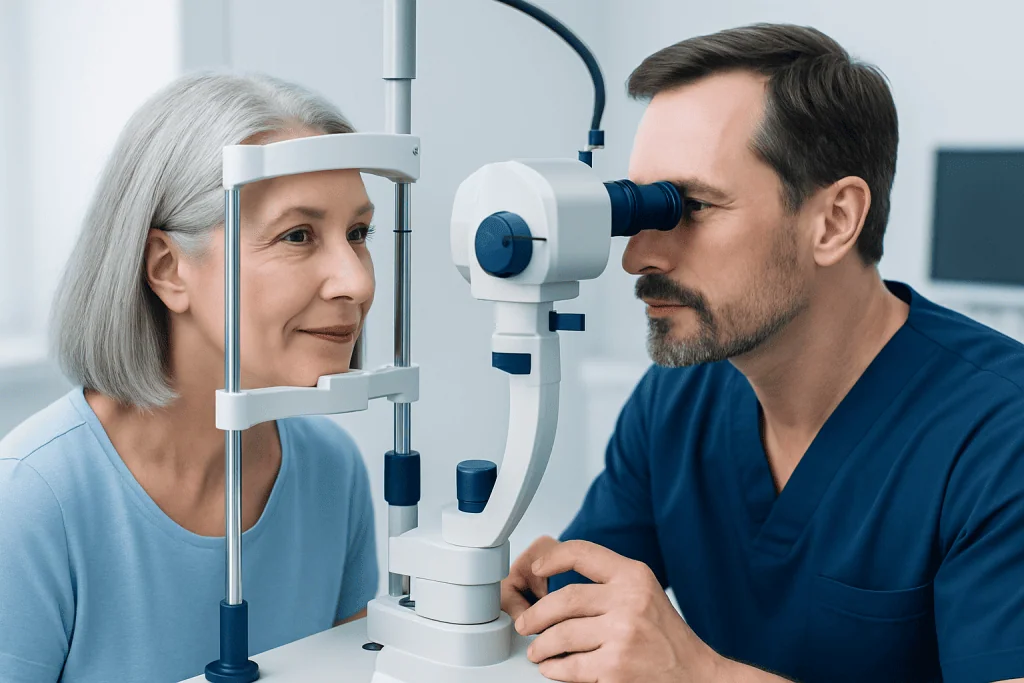
Toric IOLs may benefit adults who have cataracts and regular corneal astigmatism significant enough to affect vision. They are often considered for people who would like sharper distance vision without always depending on glasses. This may be especially appealing to patients who drive, spend time outdoors, or prefer fewer visual aids for day-to-day tasks.
Patients are usually better candidates when the astigmatism is stable and can be measured clearly before surgery. Good candidates also tend to have otherwise healthy eyes, or eye conditions that are well controlled and unlikely to limit the visual benefit of the lens. Many people with astigmatism and cataracts fit this description.
Some patients may not be ideal candidates. Toric lenses may be less suitable when astigmatism is irregular, when the cornea has significant scarring or disease, or when other eye disorders such as advanced retinal disease, severe glaucoma, or corneal instability are present. In these situations, correcting the astigmatism with a toric lens may not lead to the expected improvement in vision.
Expectations also matter. A toric lens can reduce blur from corneal astigmatism, but many patients still need reading glasses because standard toric lenses usually do not restore the eye’s natural focusing ability for near tasks. A careful conversation with the surgeon helps match the lens choice to the patient’s lifestyle and goals.
How Toric Lenses Work and What They Can Improve

A toric lens works by compensating for uneven corneal curvature. To do this, the lens must be positioned in a specific orientation inside the eye. During surgery, the ophthalmologist aligns the lens with the eye’s measured axis of astigmatism. If alignment is accurate, the lens can neutralize a substantial part of the refractive error caused by regular astigmatism.
This correction can improve the sharpness of distance vision after cataract surgery. Many patients notice clearer outlines, less ghosting, and better quality of vision compared with what they might achieve from a standard monofocal lens alone. That said, the final result depends on several factors, including the exact corneal measurements and healing after surgery.
Toric IOLs correct only certain refractive errors. They do not treat eye diseases affecting the retina or optic nerve, and they do not correct every visual symptom. If a person has dry eye, macular disease, or another eye condition, those issues may still affect visual quality even when the toric lens is well positioned.
In some cases, if residual refractive error remains after surgery, the ophthalmologist may discuss options such as glasses, contact lenses, or selected laser-based enhancement procedures. The need for these is not unusual and does not mean the original surgery was unsuccessful.
Preoperative Assessment and Diagnosis
Choosing a toric IOL begins with a detailed eye evaluation. The ophthalmologist confirms the presence of cataracts and measures the amount, type, and axis of astigmatism. These measurements are important because the toric lens must match the eye as accurately as possible. Even small differences can affect the final visual outcome.
Preoperative testing often includes keratometry, corneal topography or tomography, biometry, and a comprehensive eye exam. These tests help determine whether the astigmatism is regular and stable and whether there are corneal or retinal problems that could limit the benefit of surgery. A thorough eye examination is especially important if the patient has a history of previous eye surgery, dry eye symptoms, or long-term contact lens wear.
The surgeon will also review general eye health. Conditions such as severe dry eye, corneal scarring, keratoconus, uncontrolled glaucoma, or retinal disease may change the surgical plan. Sometimes additional treatment is needed before accurate measurements can be taken, because the eye surface must be as healthy and stable as possible.
This planning stage is also the time to discuss visual goals. Some people prioritize distance clarity, while others are more concerned about reading or computer work. The surgeon may compare toric IOLs with other lens choices and explain what is realistically possible after surgery.
Treatment Process: Surgery, Recovery, and Results
Toric lenses are implanted during cataract surgery, which is usually performed as a planned day procedure. The cloudy lens is removed through a small incision, and the toric IOL is inserted and rotated into the intended position. Accurate marking and alignment are important because the lens must sit at the proper axis to correct astigmatism effectively.
Recovery is often similar to recovery after standard cataract surgery. Vision may begin improving quickly, but it can still fluctuate in the early healing period. The eye may feel mildly scratchy or sensitive for a short time, and prescribed eye drops are commonly used to support healing and reduce inflammation. Follow-up visits allow the surgeon to check the eye pressure, healing, and lens position.
One specific issue with toric lenses is that they can occasionally rotate after surgery. If the lens shifts enough, the astigmatism correction may become less effective. When that happens, the surgeon may recommend observation, glasses, or in some cases a procedure to reposition the lens. This is one reason scheduled postoperative visits matter.
Many patients are pleased with their distance vision after cataract surgery, but results vary. Some still need glasses for reading, night driving, or very fine visual tasks. It can take time for vision to stabilize and for the full benefit of the lens to become clear.
Limitations, Risks, and Alternatives
Toric IOLs can be very helpful, but they are not perfect. They work best for regular corneal astigmatism and may be less effective if the source of astigmatism is complex or if measurements are inconsistent. Preexisting eye disease can also limit how much visual improvement a person notices after surgery.
As with any cataract operation, there are general surgical risks, including infection, inflammation, swelling, increased eye pressure, retinal problems, or clouding of the capsule behind the lens over time. These complications are uncommon, but patients should understand that every procedure involves some degree of risk and uncertainty. A toric lens also has the added requirement of accurate rotational alignment.
Alternative approaches may include a standard monofocal IOL with postoperative glasses, limbal relaxing incisions, or selected corneal refractive procedures in suitable cases. For some patients, a surgeon may also discuss other technologies, including laser treatments after healing if a small refractive error remains. The right plan depends on anatomy, preferences, and the surgeon’s assessment.
Patients with unusual corneal findings may need evaluation for conditions beyond simple astigmatism. If the astigmatism is linked to corneal disease or irregularity, a different strategy may be safer and more effective than a toric lens alone.
Self-care, Expectations, and When to See a Doctor
Before surgery, following instructions about eye drops, contact lens use, and medical history helps improve the accuracy of measurements and supports safe planning. After surgery, patients should use medications exactly as prescribed, avoid rubbing the eye, and attend all follow-up appointments. Protecting the eye during healing is part of getting the best possible result.
It is helpful to have realistic expectations. Toric lenses can reduce blur caused by astigmatism, but they do not stop normal aging changes in the eye and do not guarantee perfect vision in all settings. Reading glasses are still commonly needed, and some people may notice that vision quality changes slightly in dim light or while the eye is healing.
Patients should contact their doctor promptly if they develop worsening pain, a sudden drop in vision, increasing redness, flashes of light, many new floaters, or symptoms that do not improve as expected. These signs do not always mean a serious problem, but they should be assessed quickly by an eye specialist.
For people seeking care across borders, Acibadem International’s multidisciplinary specialists and JCI-accredited hospitals diagnose and treat cataracts and refractive eye conditions for international patients. A personalized consultation can help clarify whether a toric lens, standard lens, or another approach is the most suitable option.
Frequently asked questions
What is the difference between a standard lens and a toric lens in cataract surgery?
A standard intraocular lens mainly replaces the cloudy cataract lens and usually corrects only one basic focusing power. A toric lens also replaces the cataract lens, but it is shaped to correct certain types of regular corneal astigmatism at the same time. This may reduce the need for distance glasses after surgery.
Will a toric intraocular lens eliminate the need for glasses?
Not always. Many patients need fewer glasses for distance vision, but reading glasses are still commonly needed because most toric lenses do not correct near focus. Some people may also still use glasses for night driving or very detailed tasks.
Who is not a good candidate for a toric lens?
People with irregular astigmatism, unstable corneal shape, significant corneal scarring, or certain retinal or optic nerve diseases may not be ideal candidates. Severe dry eye can also interfere with accurate measurements and visual quality. An ophthalmologist can decide this after detailed testing.
Can a toric lens move after surgery?
Yes, a toric lens can occasionally rotate inside the eye after implantation. Small shifts may have little effect, but larger rotations can reduce the astigmatism correction. If this happens, the surgeon may monitor it, prescribe glasses, or recommend repositioning the lens.
Is recovery different from regular cataract surgery?
Recovery is usually very similar to standard cataract surgery. The main difference is that the surgeon also checks whether the toric lens remains aligned as planned. Vision may improve quickly, but full stabilization can still take time.
Can toric lenses correct all types of astigmatism?
They are mainly designed for regular corneal astigmatism. They are less effective for irregular astigmatism or blur caused by other eye problems. That is why corneal measurements and a complete eye evaluation are so important before surgery.
This article is for general information only and is not a substitute for professional medical advice. Please consult a qualified doctor about your individual situation.
Cataract Surgery in Turkey — costs, top hospitals & a free quote
JCI-accredited · board-certified surgeons · reply within 24h
Add us as a Preferred Source to see more of our trusted health content across Google Search, AI Overviews and Discover.

Ophthalmology
Comprehensive eye care from laser vision correction to retina, cornea and cataract surgery.
75 specialists in this unitRelated Treatments
More from the Health Library

How Does LASIK Work? Step-by-Step Vision Correction

Can You Wear Contacts After LASIK? What to Know

How Long Does LASIK Last? What to Expect Over Time

Chalazion and Stye: Eyelid Lumps and Treatment Options

Can Contact Lenses Correct Astigmatism? Types, Fit, and Daily Comfort