Intraocular Lens Options After Cataract Surgery: Monofocal, Toric, and EDOF

Monofocal lenses usually provide clear vision at one main distance, often far, but many people still need glasses for reading. Toric lenses are designed to correct cataracts and corneal astigmatism at the same time.
Key Takeaways
- Monofocal lenses usually provide clear vision at one main distance, often far, but many people still need glasses for reading.
- Toric lenses are designed to correct cataracts and corneal astigmatism at the same time.
- EDOF lenses aim to provide a broader range of vision, especially distance and intermediate, with less dependence on glasses for some tasks.
- The best lens choice depends on eye health, lifestyle, visual priorities, and a detailed preoperative eye examination.
- No lens is perfect for everyone, so discussing benefits, trade-offs, and expectations with an eye surgeon is essential.
Choosing an intraocular lens after cataract surgery is an important step in planning vision after the cloudy natural lens is removed. Monofocal, toric, and extended depth of focus (EDOF) lenses each have different strengths, and the best option depends on a person’s eyes, daily activities, and expectations.
Overview
Cataract surgery removes the eye’s cloudy natural lens and replaces it with a clear artificial lens called an intraocular lens, or IOL. This is one of the most common and successful eye procedures, and it can improve blurred, dim, or glare-filled vision caused by cataracts. The lens selected at the time of surgery helps determine how a person will see afterward.
Several types of IOLs are available, but three commonly discussed options are monofocal, toric, and extended depth of focus (EDOF) lenses. Each is designed with a different visual goal in mind. Some lenses prioritize crisp distance vision, while others help reduce the effects of astigmatism or expand the range of clear vision.
Lens selection is highly individualized. An eye surgeon considers the health of the cornea, retina, and optic nerve, as well as the amount of astigmatism, the need for glasses, work demands, hobbies, and comfort with possible visual side effects. A careful consultation before cataract surgery helps match the lens to the person rather than expecting one lens to suit everyone.
Monofocal, Toric, and EDOF Lenses Explained
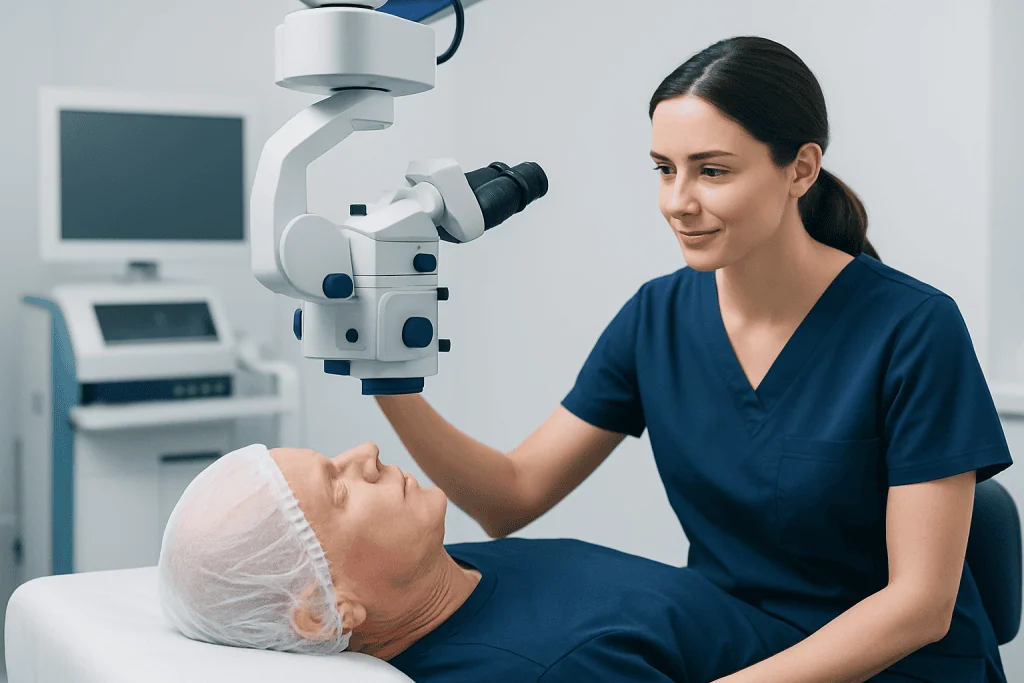
Monofocal lenses have one point of focus. In most cases, they are set for clear distance vision, which may help with activities such as driving or watching television. However, because they focus at one main distance, reading glasses or progressive glasses are often still needed for near tasks, and sometimes for computer work as well.
Toric lenses are a type of monofocal lens designed for people who also have corneal astigmatism. Astigmatism happens when the cornea is shaped more like an oval than a round dome, causing blurred or distorted vision. A toric lens can correct this refractive error during cataract surgery, reducing the need for glasses for distance in many patients, although near glasses may still be needed.
EDOF lenses, or extended depth of focus lenses, are designed to stretch the range of clear vision rather than create a single focal point. They often provide good distance vision and stronger intermediate vision than standard monofocal lenses, which may help with tasks such as computer use, shopping, or seeing a car dashboard. Some people still need reading glasses for small print or prolonged close work.
These lens types differ from multifocal lenses, which divide light into more than one focal point. EDOF lenses typically aim to provide a smoother transition between distances and may be chosen for people seeking more visual range with a careful balance of quality and function.
How Vision May Differ With Each Lens

The experience after cataract surgery depends not only on the surgery itself but also on the optical design of the IOL. With a monofocal lens set for distance, many people enjoy sharp far vision in good lighting but still reach for glasses when reading a book, using a smartphone, sewing, or doing other close work. Some patients choose a strategy called monovision, where one eye is focused more for distance and the other more for near, but this is not suitable for everyone.
Toric lenses can improve the clarity of distance vision when astigmatism is present. Without astigmatism correction, even a technically successful surgery may leave blurred vision due to the shape of the cornea. Toric lenses must be positioned precisely inside the eye to work properly, which is why measurements before surgery are especially important.
EDOF lenses may reduce dependence on glasses for a broader range of tasks, especially distance and intermediate activities. However, they may not provide the same strength of near vision as reading-focused solutions, and some people may still need glasses for fine print, medication labels, or extended close-up work.
All lens types involve trade-offs. Some patients are most comfortable prioritizing the sharpest possible image quality at one distance, while others value greater freedom from glasses. A realistic discussion of expected benefits and possible compromises can prevent disappointment and help patients make a confident choice.
Who May Be a Good Candidate for Each Option
Monofocal lenses are often a good fit for people who want a straightforward, reliable option and do not mind wearing glasses for some tasks. They may also be preferred in patients with certain other eye conditions, because they often provide excellent contrast sensitivity and predictable visual quality. For many people, this makes monofocal lenses a practical and reassuring choice.
Toric lenses may be suitable for patients with meaningful corneal astigmatism who want clearer unaided distance vision. They are especially helpful when preoperative measurements show that astigmatism is likely to affect vision after surgery. People who have long relied on glasses because of astigmatism may appreciate the improved sharpness a toric lens can offer.
EDOF lenses may appeal to people who want more range of vision for daily life and are motivated to reduce glasses use for distance and intermediate tasks. They may be helpful for active adults who spend time driving, using digital screens, cooking, or moving between indoor and outdoor tasks. Still, candidacy depends on healthy eyes and realistic expectations.
Not every eye is suited to every lens. Conditions affecting the cornea, retina, or optic nerve can influence which option is most appropriate. For that reason, a full eye examination is essential, and some people may also need evaluation for issues such as dry eye, corneal irregularity, or retinal disease before finalizing the plan.
How Doctors Choose the Right Lens
Choosing an IOL involves more than selecting a lens from a list. The surgeon first measures the length of the eye, the curvature of the cornea, and the amount and type of astigmatism. These calculations help determine the lens power and whether special designs, such as toric correction, are likely to be beneficial.
Medical history and lifestyle are just as important. A person who reads for hours each day may prioritize near vision differently from someone who spends more time driving. Night driving, computer work, sports, hobbies, occupation, and previous use of glasses or contact lenses all help guide the decision. People who have worn monovision contact lenses successfully in the past may also discuss whether a similar approach is reasonable after surgery.
The health of the eye can limit or shape the choice. Problems involving the retina or macula, significant glaucoma, prior corneal surgery, or irregular corneal shape may affect visual outcomes with certain premium lens designs. In these situations, the surgeon may recommend a lens that favors optical simplicity and image quality.
Shared decision-making is central to good results. The goal is not to promise perfect vision in every situation, but to select the lens that best fits the patient’s needs. Understanding likely outcomes before surgery often leads to greater satisfaction afterward.
Benefits, Limitations, and Possible Side Effects
Monofocal lenses are valued for clarity, predictability, and a long track record of use. They usually provide strong image quality at the chosen focal distance and are often well tolerated. Their main limitation is that glasses are commonly needed for other distances, especially reading and close-up tasks.
Toric lenses add the benefit of astigmatism correction, which can noticeably sharpen vision for suitable patients. Their main limitation is that they correct a specific refractive issue but do not usually eliminate the need for near glasses. In some cases, residual astigmatism can remain, particularly if the lens rotates slightly or if measurements change over time.
EDOF lenses offer the potential for more continuous vision across distances, especially far and intermediate. This may reduce glasses dependence for many daily activities. Even so, near vision may not be as strong as some patients expect, and reading glasses may still be useful for small print or low-light conditions.
Any IOL choice can be associated with routine surgical risks related to cataract surgery itself, such as infection, inflammation, swelling, or retinal complications, although these are uncommon. Some lens designs may also be associated with visual phenomena such as glare or halos, especially at night, though the degree varies from person to person. An open discussion with the surgeon helps place these possibilities in context and supports informed consent.
Recovery, Self-care, and Adapting After Surgery
Recovery after cataract surgery is usually smooth, but the eye still needs time to heal and adapt. Vision often improves within days, yet it may continue to stabilize over several weeks. Patients are usually asked to use prescribed eye drops, avoid rubbing the eye, and follow instructions about activity restrictions, hygiene, and follow-up visits.
It is common for the brain to adjust to a new optical system, especially when a toric or EDOF lens is used, or when both eyes are not operated on at the same time. During this period, some patients notice changes in depth perception, light sensitivity, or how clearly they see at different distances. These symptoms often improve as healing continues.
Good self-care includes protecting the eye from accidental injury, using sunglasses outdoors if bright light is uncomfortable, and reporting any unexpected pain or major drop in vision promptly. If glasses are still needed after healing, a new prescription is usually checked once the eye has stabilized.
For international patients seeking specialist eye care, Acibadem International’s multidisciplinary ophthalmology teams at JCI-accredited hospitals diagnose and treat cataracts and advise on suitable lens options based on each patient’s eye health and visual goals.
When to See a Doctor
Anyone considering cataract surgery should see an ophthalmologist for a complete assessment if vision is becoming cloudy, dim, blurry, or more sensitive to glare. Difficulty reading, driving at night, recognizing faces, or managing daily activities may all be signs that cataracts are affecting quality of life and that treatment options should be discussed.
People who already know they have astigmatism, retinal disease, glaucoma, prior eye surgery, or other eye conditions should mention these during the consultation. These details can strongly influence lens choice and help avoid unrealistic expectations. It is also helpful to tell the surgeon what matters most, such as reading without glasses, sharper distance vision, or easier computer work.
After surgery, urgent medical advice is important if there is worsening eye pain, increasing redness, sudden loss of vision, new flashes or floaters, or discharge from the eye. While most recovery is uncomplicated, these symptoms should not be ignored. Prompt review helps protect vision and address any problems early.
Even when surgery has gone well, follow-up care remains important. Regular postoperative visits allow the doctor to monitor healing, confirm lens position, and make further recommendations if glasses, additional treatment, or management of another eye condition is needed.
Frequently asked questions
What is the difference between monofocal, toric, and EDOF lenses?
A monofocal lens focuses at one main distance, usually far. A toric lens is designed to correct astigmatism as well as replace the cloudy cataract lens. An EDOF lens aims to provide a broader range of vision, especially distance and intermediate, with less reliance on glasses for some activities.
Will glasses still be needed after cataract surgery?
Many people still need glasses for at least some tasks after cataract surgery. This is especially common with monofocal lenses, which are usually set for one distance. Even with toric or EDOF lenses, reading glasses may still be needed for fine print or prolonged close work.
Who is a good candidate for a toric lens?
A toric lens may be a good choice for someone who has clinically significant corneal astigmatism before cataract surgery. It can improve the sharpness of uncorrected distance vision by addressing that astigmatism during the operation. A full eye examination is needed to confirm whether the amount and type of astigmatism make toric correction useful.
Are EDOF lenses better than monofocal lenses?
Neither lens is universally better; they serve different goals. Monofocal lenses are often chosen for simplicity, sharp image quality, and predictability at one distance. EDOF lenses may offer more range of vision, but they may not be ideal for every eye or every patient expectation.
Can cataract surgery correct astigmatism?
Yes, cataract surgery can often help correct astigmatism, especially when a toric intraocular lens is used. In some cases, surgeons may also use additional techniques to reduce astigmatism. The best approach depends on corneal measurements and the individual surgical plan.
How do doctors decide which lens is right?
Doctors combine eye measurements with information about the patient’s lifestyle, work, hobbies, and goals for vision after surgery. They also consider other eye problems, such as retinal disease, glaucoma, or corneal irregularities. The best choice is usually made through a shared discussion about expected benefits and trade-offs.
This article is for general information only and is not a substitute for professional medical advice. Please consult a qualified doctor about your individual situation.
Cataract Surgery in Turkey — costs, top hospitals & a free quote
JCI-accredited · board-certified surgeons · reply within 24h
Add us as a Preferred Source to see more of our trusted health content across Google Search, AI Overviews and Discover.

Ophthalmology
Comprehensive eye care from laser vision correction to retina, cornea and cataract surgery.
75 specialists in this unitRelated Treatments
More from the Health Library

Cataract Surgery Recovery: Vision Changes, Activity Limits, and Healing Timeline

Uveitis: Eye Inflammation, Pain, and Vision Risks

LASIK Side Effects: Common, Rare, and Long-Term Changes

How to Choose an Eye Clinic in Turkey for Surgery or Specialist Care
Neuro-Ophthalmology: When Vision Problems May Be Linked to the Brain or Nerves