How to Choose an Eye Clinic in Turkey for Surgery or Specialist Care

The right eye clinic should match the patient’s exact condition, not just offer a popular procedure. Board-certified ophthalmologists, subspecialty experience, and strong diagnostic services are key quality markers.
Key Takeaways
- The right eye clinic should match the patient’s exact condition, not just offer a popular procedure.
- Board-certified ophthalmologists, subspecialty experience, and strong diagnostic services are key quality markers.
- A thorough pre-treatment assessment is essential before cataract, laser vision correction, or retinal care.
- Patients should ask clear questions about benefits, risks, alternatives, recovery, and follow-up plans.
- Accreditation, infection control, transparent communication, and documented outcomes support safer care.
Choosing an eye clinic in Turkey for surgery or specialist care involves more than comparing prices or travel convenience. The best decision usually depends on the clinic’s medical expertise, diagnostic technology, safety processes, communication, and ability to provide the right follow-up care for the person’s specific eye condition.
Overview: What Matters Most When Choosing an Eye Clinic
An eye clinic in Turkey may provide a wide range of services, from routine eye checks to advanced surgery for cataracts, corneal problems, retinal disease, glaucoma, or refractive errors. For many patients, the most important point is that the clinic should be able to assess the eye carefully, explain the diagnosis clearly, and recommend treatment that fits the individual’s vision needs, age, eye health, and general medical history.
Choosing a clinic is not only about finding a surgeon. It is also about evaluating the whole care pathway, including consultation, imaging, preoperative testing, anesthesia support when needed, operating room standards, recovery planning, and long-term follow-up. A good clinic helps patients understand what treatment can realistically improve and what limitations may remain.
Turkey has many ophthalmology centers serving both local and international patients. This gives people more options, but it also means they should compare clinics thoughtfully. Looking at qualifications, equipment, patient communication, and aftercare can help a person make a more informed and comfortable decision.
Which Types of Eye Problems and Treatments Should a Clinic Handle?
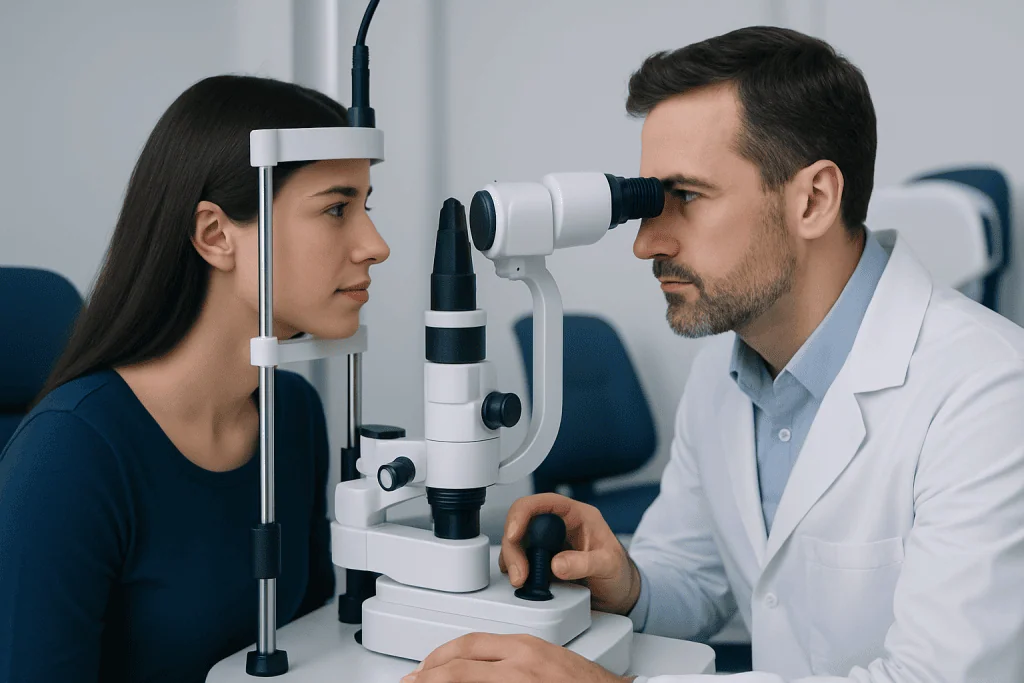
The best clinic is usually one with experience in the patient’s particular eye problem. Some centers focus mainly on refractive surgery to reduce dependence on glasses, while others have stronger services in cataracts, retina, cornea, oculoplastics, neuro-ophthalmology, or children’s eye care. A person with dry eye, keratoconus, diabetic eye disease, or complex double vision may need a different team than someone seeking routine laser vision correction.
It helps to check whether the clinic offers comprehensive assessment rather than only one procedure. For example, before LASIK, PRK, or ReLEx SMILE, the cornea should be measured carefully and the person should be screened for problems such as unstable vision, dry eye, or corneal thinning. Similarly, someone considering cataract surgery should have an evaluation that covers lens opacity, retinal status, corneal health, and expectations for postoperative vision.
If a patient already knows the suspected diagnosis, it is reasonable to ask whether the clinic regularly treats that condition. Examples include retinal disorders, keratoconus treatment, diabetic eye disease, or complex nerve-related visual symptoms that may need neuro-ophthalmology input. A broad service range can be useful, especially when a diagnosis changes after examination or when more than one eye problem is present.
Signs of a High-Quality Eye Clinic
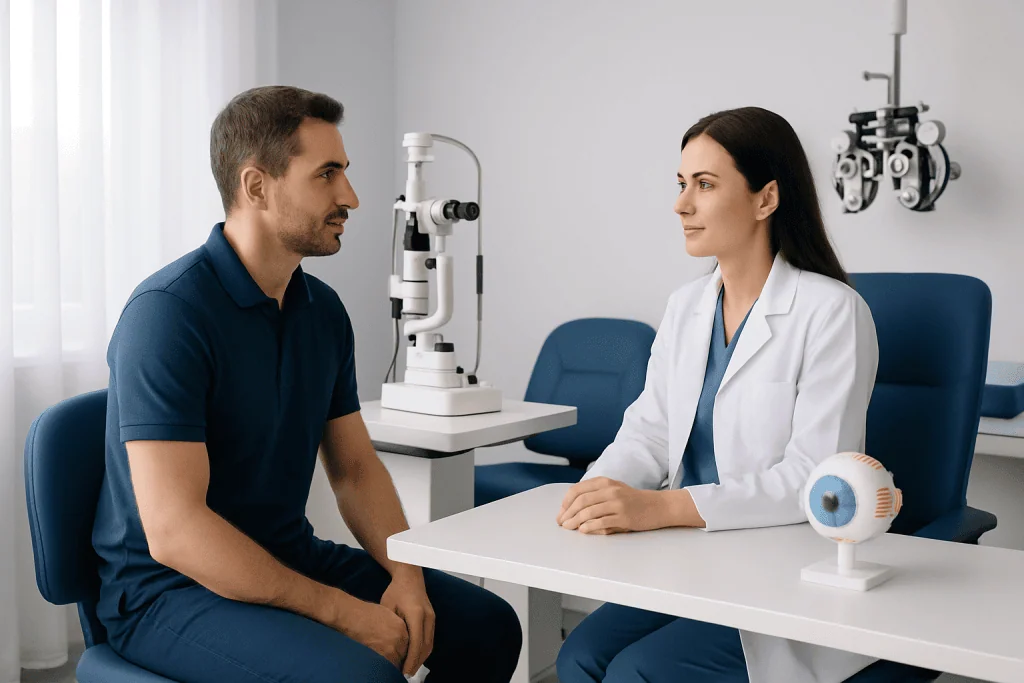
One of the clearest quality markers is specialist expertise. Patients may want to look for ophthalmologists who are appropriately licensed and who have specific experience in the procedure or subspecialty needed. It is reasonable to ask who will perform the surgery, how the treatment plan is decided, and whether other specialists such as retina, cornea, glaucoma, pediatric ophthalmology, or oculoplastic experts are available when needed.
Diagnostic capability is equally important. A high-quality clinic should be able to perform a detailed eye examination and use suitable imaging or measurements for the condition being assessed. Depending on the case, this may include corneal topography, optical coherence tomography, visual field testing, retinal imaging, biometry before lens surgery, or tests for tear film and ocular surface disease. Good treatment decisions depend on accurate diagnosis.
Patients should also look at systems rather than appearance alone. Useful signs include clear consent procedures, written instructions, attention to infection control, emergency contact arrangements, and realistic discussion of benefits and risks. International accreditation can add reassurance, but it should be considered alongside clinical expertise, patient safety practices, and the clinic’s ability to communicate in a language the patient understands.
Questions to Ask Before Surgery or Specialist Care
Before choosing an eye clinic in Turkey, patients may benefit from preparing a list of practical questions. A good clinic should be willing to explain the diagnosis, why a particular treatment is recommended, and whether there are alternatives. If surgery is being considered, the patient should understand what the procedure can improve, what it cannot change, and what the recovery timeline may look like.
Important questions include:
- What is the exact diagnosis, and how certain is it?
- Am I a suitable candidate for this treatment?
- What are the likely benefits, limitations, and possible risks?
- Who will perform the procedure and what is their experience?
- What tests are needed before treatment?
- What type of follow-up care will I need after I return home?
- What symptoms after treatment would require urgent review?
Patients should also ask whether travel timing is appropriate. Some procedures need several days or more for early follow-up, while others may require additional visits over weeks or months. If the patient has an eye condition such as diabetic retinopathy or cataracts, coordination with an eye doctor in the home country may also be helpful for long-term monitoring.
Why a Full Evaluation Is Essential Before Treatment
A careful pre-treatment assessment helps protect patient safety and improve decision-making. In eye care, similar symptoms can have different causes. Blurred vision may come from cataracts, dry eye, corneal disease, retinal disease, glaucoma, diabetes-related changes, or a refractive problem. This is why a clinic should avoid promising a procedure before completing a proper examination.
For laser vision correction, a full evaluation can show whether the cornea is healthy and stable enough for surgery. For lens-based procedures, measurements help determine the most appropriate intraocular lens option and identify conditions that may affect visual outcomes. For retinal symptoms such as flashes, floaters, or central distortion, imaging may be needed urgently to guide treatment and rule out more serious disease.
General health matters as well. Diabetes, autoimmune disease, previous eye surgery, pregnancy status, certain medications, and a history of dry eye can all influence treatment planning. A good clinic takes a full medical history and explains how these factors may affect suitability, healing, and the expected result.
Safety, Communication, and Follow-Up for International Patients
For someone traveling abroad, safe care depends on more than the operation itself. Good communication before arrival is especially important. The clinic should review previous eye records when available, explain what tests may be repeated, and provide clear information about preparation, expected length of stay, medication instructions, and when flying home is likely to be appropriate.
Aftercare planning is one of the most important parts of the decision. Some eye treatments have a relatively quick recovery, while others need closer observation. Patients should know who to contact if they develop pain, worsening redness, sudden vision loss, increasing light sensitivity, or other unexpected symptoms after returning home. Written discharge information and a summary for the patient’s local doctor can be very helpful.
It is also sensible to ask whether the clinic has access to other specialties if needed, such as endocrinology for diabetes, internal medicine for preoperative assessment, or anesthesia support for patients with additional health conditions. Near the end of the decision process, some international patients choose centers such as Acibadem International, where multidisciplinary specialists and JCI-accredited hospitals diagnose and treat eye conditions for international patients.
How to Compare Clinics in a Balanced Way
Price may matter, but it should not be the only factor. A lower price does not always reflect the total cost of care, and a higher price does not automatically mean better quality. Patients should compare what is included: consultation, imaging, surgeon fees, lens options if relevant, medications, follow-up visits, and whether additional testing or treatment would be charged separately.
Reviews can offer useful impressions, but they should be read carefully. Personal experiences may reflect communication style, waiting time, or travel logistics rather than clinical quality alone. It is often more helpful to focus on whether patients describe thorough evaluation, honest explanations, organized aftercare, and treatment that matched their diagnosis.
In the end, the strongest choice is usually a clinic that combines specialist expertise, modern diagnostics, transparent communication, and a follow-up plan that fits the patient’s travel situation. Patients should feel comfortable asking questions and should never feel rushed into surgery before they understand the recommendation.
When to Seek Prompt Eye Assessment
Some eye symptoms should not wait for routine travel planning or elective consultation. Sudden vision loss, severe eye pain, significant eye injury, sudden onset of flashes and floaters, a curtain-like shadow in the field of vision, or marked redness with light sensitivity can indicate urgent eye problems that need prompt medical assessment.
Patients with diabetes, a previous retinal tear, glaucoma, recent eye surgery, or only one seeing eye should be especially cautious about new symptoms. Delaying evaluation can sometimes affect outcome. In these situations, the safest step is to seek urgent local medical care first, even if treatment abroad is being considered later.
For non-urgent concerns such as gradual blurring, increasing dependence on glasses, mild cataract symptoms, chronic dryness, or interest in refractive surgery, there is usually time to compare clinics carefully and arrange a structured consultation.
Frequently asked questions
How can someone tell if an eye clinic in Turkey is reputable?
A reputable clinic usually has qualified ophthalmologists, strong diagnostic services, clear consent procedures, and organized follow-up care. It should be willing to explain the diagnosis, the reason for treatment, expected results, and possible risks in understandable language.
Is it enough to choose a clinic based on price?
No. Price alone does not show whether the clinic is the best fit for a person’s eye condition or whether all important services are included. Expertise, testing quality, safety standards, and aftercare are often more important than the headline cost.
What should a patient bring to an eye consultation abroad?
It is helpful to bring previous eye reports, glasses or contact lens prescriptions, a list of medications, and details of any past eye surgery or medical conditions. Recent scans or imaging can also support assessment, although the clinic may still need to repeat tests.
Do all patients seeking laser vision correction qualify for surgery?
No. Suitability depends on factors such as corneal shape and thickness, stable prescription, dry eye status, age, and overall eye health. A careful preoperative evaluation is needed to decide whether surgery is appropriate and which technique may be safest.
Why is follow-up important after eye surgery in another country?
Follow-up helps confirm that healing is progressing normally and allows early detection of problems such as inflammation, pressure changes, infection, or delayed visual recovery. Patients should know exactly when reviews are needed and how care will be coordinated after they return home.
Should a patient choose a general eye clinic or a subspecialty center?
That depends on the eye problem. For straightforward refractive or cataract care, a well-equipped general ophthalmology service may be suitable, while retinal, corneal, pediatric, or neuro-ophthalmic problems often benefit from subspecialty expertise.
References
- American Academy of Ophthalmology
- National Eye Institute
- World Health Organization
- Royal College of Ophthalmologists
- European Society of Cataract and Refractive Surgeons
This article is for general information only and is not a substitute for professional medical advice. Please consult a qualified doctor about your individual situation.
Explore treatments in Turkey — costs, top hospitals & a free quote
JCI-accredited · board-certified surgeons · reply within 24h
Add us as a Preferred Source to see more of our trusted health content across Google Search, AI Overviews and Discover.