Ocular Prosthetics
Ocular prosthetics create a custom artificial eye to restore facial symmetry and natural appearance after eye loss or severe eye damage. The prosthesis is individually shaped, colored, and fitted for comfort.
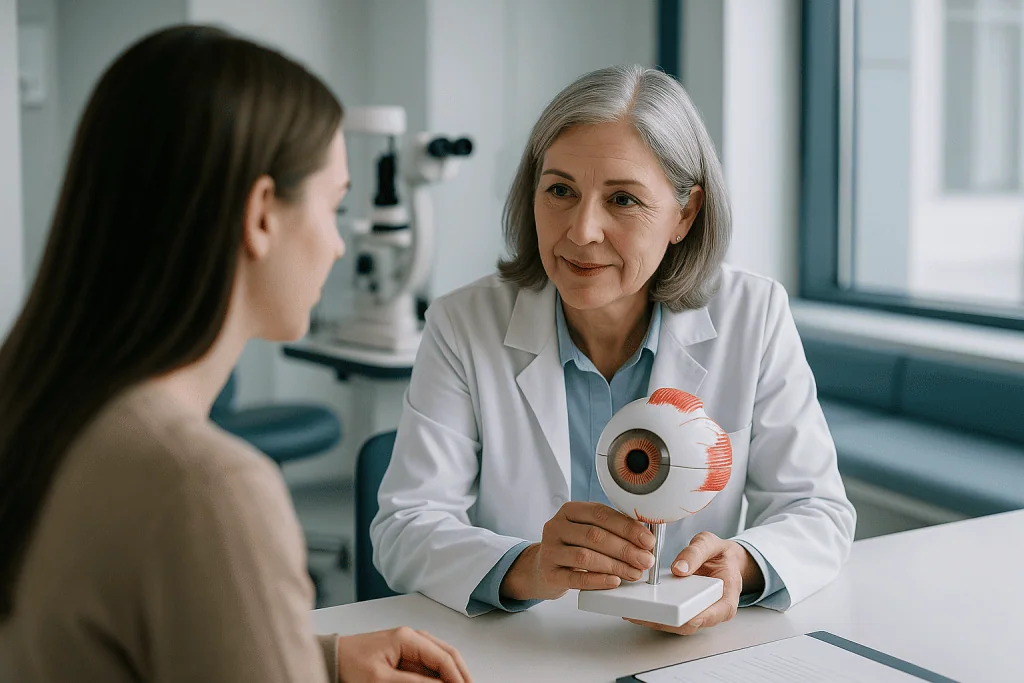
Quick answer
An ocular prosthesis, often called a glass eye, though modern versions are made of medical-grade acrylic, is a custom-made artificial eye fitted after eye removal, severe injury or congenital eye absence. It does not restore sight. It recreates the visible eye, supports the eyelids, protects the socket and restores facial symmetry. Fitting involves an impression of the socket, hand colour-matching to the other eye, and refinement over several visits.
Glass Eye and Ocular Prosthetics: Restoring Appearance After Eye Loss
A glass eye, known clinically as an ocular prosthesis, is a custom-made artificial eye that replaces the visible part of an eye lost to surgery, injury, disease or a congenital condition. It does not restore sight. Its job is to recreate the appearance of the eye, support the eyelids and surrounding tissues, protect the socket, and restore facial symmetry. It is made for people who have had an eye removed, who were born without a fully formed eye, or who live with a blind, shrunken or disfigured eye that remains in place.
Losing an eye, living with a severely damaged eye, or facing the possibility of eye removal is emotionally difficult as well as medically complex. You may be wondering how you will look, whether other people will notice, whether the prosthesis will feel comfortable, and how daily life will change. These concerns are entirely reasonable. The eye is central to facial expression, identity and communication, so good treatment has to address more than the socket alone.
If you are weighing up this treatment, you probably have practical questions too. How many visits does fitting take? Is the prosthesis hand-painted? Will it match your other eye? How long does a prosthesis last before it needs replacing? At Acibadem, ocular prosthetic care is approached through careful evaluation, precise customisation, and coordination between ophthalmology, oculoplastic surgery and ocular prosthetic specialists. The aim is a prosthesis that fits well, looks natural, and can be maintained safely for years.
Glass eye, fake eye, prosthetic eye: what the terms mean
These terms all describe the same device, and it helps to untangle them at the start. “Glass eye” is the everyday name most people know, inherited from an era when the devices really were blown glass. “Fake eye” is a blunter version of the same idea, and while clinicians avoid the phrase, it is what many people type into a search bar when they first face eye loss. “Prosthetic eye” and “artificial eye” are the plainer modern names. The formal clinical term is “ocular prosthesis”, and search phrases such as “ocular prosthesis artificial eye” simply combine two names for one device. Whatever you call it, the device is the same: a custom-shaped, hand-finished piece that sits in the socket or over a non-seeing eye.
What does having a glass eye mean?
Having a glass eye means that one of your eyes has been replaced, or covered, by a custom artificial eye. It usually follows one of a few paths: surgical removal of an eye after severe trauma, a painful blind eye, advanced infection or certain tumours; a congenital condition in which the eye never developed fully; or a decision to fit a thin shell over a blind, disfigured eye that does not need removal. It does not mean the person can see with that eye, and in most cases it does not mean their daily life is visibly limited. A well-made prosthesis blends with the natural eye closely enough that many people around the wearer never notice it.
Do glass eyes still exist?
Glass eyes in the literal sense are now rare. For centuries, artificial eyes were made from cryolite glass, blown and shaped by specialist craftsmen, and glass prostheses are still produced in a small number of workshops, mainly in parts of Europe. Almost everywhere else, the material of choice has been medical-grade acrylic (PMMA) since the mid-twentieth century. Acrylic is lighter, far less fragile, easier to adjust and polish, and better suited to the precise custom shaping a healthy socket needs. So while the phrase “glass eye” survives in everyday speech, the device you would actually be fitted with today is an acrylic ocular prosthesis, individually shaped and hand-painted for your face.
What Are Ocular Prosthetics?
Ocular prosthetics is the field of designing, fabricating and fitting custom artificial eyes, and an ocular prosthesis is the device itself: a custom-made artificial eye that sits in the eye socket or over a non-seeing, damaged eye to restore a more balanced facial appearance. It is typically made from medical-grade acrylic that is shaped, polished and coloured to resemble your remaining eye. The visible portion includes a painted iris, pupil and sclera, with subtle details, fine vessels, shading, surface tone, added by hand to improve realism.
There are different types of ocular prosthetic solutions depending on your anatomy and medical history. A full ocular prosthesis is commonly used after enucleation, in which the whole eye is removed, or after evisceration, in which the contents of the eye are removed while the outer shell is preserved. In many cases, a spherical orbital implant is placed surgically inside the socket at the time of removal to maintain volume and support movement. The prosthesis then sits over the implant and beneath the eyelids: it is not implanted itself, and it can be removed for cleaning.
A scleral shell prosthesis may be recommended when you still have an eye that is blind, shrunken, discoloured or cosmetically altered but does not need removal. This thin shell fits over the existing eye, rather like a very large, individually made cover, and can improve appearance considerably, provided the underlying eye is stable, comfortable and not inflamed. If the eye is painful or unstable, that has to be addressed first.
Ocular prosthetics demands a balance of medical knowledge and artistry. The shape must follow your socket anatomy, the eyelids must close properly over it, and the prosthesis must move naturally enough to blend with the opposite eye. The colour work must capture not only the iris shade but its depth, the limbal ring, pupil size, scleral tint and vascular pattern. Small details matter, because the eye is the focal point of the face and the thing other people look at when they speak to you.
How do ocular prosthetics work?
An ocular prosthesis works by occupying the space the natural eye once filled, so that the eyelids, socket tissues and facial contours are supported as they were before. The back surface is moulded to the individual socket, which lets the prosthesis sit securely without straps or adhesives: the eyelids and the fit itself hold it in place. When an orbital implant has been placed at surgery, the muscles that once moved the eye are usually attached to or around that implant; as the implant shifts with the muscles, it carries the overlying prosthesis with it, producing a degree of natural-looking movement. The front surface is painted to match the fellow eye, so that in ordinary conversation and in photographs the two eyes read as a pair. The prosthesis is removable, cleanable and replaceable, and it needs periodic professional polishing because even a smooth acrylic surface develops microscopic changes over time.
Can you still see with a glass eye?
No. A glass eye is a cosmetic and structural device, not a visual one, no current prosthesis restores sight to a removed or blind eye. This is one of the most important expectations to settle early. What the prosthesis restores is appearance, eyelid support, socket protection and facial balance. People adjusting to vision in one eye do adapt over time: depth judgement at close range changes, the field of vision on the affected side is narrower, and most people develop compensating habits within months. Prosthetic rehabilitation and visual adaptation run in parallel, and both deserve attention.
Who May Need a Prosthetic Eye
A prosthetic eye may be needed after surgical eye removal, severe trauma, infection, cancer treatment, congenital eye conditions, or long-standing eye disease that has changed the appearance or comfort of the eye. Some patients seek care soon after surgery. Others have worn a prosthesis for years and now need a replacement because of poor fit, irritation, discharge, asymmetry or gradual changes in facial appearance.
Common situations that bring patients to ocular prosthetic care include a missing eye after enucleation, a painful blind eye, a shrunken eye known as phthisis bulbi, a severely scarred cornea or disfigured globe, and congenital conditions such as anophthalmia (absence of the eye) or microphthalmia (an underdeveloped eye). Evaluation is also worthwhile when an older prosthesis no longer sits properly, causes recurrent irritation, or looks visibly different from the natural eye.
Typical concerns include:
- Visible facial asymmetry after eye loss or injury
- Difficulty with eyelid closure, or hollowing around the socket
- Frequent discharge, irritation or dryness related to an older prosthesis
- A prosthesis that rotates, slips or feels uncomfortable
- Changes in eyelid position or socket shape over time
- A blind, discoloured or damaged eye that affects appearance
- Emotional distress related to eye loss or altered facial appearance
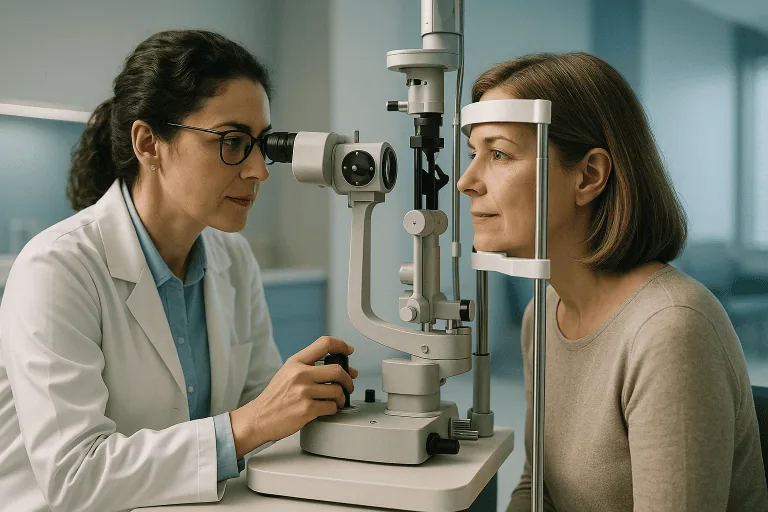
Assessment begins with a detailed ophthalmic and socket examination. The specialist evaluates the eyelids, the conjunctival lining, socket depth, implant position if one is present, the tear film, inflammation, scarring and movement. If the natural eye remains in place, the medical team assesses whether a scleral shell is safe and appropriate, or whether pain, inflammation or structural disease needs treatment first.
Patients with a history of trauma or cancer may need additional imaging or a review of previous surgical and pathology records. In tumour-related cases, planning may involve oncology, ophthalmic oncology, oculoplastic surgery and radiology to confirm that prosthetic rehabilitation is appropriate and that surveillance needs are built into the plan.
Timing varies. After eye removal surgery, a temporary conformer, a clear placeholder, is usually placed to maintain socket shape during healing. The custom prosthesis is fitted once the tissues have healed sufficiently and swelling has settled. The exact timing depends on the surgical technique, your healing pattern and your comfort.
Conditions and Indications Ocular Prosthetics Address
Ocular prosthetics can form part of rehabilitation for a wide range of conditions affecting the eye and orbit. The goal is not only cosmetic restoration but also socket health, eyelid support and long-term comfort.
Eye loss after surgery is one of the most common indications. Enucleation or evisceration may be needed for severe trauma, a painful blind eye, advanced infection, or selected tumours. Once healing is adequate, a custom prosthesis restores the visible appearance of the eye and holds the socket architecture in place.
Traumatic eye injury may leave severe scarring, shrinkage, loss of the eye, or an eye without useful vision. Some patients are fitted after reconstructive surgery; others may wear a scleral shell if the damaged eye remains in place but is stable and comfortable.
Congenital eye absence or underdevelopment, including anophthalmia and microphthalmia, may need prosthetic care from early childhood. In children, prosthetic management is tied closely to facial growth and socket development. Paediatric care often requires staged expansion, a series of progressively larger conformers or prostheses, and frequent adjustment as the child grows, because an unsupported socket in a growing face can affect how the surrounding bones develop.
Phthisis bulbi, a shrunken and non-functioning eye, may be managed with a scleral shell if the eye is comfortable. If the eye is painful, inflamed or unsuitable for shell wear, surgical options are usually discussed before prosthetic rehabilitation begins.
Cosmetic deformity of a blind eye can follow infection, surgery, corneal opacity, glaucoma, retinal disease or chronic inflammation. In selected cases a custom shell improves appearance without removing the eye: a meaningful option for patients who want to avoid further surgery. Where chronic inflammation of the eye itself is the underlying issue, assessment may overlap with ocular immunology before any shell is considered.
Socket changes after long-term prosthesis wear can cause poor fit, a drooping eyelid, deep upper-lid hollowing, a lax lower lid or recurrent discharge. These patients may need refitting, professional polishing, socket treatment, or oculoplastic surgery before a new prosthesis is made. It is common for someone to tolerate a slowly worsening fit for years before discovering that much of the discomfort was correctable.
Cancer-related eye removal requires careful coordination. Prosthetic restoration is planned after the surgical and oncology teams have confirmed the treatment pathway, healing status and follow-up schedule. The prosthesis should support appearance while leaving room for whatever medical surveillance the underlying condition requires.
Combined facial and orbital defectsfor example after extensive tumour surgery or major trauma involving the eyelids, orbit or surrounding face, may need more than an eye alone. In these cases, care overlaps with maxillofacial prosthetics, where larger custom facial prostheses restore structures beyond the socket itself.
How Ocular Prosthetic Treatment Is Performed
Preparation and Medical Evaluation
The process begins with a consultation reviewing your medical history, previous surgeries, current symptoms and expectations. A review of medical reports, operative notes, pathology results where relevant, photographs and imaging helps the care team judge whether the socket is ready for fitting or needs treatment first: a distinction that shapes the whole plan, since fitting a prosthesis into an unprepared socket rarely ends well.
During the examination, the specialist evaluates socket anatomy, eyelid position, tissue health, discharge, inflammation, implant mobility and the appearance of the opposite eye. If you already wear a prosthesis, its fit, surface condition, alignment and movement are reviewed. The team also discusses your daily routines, comfort concerns, cosmetic goals and follow-up planning.
If active infection, significant inflammation, an exposed implant, severe scarring or eyelid malposition is present, these problems usually need treatment before final fabrication. Sometimes minor adjustment or polishing is enough. In other cases, oculoplastic surgery is recommended first to give the prosthesis a sound foundation: a well-made eye cannot compensate for an unstable socket.
What does an ocularist do?
An ocularist is the specialist who designs, fabricates, fits and maintains artificial eyes: a profession that combines clinical training with fine artistic skill. While the ophthalmologist and oculoplastic surgeon manage the medical and surgical side of the socket, the ocularist takes the impression, shapes the prosthesis, paints the iris and sclera by hand, refines the fit, and carries out the periodic polishing and adjustment the device needs over its life. In practice the two roles work together: the surgeon prepares and monitors the tissue, and the ocularist builds the eye that tissue will carry. The quality of this partnership shows in the final result, because fit, movement and colour all depend on decisions made by both.
Impression, Measurement and Design
Custom ocular prosthetics are created through a detailed impression or fitting process. The specialist uses safe, biocompatible impression material or customised fitting techniques to capture the exact shape of your socket. This is what allows the finished prosthesis to rest comfortably, support the eyelids and align with the opposite eye, and it is the main reason a stock, off-the-shelf eye rarely fits or looks as well as a custom one.
The prosthesis is shaped gradually, with attention to volume, eyelid contour, gaze direction and comfort. Small changes in curvature or thickness noticeably affect both appearance and tolerance. You may be asked to look in different directions, blink and relax the eyelids while the fit is refined.
Colour matching is a highly individual stage. The iris is matched to the fellow eye in colour, size, depth and pattern. The sclera is tinted to your natural tone, and fine vessel patterns are added for realism. Digital photography and magnified assessment help document detail, but the final match depends on expert handwork checked under both natural and clinical lighting, because eye colour reads differently indoors and out.
Fabrication and Fitting
Once shape and design are established, the prosthesis is fabricated from medical-grade materials intended for long-term contact with delicate socket tissue. The surface is polished smooth to reduce friction. The prosthesis is then inserted and assessed for alignment, lid closure, movement and symmetry.
Several refinements are usually made at the fitting appointment. The specialist checks whether the upper-lid contour is balanced, whether the lower lid supports the prosthesis adequately, and whether the gaze appears centred when you look straight ahead. The prosthesis should feel secure without excessive pressure. It should not cause sharp pain, persistent rubbing or significant irritation: those are signs the fit needs further work, not things to put up with.
The total process varies. Some custom fittings are completed over a short sequence of visits; more complex cases, scarred sockets, paediatric sockets, post-tumour reconstruction, significant asymmetry, need additional appointments. It is worth planning for the full sequence of examination, fitting, refinement and an early review, rather than compressing everything into the fewest possible visits, because the refinement stage is where a good prosthesis becomes an excellent one.
How do you get an ocular prosthesis?
The pathway from first assessment to finished eye follows a recognisable sequence, whatever brought you to it:
- Specialist assessment. An ophthalmologist or oculoplastic surgeon examines the socket or the remaining non-seeing eye and confirms whether you are ready for fitting or need treatment first.
- Socket preparation, if needed. This may mean healing time after surgery with a conformer in place, management of inflammation, or corrective eyelid or socket surgery.
- Impression and shaping. The ocularist captures the socket shape and builds a trial form, refining volume and contour against your eyelids and fellow eye.
- Colour matching and painting. Iris, sclera and vessel detail are matched to your natural eye by hand.
- Final fitting and instruction. The finished prosthesis is inserted, checked and adjusted, and you are taught handling, cleaning and lubrication routines.
- Review and maintenance. Follow-up confirms tissue health and fit; periodic polishing and eventual replacement keep the prosthesis comfortable as the years pass.
Technology Used in Ocular Prosthetic Care
Modern ocular prosthetic care draws on detailed clinical photography, magnified colour assessment, digital measurement, imaging review and precise laboratory fabrication. These tools document the anatomy, support accurate matching and guide refinement. In complex cases, orbital imaging may be reviewed to understand implant position, socket volume or post-traumatic anatomy.
The most important technology, though, serves personalisation. A prosthesis cannot meaningfully be chosen from a shelf. It must be shaped and finished for your socket, your eyelids, your facial symmetry and your other eye. Advanced materials and polished surfaces improve comfort; careful individual design is what produces a natural look. This distinguishes ocular prosthetics from implanted ocular devices such as an intraocular lens, which is a surgical optical implant placed inside a seeing eye: a different treatment answering a different problem.
Aftercare and Recovery
After insertion, you receive instructions on wearing, cleaning, lubrication and when to seek medical review. Many patients adapt quickly, but mild awareness, tearing or temporary irritation can occur during the adjustment period. Follow-up visits confirm that the prosthesis is not creating pressure points and that the socket tissues remain healthy.
You will be taught how to remove and insert the prosthesis if appropriate. Some patients prefer to leave removal to periodic professional care; both approaches are legitimate, depending on your comfort and medical situation. Cleaning routines vary by patient, socket condition and discharge pattern, so instructions are individualised rather than generic. Most wearers keep the prosthesis in around the clock, removing it only as instructed, over-frequent removal can irritate the socket rather than help it.
Professional polishing is recommended periodically because even a smooth prosthesis develops microscopic surface changes with wear, and those changes can irritate the conjunctival lining. Polishing reduces irritation, improves comfort and restores surface clarity. Children, and adults with changing socket anatomy, need more frequent adjustment. If you wear a prosthesis and are scheduled for any unrelated hospital procedure, it is worth knowing how removable devices are handled on the day: the guide on contact lenses, glasses, hearing aids and dentures on procedure day explains the general approach.
Why Acting Early Matters
Timely evaluation after eye loss or severe eye damage makes rehabilitation easier. The socket and eyelids respond to changes in volume and support. If the socket is left unsupported for too long after surgery, tissues can contract, eyelid shape can change, and facial asymmetry becomes harder to correct. A temporary conformer, followed by a custom prosthesis, maintains the socket architecture and supports the lids while healing continues.
Delay also lets treatable problems become entrenched. A poorly fitting prosthesis can cause chronic irritation, discharge, inflammation or tissue change. Patients sometimes adapt to discomfort for months or years, assuming it is simply part of wearing an artificial eye. Often it is not: evaluation frequently identifies practical fixes, polishing, adjustment, refitting, socket treatment or eyelid support.
For patients with a painful blind eye, early assessment matters for a different reason: it determines whether a shell prosthesis is appropriate or whether the eye needs medical or surgical treatment first. Wearing a shell over an unstable or inflamed eye can worsen symptoms. When the eye is quiet and suitable, a scleral shell can deliver meaningful cosmetic improvement without eye removal, but that judgement has to be made before fitting, not after.
In children, timely care is especially important because the socket and facial bones are still developing. Prosthetic expansion and regular follow-up support more balanced growth; delay makes later rehabilitation more complex and can leave asymmetry that surgery struggles to undo.
Benefits of Ocular Prosthetic Treatment
The benefits are both physical and emotional, and the greatest value comes from a prosthesis that is medically appropriate, carefully fitted and maintained over time.
| Benefit | What It Means for You |
|---|---|
| Restored facial symmetry | A custom prosthesis supports the eyelids and replaces lost volume, helping the face appear more balanced in everyday expression. |
| Natural appearance | Individual shaping and hand colour-matching help the artificial eye blend with the remaining eye in gaze, iris detail and scleral tone. |
| Improved socket comfort | A smooth, well-fitted prosthesis reduces friction, protects delicate tissues and supports healthier socket conditions. |
| Better eyelid support | Appropriate prosthetic volume improves upper and lower eyelid contour, reducing a hollow or sunken appearance. |
| Daily confidence | Many patients feel more at ease returning to work, travel, social life and photographs once facial symmetry is restored. |
| Personalised long-term care | Regular follow-up, polishing and adjustment maintain comfort and appearance as tissues change over time. |
Recovery and Adjustment Timeline
Every patient heals and adapts differently, but the timeline below describes what many patients experience after receiving or replacing a custom ocular prosthesis.
| Time Period | What Patients Can Expect |
|---|---|
| Day 1 | The prosthesis is inserted and checked for comfort, alignment, eyelid closure and appearance. Mild awareness or tearing may occur as the socket adjusts. |
| First Week | You learn cleaning, lubrication and handling routines. Minor refinements are made if there is rubbing, pressure or visible asymmetry. |
| First Month | Comfort usually improves as wearing the prosthesis becomes familiar. A follow-up visit confirms tissue health and fit. |
| First 3 to 6 Months | Socket swelling after recent surgery continues to settle. Adjustments may be needed if the prosthesis was fitted soon after healing. |
| Longer Term | Periodic professional polishing and reassessment maintain comfort, appearance and socket health. Replacement is needed when anatomy or surface quality changes. |
Can you drive if you have a glass eye?
In many countries, yes, people with vision in one eye can hold an ordinary driving licence, provided the remaining eye meets the local visual standard and a period of adaptation has passed. Licensing rules differ between countries and between private and commercial licences, so the specific requirements depend on where you live and what you drive. What is universal is the adaptation itself: after losing vision on one side, drivers typically relearn head-turning and mirror habits to compensate for the narrower field, and most report that this becomes second nature. The prosthesis itself plays no role in the legal question: it is the vision in the remaining eye that licensing authorities assess.
Factors That Influence a Good Result
The outcome of ocular prosthetic treatment depends on several medical, anatomical and technical factors. A natural-looking prosthesis begins with a healthy, stable socket. Significant scarring, poor eyelid support, implant exposure, deep socket hollowing or chronic inflammation may need to be addressed before or during prosthetic rehabilitation.
Surgical history matters. Patients who had enucleation or evisceration with an orbital implant often have better volume support than those with substantial tissue loss, but implant position, motility and the health of the surrounding tissue all shape the final appearance. In trauma cases, fractures, scarring and eyelid injuries make fitting more complex.
The remaining eye provides the reference for colour, size and gaze alignment. Natural eyes are not perfectly symmetrical, and they change with lighting, emotion and fatigue. A skilled specialist interprets these variations rather than copying a single static image, which is why the process involves both measurement and artistic judgement, and why two eyes made from the same photograph can look quite different in person.
Expectations play an important role too. A custom prosthesis can look very natural in everyday settings, but it will not move exactly like a seeing eye in every direction of gaze. Movement depends on the socket, the implant, the eyelids and tissue mobility. The realistic goal is a comfortable prosthesis that looks balanced in straight-ahead gaze and in normal social interaction: the positions in which people actually look at each other.
Ongoing maintenance shapes long-term satisfaction. A prosthesis that was excellent when first made can become uncomfortable if it is never polished, if socket tissues change, or if discharge develops. Persistent redness, pain, increased discharge, odour, bleeding, a loosening fit or a change in position usually point to a correctable problem with the fit, the surface or the socket, not something a wearer simply has to endure.
General health affects healing and socket condition as well. Diabetes, immune suppression, inflammatory disease, prior radiotherapy and recurrent infection may all need additional attention in planning. Complete medical information lets the care team plan safely and efficiently.
Are ocular prosthetics covered by insurance?
Often, but the rules depend entirely on where you live and what scheme you hold. Custom ocular prostheses are widely treated as medically necessary devices rather than cosmetic items, and many public health systems and private insurers contribute towards them, but eligibility criteria, approval processes and how often a replacement is funded vary from scheme to scheme. Provincial and state programmes, national health systems and private insurers each apply their own definitions, documentation requirements and replacement intervals, and these change over time. The reliable step is to confirm current terms directly with your own scheme in writing before treatment planning begins.
Living With an Artificial Eye Day to Day
Daily life with an artificial eye is, for most wearers, unremarkable, and that is the point of good prosthetic care. The prosthesis stays in during sleep, showering and ordinary activity. Swimming is generally possible with sensible precautions such as goggles, since a prosthesis can be dislodged by forceful water. Contact sports call for protective eyewear, and many specialists recommend impact-resistant polycarbonate spectacles as everyday protection for the remaining, seeing eye, protecting the eye you still have becomes a lifelong priority once you rely on it alone.
Tear film and lubrication deserve attention. A prosthetic eye does not produce tears, and the socket’s natural moisture varies from person to person, so many wearers use lubricating drops or gels suited to prosthesis wear. Dry environments, aircraft cabins, air-conditioned offices, wind, tend to increase awareness of the prosthesis, and lubrication usually settles it. Discharge patterns also vary: a small amount of mucus is common and manageable with cleaning routines, while a marked increase in discharge usually points to a correctable issue such as surface wear, a change in fit or socket irritation.
Cosmetically, most wearers find that once the prosthesis is fitted and matched well, other people do not notice it in ordinary interaction. Glasses, if worn, add a further layer of visual blending. Emotionally, adjustment takes time and is different for everyone; many patients describe the first weeks as the hardest and the first well-matched prosthesis as a turning point. It is worth knowing that ocular prosthetics sits within the broader discipline of prosthetics and orthotics, a field built around exactly this kind of long-term, personalised rehabilitation rather than one-off treatment.
Ocular Prosthetic Care at Acibadem
At Acibadem, ocular prosthetic treatment is supported by ophthalmology and related specialties. Depending on the condition, care may involve ophthalmologists, oculoplastic surgeons, ocular prosthetic specialists, radiology, oncology, paediatrics and rehabilitation professionals. For patients with cancer-related eye removal, congenital disorders, major trauma or complex socket problems, multidisciplinary review helps align the prosthetic plan with the broader medical picture, important when the prosthesis is one part of a longer treatment journey.
Evidence-based protocols guide evaluation, timing, infection control, surgical decision-making where needed, and follow-up. The working principle is straightforward: a prosthesis is made only when the socket is ready and the surrounding tissues can tolerate wear safely. If preliminary treatment is needed, management of inflammation, eyelid correction, implant assessment or socket reconstruction: the care plan sets out those steps in order, so you understand what happens when and why.
Because a prosthesis is worn for years, the care plan looks beyond the fitting itself. Follow-up scheduling, polishing intervals and the likely timing of eventual replacement are discussed at the outset, so that maintenance is built into the plan rather than left to chance. Records of the socket impression, colour work and each adjustment are kept, which makes later refinements and remakes faster, more consistent and less dependent on starting from scratch.
Experience also matters in recognising when a prosthesis alone is enough and when more is needed. Some patients need only a new custom eye and a polishing plan. Others need oculoplastic evaluation for a drooping eyelid, socket contraction, implant issues or deep hollowing. A personalised plan avoids unnecessary procedures while addressing the problems that would otherwise compromise comfort or appearance, and it states plainly what a prosthesis can and cannot achieve in your particular anatomy.
What Ocular Prosthetic Rehabilitation Ultimately Offers
Ocular prosthetic care is a deeply personal form of rehabilitation. It combines medical evaluation, precise fitting and aesthetic detail to restore facial balance after eye loss or severe eye damage. For many patients, the value goes beyond how the eye looks: it is about feeling at ease in daily life again, speaking face to face without self-consciousness, and knowing how to keep the socket healthy for the long term.
Whether the question is a first prosthesis after surgery, the replacement of an older artificial eye, persistent discomfort under an existing one, or whether a scleral shell could improve a blind eye without removal, the answer starts with a specialist evaluation of the socket, the eyelids and the eye that remains. The device itself, call it a glass eye, an artificial eye or an ocular prosthesis, is the visible result of that evaluation done carefully: a hand-finished piece, made for one face, and maintained as that face changes over the years.
Preparation
- An ophthalmology evaluation checks the eye socket, eyelids, healing status, and suitability for a custom prosthesis. Patients should bring previous surgical records, imaging, and details of any implants or socket procedures. Fitting is usually planned after the socket has healed adequately following eye removal or trauma care.
Aftercare
- The prosthesis should be cleaned as instructed and handled with clean hands to reduce irritation or infection risk. Follow-up visits help adjust comfort, eyelid movement, and cosmetic alignment. Patients should seek medical advice if they notice pain, discharge, redness, or sudden poor fit.
Frequently Asked Questions
What affects the cost of an ocular prosthesis?
The final cost depends on the type of prosthesis, socket condition, need for specialist ophthalmology or oculoplastic input, level of hand painting and fitting complexity, adjustment visits, and whether travel support or aftercare services are included.
How can I get a personalised quote?
A personalised quote usually requires medical history, photographs if appropriate, details of previous surgery or trauma, and a specialist assessment. You can request a free consultation so the team can review your needs and explain the recommended pathway.
Does the quoted package usually include all appointments?
Package contents vary by provider. A quote may include consultation, fitting, colour matching, fabrication, and adjustment visits, while additional tests, surgery, medications, or future maintenance may be separate. Always ask for an itemised explanation before travelling.
Will I need surgery before receiving an ocular prosthesis?
Some patients can proceed directly to prosthetic fitting, while others need treatment for socket shape, eyelid position, inflammation, or volume loss before a comfortable result is possible. A specialist decides this after examination.
Is an ocular prosthesis permanent?
An ocular prosthesis is durable, but it may need professional polishing, adjustment, or replacement over time as the socket and surrounding tissues change. Your care team will explain maintenance and follow-up needs.
Why might international patients choose Turkey for ocular prosthetics?
Turkey may offer coordinated international patient services, multilingual communication, travel assistance, access to ophthalmology and oculoplastic specialists, and care in JCI accredited hospital settings. The most suitable choice depends on your medical condition, expectations, and personalised quote.
Medically reviewed by the Acıbadem International Medical Board September 13, 2026
See our medical review board →
Update history
- PublishedJune 8, 2026
- Medical review approvedSeptember 13, 2026
- Last content updateSeptember 12, 2026
Trusted care for international patients
From the Acibadem Blog
What a Prosthetic Eye Can and Cannot Do: Movement, Symmetry and Realistic Expectations
A prosthetic eye restores the appearance of the eye and supports the eyelids, but it cannot restore sight. Most modern prostheses move partly in…