Prosthetics And Orthotics
Prosthetics and orthotics provide custom artificial limbs, braces, and supportive devices to improve mobility, alignment, function, and daily independence after injury, disease, or limb loss.
Quick answer
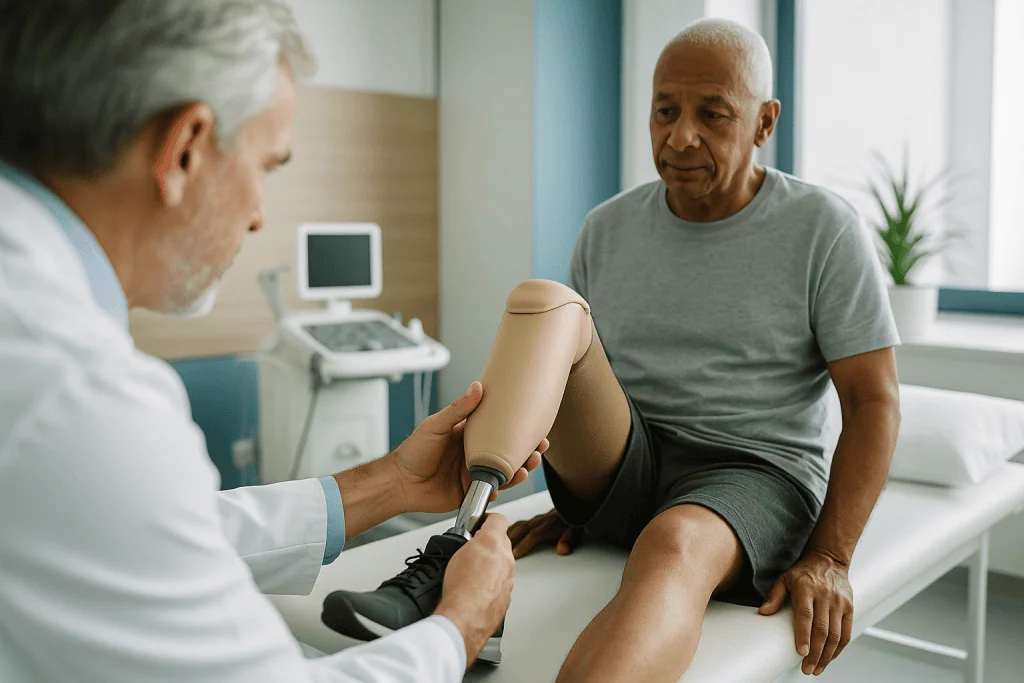
A prosthesis is a custom device that replaces a missing body part, most often part of a limb; an orthosis supports a body part that is weak, unstable or misaligned. Treatment is non-surgical and involves clinical assessment, measurement or digital shape capture, component selection, test fitting, alignment and rehabilitation training, followed by regular reviews as the body and the patient's needs change.
Prosthesis and Prosthetic Care: When Mobility Depends on the Right Support
A prosthesis is a device that replaces a missing body part, most often part or all of a leg or an arm, but also an eye, a facial structure, a breast form or a joint inside the body. Prosthetic care is the medical process around that device: assessing the patient, designing and fitting the prosthesis, aligning it precisely, and training the body to use it safely. Its close partner, orthotic care, supports a body part that is still present but weak, unstable, painful or misaligned: the foot, ankle, knee, spine, arm, wrist or hand. Together they form a single clinical discipline with one purpose: safer, more independent movement.
Needing a prosthetic limb, brace or supportive device is rarely a purely technical decision. It often follows a life-changing injury, surgery, neurological condition, congenital difference, diabetes-related complication, stroke, spinal disorder or progressive musculoskeletal disease. The questions patients and families ask are deeply personal. Will I be able to walk safely? Can I return to work, school, travel or sport? Will the device be comfortable enough to wear all day? How long will it take to adapt? Will people notice it? What happens if my condition changes over time?
Good prosthesis and prosthetic care is designed to answer those questions with a planned, medically guided pathway rather than a single product. The best device is not only the one that fits the body. It also fits the patient’s goals, strength, balance, skin health, work demands, home environment, culture and expectations for daily life. Two patients with the same level of limb loss may need very different solutions, and both can be right.
At Acibadem, prosthetic and orthotic care sits inside a broader rehabilitation and medical pathway. Physicians, rehabilitation specialists, physiotherapists, occupational therapists, prosthetists, orthotists, nurses, wound care teams and pain specialists may work together, joined when needed by vascular, orthopaedic, neurology, neurosurgery, paediatric or oncology specialists. This coordinated approach matters most when the device is only one part of the picture, after complex surgery, during cancer treatment, or when a child’s needs will change as they grow.
The aim is not only to provide a device. The aim is to restore as much safe function, confidence and independence as possible while protecting long-term health. A well-planned prosthesis or orthosis can improve mobility, reduce pain, prevent deformity, support healing, conserve energy and make everyday activities more manageable. Getting there requires clinical precision, patience, honest communication and adjustment over time.
What Is Orthotics and Prosthetics?
Prosthetics and orthotics is the clinical field that designs, makes, fits and adjusts devices which replace or support parts of the body. It combines medicine, biomechanics, materials science and rehabilitation. The field has two halves. Prosthetics deals with artificial replacements for body parts that are absent, after amputation, cancer surgery or a congenital difference. Orthotics deals with braces and supports for body parts that are present but not working as they should.
Prosthetics covers the design, fitting and training involved in using artificial body parts, most commonly upper- or lower-limb prostheses. A lower-limb prosthesis may replace part of the foot, a below-knee limb, an above-knee limb, or the entire limb from the hip level. An upper-limb prosthesis may replace part of the hand, the forearm, the arm above the elbow, or the shoulder-level limb. A prosthetic device may be designed primarily for walking, standing, grasping, daily self-care, work, sport or cosmetic restoration, depending on what the patient needs it to do.
Orthotics covers the design and fitting of braces and supports that assist existing body structures. Orthotic devices can stabilise weak joints, guide movement, correct alignment, reduce pressure, protect healing tissues, manage spasticity or improve gait. Common examples include foot orthoses, ankle-foot orthoses, knee braces, knee-ankle-foot orthoses, spinal braces, wrist-hand orthoses, elbow supports and paediatric orthoses for developmental or neuromuscular conditions.
Although the two fields are usually discussed together, the clinical reasoning behind each device is highly specific. A person recovering from a stroke may need an ankle-foot orthosis to prevent foot drop and make walking safer. A child with scoliosis may need a spinal brace designed to guide growth and slow curve progression. A patient with diabetes and a partial foot amputation may need a custom insert or partial foot prosthesis that redistributes pressure and protects the skin. A person after traumatic limb loss may need a staged prosthetic plan that begins with healing and progresses to more advanced components as strength and confidence build.
What is the difference between a prosthesis and a prosthetic?
A prosthesis is the device itself; prosthetic is, strictly speaking, the adjective that describes it. You wear a prosthesis; it is a prosthetic leg, a prosthetic hand or a prosthetic eye. In everyday speech, “a prosthetic” is now widely used as a noun for the device as well, and clinicians will understand you either way. The words prosthesis and prosthetic therefore point to the same thing from slightly different angles, one names the object, the other describes it, and neither usage will cause confusion in a clinical appointment.
What is the plural of “prosthesis”?
The plural of prosthesis is prostheses, following the Greek pattern, in the same way that diagnosis becomes diagnoses. “Prosthetics”, which is sometimes assumed to be the plural, is actually the name of the clinical field, although it is also used informally to mean several prosthetic devices. In medical writing you will usually see “two prostheses” rather than “two prosthetics”.
Is a prosthetist a doctor?
No, orthotists and prosthetists are specialist allied health professionals, not physicians. They complete dedicated training in the assessment, design, fabrication and fitting of orthoses and prostheses, and they work alongside doctors rather than in place of them. In a well-run service, a physician or rehabilitation specialist manages the underlying medical condition, circulation, wound healing, pain, spasticity, bone and joint problems, while the prosthetist or orthotist manages the device: its shape, materials, components, alignment and fit. Physiotherapists and occupational therapists then train the patient to use it. Each role depends on the others, which is why fragmented care, where the device is made far away from the medical team, tends to produce more fitting problems.
What Are the Main Types of Prosthesis?
Prostheses are usually classified by the level of the body they replace and by how they are controlled. Understanding the categories helps patients make sense of the options a clinical team will discuss.
What are the four types of prosthetics?
Limb prostheses are commonly grouped into four main types by amputation level: transtibial (below the knee), transfemoral (above the knee), transradial (below the elbow) and transhumeral (above the elbow). Each level has different mechanical demands. A transtibial prosthesis works with the patient’s own knee, so walking is generally easier to relearn. A transfemoral prosthesis must replace the knee joint itself, which requires more balance, strength and training. The same logic applies in the arm: keeping the natural elbow makes control simpler, while higher-level loss requires the device to reproduce more joints. Beyond these four, there are partial foot and partial hand prostheses, and hip- or shoulder-level designs for the highest levels of limb loss.
What is the most common prosthetic?
Lower-limb prostheses are the most commonly fitted, and among them the below-knee (transtibial) prosthesis is the type most prosthetists see most often. This reflects the underlying causes of amputation worldwide, vascular disease, diabetes-related complications and trauma affect the lower limb more often than the upper limb. Below-knee prostheses also tend to have the most established rehabilitation pathways, because retaining the natural knee joint gives patients a strong mechanical starting point for walking.
Upper-limb prostheses vary more widely because hand function varies so widely. Some patients prioritise fine motor tasks such as holding utensils, writing, using a phone or dressing. Others need a device that supports work activities, two-handed function, lifting or body symmetry. Options include passive designs, body-powered designs operated by a harness and cable, externally powered designs, activity-specific attachments for sport or tools, and hybrids that combine approaches. The choice balances function, comfort, weight, reliability and the patient’s own preference: the most technologically advanced hand is not automatically the most useful one.
Prostheses also extend well beyond arms and legs. Joint replacements implanted surgically, such as a shoulder prosthesis, are internal prostheses. An artificial eye, described on our ocular prosthetics page, restores the appearance of the eye after loss or removal. Maxillofacial prosthetics restores structures of the face and jaw after cancer surgery, trauma or congenital difference. Breast prostheses restore body contour after mastectomy, and some patients later choose breast prosthesis removal or replacement as their needs change. Each of these fields has its own specialists, but the underlying principle is the same: a device shaped to one individual body, reviewed over time.
Types of Orthosis and What Each One Does
Orthoses are named for the joints they cross. Foot orthoses (insoles) work inside the shoe to redistribute pressure and support alignment. An ankle-foot orthosis (AFO) controls the ankle and foot, most familiarly for foot drop after stroke or nerve injury. A knee orthosis stabilises the knee after ligament injury, surgery or in osteoarthritis. A knee-ankle-foot orthosis (KAFO) spans the whole lower limb for patients with severe weakness or paralysis who want to stand and walk more safely. Spinal orthoses range from soft supports to rigid braces used for scoliosis, kyphosis, vertebral fractures and post-operative stabilisation. In the upper limb, wrist-hand orthoses and elbow supports position, protect or assist the arm and hand.
What matters more than the name is the mechanical job the device is asked to do. An orthosis may restrict harmful movement, guide safer movement, correct a deformity that is still flexible, accommodate a deformity that has become fixed, reduce pressure on vulnerable tissue, protect a surgical repair while it heals, or substitute for a weakened muscle group. Defining that job precisely, direction of instability, degree of correction, hours of daily wear, is the core of orthotic prescription, and it is where an experienced clinician earns their keep.
Paediatric orthotic care deserves separate mention. Children with cerebral palsy, spina bifida, clubfoot, limb length difference, scoliosis or developmental delays grow, and their movement patterns evolve. A brace that fits perfectly today may work against the child in six months. Paediatric plans therefore build in regular reassessment, close communication with families, and coordination with the child’s wider medical and therapy team.
Who May Need Prosthetic or Orthotic Care?
Patients come to this field after sudden trauma, planned surgery, long-term disease, congenital limb difference, neurological injury, cancer treatment or progressive orthopaedic problems. Sometimes the need is obvious, as after amputation. Often it is subtle: weakness, instability, pain or deformity that gradually limits walking, standing tolerance or self-care until everyday life shrinks around it.
Typical situations that lead to an orthotics assessment include difficulty walking, frequent tripping, foot drop, ankle instability, knee buckling, back pain related to spinal alignment, painful pressure points, joint deformity, muscle weakness, poor balance, spasticity, nerve injury or reduced endurance. Referrals also follow fractures, ligament injuries, tendon repairs, spinal surgery, stroke, cerebral palsy, multiple sclerosis, spinal cord injury, peripheral neuropathy and arthritis.
Patients who may need prosthetic care include those who have undergone amputation because of trauma, diabetes-related complications, vascular disease, infection, tumours, severe congenital limb deficiency or unsuccessful limb salvage. Some patients ask for a prosthetic evaluation before a planned amputation, to understand the likely rehabilitation pathway and prepare physically and emotionally. That early education is worth having: it makes the sequence ahead less uncertain and clarifies what must happen, healing, swelling reduction, limb shaping, before a first fitting is possible.
How is the need for a prosthesis or orthosis assessed?
Assessment begins with a detailed medical history and a functional examination, not with a catalogue of devices. The team evaluates the underlying condition, surgical history, skin and wound status, sensation, muscle strength, joint range of motion, balance, pain, circulation, posture, gait and, crucially, the patient’s daily goals. For prosthetic patients, the residual limb is examined for shape, swelling, scar position, skin tolerance, sensitivity and range of motion. For orthotic patients, the focus is the joint or limb segment that needs support: the direction of instability, whether a deformity is flexible or fixed, how much pressure the tissues can tolerate, and the movement pattern the device is meant to change.
Additional tests are used when they genuinely add information. Imaging can clarify bone alignment, joint condition, spinal curvature, fracture healing or tumour-related changes. Vascular studies matter for patients with circulation problems, because a device that loads compromised tissue can do harm. Neurological assessment helps define the source of weakness, spasticity or sensory loss. Gait analysis, balance testing and pressure assessment give objective measurements of walking mechanics and areas of high stress. These findings shape the design and reduce the risk of discomfort, skin breakdown or a device that is technically correct but functionally useless.
Conditions Treated with Prosthetics and Orthotics
In lower-limb prosthetics, common indications include below-knee amputation, above-knee amputation, partial foot amputation, hip disarticulation and congenital limb absence or difference. The prosthetic plan depends on the level of limb loss, the condition of the residual limb, strength, balance, cardiovascular capacity, lifestyle and the patient’s own priorities.
Upper-limb prosthetic care may follow hand, wrist, forearm, elbow, upper-arm or shoulder-level limb loss. Goals differ enormously between patients, which is why the assessment spends as much time on tasks, eating, dressing, working, carrying, typing, as on anatomy.
Orthotic indications in the foot and ankle include flatfoot, high arch, plantar fasciitis, diabetic foot risk, foot drop, ankle instability and post-surgical support. Knee orthoses are used for ligament injuries, osteoarthritis, instability, hyperextension, post-operative protection and neuromuscular weakness. More complex devices, such as knee-ankle-foot orthoses, can help patients with severe weakness or paralysis stand and walk more safely than they otherwise could.
Spinal orthoses are used for scoliosis, kyphosis, vertebral fractures, post-operative stabilisation, degenerative spinal conditions and certain neuromuscular disorders. In children, timing is often tied to growth: bracing decisions for spinal curvature depend on the curve pattern, its flexibility and the growth remaining, which is why paediatric spinal bracing is monitored so closely.
Orthotic care is also central to neurological rehabilitation. After stroke, brain injury, spinal cord injury, peripheral nerve injury or in progressive neuromuscular disease, braces can improve alignment, limit unsafe movement, manage spasticity and assist walking or upper-limb positioning. Here the orthosis rarely works alone; it is combined with physiotherapy, occupational therapy, strengthening, balance training, spasticity management and functional retraining, and its role is reviewed as the neurological picture evolves.
How Prosthetic and Orthotic Treatment Is Performed
The process is non-surgical and follows a recognisable sequence, although the depth of each stage depends on the device. A patient receiving simple foot orthoses may complete the pathway quickly; a patient being fitted with a first above-knee prosthesis will move through every stage in detail, over multiple visits.
- Consultation and goal-setting. The team reviews the diagnosis, medical background, previous surgeries, current medication list, rehabilitation history, and the patient’s work and home environment. A patient who wants to walk short indoor distances safely needs a different solution from one who must commute, climb stairs, return to sport or use both hands for detailed work. Realistic goals set here shape everything that follows.
- Medical preparation. Wounds, swelling, circulation problems or fragile skin are addressed before a device can safely load the tissue.
- Measurement and shape capture. Hand measurements, casting or digital scanning record the exact shape the device must match.
- Design and material selection. Components and materials are chosen for the specific mechanical job.
- Fabrication. The device is manufactured, often with a temporary test version first.
- Test fitting and alignment. Pressure, comfort and movement are checked and refined.
- Rehabilitation training. The patient learns to use the device in daily life.
- Follow-up and adjustment. The device is reviewed and modified as the body changes.
For prosthetic patients, preparation may start well before the final device exists. After a recent amputation, the residual limb must heal adequately, swelling must reduce, and the skin must tolerate gentle pressure. The team may recommend compression, desensitisation exercises, scar care, range-of-motion work, strengthening, balance training and prevention of joint contractures. Pain, including phantom limb sensation and residual limb pain, is addressed within the rehabilitation plan by the treating physicians. Prosthesis and prosthetic planning done at this stage, before anything is manufactured, is what makes the later fittings go smoothly.
For orthotic patients, preparation focuses on defining the mechanical problem and the intended role of the brace: temporary protection during healing, or long-term support as part of daily function. That distinction changes the materials, the design and the wearing schedule.
Measurement and shape capture may involve hand measurements, plaster casting, three-dimensional scanning, photographs for clinical documentation, posture assessment and gait observation. Digital tools improve precision and let the team analyse shape, alignment, pressure and symmetry on screen. Computer-assisted design and manufacturing are used in selected cases to produce sockets, braces, insoles or components with highly accurate contours. The value of the technology is simple: the closer the device matches the individual anatomy, the fewer pressure problems appear later.
Material and component selection follows. Prosthetic sockets use lightweight, durable materials designed to distribute pressure and protect the skin. Liners, suspension systems, feet, knees, hands, wrists or elbows are chosen according to the level of limb loss, stability needs, walking speed, hand function, endurance and maintenance considerations. Orthoses may use thermoplastic, carbon composite, metal, fabric, leather, silicone or hybrid constructions. The right choice balances support, weight, comfort, durability, hygiene, appearance and ease of use, and sometimes the honest answer is a simpler device that the patient will actually wear.
A test fitting is usually performed before the final device is completed. The clinician checks pressure areas, alignment, limb position, joint control, suspension, comfort, skin response and movement. For lower-limb devices, standing and walking are assessed carefully; for upper-limb devices, grasp, release, reach, control and task performance. Adjustments at this stage are expected. They are not a sign of failure: they are how a mechanical device is refined against a living, changing body.
Fitting sessions range from brief appointments for simple insoles to several longer sessions for complex prosthetic or spinal devices. A custom device can take days to weeks to produce, depending on complexity, materials, clinical urgency and the number of adjustments required. Patients should allow time not only for delivery of the device but for training, modifications and skin tolerance checks; a device handed over without that process is a device likely to sit in a cupboard.
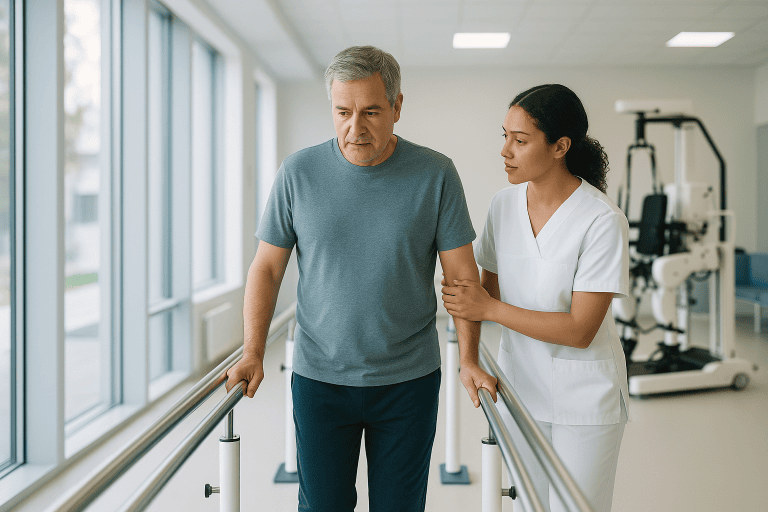
Rehabilitation is not an optional extra. A prosthesis or orthosis does not work in isolation; the body must learn to use it. Lower-limb prosthetic training may include standing balance, weight shifting, gait training, stairs, ramps, fall prevention, endurance building and care of the residual limb. Orthotic training may include donning and doffing, safe walking, posture correction, strengthening, skin checks and a progressive wearing schedule. Upper-limb prosthetic training may involve control strategies, two-handed task practice, work simulation and activities of daily living.
Follow-up matters because fit is not permanent. Residual limbs change shape after amputation, especially in the first months. Children outgrow devices. Neurological conditions improve or progress. Weight changes, activity changes, skin sensitivity and new medical conditions all affect fit. At review, the team may modify padding, alignment, straps, socket shape, foot or knee settings, or brace contours to keep the device performing and the skin safe.
Bionics and Advanced Prosthetic Technology
Bionics is the branch of prosthetic technology that uses electronics to sense, process and drive movement. Myoelectric prostheses read electrical signals from the muscles of the residual limb through skin sensors and use them to open and close a hand, rotate a wrist or bend an elbow. Microprocessor-controlled knees adjust their resistance many times per second to make walking on slopes, stairs and uneven ground more predictable. In this sense, a modern powered arm is bionically controlled: the patient’s own muscle activity commands the device.
These technologies are genuinely useful for the right patient, but they are not automatically better than simpler designs. Powered components are heavier, need charging and maintenance, and demand focused training to control well. A body-powered hook remains the more practical tool for some manual work; a mechanical knee remains the right choice for some walkers. An honest clinical team matches the technology to the patient’s strength, skin condition, goals and daily reality, not to the latest catalogue. Where advanced components are appropriate, the training period is longer and follow-up more frequent, and patients should plan for both.
Why Acting Early Matters
Early evaluation prevents secondary problems and makes rehabilitation more effective. When weakness, instability, deformity or limb loss is not addressed appropriately, patients develop compensatory movement patterns that load the back, hips, knees, shoulders or the opposite limb. A person with foot drop may start hiking the hip or swinging the leg outward, which increases fatigue and fall risk. A person with an ill-fitting prosthesis may simply walk less, losing strength, developing skin problems and withdrawing from social life.
For patients with diabetes, vascular disease, neuropathy or reduced sensation, delay is especially harmful. Pressure areas can progress into wounds before any pain is felt. Recurrent skin breakdown can lead to infection, hospitalisation or further surgery. Custom insoles, footwear, orthoses or prosthetic modifications can help distribute pressure and protect vulnerable tissue, but only when implemented early and monitored properly.
In children, early and consistent orthotic management can support safer development, limit worsening deformity and help the child participate in school and play. For spinal curvature, timing is tied to growth, curve pattern and progression risk, which is why paediatric bracing decisions should not drift. In neurological conditions, early bracing and therapy help preserve range of motion, reduce unsafe positioning and support functional training while the nervous system is adapting.
After amputation, timely prosthetic planning helps patients maintain strength, mobility and motivation. That does not mean rushing the process before the limb is ready. It means coordinating wound healing, limb shaping, therapy, education and fitting into one sequence, so the patient always knows what comes next and why.
Benefits of Prosthetic and Orthotic Treatment
What treatment can realistically achieve depends on the diagnosis, the device, the rehabilitation plan and the patient’s overall health. Within those limits, well-designed care supports many aspects of daily life.
| Benefit | What It Means for You |
|---|---|
| Improved mobility | A prosthesis or orthosis may help you stand, walk, transfer, climb stairs or move more safely with less effort. |
| Better alignment and stability | Custom support can guide joints and limbs into safer positions, reducing buckling, imbalance or harmful movement patterns. |
| Reduced pain and pressure | Proper load distribution may reduce stress on sensitive areas, joints, the spine or the opposite limb. |
| Protection during healing | Braces and supportive devices can help protect surgical repairs, fractures, ligaments, tendons or vulnerable skin while recovery progresses. |
| Greater independence | Many patients manage daily activities with more confidence, including dressing, self-care, work tasks, school and community participation. |
| Long-term health support | Appropriate device use may help prevent falls, wounds, contractures, worsening deformity and overuse injuries elsewhere in the body. |
Recovery and Adaptation Timeline
Adaptation varies by condition and device complexity, but the following timeline shows what many patients can expect. It is a guide to the shape of the process, not a schedule your body is obliged to follow.
| Time Period | What Patients Can Expect |
|---|---|
| Day 1 | Initial fitting, comfort checks, education on the wearing schedule, skin inspection, device care and basic use. Some patients begin standing or walking practice under supervision. |
| First Week | Gradual increase in wearing time, early therapy, gait or functional training, and adjustments for pressure, alignment, straps, socket fit or brace contour. |
| First Month | Improving tolerance, strength, coordination and confidence. Patients may progress to stairs, uneven surfaces, work activities or refined hand function. |
| Three to Six Months | Ongoing adaptation and possible device modifications as swelling decreases, muscles strengthen, walking patterns improve or daily activity increases. |
| Longer Term | Periodic reassessment. Devices may need repair, replacement, resizing, new liners, new insoles or updated components as the body and lifestyle change. |
Factors That Influence Outcomes
A good result depends on more than the device. The underlying diagnosis, level of limb loss or degree of deformity, muscle strength, joint mobility, balance, skin condition, sensation, circulation, pain level, age, weight, activity level and other medical conditions all influence what can be achieved. Patients with diabetes, vascular disease, neuropathy, fragile skin or complex wounds need especially careful monitoring and a gradual progression.
For prosthetic patients, the residual limb itself is decisive: its shape, scar location, soft tissue coverage, range of motion and ability to tolerate pressure. A below-knee prosthesis has different mechanical demands from an above-knee prosthesis, and patients with higher-level amputations use more energy to walk and need more training for balance and control. The opposite limb also needs protecting, particularly where diabetes, arthritis or vascular disease is present: it is now doing more work than before.
For orthotic patients, outcomes depend on whether the deformity is flexible or fixed, whether the condition is improving or progressive, and whether the brace is worn as prescribed. A brace that performs well in the clinic achieves nothing if it is uncomfortable, difficult to put on, incompatible with the patient’s shoes or clothing, or mismatched to their routine. Practical design decisions, closure types, weight, appearance, ease of cleaning, are clinical decisions.
Rehabilitation participation is the other major factor. Muscles, balance, coordination and confidence develop through repeated, guided practice. Patients who follow wearing schedules, attend therapy, report discomfort early and do the recommended exercises adapt more successfully. Skin checks are essential, especially where sensation is reduced: redness that does not fade, blisters, wounds, unusual swelling, increasing pain or a change in walking pattern are all things the treating team wants to know about early, because early problems are usually simple to fix.
Expectations should be realistic and individual. Some patients return to highly active lives; others aim for safer home mobility, pain control, pressure relief or easier caregiving. Both are meaningful outcomes. A good plan respects the patient’s medical reality while aiming for the highest practical level of function and participation, and it says so plainly at the start.
Caring for a Prosthesis or Orthosis Day to Day
A device that is used daily needs daily habits. The residual limb or braced skin should be inspected regularly, especially at the start of a wearing schedule and after any increase in activity. Liners, socks and straps need cleaning and periodic replacement; sockets and braces need to stay dry and intact. Small mechanical issues, a loose strap, a worn liner, a click in a joint, are worth reporting at follow-up rather than living with, because minor faults change how the device loads the body.
Body changes matter as much as device changes. Weight gain or loss, swelling, pregnancy, new footwear, a new job or a change in the underlying condition can all alter fit. This is why prosthetic and orthotic care is best understood as a long-term clinical relationship with scheduled reviews, not a single purchase. Devices have working lives: liners wear, materials fatigue, components are superseded, and children simply grow. Planning for maintenance and eventual replacement from the beginning avoids the gap in mobility that comes from waiting until a device fails.
Prosthetic and Orthotic Care at Acibadem
Prosthesis and prosthetic care at Acibadem is structured around medical assessment first. The team evaluates not only which device may be appropriate, but why it is needed, what medical risks must be considered, and how the patient can use it safely in daily life. Existing medical records, imaging, surgical reports and therapy notes are reviewed as part of that assessment, because the history of the limb or joint often explains fitting problems that a physical examination alone cannot.
Multidisciplinary working is particularly valuable in this field. A patient with limb loss after vascular disease may need input from rehabilitation medicine, vascular surgery, wound care, endocrinology, physiotherapy and prosthetics. A child with cerebral palsy may need paediatric rehabilitation, orthopaedics, physical therapy and ongoing growth monitoring. A patient after tumour surgery may require coordination with oncology and orthopaedic reconstruction teams. Collaborative clinical discussion keeps the device aligned with the patient’s broader medical condition rather than treating it in isolation.
Digital measurement, gait assessment, pressure evaluation, computer-assisted design, modern materials and precision fabrication are used where they genuinely help. These tools sharpen assessment and improve fit, but they work best combined with experienced clinical judgment and careful follow-up, technology supports the clinician, it does not replace the process.
For prosthetic and orthotic patients specifically, the practical point is time: fitting, training and adaptation usually require more than one appointment, and the sequence of consultations, device preparation, therapy sessions and follow-up checks is planned as a connected whole rather than as isolated visits. Understanding that sequence from the start makes each stage, and each adjustment along the way, easier to anticipate.
Living Well with a Prosthesis or Orthosis
Choosing prosthetic or orthotic care involves medical facts, personal goals, emotional adjustment and practical planning. The most effective plans begin with listening: what you can do now, what is difficult, what you hope to regain, and what challenges you face at home, at work and in your community. From there, a clinical team can assess the condition, explain the realistic options, discuss likely timelines and guide the fitting, training and follow-up that turn a device into part of daily life.
The process takes time, and it does not end at delivery. Bodies change, devices wear, goals evolve. Patients who understand this from the start, who treat the prosthesis or orthosis as an ongoing partnership between themselves and their clinical team, tend to get the most out of it. Each adjustment, each review and each stage of training exists for one reason: to make the device safer, more comfortable and more useful for the life you actually live.
Preparation
- A specialist evaluates mobility, muscle strength, skin condition, posture, and functional goals. Measurements, imaging, gait analysis, or casting may be used to design a custom prosthesis or orthosis. Patients should bring previous medical reports, current devices, and comfortable clothing for assessment.
Aftercare
- Follow-up visits are needed to adjust fit, comfort, alignment, and function as the body adapts. Patients receive training on safe use, skin checks, cleaning, and gradual wearing schedules. Rehabilitation exercises may be recommended to improve balance, strength, and mobility.
Frequently Asked Questions
What affects the cost of prosthetics and orthotics most?
The main factors are the type of device, the body region involved, component selection, materials, fabrication complexity, rehabilitation needs and the number of fitting or adjustment visits required.
How can I get a personalised quote?
A personalised quote usually requires medical records, photos or imaging when relevant, details of the diagnosis, previous treatments, mobility goals and any current device information. You can request a free consultation so the team can review your needs and outline an appropriate plan.
Are rehabilitation and gait training included in the cost?
This depends on the care package. Some packages include physiotherapy guidance, gait training or device-use education, while others list rehabilitation separately. It is important to ask what is included before confirming travel.
Will I need more than one visit for fitting?
Custom prosthetic and orthotic care often requires assessment, measurement or scanning, fabrication, fitting, alignment and later adjustments. The exact schedule depends on the device type, skin condition, comfort and functional progress.
Do international patients receive language and travel support?
International hospital programs may help with interpreters, appointment coordination, airport transfers and accommodation guidance. Availability can vary, so these services should be confirmed during the consultation.
Is the lowest-cost option always the best choice?
Not necessarily. Device comfort, safety, durability, specialist experience, rehabilitation support and follow-up access are important parts of value. This information is general and not medical or financial advice; a specialist consultation is needed for an individual recommendation.
Medically reviewed by the Acıbadem International Medical Board August 31, 2026
See our medical review board →
Update history
- PublishedJune 8, 2026
- Medical review approvedAugust 31, 2026
- Last content updateAugust 31, 2026
References1
- Prosthesis my.clevelandclinic.org
Trusted care for international patients
From the Acibadem Blog
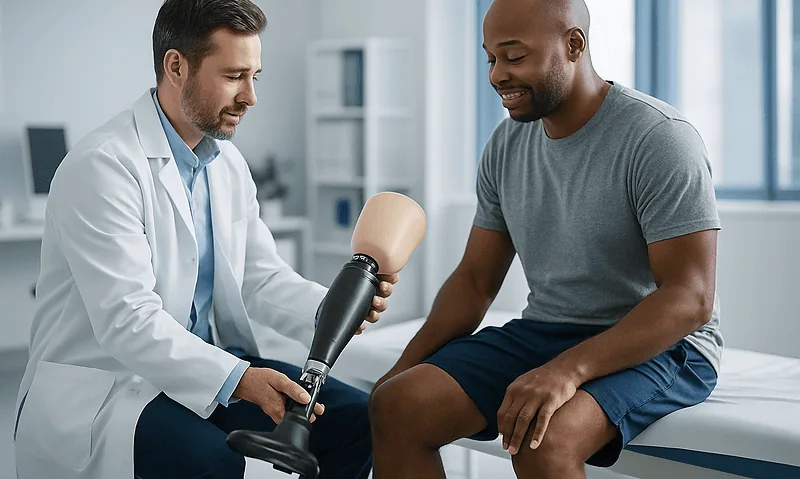
How a Prosthetic Limb Is Designed and Fitted: Casting, Gait Analysis and Adjustments
The prosthetic fitting process usually begins once the surgical wound has healed and swelling has settled. A prosthetist captures the shape of the residual…
How Do You Get Used to a Prosthesis? Wearing Schedules, Skin Checks and Early Training
Getting used to a prosthetic leg is gradual and supervised. Most rehabilitation programs begin with short wearing sessions of an hour or two, a…
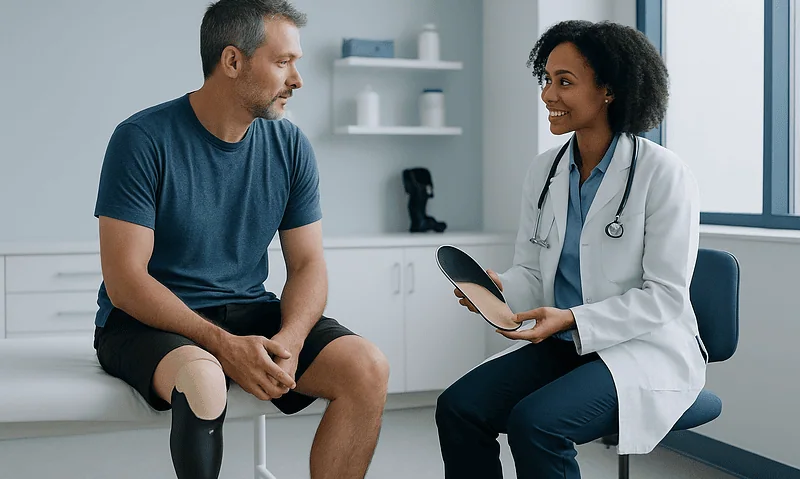
Prosthetics vs Orthotics: Which Device Replaces a Limb and Which Supports One
A prosthesis replaces a body part that is missing, such as an artificial leg after amputation or a limb absent from birth. An orthosis…