Anti Inflammatory Cream: An Evidence-Based Guide for Patients

Topical NSAID gels are commonly used for short-term, localized muscle and joint pain, including some osteoarthritis pain. Steroid creams reduce inflammation caused by certain skin conditions, but they are not appropriate for routine muscle or joint pain.
Key Takeaways
- Topical NSAID gels are commonly used for short-term, localized muscle and joint pain, including some osteoarthritis pain.
- Steroid creams reduce inflammation caused by certain skin conditions, but they are not appropriate for routine muscle or joint pain.
- A product marketed for pain relief may create a warming or cooling sensation without treating inflammation directly.
- Anti inflammatory creams can still cause side effects and may interact with medicines, especially when used over large areas or for long periods.
- Persistent, severe or unexplained pain, swelling or skin changes should be assessed by a healthcare professional.
Anti inflammatory cream is applied to the skin to help relieve localized pain, swelling or inflammation, often in muscles and joints. Its benefits and risks depend on the active ingredient: topical NSAIDs, corticosteroids and soothing counterirritants work differently and are not interchangeable.
What Is an Anti Inflammatory Cream?
An anti inflammatory cream is a topical product applied to the skin to reduce symptoms in a specific area of the body. Depending on its active ingredient, it may help reduce inflammation itself, relieve pain, calm an inflammatory skin rash, or produce a cooling or warming sensation that distracts from discomfort. These products are often available as creams, gels, sprays, patches or ointments.
For muscle or joint pain, the most evidence-supported non-prescription options are usually topical nonsteroidal anti-inflammatory drugs (NSAIDs), such as diclofenac in countries where it is available without prescription. For eczema, dermatitis and similar skin disorders, a clinician may recommend a topical corticosteroid. Because these medicines have different purposes, choosing a product based only on the label phrase “anti inflammatory” can lead to ineffective or unsuitable treatment.
Topical treatment can be useful when pain is localized, such as at one knee, hand, ankle or shoulder. It delivers medicine near the painful area and generally results in lower levels in the bloodstream than oral medicines. However, “topical” does not mean risk-free, and the product instructions and a clinician’s advice remain important.
How Different Types Work
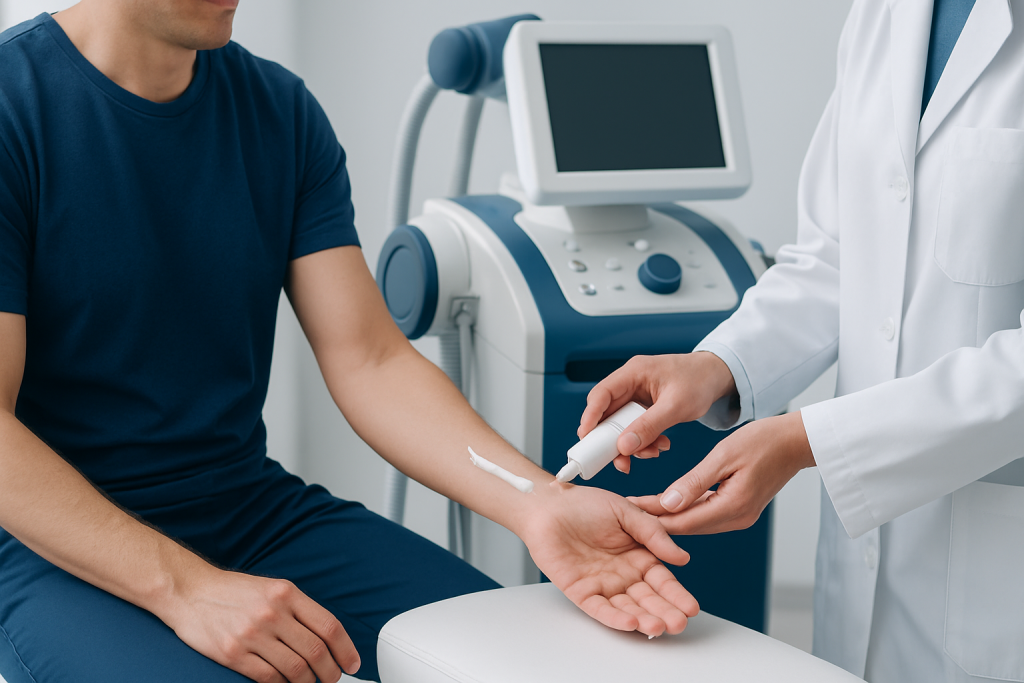
Topical NSAIDs reduce the production of substances called prostaglandins, which contribute to pain and inflammation. They are often considered for mild to moderate pain from sprains, strains, overuse injuries and osteoarthritis affecting superficial joints, such as the hands or knees. Their effect may develop over several days of regular use rather than immediately after one application.
Topical corticosteroids, sometimes called steroid creams, suppress inflammation in the skin. They may be prescribed or recommended for conditions such as eczema, contact dermatitis, insect-bite reactions or psoriasis in selected areas. The strength, amount and duration need to match the diagnosis and body site. Steroid creams should not be used as a general treatment for an undiagnosed rash, fungal infection or muscle pain.
Other rubs contain menthol, camphor, capsaicin or salicylate-related ingredients. These are often called counterirritants. They may temporarily ease pain through cooling, warming or nerve-related effects, but they do not necessarily reduce underlying inflammation. Capsaicin may help some people with longer-lasting nerve-related or arthritis pain, although burning or stinging can occur early in treatment.
When an Anti Inflammatory Cream May Help

A topical NSAID may be a reasonable option for localized pain due to a minor soft-tissue injury or osteoarthritis, particularly for people who prefer to avoid or limit oral anti-inflammatory medicines. It is most suitable when the painful structure is close to the skin. Deep pain from the hip, lower back or internal organs is less likely to respond because the medicine may not reach the source effectively.
For skin symptoms, the key question is not simply whether skin looks inflamed, but why. Redness, itchiness and scaling can result from eczema, irritation, allergy, infection, psoriasis or other conditions. A suitable moisturizer and avoidance of triggers may be central to care, while a steroid cream is used only when appropriate. A healthcare professional can help distinguish common skin conditions when symptoms are recurrent or uncertain.
Topical products should support, rather than replace, other practical measures. Resting briefly after an acute injury, gradually returning to movement, using appropriate footwear, strengthening surrounding muscles and following a rehabilitation plan can all be important. For osteoarthritis, regular low-impact activity and weight management when relevant can improve symptoms and function over time.
Using Topical Products Safely
Use an anti inflammatory cream exactly as directed on the package or by the prescribing clinician. Apply only to intact, clean and dry skin, and wash hands afterward unless the hands are being treated. Avoid contact with eyes, mouth, genitals and other sensitive areas. Do not apply more frequently, over a larger area or for a longer period than recommended in the hope of getting faster relief.
Do not cover the treated area with airtight dressings, heating pads or hot-water bottles unless a clinician specifically advises it. Heat and occlusion can increase absorption and may raise the risk of burns, irritation or unwanted medicine effects. It is also sensible to avoid applying multiple medicated creams to the same area without professional guidance.
People using a topical NSAID should tell a pharmacist or doctor about aspirin, ibuprofen, naproxen, blood-thinning medicines and other regular treatments. Although absorption is lower than with tablets, some medicine still enters the bloodstream. Extra caution is appropriate for people with a history of stomach ulcers or bleeding, kidney disease, heart disease, asthma triggered by NSAIDs, or allergy to aspirin or similar medicines.
- Stop using the product if a rash, hives, severe burning, blistering or swelling develops.
- Keep products away from children and do not use them on broken, infected or sunburned skin unless specifically instructed.
- Check with a clinician before use during pregnancy or breastfeeding, especially in later pregnancy.
Side Effects and Common Mistakes
The most common side effects of topical treatments occur at the application site. They can include dryness, itching, redness, peeling, burning or a rash. Menthol and capsaicin products may cause temporary warmth, coolness or stinging; severe or persistent discomfort is not expected and should prompt discontinuation and advice from a pharmacist or clinician.
Topical NSAIDs can occasionally cause broader NSAID-related side effects, especially when used excessively or alongside oral NSAIDs. Steroid creams can thin the skin, cause visible small blood vessels, alter skin color or worsen certain infections when they are too strong, used too long or applied to delicate areas such as the face, groin or skin folds. Children may be more vulnerable to steroid absorption because of their smaller body size.
A frequent mistake is treating a painful swollen joint repeatedly without understanding the cause. Sudden pain can be caused by injury, gout, infection or inflammatory arthritis, and these require different care. Another common error is using a steroid cream on a fungal rash; this can temporarily change its appearance while allowing the infection to spread. When a diagnosis is uncertain, assessment is safer than trialing several products.
Choosing the Right Next Step for Pain or Skin Inflammation
For a recent mild sprain or strain, a topical NSAID may be discussed with a pharmacist or doctor if there are no reasons to avoid it. Protecting the injured area, gentle movement as tolerated and a gradual return to usual activity are often helpful. Severe injury, inability to use a limb, deformity or rapidly increasing swelling needs medical assessment rather than self-treatment alone.
For ongoing joint pain, a clinician may consider osteoarthritis, tendon problems, inflammatory arthritis or another cause. The care plan can include exercise therapy, physical therapy, topical or oral medicines, injections in selected situations, and further investigations when needed. Pain that lasts beyond the expected recovery period deserves review, particularly if it affects sleep, work, walking or daily activities.
For a rash, basic skin care includes avoiding known irritants, using fragrance-free emollients where appropriate and not scratching as much as possible. A clinician or dermatologist can determine whether treatment should include a topical steroid, antifungal medicine, antibiotic treatment or another option. Acibadem International’s multidisciplinary specialists and JCI-accredited hospitals can assess persistent joint, soft-tissue and skin concerns for international patients.
When to Seek Medical Care
Urgent medical care is important for a painful area that is hot, very swollen, rapidly worsening or associated with fever, feeling unwell, or red streaks on the skin. These features can sometimes indicate infection or another condition requiring prompt treatment. Emergency assessment is also needed after a serious injury, visible deformity, loss of sensation, a cold or pale limb, or inability to bear weight after trauma.
A routine medical appointment is advisable when pain lasts more than a few weeks, repeatedly returns, limits normal activities, or is accompanied by morning stiffness, unexplained weight loss or pain in several joints. A clinician should also assess a rash that is spreading, painful, oozing, crusted, blistered, near the eyes, or not improving with appropriate basic care.
Anyone who develops breathing difficulty, facial swelling, widespread hives, dizziness or severe skin blistering after applying a product should stop using it and seek urgent help. These reactions are uncommon, but they may signal a serious allergy. Bringing the product package to the appointment can help the clinician identify the active ingredient and advise on safe alternatives.
Frequently asked questions
Is anti inflammatory cream better than anti-inflammatory tablets?
Neither option is always better. A topical NSAID may be useful for pain in a small, accessible area and may cause fewer whole-body side effects than an oral NSAID. Tablets may be more appropriate for some types of deeper, widespread or severe pain, but a clinician can help balance expected benefit and individual risks.
Can anti inflammatory cream be used every day?
Some products are intended for regular short-term use, while others are prescribed for a defined course. The safe frequency and duration depend on the active ingredient, the body area and the person’s medical history. Following the label or prescription is important, and ongoing symptoms should be reviewed rather than treated indefinitely without advice.
Can a steroid cream help muscle or joint pain?
Steroid creams mainly treat inflammation in the skin and do not usually treat pain originating in muscles, tendons or joints. Applying them to normal skin over a painful joint is unlikely to provide meaningful benefit. Prolonged unnecessary use can damage the skin.
Can anti inflammatory cream be used with ibuprofen tablets?
It may be possible in some circumstances, but combining a topical NSAID with oral NSAIDs can increase total exposure and side-effect risk. This is especially relevant for people with ulcer history, kidney disease, cardiovascular disease or blood-thinning treatment. A pharmacist or doctor should be asked before combining them.
Why does a pain-relief cream burn or feel hot?
Some products contain menthol, camphor or capsaicin, which can create cooling, warming or burning sensations as part of their intended action. Mild temporary sensations may occur, but intense pain, marked redness, blistering or swelling is not normal. The product should be washed off as directed and medical advice sought if a significant reaction occurs.
How long should it take for an anti inflammatory cream to work?
Counterirritant products may alter pain sensation soon after application, while topical NSAIDs may require several days of consistent use for their full effect. Improvement also depends on the underlying cause and whether the affected area is protected and rehabilitated appropriately. If symptoms are worsening or not improving within the recommended use period, medical assessment is appropriate.
References
- National Institute for Health and Care Excellence
- American Academy of Dermatology Association
- National Health Service
- Arthritis Foundation
- U.S. Food and Drug Administration
This article is for general information only and is not a substitute for professional medical advice. Please consult a qualified doctor about your individual situation.
Joint and spine care in Turkey — expert assessment & treatment
JCI-accredited · board-certified surgeons · reply within 24h
Add us as a Preferred Source to see more of our trusted health content across Google Search, AI Overviews and Discover.

More from the Health Library

Buck Teeth: An Evidence-Based Guide for Patients

Posterior Communicating Artery: An Evidence-Based Guide for Patients

Electrolytes: A Complete Medical Overview

Stress Induced Fits: A Complete Medical Overview

Choosing a Deodorant With Baking Soda for Sensitive Skin