Aphakia: An Evidence-Based Guide for Patients

Aphakia happens when the natural lens of the eye is absent, usually after surgery, injury, or rarely from birth. Common effects include blurred vision, trouble focusing, glare, and reduced ability to see clearly at different distances.
Key Takeaways
- Aphakia happens when the natural lens of the eye is absent, usually after surgery, injury, or rarely from birth.
- Common effects include blurred vision, trouble focusing, glare, and reduced ability to see clearly at different distances.
- Doctors diagnose aphakia through an eye examination and by assessing how the eye focuses light.
- Treatment may include special glasses, contact lenses, or surgery to place an artificial lens when appropriate.
- Prompt eye care is important if aphakia symptoms develop suddenly or after an eye injury.
Aphakia is a condition in which the eye's natural lens is missing. It can affect focusing, make vision blurry, and increase sensitivity to light, but many people can see well with proper diagnosis and treatment.
What Is Aphakia?
Aphakia is the absence of the eye’s natural lens. The lens normally sits behind the colored part of the eye and helps focus light onto the retina so a person can see clearly. When the lens is missing, vision usually becomes significantly blurred, especially for near tasks, and the eye may struggle to focus at different distances.
In modern practice, aphakia most often occurs after the natural lens has been removed and not replaced with an artificial intraocular lens. This may happen in certain complex eye surgeries, after serious trauma, or in some uncommon medical situations. A baby may also be born with aphakia, although this is rare and requires specialist care.
Aphakia can affect one eye or both eyes. Its impact depends on the person’s age, whether one or both eyes are involved, and whether other eye conditions are present. With timely care, many people can regain useful vision through corrective lenses, contact lenses, or surgery.
How Aphakia Affects Vision
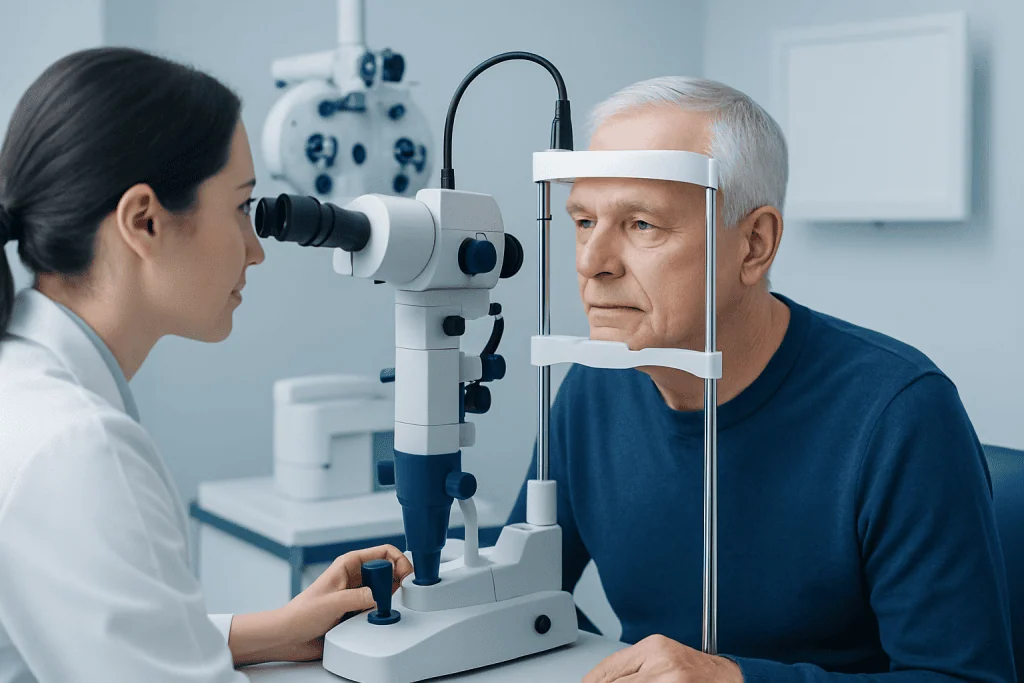
The natural lens contributes a large part of the eye’s focusing power. Without it, incoming light does not bend properly, so objects may appear blurred or distorted. Vision is often worse up close, but distance vision can also be affected. People may notice that they cannot shift focus smoothly between near and far objects.
Some people with aphakia become very sensitive to bright light because the missing lens changes how light enters the eye. Colors may look slightly different, and glare from sunlight or headlights can become more bothersome. If only one eye is affected, the brain may have difficulty combining images from both eyes, which can lead to eyestrain or reduced depth perception.
In children, untreated aphakia can interfere with normal visual development. Because the brain learns to process visual input early in life, prompt diagnosis and treatment are especially important. In adults, the condition is still significant, but the goals often focus on restoring clear, comfortable vision and supporting daily activities.
Symptoms of Aphakia
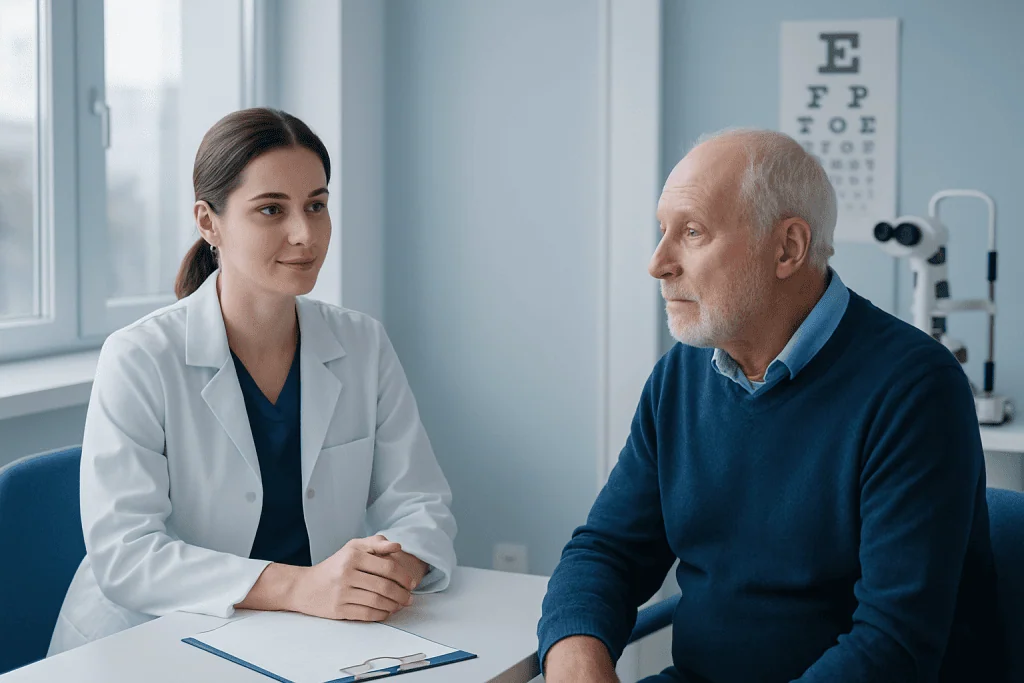
The symptoms of aphakia vary from person to person, but blurred vision is the most common complaint. The blur may be severe, and reading, driving, or recognizing faces can become difficult. Some people describe a feeling that their eye cannot focus properly no matter how hard they try.
Other symptoms can include:
- Difficulty seeing clearly at near or far distances
- Sensitivity to light
- Glare or halos around lights
- Reduced contrast or clarity
- Trouble with depth perception, especially if only one eye is affected
- Eyestrain or headaches from focusing effort
Symptoms may appear suddenly after surgery or eye trauma, or they may become apparent when a child is evaluated for abnormal visual development. Aphakia can also exist alongside other eye problems, such as cataract-related lens disease before surgery, retinal problems, or damage to other eye structures, which may influence how much vision is affected.
Causes and Risk Factors
The most common cause of aphakia is surgical removal of the natural lens. In many cataract operations, the removed lens is replaced with an artificial lens, so the person is not left aphakic. However, in certain complicated situations, an artificial lens may not be implanted immediately or may not be suitable at that time. This can occur in some emergency procedures or when the eye needs to heal first.
Another important cause is eye trauma. A severe injury can dislocate, damage, or completely remove the natural lens. Trauma may also injure the cornea, retina, or other internal structures, which can make treatment more complex. In some people, earlier surgery or eye disease can also lead to loss of the lens.
Rarely, aphakia is congenital, meaning a baby is born without the lens. This may happen because the lens did not form properly during development or was absorbed before birth. Risk factors for acquired aphakia therefore include previous eye surgery, major eye injury, and complex ocular disease requiring specialist treatment, sometimes overlapping with conditions managed in retinal disease care.
How Doctors Diagnose Aphakia
Diagnosis usually begins with a detailed eye examination. An eye specialist asks about symptoms, past surgeries, injuries, and how vision has changed. The doctor then examines the front and back of the eye to confirm whether the natural lens is absent and to check for any related complications.
Vision testing helps measure how much aphakia is affecting sight. Refraction tests can show the kind of optical correction needed, while slit-lamp examination allows the specialist to inspect the eye under magnification. Depending on the situation, the doctor may also examine the retina, measure eye pressure, and evaluate the overall health of the eye.
In children and in complex adult cases, additional imaging or measurements may be needed to plan treatment. The aim is not only to identify aphakia but also to understand whether there are associated conditions that could change management. This careful approach helps the care team choose between glasses, contact lenses, or a surgical option such as intraocular lens implantation when appropriate.
Treatment Options for Aphakia
Treatment depends on age, whether one or both eyes are affected, and the condition of the rest of the eye. The main goal is to restore focus and support the best possible visual function. In some cases, the simplest option is the best one; in others, surgery may offer better long-term vision.
Special aphakic glasses can provide strong focusing power, especially when both eyes are affected. They are noninvasive and may work well for some adults, but they can feel heavy and may cause image distortion. Contact lenses are often another effective choice because they can provide clearer, more natural vision than thick glasses for many people. In infants and children, contact lenses are commonly used when surgery is delayed or carefully timed.
Some people may benefit from surgery to place an artificial lens inside the eye. This can be considered when the eye is healthy enough and the specialist believes a lens implant is suitable. Depending on the underlying problem, treatment planning may be connected with cataract surgery pathways or more advanced vitreoretinal surgery if trauma or retinal complications are present.
Follow-up care is an important part of treatment. The prescription may need adjustment over time, and children need especially close monitoring to support visual development and prevent amblyopia, sometimes called lazy eye. Patients should use their prescribed correction consistently and attend scheduled eye visits.
Living With Aphakia: Self-Care and Practical Tips
Everyday management of aphakia often includes adapting to new visual needs. Good lighting at home, anti-glare sunglasses outdoors, and regular use of prescribed corrective lenses can make daily tasks easier. Reading materials may need larger print or stronger task lighting, particularly during the adjustment period.
People who wear contact lenses should follow cleaning and replacement instructions carefully. Good lens hygiene helps reduce the risk of irritation and infection. If the eye becomes red, painful, or unusually sensitive to light, the person should stop wearing the lens and seek medical advice.
Protecting the eyes is also important. Safety eyewear can help prevent injury during sports, home repairs, or work involving flying particles. For children with aphakia, families often play a key role in helping with contact lens care, follow-up appointments, and patching or vision therapy if recommended by the eye specialist.
Near the end of the care journey, some patients may seek treatment coordination at centers experienced in complex eye conditions. Acibadem International’s multidisciplinary specialists and JCI-accredited hospitals diagnose and treat eye disorders, including aphakia, for international patients.
When to Seek Medical Care
Medical review is important whenever aphakia is suspected, because the condition affects visual function and may sometimes be linked to other eye problems. A prompt appointment with an eye specialist is especially important for babies and children, since early treatment supports normal visual development.
Urgent care is needed if vision suddenly changes, if aphakia follows an eye injury, or if symptoms occur with pain, redness, flashes of light, many new floaters, or a curtain-like shadow in the vision. These features may suggest additional problems that need immediate assessment. Any person who has had lens surgery or trauma and notices worsening blur or marked glare should contact a doctor without delay.
Frequently asked questions
Is aphakia the same as cataract?
No. A cataract means the eye's natural lens has become cloudy, while aphakia means the lens is missing. Aphakia can happen after cataract removal if an artificial lens is not placed or cannot be placed right away.
Can aphakia be corrected?
Yes, in many cases aphakia can be managed effectively. Treatment may include strong glasses, contact lenses, or surgery to place an artificial lens, depending on the person's age and eye health.
What does vision look like with aphakia?
Vision is usually very blurred without correction because the eye has lost a major part of its focusing power. Many people also notice glare, difficulty reading, and trouble judging distances, especially if only one eye is affected.
Is aphakia permanent?
The absence of the natural lens itself is usually permanent unless vision is restored with an artificial lens or optical correction. Even so, the visual effects can often be improved substantially with proper treatment and follow-up.
Do all people need surgery for aphakia?
No. Some people do well with glasses or contact lenses, particularly in certain age groups or clinical situations. Surgery may be considered when it is safe, suitable, and likely to provide better visual function.
Why is aphakia in children treated urgently?
A child's visual system is still developing, so clear visual input is essential. If aphakia is not treated promptly, the brain may not learn to process images normally from the affected eye, which can lead to long-term vision problems.
References
- American Academy of Ophthalmology
- National Eye Institute
- Mayo Clinic
- Merck Manual
- Royal College of Ophthalmologists
This article is for general information only and is not a substitute for professional medical advice. Please consult a qualified doctor about your individual situation.
Explore treatments in Turkey — costs, top hospitals & a free quote
JCI-accredited · board-certified surgeons · reply within 24h
Add us as a Preferred Source to see more of our trusted health content across Google Search, AI Overviews and Discover.

More from the Health Library



Related Specialists

Psk. Gözde Genç İşleyen
Psychology
Dr. Harun Yaşar
Physical Medicine & Rehabilitation
Prof. Dr. G. Ertuğrul Mirza
Ophthalmology
Dr. Mesut Fatih
Orthopedic Surgery & Traumatology