Are All Babies Born with Blue Eyes? A Doctor-Reviewed Answer

Many newborns have blue-gray eyes at birth, but this does not mean all babies are born with blue eyes. Eye color depends on genetics and on how much melanin develops in the iris after birth.
Key Takeaways
- Many newborns have blue-gray eyes at birth, but this does not mean all babies are born with blue eyes.
- Eye color depends on genetics and on how much melanin develops in the iris after birth.
- A baby's eye color may keep changing during the first 6 to 12 months, and sometimes longer.
- Most eye color changes are normal and harmless.
- Medical review is important if there is a white pupil, marked unequal pupils, cloudiness, redness, pain, or poor visual response.
No, not all babies are born with blue eyes. Many newborns appear to have blue-gray eyes at first because pigment is still developing, but babies can also be born with brown, hazel, or other eye colors, and the shade may change over time.
Overview: Are all babies born with blue eyes?
No, not all babies are born with blue eyes. It is common for newborn eyes to look blue, gray, or blue-gray in the first days or weeks of life, but this early appearance can be misleading. In many babies, the iris has not yet produced its full amount of melanin, the pigment that helps determine final eye color.
This is usually harmless and part of normal development. Some babies are born with eyes that already look brown, dark brown, hazel, or a clearly mixed shade. Others start with lighter-looking eyes and gradually develop a different color over the first several months.
The most helpful way to understand newborn eye color is that it often reflects developing pigment rather than a permanent shade. Lighting, camera flash, and the baby’s age can also make the eyes look lighter or darker than they really are.
Why newborn eyes often look blue or gray

The colored part of the eye is called the iris. Eye color is mainly related to melanin within the iris, not to a blue pigment. In babies with less visible melanin at birth, light scatters in a way that can make the eyes appear blue or gray.
After birth, normal exposure to light and ongoing genetic signaling can influence how much melanin becomes more noticeable in the iris. As that happens, the eyes may deepen in color, stay light, or settle somewhere in between. This is why a baby who appears to have blue eyes in the newborn period may later have green, hazel, or brown eyes.
The exact timing varies from child to child. Some changes are noticeable within a few months, while others are gradual and subtle. Parents often first notice the difference by comparing photos taken in different seasons or under the same lighting.
What determines a baby's final eye color?
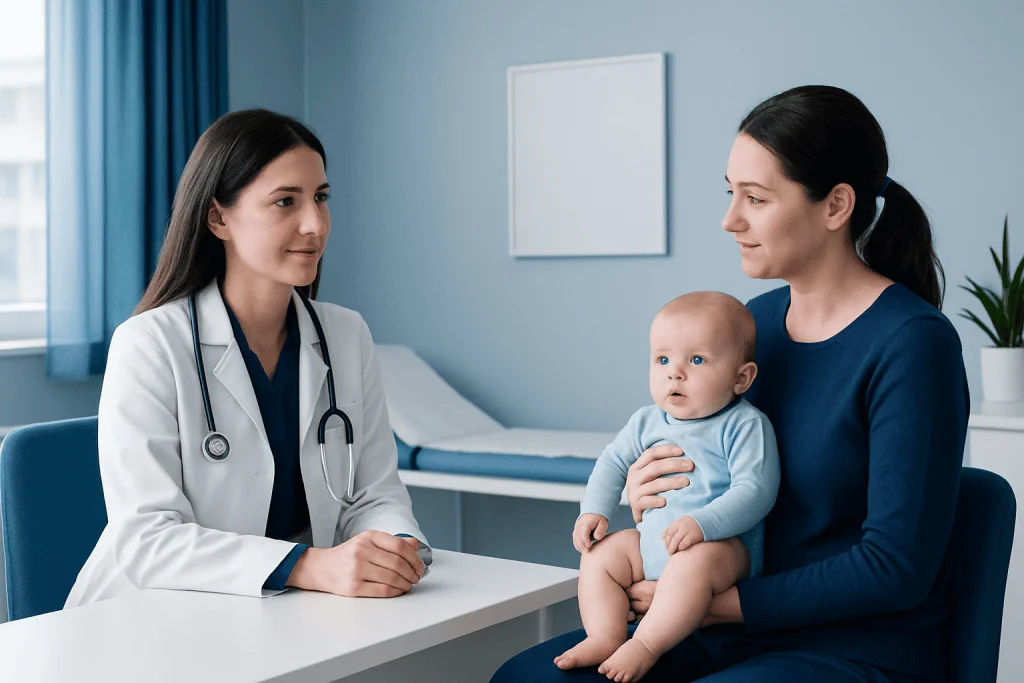
Genetics plays the biggest role in eye color. A baby’s genes influence how much melanin the iris makes and how that pigment is distributed. Eye color is not determined by a single gene alone, so simple rules such as “two blue-eyed parents always have a blue-eyed baby” do not explain every case.
Several inherited traits work together, which is why siblings can have different eye colors and why a baby’s eye shade may not match what parents expected. Family patterns can offer clues, but they cannot predict eye color with complete certainty.
Common eye colors include brown, hazel, green, gray, and blue. Brown eyes usually reflect a higher amount of melanin, while blue eyes reflect less melanin in the iris. These are natural variations and are not signs of better or worse eye health.
- Eye color is influenced by multiple genes.
- Melanin amount helps determine whether eyes appear darker or lighter.
- Family history may suggest possibilities, but it does not guarantee one outcome.
- Normal eye color can continue to mature after birth.
When does baby eye color change?
Many babies show the most noticeable eye color changes during the first 6 to 12 months. In some, the color appears fairly stable by about 6 months. In others, changes continue into the second year of life, although they are often less dramatic.
Brown eyes may look darker fairly early because more melanin is visible. Lighter eyes may seem to shift slowly between gray, blue, green, or hazel before settling. The final color can take time, so early newborn photos are not always a reliable guide.
If both eyes change gradually in a similar way and the child otherwise seems well, this is generally normal. Routine pediatric visits usually include basic eye observation, and any concerns about visual development can be raised there.
When to seek medical care
Most newborn eye color changes are harmless, but some eye findings deserve prompt medical attention. A doctor should assess any white reflex or white pupil in photos or in normal light, a cloudy-looking pupil or cornea, significant redness, swelling, discharge that does not improve, marked sensitivity to light, or eyes that do not seem to track faces or movement over time.
It is also important to seek review if the pupils are very unequal, one iris changes differently from the other, one eyelid droops significantly, or the baby seems to have pain. These signs do not always mean a serious problem, but they should not be ignored. Conditions involving the lens, cornea, retina, or eye pressure can affect a baby’s vision and benefit from early diagnosis.
Parents may hear about rare conditions such as glaucoma or pediatric cataract when discussing these symptoms. Most babies with changing eye color do not have these disorders, but a clinician will want to rule out important causes if there are warning signs.
How doctors evaluate unusual eye color or eye symptoms
If an infant’s eye appearance raises concern, the first step is a careful history and physical examination. The doctor will ask when the change was first noticed, whether it affects one or both eyes, whether there is a family history of eye disease, and whether the baby has redness, tearing, light sensitivity, discharge, or trouble fixing on faces.
The examination usually includes looking at the pupils, iris, cornea, eyelids, and eye movements. A clinician may use a red reflex test to check whether light reflects normally from the back of the eye. This simple screening can help identify problems that need urgent follow-up.
If needed, the baby may be referred for a more detailed eye examination by an ophthalmologist. Some children may also need imaging or further testing when doctors are checking for structural problems, uncommon pigment conditions, or visual pathway issues. In selected cases, advanced eye check-up services can help clarify whether the finding is simply a normal variation or something that needs treatment.
Normal differences vs. conditions that may affect eye appearance
Many harmless factors can make a baby’s eyes look different from day to day. Room lighting, sunlight, flash photography, and the angle of a photo may make the iris look brighter or duller. Newborns also have developing visual systems, so intermittent wandering of the eyes may be seen early on, although persistent crossing or drifting should be discussed with a doctor.
There are also uncommon medical causes of unusual eye appearance. These may include congenital cataract, corneal disorders, inflammation, differences in iris pigmentation, or increased eye pressure. In older infants or children, eye misalignment may lead to a discussion about strabismus treatment if the eyes do not align properly.
Another point doctors consider is whether the change is equal in both eyes. A gradual, symmetric shift in color is more often normal. A sudden difference in one eye, or a striking mismatch that newly appears, deserves professional evaluation to make sure the eye structures and visual development are healthy.
Practical guidance for parents
For most families, the best approach is simple observation and routine pediatric care. Taking photos in similar natural light every few months can help parents notice gradual, normal changes without becoming overly concerned about day-to-day differences. It can also be useful to mention any eye concerns during well-baby visits.
Parents should avoid trying to predict final eye color too early. A baby whose eyes look blue in the first weeks may keep that color, or may not. The same is true for gray or hazel tones. Waiting several months gives a more accurate sense of the child’s emerging eye color.
If a pediatrician suggests specialist care, early review is helpful and reassuring. Near the end of the care pathway, some families may seek evaluation at centers with pediatric and ophthalmology expertise. Acibadem International’s multidisciplinary specialists in JCI-accredited hospitals diagnose and treat eye conditions for international patients when further assessment is needed.
Frequently asked questions
Are all babies born with blue eyes?
No. Many babies appear to have blue or blue-gray eyes at birth, but not all do. Some are born with brown, hazel, or other shades, and eye color may continue to change during infancy.
Why do so many newborns seem to have blue eyes?
In early life, the iris may contain less visible melanin, which can make the eyes look blue or gray. This is related to how light interacts with the iris, not to a blue pigment. As melanin becomes more apparent over time, the eye color may deepen or change.
At what age is a baby's eye color usually permanent?
Many babies have a more stable eye color by 6 to 12 months of age. However, subtle changes can continue into the second year. The timing varies from child to child.
Can a baby be born with brown eyes?
Yes. Many babies are born with brown or dark brown eyes, especially when more melanin is already present in the iris. Brown eyes in a newborn are a normal variation.
Is it normal for one eye to look slightly different from the other in photos?
Lighting and camera angle can sometimes make one eye look different in pictures. But if one eye consistently looks lighter, cloudy, has a white reflection, or seems visually different in normal light, a doctor should assess it. Persistent asymmetry deserves a professional check.
When should parents worry about a baby's eye appearance?
Medical review is important for a white pupil, cloudiness, strong light sensitivity, persistent redness, swelling, unusual discharge, poor tracking, or obvious unequal pupils. Most eye color changes are harmless, but these signs need prompt attention. Early evaluation can protect vision if a problem is present.
References
- American Academy of Pediatrics
- American Academy of Ophthalmology
- National Eye Institute
- MedlinePlus
- Royal College of Ophthalmologists
This article is for general information only and is not a substitute for professional medical advice. Please consult a qualified doctor about your individual situation.
Explore treatments in Turkey — costs, top hospitals & a free quote
JCI-accredited · board-certified surgeons · reply within 24h
Add us as a Preferred Source to see more of our trusted health content across Google Search, AI Overviews and Discover.