Arthritis vs Sports Injury: How Orthopedic Doctors Tell the Difference

A sudden injury during activity is more suggestive of a sports injury, while gradual or recurrent stiffness and pain may point to arthritis. Morning stiffness, pain in several joints, and symptoms that improve with gentle movement can be clues to arthritis.
Key Takeaways
- A sudden injury during activity is more suggestive of a sports injury, while gradual or recurrent stiffness and pain may point to arthritis.
- Morning stiffness, pain in several joints, and symptoms that improve with gentle movement can be clues to arthritis.
- Instability, bruising, a popping sensation, or pain linked to one specific movement often suggest ligament, tendon, or muscle injury.
- Orthopedic evaluation may include a medical history, joint examination, X-rays, ultrasound, MRI, or blood tests depending on the case.
- Early diagnosis helps guide the right treatment and may reduce the risk of ongoing joint damage or prolonged pain.
Arthritis and sports injuries can both cause joint pain, swelling, and limited movement, but they usually develop in different ways and need different care. Orthopedic doctors look at how symptoms started, which joint is affected, physical exam findings, and imaging tests to tell them apart.
Overview: Why Arthritis and Sports Injuries Can Feel Similar
Joint pain after exercise or everyday movement is common, and it is not always easy to know whether the cause is arthritis or a sports-related injury. Both can lead to pain, swelling, stiffness, and difficulty using the affected area. Knees, shoulders, ankles, hips, wrists, and elbows are especially common sites because they are involved in repeated motion and weight-bearing activity.
Even though the symptoms can overlap, the underlying problems are different. Arthritis refers to conditions that affect the joints, such as wear-and-tear osteoarthritis or inflammatory types of arthritis. A sports injury usually involves damage to muscles, tendons, ligaments, cartilage, or bone after a sudden event or repeated overuse.
Orthopedic doctors focus on the full picture rather than one symptom alone. They consider when the pain started, whether there was a clear injury, how the joint behaves during activity and rest, and whether there are signs of inflammation or instability. This step-by-step approach helps them decide whether the symptoms fit arthritis, an acute injury, an overuse problem, or sometimes a combination of these.
Symptoms That May Suggest Arthritis
Arthritis often develops gradually, although flare-ups can make symptoms feel sudden. People may notice aching, stiffness, swelling, or tenderness that has been building over time. In many cases, the joint feels especially stiff after waking up or after sitting still for a while, then loosens somewhat with gentle movement.
The pattern of pain can be a helpful clue. Osteoarthritis often causes discomfort that gets worse with repeated use and may be associated with a grinding sensation or reduced range of motion. Inflammatory arthritis may cause longer-lasting morning stiffness, warmth, swelling, and symptoms in more than one joint.
Orthopedic doctors also ask whether the pain is affecting daily function over weeks or months. Difficulty climbing stairs, getting up from a chair, opening jars, or walking longer distances may suggest an ongoing joint condition rather than a one-time injury. Some patients may also have a known history of arthritis or symptoms in both sides of the body.
- Gradual onset of pain or stiffness
- Morning stiffness or stiffness after rest
- Swelling that recurs or persists
- Reduced range of motion over time
- Symptoms in more than one joint, in some cases
Symptoms That May Suggest a Sports Injury

Sports injuries are more likely when pain begins during or soon after a specific movement, impact, twist, fall, or increase in training intensity. The person may remember the exact moment symptoms started. Depending on the injury, there may be a popping sensation, immediate pain, bruising, swelling, or difficulty putting weight on the area.
Different structures produce different symptom patterns. Ligament injuries may cause instability or a feeling that the joint could give way. Tendon injuries may hurt during a particular motion, such as lifting the arm, jumping, or running. Muscle strains can cause localized tenderness and pain when the muscle contracts or stretches.
Not every sports injury is dramatic. Overuse problems can come on more slowly and may mimic arthritis at first. However, these injuries are often linked to repetitive motion, a change in training, poor mechanics, or inadequate recovery. Orthopedic doctors may consider conditions such as sports injuries when symptoms are tied closely to exercise or one repeated activity.
- Sudden onset during activity or after trauma
- Swelling or bruising soon after injury
- Pain with one specific motion
- Instability, weakness, or locking
- Symptoms linked to training load or repetitive use
How Orthopedic Doctors Make the Diagnosis
The evaluation begins with a careful medical history. Doctors ask when symptoms started, whether there was an injury, which movements worsen the pain, and whether stiffness is more noticeable in the morning or after exercise. They also ask about previous injuries, family history of arthritis, occupation, sports participation, and any fever, skin changes, or symptoms in other joints.
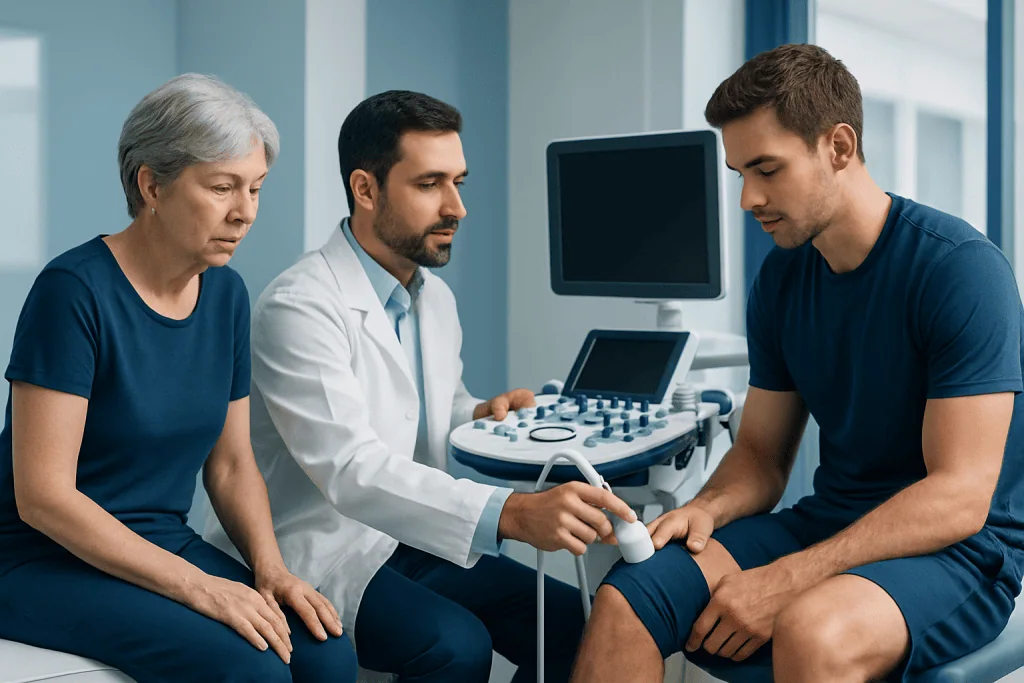
The physical examination provides important clues. The doctor checks swelling, warmth, tenderness, joint alignment, range of motion, muscle strength, and balance. They may perform specific maneuvers to look for ligament tears, meniscus problems, tendon irritation, or signs of cartilage wear. Comparing the painful joint with the unaffected side can be especially useful.
Imaging and other tests are chosen based on the suspected cause. X-rays can show joint space narrowing, bone spurs, fractures, or changes linked to osteoarthritis. MRI may be helpful for cartilage, meniscus, ligament, tendon, or other soft tissue problems, and ultrasound can sometimes identify fluid, inflammation, or tendon injury. In selected cases, blood tests or joint fluid analysis are used when inflammatory arthritis, infection, or crystal-related disease is a concern.
Sometimes the answer is not purely one or the other. A person may already have arthritis and then develop a sports injury in the same joint. In those situations, the goal is to identify which problem is driving the current symptoms so treatment can be better targeted.
Conditions That Can Be Confused With Either Problem
Several orthopedic conditions can resemble both arthritis and sports injuries. Tendinitis, bursitis, meniscus tears, cartilage injuries, stress fractures, and joint instability may all cause pain and swelling around a joint. Some of these conditions come from overuse, while others follow trauma or happen alongside degenerative joint changes.
For example, knee pain may be caused by a meniscus tear, ligament injury, early osteoarthritis, or a combination of these. Shoulder pain may come from arthritis, a rotator cuff problem, or inflammation around the joint. Hip and ankle pain can also have more than one cause, especially in active adults and older patients.
Because of this overlap, self-diagnosis can be misleading. Pain that seems like a simple strain may actually involve cartilage or ligament damage, while pain blamed on aging may come from a treatable overuse injury. A structured orthopedic assessment helps narrow down the possibilities and guide next steps.
Treatment Options and Why the Right Diagnosis Matters
Treatment depends on the exact cause. For many sports injuries, early care may include activity modification, rest from the aggravating movement, ice, compression, elevation, and a gradual return to exercise. Physical therapy is often central to recovery because it can improve strength, flexibility, movement patterns, and joint stability. When symptoms persist or there is significant structural damage, further options may be considered, including physical therapy and rehabilitation or, in selected cases, orthopedic surgery.
Arthritis treatment usually focuses on symptom control, preserving function, and protecting the joint over time. This may involve exercise tailored to the joint, weight management when appropriate, supportive devices, anti-inflammatory strategies, and medicines recommended by a doctor. If joint damage becomes advanced and daily function is significantly limited, some patients may benefit from procedures such as knee replacement or hip replacement when clinically appropriate.
The reason the diagnosis matters is that treatments for one condition may not fully address the other. Rest alone may not help progressive arthritis, and simply assuming pain is arthritis could delay care for a tear or fracture. A personalized plan gives the best chance of pain relief, safe return to activity, and long-term joint health.
Self-care, Prevention, and When to See a Doctor
General joint care can help reduce both injury risk and strain on the joints. Warm-up before sports, gradual increases in training intensity, proper technique, good footwear, and strength training for the muscles around the joints are all helpful. For people with arthritis, regular low-impact exercise and maintaining flexibility can support function and reduce stiffness.
It is reasonable to monitor mild symptoms for a short time if they improve quickly with rest and activity adjustment. However, medical evaluation is important when pain is severe, swelling is significant, the joint feels unstable, movement is very limited, or symptoms keep returning. Ongoing pain lasting more than a few days to weeks, depending on severity, should also be assessed, especially if it affects walking, work, sleep, or exercise.
Urgent care is needed if there is an obvious deformity, inability to bear weight after injury, fever with a hot swollen joint, or sudden severe pain without a clear explanation. These signs can point to a more serious problem that should not be ignored.
Near the end of the diagnostic journey, some patients seek coordinated specialist care, especially if symptoms are complex or persistent. Acibadem International’s multidisciplinary specialists in JCI-accredited hospitals diagnose and treat orthopedic conditions for international patients, helping determine whether symptoms are due to arthritis, injury, or both.
Frequently asked questions
How can someone tell if joint pain is arthritis or a sports injury?
The timing and pattern of symptoms often provide clues. Pain that starts suddenly during exercise or after a twist, fall, or impact is more suggestive of an injury, while pain and stiffness that build gradually or return over time may suggest arthritis. A doctor may still need to examine the joint and use imaging to confirm the cause.
Can arthritis start after a sports injury?
Yes. A significant joint injury can increase the risk of later joint degeneration, sometimes called post-traumatic arthritis. This does not happen in every case, but it is one reason proper diagnosis, treatment, and rehabilitation after injury are important.
Is morning stiffness more common with arthritis?
Morning stiffness is a common clue for arthritis, especially when it lasts for a noticeable period after waking or after sitting still. Sports injuries may also cause stiffness, but symptoms are often more closely tied to one movement or the recent injury itself.
Do all sports injuries need an MRI?
No. Many injuries can be evaluated with a medical history, physical examination, and sometimes X-rays. MRI is usually reserved for cases where soft tissue damage is suspected, symptoms persist, or the diagnosis remains unclear.
Can a person have both arthritis and a sports injury in the same joint?
Yes, and this is fairly common, especially in active adults or older individuals. For example, someone with early arthritis can also develop a tendon problem or ligament injury. In these cases, treatment is based on which issue is causing the main symptoms.
When should joint pain be checked by an orthopedic doctor?
An orthopedic assessment is a good idea if pain is severe, swelling is marked, the joint feels unstable, or symptoms do not improve with simple self-care. Medical review is also important if pain keeps returning, limits daily activities, or follows a significant injury.
References
- American Academy of Orthopaedic Surgeons
- Arthritis Foundation
- National Institute of Arthritis and Musculoskeletal and Skin Diseases
- Centers for Disease Control and Prevention
- World Health Organization
This article is for general information only and is not a substitute for professional medical advice. Please consult a qualified doctor about your individual situation.
Arthritis in Turkey — costs, top hospitals & a free quote
JCI-accredited · board-certified surgeons · reply within 24h
Add us as a Preferred Source to see more of our trusted health content across Google Search, AI Overviews and Discover.

Physical Medicine & Rehabilitation
Restoring movement and function after injury, surgery or neurological conditions.
150 specialists in this unit