Arthroplasty Meaning: What the Term Really Means

Arthroplasty means surgical reconstruction or replacement of a joint. It is commonly performed on the hip, knee, shoulder, and other major joints.
Key Takeaways
- Arthroplasty means surgical reconstruction or replacement of a joint.
- It is commonly performed on the hip, knee, shoulder, and other major joints.
- The goal is to reduce pain, improve function, and support better quality of life.
- Not every arthroplasty is a full joint replacement; some procedures resurface or partially replace a joint.
- Treatment plans depend on the joint involved, symptoms, imaging findings, age, activity level, and overall health.
Arthroplasty is a medical term for surgery that restores, reshapes, or replaces a damaged joint. It is most often done to relieve pain, improve movement, and help a person return to daily activities when other treatments are no longer enough.
Overview: What arthroplasty means
The term arthroplasty refers to surgery used to restore the function of a joint. In simple terms, it may involve reshaping joint surfaces, repairing damaged structures, or replacing part or all of the joint with an artificial implant. People often use the term interchangeably with joint replacement, but arthroplasty is actually the broader medical word.
Joints can become painful and stiff for many reasons, including osteoarthritis, rheumatoid arthritis, injury, wear over time, or damage from previous fractures. When symptoms start to interfere with walking, climbing stairs, sleeping, dressing, or other everyday activities, arthroplasty may be considered. The main aim is to reduce pain and improve movement.
Arthroplasty can be performed in several parts of the body. The most common examples are hip and knee procedures, but the shoulder, ankle, elbow, wrist, and some finger joints may also be treated this way. Depending on the condition, a surgeon may recommend a partial procedure or a total joint replacement.
Although surgery can be very effective for carefully selected patients, arthroplasty is usually not the first step. Doctors often begin with non-surgical options such as exercise therapy, weight management, pain-relieving medicines, supportive devices, and activity modification before discussing an operation.
Types of arthroplasty
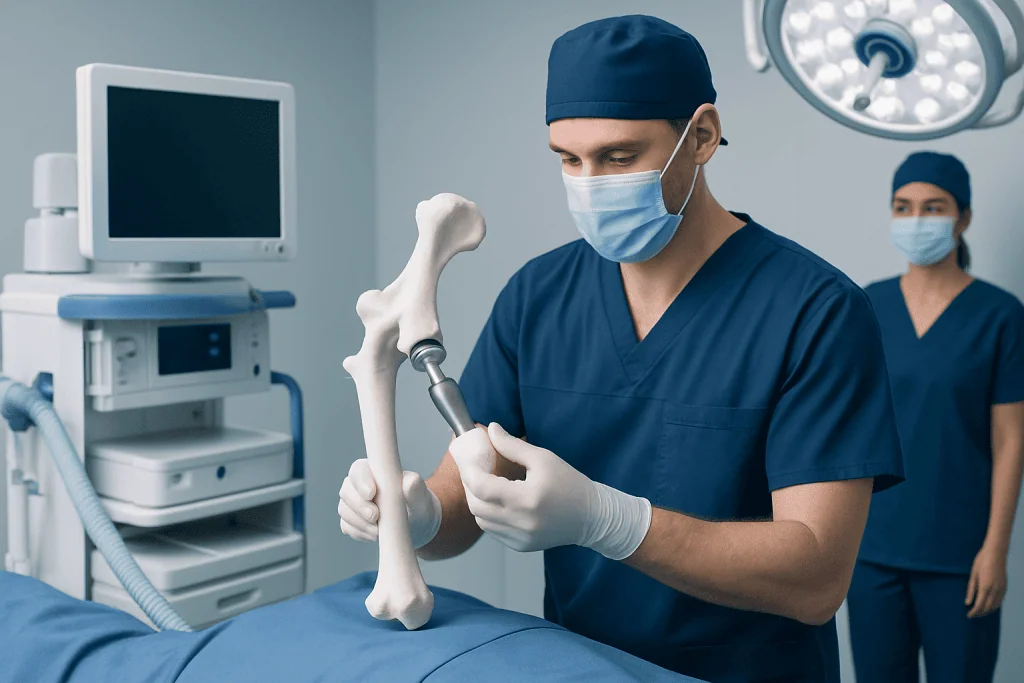
There is more than one type of arthroplasty. A total arthroplasty replaces the entire joint surface with artificial components. A partial arthroplasty replaces only the damaged part of the joint. In some cases, the procedure may involve resurfacing, where the surgeon preserves more of the patient’s own bone while covering damaged areas with a prosthetic surface.
The type used depends on the joint, the amount of damage, age, bone quality, activity level, and overall goals of treatment. For example, some people may benefit from knee replacement surgery when arthritis affects the whole knee, while others may need only one section of the joint treated. Similarly, severe hip arthritis may be managed with hip replacement when pain and stiffness become advanced.
Shoulder arthroplasty is another important example. It may be offered when arthritis, tendon damage, or fracture affects the shoulder joint. Depending on the underlying problem, the surgeon may recommend different implant designs, including standard or reverse replacements, often discussed under shoulder replacement procedures.
The materials used in implants vary, but they commonly include metal, ceramic, and high-grade plastic components. These are designed to move smoothly together and tolerate daily use. A surgeon chooses the implant style and fixation method based on the anatomy of the joint and the patient’s needs.
Why arthroplasty is done

Arthroplasty is usually recommended when joint damage causes ongoing pain, stiffness, swelling, instability, or reduced motion that has not improved enough with conservative care. Many people first notice difficulty with basic movements such as getting up from a chair, lifting the arm, or walking longer distances. In more advanced cases, pain may continue even at rest or during sleep.
The most common reason for arthroplasty is osteoarthritis, a condition in which joint cartilage gradually wears down. However, it may also be used for inflammatory arthritis, joint deformity, avascular necrosis, serious injuries, or damage after a fracture. Some patients consider surgery because the joint problem limits independence and lowers quality of life.
Doctors do not base the decision on pain alone. They also look at how much the condition affects daily function, whether the joint has visible structural damage on imaging, and whether other treatments have been tried for a reasonable period. The right time for surgery is individual and should be discussed carefully with an orthopedic specialist.
For patients living with advanced osteoarthritis, arthroplasty may offer a long-term solution when symptoms become persistent and disabling. However, expectations should remain realistic. Surgery can improve pain and mobility, but it does not make the joint exactly the same as a healthy natural joint.
Symptoms and conditions that may lead to arthroplasty
Several symptoms may suggest that a damaged joint needs specialist evaluation. Common signs include deep aching pain, stiffness after rest, reduced range of motion, grinding or catching sensations, swelling, and weakness around the joint. Some people also notice limping, poor balance, or difficulty using stairs and uneven ground.
These symptoms can arise from different conditions. Osteoarthritis is the most frequent cause, especially in older adults, but not the only one. Rheumatoid arthritis and other inflammatory joint diseases can damage cartilage and bone over time. Previous sports injuries, ligament tears, repeated strain, and fractures that heal with altered alignment may also lead to joint degeneration.
In the hip or shoulder, reduced motion may make everyday tasks difficult, such as putting on shoes or reaching overhead. In the knee, pain may be worse when walking, standing from a seated position, or going up and down stairs. The pattern of symptoms often gives doctors useful clues about which part of the joint is affected and how severe the problem may be.
Joint pain does not always mean arthroplasty is needed. Conditions such as bursitis, tendon problems, temporary inflammation, or early cartilage wear can often be managed without surgery. A proper diagnosis is important, because treatment depends on the cause rather than the symptom alone.
How doctors diagnose the need for arthroplasty
Diagnosis begins with a detailed medical history and physical examination. The doctor asks about pain location, stiffness, walking ability, previous injuries, treatments already tried, and how symptoms affect daily activities. During the examination, they assess joint movement, swelling, alignment, strength, and signs of instability.
Imaging tests are usually an important next step. Standard X-rays often show joint space narrowing, bone spurs, deformity, or loss of smooth joint surfaces. In some cases, magnetic resonance imaging or computed tomography may be used to assess bone quality, soft tissues, or surgical planning in more detail.
Blood tests may be ordered if inflammatory arthritis or infection is suspected, but they are not always necessary for typical wear-and-tear arthritis. Doctors also evaluate general health, including heart and lung conditions, weight, bone health, and any factors that could affect anesthesia, wound healing, or rehabilitation.
The decision to move forward with arthroplasty usually comes after shared discussion between patient and specialist. The surgeon explains the diagnosis, expected benefits, possible risks, implant options, recovery process, and alternatives. This helps each person decide whether the likely improvement is worth having surgery at that stage.
Treatment options before and after arthroplasty
Before recommending surgery, doctors often try non-surgical treatments. These may include physical therapy, low-impact exercise, activity modification, pain-relieving medicines, anti-inflammatory medicines when appropriate, braces, walking aids, and weight management. In some joints, injections may also provide temporary symptom relief.
When these measures no longer control symptoms well enough, arthroplasty may become the most suitable option. The procedure is performed under anesthesia, and the exact technique depends on the joint. Damaged cartilage and bone are removed or reshaped, then replaced with artificial components designed to create smoother movement and more stable joint mechanics.
Recovery is a key part of success. Early movement is often encouraged soon after surgery, followed by a rehabilitation program focused on walking, strengthening, flexibility, and safe return to daily tasks. The length of recovery varies by joint, surgical method, age, and overall health, but steady progress over weeks to months is common.
Like all operations, arthroplasty has potential risks, including infection, blood clots, stiffness, implant loosening, dislocation in some joints, or continued pain. Even so, many patients experience meaningful improvement when surgery is well planned and followed by appropriate rehabilitation. In selected cases, related procedures such as robotic orthopedic surgery may be used to support surgical precision, depending on the center and the patient’s needs.
Self-care, prevention, and when to see a doctor
Not all joint damage can be prevented, but healthy habits may help protect joint function for longer. Regular low-impact exercise, muscle strengthening, flexibility work, and maintaining a healthy weight can reduce stress on weight-bearing joints. Good posture, supportive footwear, and prompt treatment of injuries may also lower future problems.
People with chronic joint symptoms may benefit from pacing activities, using heat or cold when advised, and choosing exercises that do not overload the painful joint. Swimming, cycling, and guided strengthening are often easier on the joints than repetitive high-impact activities. A doctor or physiotherapist can suggest a program that fits the person’s condition and ability.
Medical review is important when joint pain lasts for weeks, interrupts sleep, causes visible swelling or deformity, or makes everyday tasks difficult. Urgent assessment is needed if there is sudden severe pain after an injury, inability to bear weight, fever with a hot swollen joint, or rapid loss of function. These symptoms may point to a problem that needs prompt care.
For people considering arthroplasty, expert evaluation helps clarify the best timing and the most appropriate option. Acibadem International’s multidisciplinary specialists and JCI-accredited hospitals diagnose and treat joint conditions for international patients, with care plans tailored to the affected joint, overall health, and recovery goals.
Frequently asked questions
Does arthroplasty always mean a full joint replacement?
No. Arthroplasty is a broad term that includes several procedures used to restore joint function. It may involve partial replacement, resurfacing, or total joint replacement, depending on the damage and the joint involved.
What is the difference between arthroplasty and arthroscopy?
Arthroplasty is surgery to reconstruct or replace a damaged joint. Arthroscopy is a minimally invasive procedure that uses a small camera to inspect or treat problems inside a joint, often without replacing it.
Which joints are most commonly treated with arthroplasty?
The hip and knee are the most common joints treated with arthroplasty. However, the shoulder, ankle, elbow, wrist, and some finger joints can also be treated when damage is severe enough.
How do doctors know if someone needs arthroplasty?
Doctors look at symptoms, physical examination findings, imaging results, and how much the problem affects daily life. Arthroplasty is usually considered when pain and loss of function remain significant despite non-surgical treatment.
How long does it take to recover from arthroplasty?
Recovery time varies depending on the joint, the type of procedure, age, and overall health. Many people begin moving early after surgery, but full recovery and rehabilitation may continue for weeks or months.
Can younger people have arthroplasty?
Yes, younger adults can sometimes need arthroplasty because of injury, congenital joint problems, inflammatory arthritis, or severe early degeneration. The decision is individualized, with careful attention to expected implant wear and long-term function.
References
- World Health Organization
- American Academy of Orthopaedic Surgeons
- National Institute of Arthritis and Musculoskeletal and Skin Diseases
- National Health Service
- Arthritis Foundation
This article is for general information only and is not a substitute for professional medical advice. Please consult a qualified doctor about your individual situation.
Joint and spine care in Turkey — expert assessment & treatment
JCI-accredited · board-certified surgeons · reply within 24h
Add us as a Preferred Source to see more of our trusted health content across Google Search, AI Overviews and Discover.

Orthopedics & Spine
Care for bones, joints and the musculoskeletal system, including joint replacement, sports injuries and trauma.
125 specialists in this unit