Astigmatism Surgery Options: LASIK, PRK, or Lens Treatment?

Astigmatism is often treatable with laser or lens-based procedures, but not every option suits every eye. LASIK usually offers faster visual recovery, while PRK may be preferred for thinner corneas or some lifestyle needs.
Key Takeaways
- Astigmatism is often treatable with laser or lens-based procedures, but not every option suits every eye.
- LASIK usually offers faster visual recovery, while PRK may be preferred for thinner corneas or some lifestyle needs.
- Lens procedures may be considered when laser surgery is not suitable, especially in older adults or people with high prescriptions.
- A detailed eye examination is essential to confirm whether surgery is safe and likely to help.
- Stable vision, healthy corneas, and realistic expectations are important before any refractive procedure.
Astigmatism surgery includes several vision-correction options, most commonly LASIK, PRK, and certain lens-based procedures. The best choice depends on the shape and thickness of the cornea, the degree of refractive error, age, and overall eye health.
Overview: What astigmatism surgery means
Astigmatism is a common refractive error caused by an irregular curve in the cornea or, less often, the natural lens inside the eye. Instead of focusing light evenly on the retina, the eye bends light unevenly, which can make vision appear blurred, shadowed, or distorted at both near and far distances. Many people do well with glasses or contact lenses, but some prefer a more lasting correction.
Astigmatism surgery refers to procedures that reshape the cornea or use an implanted lens to improve the way light focuses in the eye. The most familiar options are LASIK and PRK, which are laser-based procedures. Lens treatments, such as toric intraocular lenses or refractive lens exchange, may also be used in selected patients.
The right procedure depends on several factors, including the amount of astigmatism, whether a person also has myopia or hyperopia, the thickness and regularity of the cornea, dry eye symptoms, age, and whether the glasses prescription has been stable. A refractive surgeon uses these details to recommend the option that offers the best balance of safety and visual quality.
Symptoms and when people consider surgery
Astigmatism may cause blurred vision, ghosting around letters or lights, eye strain, headaches, squinting, and trouble seeing clearly at night. Some people notice that lines look tilted or less sharp in one direction. Mild astigmatism may cause very few symptoms, while higher degrees can affect driving, reading, screen use, and sports.
People often consider surgery when they want more freedom from glasses or contact lenses, or when lenses become inconvenient or uncomfortable. Contact lens intolerance, an active lifestyle, occupational needs, or frequent prescription changes can lead someone to ask about surgical correction.
Even so, symptoms alone do not determine whether surgery is appropriate. Some visual complaints can be related to dry eye, cataracts, keratoconus, or other eye conditions rather than simple astigmatism. That is why a full eye examination is important before deciding on treatment.
- Blurred or distorted vision at distance or near
- Halos, glare, or difficulty with night driving
- Eye fatigue or headaches after visual tasks
- Dependence on glasses or contact lenses for daily activities
Who is a candidate for LASIK, PRK, or lens treatment?

Good candidates for astigmatism surgery are adults with a stable prescription, healthy eyes, and realistic expectations. Stability usually means the prescription has changed little over time. The surgeon also checks for adequate corneal thickness, healthy tear production, and no signs of corneal disease such as keratoconus or scarring.
LASIK is often suitable for people with astigmatism combined with nearsightedness or farsightedness when the cornea has enough thickness and shape regularity. In LASIK, a thin flap is created in the cornea, and a laser reshapes the tissue underneath. It is widely chosen because discomfort is usually mild and visual recovery is often quick.
PRK may be preferred when the cornea is thinner, when there are concerns about flap-related issues, or when a person’s work or sports carry a higher risk of eye trauma. PRK treats the corneal surface without making a flap, but healing takes longer than LASIK. Lens-based treatments may be more suitable for people with very high refractive errors, early cataracts, or age-related loss of near focus.
Some people are not ideal candidates for surgery at a given time. Pregnancy, unstable prescription, active eye infection, uncontrolled diabetes, autoimmune conditions affecting healing, significant dry eye, or advanced cataract may change the timing or type of procedure recommended.
LASIK for astigmatism: benefits and limits
LASIK corrects astigmatism by using an excimer laser to reshape the cornea with great precision. By smoothing the uneven curvature, the procedure helps light focus more accurately on the retina. It can treat astigmatism alone or together with myopia and hyperopia.
One advantage of LASIK is convenience. Most people notice visual improvement within a day or two, and many return to normal routines relatively quickly. Discomfort is usually limited to mild irritation, tearing, or light sensitivity for a short period. For suitable candidates, LASIK can provide dependable correction and reduce dependence on glasses or contact lenses.
However, LASIK is not the best choice for every eye. If the cornea is too thin, too steep, irregular, or weakened, another option may be safer. Temporary dry eye symptoms, glare, halos, or fluctuating vision can occur during recovery. Although enhancement procedures are sometimes possible, the goal is not perfection in every lighting condition but meaningful, functional improvement.
Careful screening is especially important because irregular astigmatism may point to a condition such as keratoconus, where standard refractive laser surgery may not be advised. In these cases, the focus shifts to protecting corneal health first.
PRK for astigmatism: when it may be preferred
PRK also uses an excimer laser to reshape the cornea, but unlike LASIK, it does not involve creating a corneal flap. Instead, the thin outer layer of the cornea is removed, the laser treatment is applied, and the surface heals over the following days. This makes PRK a useful option for some people with thinner corneas or those whose activities increase the chance of eye injury.
The main trade-off with PRK is recovery time. Vision usually improves more gradually than with LASIK, and discomfort can be more noticeable in the first few days. A temporary bandage contact lens is often used while the surface heals, and follow-up visits are important to check recovery.
Even with a slower healing period, PRK can provide excellent long-term results for well-selected patients. For people who are not ideal LASIK candidates but still want laser correction, PRK laser eye surgery may be a practical alternative. The surgeon explains expected healing, temporary visual fluctuations, and the need for patience during the early weeks.
Lens-based treatment for astigmatism
Not all astigmatism treatment relies on reshaping the cornea. In some patients, especially older adults or those with high refractive errors, a lens-based approach may be more appropriate. These procedures work by placing a specially designed lens inside the eye or by replacing the eye’s natural lens.
Toric intraocular lenses can correct astigmatism during cataract surgery or refractive lens exchange. Refractive lens exchange is similar to cataract surgery, but it is performed before a cataract becomes visually significant. This can be helpful for people who also have presbyopia or are outside the ideal age range for corneal laser surgery. In selected cases, smart lens surgery may be discussed as part of a tailored plan.
Lens procedures can reduce dependence on glasses, but they involve operating inside the eye rather than on the corneal surface. As a result, the decision requires careful discussion of benefits, healing, and risk profile. These options are usually considered when laser surgery is not the best fit or when another age-related lens issue is also present, such as cataract.
How doctors decide: evaluation, diagnosis, and choosing the best option
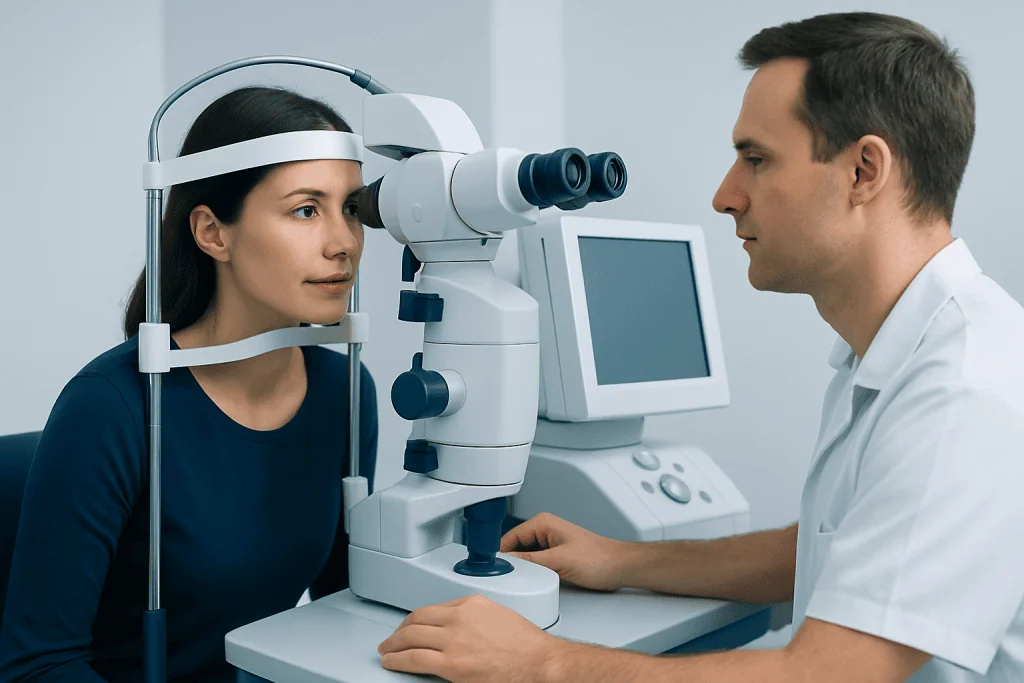
A refractive surgery evaluation is more detailed than a routine eye exam. It usually includes a refraction test to measure glasses power, corneal topography or tomography to map the shape of the cornea, pachymetry to assess thickness, pupil measurement, tear film evaluation, and a full eye health examination. These tests help confirm that the astigmatism is regular and treatable.
The surgeon also asks about age, medications, medical conditions, work environment, sports, pregnancy status, and expectations. For example, someone with dry eye symptoms may need treatment before surgery is considered. Someone over 40 may also need to discuss near vision needs, since astigmatism correction does not stop normal age-related changes in focusing.
Choosing between LASIK, PRK, and lens treatment is a personalized decision. In broad terms, LASIK may suit people wanting faster recovery and who have an adequate corneal profile. PRK may suit people with thinner corneas or a preference to avoid a flap. Lens-based treatment may suit people with early lens changes, higher prescriptions, or age-related reading vision concerns. The best result comes from matching the procedure to the eye rather than fitting the eye to a procedure.
Recovery, self-care, and when to see a doctor
Recovery varies by procedure. After LASIK, many people resume light daily activities quickly, though vision may still fluctuate for a short time. After PRK, healing is slower and requires more patience. After lens procedures, recovery can also be gradual as the eye adapts. In all cases, the doctor usually recommends medicated eye drops, avoiding rubbing the eyes, protecting them from dust and water exposure, and attending follow-up appointments.
Self-care also includes managing dryness and giving the eyes time to stabilize. People should follow advice about driving, screen use, exercise, swimming, makeup, and contact lens discontinuation before and after surgery. Long-term, regular eye exams remain important because surgery corrects refractive error but does not prevent other eye diseases.
Medical review is important if there is increasing pain, sudden drop in vision, marked redness, discharge, flashes, or new floaters. These symptoms do not always mean a serious problem, but they should be checked promptly. Near the end of the care journey, some patients choose centers with comprehensive eye services; Acibadem International’s multidisciplinary specialists in JCI-accredited hospitals diagnose and treat refractive eye conditions for international patients.
For people exploring additional options in corneal refractive care, doctors may also discuss related procedures such as no-touch laser in appropriate situations. The most important step is a careful consultation with a qualified ophthalmologist who can explain which option is safest and most suitable.
Frequently asked questions
Can astigmatism be corrected permanently with surgery?
Astigmatism surgery can provide long-lasting correction by reshaping the cornea or using an implanted lens to improve focus. However, eyes can still change over time with aging, dry eye, cataract development, or other conditions, so some people may still need glasses for certain tasks later on.
Is LASIK or PRK better for astigmatism?
Neither procedure is automatically better for everyone. LASIK often offers faster visual recovery, while PRK may be safer for some people with thinner corneas or a higher chance of eye trauma. The best choice depends on detailed measurements and overall eye health.
Who should not have astigmatism surgery?
Surgery may not be suitable for people with unstable prescriptions, significant dry eye, corneal disease, active infection, certain healing problems, or unrealistic expectations. A surgeon may also delay treatment during pregnancy or if another eye condition needs attention first.
Can cataract surgery also fix astigmatism?
Yes. During cataract surgery, special toric intraocular lenses can often correct astigmatism at the same time. This can reduce dependence on glasses, although some people may still need them for certain activities.
Does astigmatism surgery hurt?
Most people feel little or no pain during the procedure because numbing drops are used. Afterward, LASIK usually causes mild irritation for a short time, while PRK tends to involve more discomfort for several days as the surface heals.
How long does it take to recover from astigmatism surgery?
Recovery depends on the type of procedure. Many people see well quite quickly after LASIK, while PRK recovery is slower and vision may fluctuate for several weeks. Lens procedures also require follow-up and a healing period as the eye settles.
References
- American Academy of Ophthalmology
- National Eye Institute
- Royal College of Ophthalmologists
- American Society of Cataract and Refractive Surgery
This article is for general information only and is not a substitute for professional medical advice. Please consult a qualified doctor about your individual situation.
Astigmatism in Turkey — costs, top hospitals & a free quote
JCI-accredited · board-certified surgeons · reply within 24h
Add us as a Preferred Source to see more of our trusted health content across Google Search, AI Overviews and Discover.

Ophthalmology
Comprehensive eye care from laser vision correction to retina, cornea and cataract surgery.
75 specialists in this unit