Baby Eczema: An Evidence-Based Guide for Patients
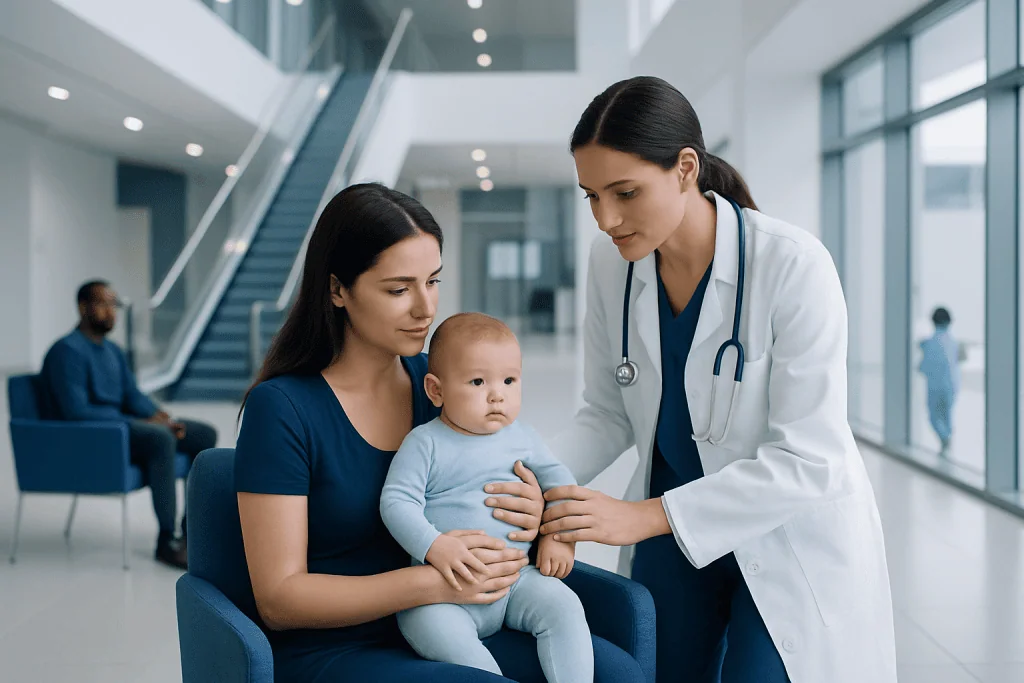
Baby eczema usually appears as dry, itchy, red or rough patches on a baby's skin. It often affects the cheeks, scalp, arms, legs, and skin folds, but patterns can vary by age.
Key Takeaways
- Baby eczema usually appears as dry, itchy, red or rough patches on a baby's skin.
- It often affects the cheeks, scalp, arms, legs, and skin folds, but patterns can vary by age.
- Daily moisturizing and avoiding triggers are central parts of care.
- A doctor may recommend medicated creams or ointments when symptoms flare.
- Parents should seek medical advice if the rash is severe, infected, or not improving with basic skin care.
Baby eczema is a common condition that causes dry, itchy, inflamed skin in infants. It is not contagious, and with consistent skin care and appropriate medical treatment, most babies can be kept comfortable and their skin can improve.
Overview: what baby eczema is
Baby eczema, often called infant eczema or atopic dermatitis, is a long-term inflammatory skin condition that causes dry, sensitive, itchy skin. It commonly begins in the first year of life. For many families, the first signs are rough red patches on the cheeks or scalp, followed by periods when the skin improves and then flares again.
This condition is very common in babies and young children. It is not contagious, and it is not caused by poor hygiene. Instead, baby eczema is linked to a weakened skin barrier and an overactive immune response, which make the skin lose moisture more easily and react more strongly to irritants and allergens.
Although baby eczema can look uncomfortable, it is usually manageable with regular skin care and, when needed, medical treatment. Many children improve as they grow older, though some continue to have sensitive skin or eczema later in childhood. Parents may also hear the broader term eczema, which includes several skin conditions, while atopic dermatitis is the most common form in infants.
Signs and symptoms in infants
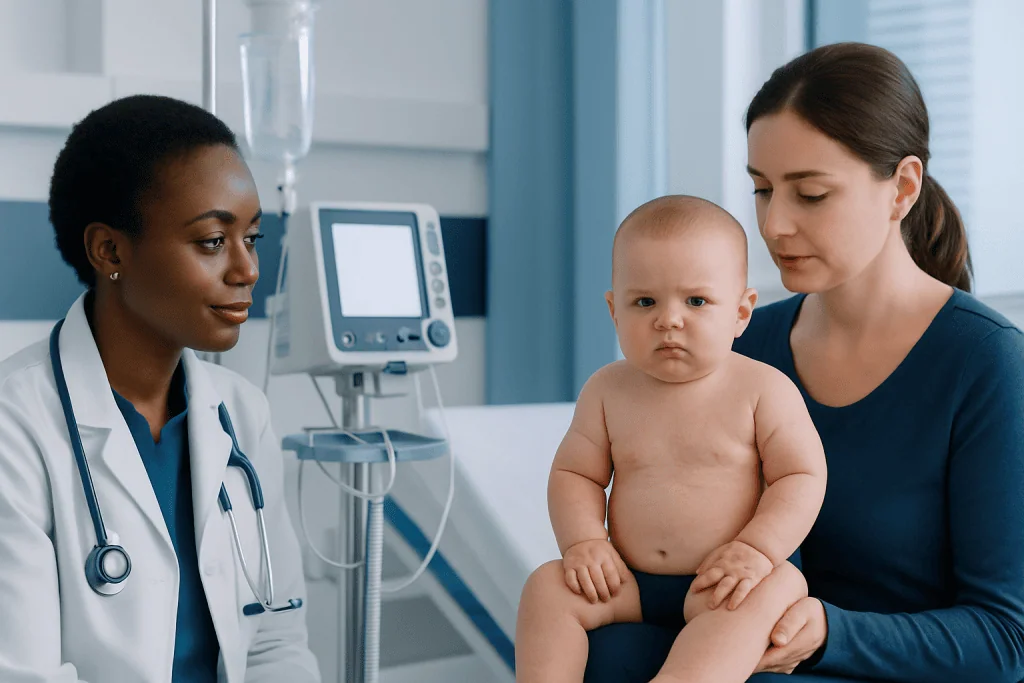
Baby eczema can look different from one child to another, but the most common features are dryness, redness, roughness, and itching. In infants, the rash often appears on the cheeks, forehead, scalp, and outer parts of the arms and legs. As babies get older, eczema may become more noticeable in skin folds such as the elbows, wrists, knees, or ankles.
The skin may appear pink or red on lighter skin tones and darker brown, purple, or grayish on deeper skin tones. In some babies, the affected areas become thickened over time from rubbing and scratching. Others may develop tiny bumps, weeping patches, crusting, or skin cracks if the flare is more intense.
Itching is a major symptom, even when a baby is too young to describe it. Parents may notice frequent rubbing against bedding, irritability, poor sleep, or scratching when the baby is more physically active. Common signs include:
- Dry, scaly, or rough skin
- Red, inflamed, or discolored patches
- Itching, rubbing, or scratching
- Crusting or oozing during flares
- Sleep disturbance due to discomfort
Because many skin conditions can resemble eczema, a medical review can be helpful when the rash is persistent, widespread, or unclear. Conditions such as seborrheic dermatitis, contact dermatitis, and skin infection may need to be considered.
Why baby eczema happens: causes and risk factors
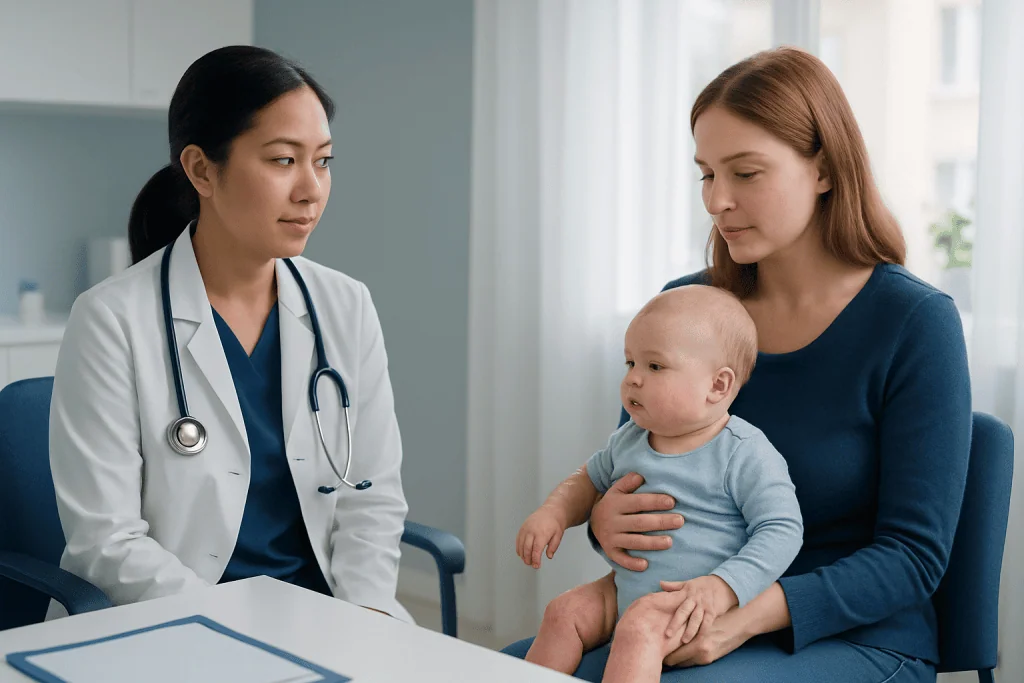
Baby eczema does not have one single cause. It usually develops because of a combination of inherited and environmental factors. Many babies with eczema have a family history of atopic conditions such as eczema, asthma, hay fever, or food allergy. A tendency toward dry skin and a more fragile skin barrier also plays a major role.
When the skin barrier is weakened, water escapes from the skin more easily and irritants can enter more easily. This leaves the skin dry and prone to inflammation. Triggers do not cause eczema by themselves, but they can make symptoms worse or lead to flares. Common triggers vary from child to child.
Possible triggers and aggravating factors include:
- Dry air or overheating
- Fragranced soaps, bubble baths, lotions, or detergents
- Wool or rough fabrics against the skin
- Saliva, drool, or food residue around the mouth
- Sweat and prolonged moisture
- Viral or bacterial skin infections
- Stress or poor sleep in older infants and children
Parents often wonder whether food causes baby eczema. Food allergy can sometimes coexist with eczema, especially in babies with moderate to severe disease, but food is not the main cause in most cases. Restrictive diets should not be started without medical advice, since unnecessary food avoidance can affect nutrition and growth.
How doctors diagnose baby eczema
Baby eczema is usually diagnosed through a clinical assessment rather than a single laboratory test. A doctor typically asks when the rash started, where it appears, what seems to trigger it, and whether there is a family history of allergies, asthma, or eczema. The skin’s appearance and pattern often provide enough information to make the diagnosis.
In many cases, no blood test or skin test is needed. However, if the rash is unusually severe, recurrently infected, not responding to treatment, or possibly linked to food reactions, the doctor may consider further evaluation. This can help rule out other conditions and guide more personalized care.
Doctors may also look for signs of complications, especially infection. Areas that are painful, swollen, warm, weeping, honey-colored, or suddenly much worse may need prompt review. In selected cases, referral to specialists in dermatology care or allergy assessment may be helpful for persistent or complicated eczema.
Treatment options and daily skin care
The main goals of baby eczema treatment are to repair the skin barrier, reduce itching, calm inflammation, and prevent flares. Regular moisturizing is the foundation of care. A thick, fragrance-free emollient or ointment is usually applied at least once or twice daily and especially soon after bathing, when the skin is still slightly damp.
Bathing can be part of good eczema care if done gently. Short baths in lukewarm water are usually preferred over hot water. Mild, fragrance-free cleansers should be used only where needed. After bathing, the skin should be patted dry rather than rubbed, and moisturizer should be applied promptly to help lock in hydration.
When eczema flares, doctors may recommend prescription anti-inflammatory treatment, commonly a topical corticosteroid used for a limited time and in the right strength for the baby’s age and body area. In some situations, other non-steroid prescription creams may be considered. Families should use these treatments exactly as directed, since appropriate use can control symptoms safely and reduce scratching and skin damage.
If scratching is severe, the doctor may discuss additional ways to reduce itch and protect the skin. Treatment also includes trigger avoidance, nail care, and managing any infection if present. Babies with stubborn or widespread symptoms may benefit from evaluation in pediatric dermatology or broader pediatric care settings to support long-term management.
Prevention, trigger control, and self-care at home
There is no guaranteed way to prevent baby eczema, but a consistent skin care routine can reduce flares and keep the skin more comfortable. Moisturizing every day, even when the skin looks clear, is one of the most effective habits. Parents may need to try a few simple, fragrance-free products before finding one that suits their baby’s skin.
Clothing and temperature also matter. Soft cotton fabrics are usually better tolerated than wool or rough synthetic materials. It may help to dress the baby in layers, avoid overheating, and rinse new clothes before use with a mild detergent. Using a humidifier in very dry environments may also help some families, as long as it is cleaned properly.
Helpful home care steps include:
- Apply moisturizer regularly and after every bath
- Choose fragrance-free skin products and laundry detergents
- Keep the baby’s nails short to reduce skin injury from scratching
- Clean drool or food gently from the face and reapply moisturizer if needed
- Avoid known triggers when possible
- Follow the treatment plan even after a flare improves
Parents should be cautious with home remedies, essential oils, and herbal products, since some can irritate delicate infant skin. If symptoms do not improve with basic care or if parents are unsure what products to use, a qualified doctor can help create a safe, practical routine.
When to seek medical care
Medical advice is important if a baby has a rash that is persistent, severe, or causing major discomfort. A doctor should also assess the skin if the diagnosis is uncertain, if the eczema interferes with sleep or feeding, or if the family is struggling to control symptoms despite daily moisturizing and trigger avoidance.
Prompt review is especially important when there are signs of infection. These can include yellow crusting, pus, increased warmth, swelling, pain, fever, or a rash that suddenly worsens. Some viral infections can also affect skin with eczema and may need urgent treatment.
If eczema is moderate to severe, the doctor may evaluate whether related conditions such as allergies or asthma are part of the child’s broader atopic history. Near the end of a care journey, some families benefit from multidisciplinary support; Acibadem International’s specialists in JCI-accredited hospitals diagnose and treat skin conditions in children and international patients when more detailed assessment is needed.
Frequently asked questions
Does baby eczema go away on its own?
Many babies improve as they grow, and some have much fewer symptoms later in childhood. However, the timing varies, and regular skin care is still important to control dryness and flares in the meantime.
Is baby eczema caused by an allergy?
Not always. Baby eczema is mainly related to a weak skin barrier and inflammation, although some children also have allergies. If allergy is suspected, evaluation should be guided by a doctor rather than self-imposed food restrictions.
Can bathing make baby eczema worse?
Bathing does not have to make eczema worse if it is done gently. Short lukewarm baths followed quickly by a thick moisturizer can help hydrate the skin and remove irritants.
Are steroid creams safe for baby eczema?
When prescribed appropriately and used as directed, topical steroid creams or ointments are a standard and effective treatment for eczema flares in babies. Parents should follow the doctor's instructions carefully and ask questions if they are worried about how or where to apply them.
How can parents tell if baby eczema is infected?
Possible signs include more redness than usual, swelling, pain, yellow crusting, oozing, or fever. A rash that suddenly worsens or seems tender should be checked by a doctor promptly.
What moisturizer is best for baby eczema?
In general, thick, fragrance-free moisturizers or ointments are preferred because they help seal in moisture better than lighter lotions. The best choice is one that is gentle, used consistently, and well tolerated by the baby's skin.
References
- American Academy of Dermatology
- American Academy of Pediatrics
- National Eczema Association
- National Institute of Allergy and Infectious Diseases
- World Health Organization
This article is for general information only and is not a substitute for professional medical advice. Please consult a qualified doctor about your individual situation.
Eczema in Turkey — costs, top hospitals & a free quote
JCI-accredited · board-certified surgeons · reply within 24h
Add us as a Preferred Source to see more of our trusted health content across Google Search, AI Overviews and Discover.

More from the Health Library

Panthenol: An Evidence-Based Guide for Patients

Monolid Eyes: An Evidence-Based Guide for Patients

Xdemvy Eye Drops: What Patients Need to Know

Anticoagulant: What Patients Need to Know

Pericardial Effusion — Explained by Medical Evidence, Not Myths

Gastroparesis: A Complete Medical Overview
Related Specialists
Prof. Dr. Alper Fındıkcıoğlu
Thoracic Surgery
Prof. Dr. Mehmet Cıncık
Vitro Fertilization and Reproductive Medicine Center
Assoc. Prof. Dr. Mustafa Aytek Şimşek
Cardiology
Dr. Nargız Ibrahımlı
Aesthetic Plastic & Reconstructive Surgery