Back Dermals: A Complete Medical Overview

Back dermals are not traditional through-and-through piercings; they use a small anchor placed beneath the skin. The back is a high-friction area, which may increase the chance of irritation, migration, and rejection.
Key Takeaways
- Back dermals are not traditional through-and-through piercings; they use a small anchor placed beneath the skin.
- The back is a high-friction area, which may increase the chance of irritation, migration, and rejection.
- Redness, pain, swelling, discharge, or fever can suggest infection and should be assessed by a clinician.
- Removing a back dermal at home is not recommended because it can worsen tissue damage and scarring.
- A qualified medical professional can help assess complications, treat infection, and remove a problematic dermal safely.
Back dermals are single-point body piercings anchored under the skin, usually for cosmetic reasons. They can heal well with proper placement and aftercare, but they also have distinct medical risks such as infection, migration, rejection, and scarring.
Overview: what back dermals are
Back dermals are single-point body piercings placed on the skin of the back using a small implanted anchor with a decorative top visible above the skin. Unlike standard earrings or barbell piercings, they do not pass completely through a fold of skin. Instead, a tiny anchor sits in the dermis, the deeper layer of the skin, while the jewelry top attaches to it.
People choose back dermals for cosmetic reasons, often placing one or more along the upper or lower back. Although they are common in body art, they are also a medical issue because they create a controlled wound in an area exposed to movement, clothing friction, sweating, and pressure. These factors can make healing slower or increase the chance of complications.
From a health perspective, the most important concerns are infection, skin irritation, migration, rejection, embedded jewelry, and scar formation. The back is also harder for a person to inspect and clean on their own, so subtle problems may go unnoticed at first. Understanding how back dermals heal and when they should be checked by a clinician can help reduce avoidable complications.
How back dermals differ from other piercings
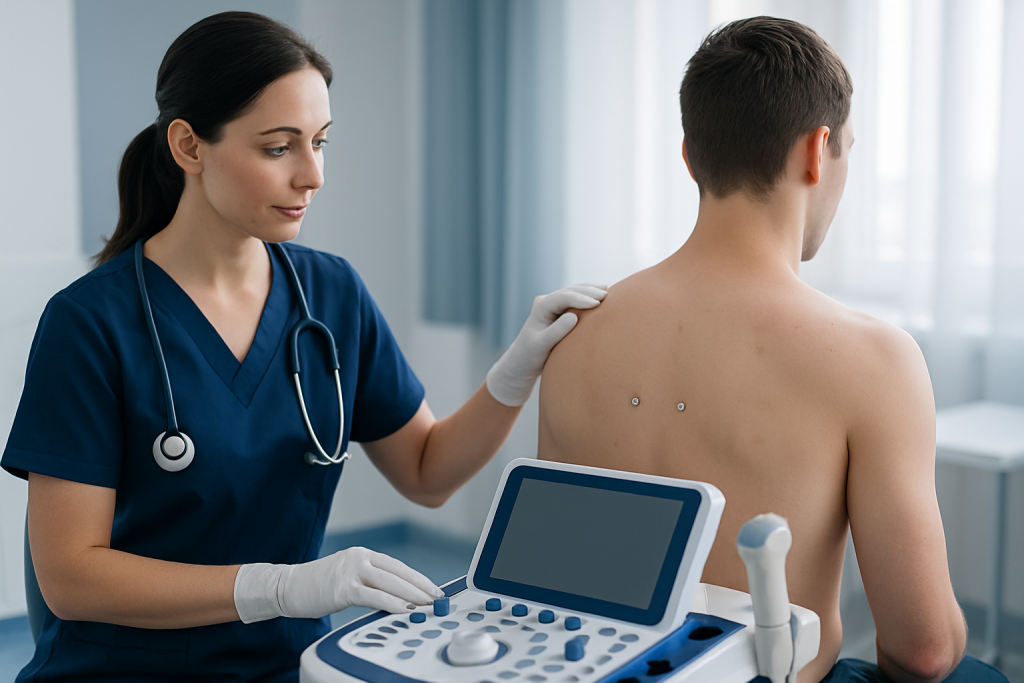
Back dermals are often confused with surface piercings, but they are not exactly the same. A surface piercing has an entry point and an exit point connected by a bar under the skin. A dermal piercing usually has just one visible point because the jewelry is fixed to a small anchor beneath the skin.
This design changes how the tissue responds. Because the anchor is held in place by the surrounding skin, any repeated pulling, twisting, or pressure can irritate the area and lead the body to push the anchor upward. This is known as migration or rejection. It can happen with many piercings, but it is a particular concern with dermals.
The location on the back also matters. Shoulder blades, the spine area, bra lines, waistbands, sports equipment, backpacks, and tight clothing can all create repeated friction. In practical terms, this means a back dermal may need more caution during healing than a piercing in a more protected area.
If complications affect the skin itself, a clinician may assess for related skin conditions such as skin diseases or localized soft-tissue inflammation. Careful examination helps distinguish normal healing from infection, allergy, traumatic irritation, or rejection.
Normal healing and common symptoms

Some mild redness, tenderness, localized swelling, and crusting can be normal in the early healing phase. The area may feel sore when clothing rubs against it or when the back is stretched. Clear or slightly yellowish lymph-like fluid may dry on the surface and form crusts; this is different from thick pus.
Healing times vary from person to person and depend on placement, aftercare, general health, and daily activity. Because the back is a mobile area that is often under pressure during sleep or exercise, healing may feel slower than expected. Minor irritation can come and go, especially if the jewelry catches on fabric or is bumped.
Symptoms that are more concerning include worsening pain, increasing redness, warmth, persistent swelling, foul odor, thick yellow or green discharge, bleeding that keeps recurring, or jewelry that appears to sit more shallowly than before. A decorative top that tilts, sinks into the skin, or seems loose may suggest migration, tissue overgrowth, or embedding.
It is also helpful to recognize symptoms beyond the piercing itself. Fever, chills, spreading redness, or red streaks extending away from the site can indicate a more serious infection and should not be ignored.
Complications, causes, and risk factors
The main complications of back dermals are infection, irritation, allergic reaction, migration, rejection, hypertrophic scarring, and keloid formation in people who are prone to raised scars. The back is especially vulnerable because of sweat, limited visibility, and constant contact with clothing, bedding, chairs, straps, and sports gear.
Infection can develop if bacteria enter the wound during placement or while healing. Risk may be higher when sterile technique is poor, aftercare is inconsistent, hands touch the area frequently, or the skin is exposed to friction and moisture for long periods. Irritant problems can also mimic infection, especially when jewelry contains metals a person is sensitive to or when cleaning products are too harsh.
Migration and rejection happen when the body gradually pushes the anchor toward the surface. This may occur because of shallow placement, repeated trauma, tension in the skin, or an individual tendency toward poor healing. Once the anchor becomes unstable, the area may remain chronically inflamed and the scar risk increases.
Other risk factors include diabetes, smoking, immune suppression, poor nutrition, skin disorders, and any condition that impairs wound healing. People with a history of prominent scars should be especially cautious. If the area develops persistent inflammation or signs of a more significant infection, a doctor may consider evaluation similar to that used for skin infections.
Diagnosis and medical assessment
Most problems with back dermals are diagnosed through a clinical examination. A doctor or other qualified clinician will ask when the piercing was placed, how symptoms changed over time, what aftercare was used, and whether there has been trauma, recent swimming, fever, or drainage. They will examine the skin for redness, warmth, fluctuance, embedded hardware, migration, or signs of rejection.
In many cases, no advanced testing is needed. However, if there is significant swelling, deep tenderness, fever, or concern that the infection involves deeper tissue, a clinician may order tests such as a culture of drainage or imaging to look for a collection of fluid. This is more likely when the area is very painful or when symptoms continue despite treatment.
Assessment also helps rule out other causes of a reaction, including contact dermatitis, metal sensitivity, traumatic irritation, or scar tissue. A raised bump near the piercing is not always an infection. It may represent excess granulation tissue, a hypertrophic scar, or simple irritation from pressure.
If there is uncertainty about whether the issue is primarily skin-related or whether a procedure is needed, evaluation by specialists in dermatology can be helpful. Their role is to identify the cause accurately and choose the safest next step.
Treatment options and safe removal
Treatment depends on the problem. Mild irritation may improve with reducing friction, avoiding pressure, and using appropriate aftercare recommended by a qualified clinician or professional piercer. Suspected infection usually requires medical assessment, and treatment may include cleaning guidance, dressing changes, and sometimes prescription medicines. Self-treating with harsh antiseptics or repeated manipulation can delay healing.
If the jewelry is migrating, embedded, repeatedly inflamed, or rejected, removal is often the best option. A back dermal should not be forcibly removed at home. Pulling or twisting it out can tear tissue, leave part of the anchor behind, and increase bleeding, infection, and scarring.
Medical removal is generally a minor procedure, but the exact method depends on how deeply the anchor is seated and whether the surrounding skin has grown over it. In some cases, clinicians use local anesthesia and a small incision to release the anchor safely. When scar management or repair is needed, related care may involve minimally invasive surgery or procedural skin treatment.
After removal, the site usually needs wound care until the skin closes. Some people are left with a small scar even after uncomplicated removal. If there is a persistent nodule, drainage, or delayed healing afterward, further evaluation is important to make sure no retained fragment or ongoing infection remains.
Prevention and self-care
The best prevention starts before placement. People considering back dermals should choose an experienced, reputable professional who uses sterile technique and high-quality jewelry. They should ask about metal composition, placement depth, expected healing time, and how the location may interact with work, sports, sleep position, and clothing.
Aftercare should focus on keeping the area clean, minimizing friction, and avoiding unnecessary touching. Helpful measures often include washing hands before any contact, gently cleaning as directed, wearing loose and breathable clothing, and protecting the area from backpacks, bra straps, waistbands, or equipment that rubs. It is also wise to avoid picking crusts or rotating the jewelry.
Swimming pools, hot tubs, and natural bodies of water may expose a fresh piercing to microorganisms, so many professionals advise extra caution during healing. Contact sports and activities with repeated pressure on the back can also interfere with recovery. Good general health habits, including not smoking and supporting nutrition, may improve healing.
If a person is already prone to skin irritation, unusual scars, or slow wound healing, discussing this with a clinician before getting a dermal can be useful. For people who later develop cosmetic concerns from a scar, options may be reviewed through services related to aesthetic and plastic surgery.
When to seek medical care
Medical care is advisable if a back dermal becomes more painful instead of gradually improving, or if redness, swelling, and warmth continue to increase. Thick discharge, bad odor, fever, chills, or spreading redness are important warning signs. These symptoms can indicate infection that needs professional treatment.
A clinician should also assess jewelry that looks crooked, shallow, or partly buried in the skin. These signs can point to migration, rejection, or embedding. Early assessment may make treatment simpler and reduce scarring.
Urgent medical attention is especially important if a person has diabetes, a weakened immune system, or symptoms suggesting a deeper infection. Acibadem International’s multidisciplinary specialists and JCI-accredited hospitals diagnose and treat skin and soft-tissue problems for international patients, including complications related to piercings when specialist evaluation is needed.
Even when symptoms seem minor, persistent irritation deserves attention if it is not settling with careful self-care. A professional examination is the safest way to decide whether a back dermal can be observed, treated conservatively, or should be removed.
Frequently asked questions
Are back dermals safe?
Back dermals can be placed safely, but they are not risk-free. Because they create a wound and sit in a high-friction area, they can develop irritation, infection, migration, or scarring. Safety depends on sterile placement, suitable jewelry, careful aftercare, and prompt medical review if problems develop.
How long do back dermals take to heal?
Healing time varies and can be longer than people expect because the back moves often and rubs against clothing and bedding. Early healing may take several weeks, while full settling can take months. Ongoing pressure or snagging can delay the process.
What does an infected back dermal look like?
An infected back dermal may become increasingly red, warm, swollen, and painful rather than gradually improving. Thick yellow or green discharge, unpleasant odor, fever, or redness spreading into the surrounding skin are more concerning features. These signs should be assessed by a doctor.
Should a back dermal be removed if it starts to reject?
If a back dermal is migrating or rejecting, medical assessment is a good idea because the skin may continue pushing the anchor out. Leaving a rejecting dermal in place can worsen inflammation and increase scar formation. Removal is often recommended when the anchor becomes unstable or the skin over it thins noticeably.
Can a person remove a back dermal at home?
Home removal is not recommended. A dermal anchor sits under the skin, and trying to pull it out can tear tissue, cause bleeding, leave part of the jewelry behind, and raise the risk of infection. A qualified professional should remove it under appropriate conditions.
Do back dermals always leave scars?
Not always, but some degree of scarring is common because the procedure affects deeper skin layers. The final appearance depends on how the skin heals, whether the dermal migrated or became infected, and whether the person tends to form raised scars. Early management of complications can help limit scar severity.
References
- American Academy of Dermatology
- Centers for Disease Control and Prevention
- Mayo Clinic
- National Health Service
- Association of Professional Piercers
This article is for general information only and is not a substitute for professional medical advice. Please consult a qualified doctor about your individual situation.
Explore treatments in Turkey — costs, top hospitals & a free quote
JCI-accredited · board-certified surgeons · reply within 24h
Add us as a Preferred Source to see more of our trusted health content across Google Search, AI Overviews and Discover.

More from the Health Library

Doxepin: An Evidence-Based Guide for Patients

Anti-parasitic Medicine: What Patients Need to Know

Eyelid Piercing: What Patients Need to Know

Lymphatic System: A Complete Medical Overview

Fast Digesting Carbs: A Complete Medical Overview

Knee Xray: What Patients Need to Know
Dermatology Specialists at Acibadem

Dr. Oya Yeşim Hacımustafaoğlu Utkan (m)
Dermatology
Dr. Özden Zeki Pınar
Dermatology
Assoc. Prof. Dr. Özgür Timurkaynak
Dermatology
Dr. Özlem Akın Çakıcı
Dermatology