Bionic Eye Implant: An Evidence-Based Patient Guide

Bionic eye implants convert visual information into electrical signals that stimulate surviving parts of the visual pathway. Current systems may help selected people detect light, contrast, movement, or large shapes rather than restore detailed vision.
Key Takeaways
- Bionic eye implants convert visual information into electrical signals that stimulate surviving parts of the visual pathway.
- Current systems may help selected people detect light, contrast, movement, or large shapes rather than restore detailed vision.
- Careful assessment by retinal, corneal, glaucoma, low-vision, and rehabilitation specialists is essential before considering a device.
- Most bionic eye technologies remain experimental, and eligibility depends on the cause of blindness and the health of the eye and optic nerve.
- Surgery and rehabilitation can be lengthy, and outcomes vary considerably between individuals.
A bionic eye implant, also called a visual prosthesis or retinal prosthesis, is an electronic system designed to provide limited visual information to certain people with profound vision loss. It does not restore natural eyesight, and availability remains limited because many devices are still being studied or are no longer commercially offered.
Overview: What Is a Bionic Eye Implant?
A bionic eye implant is an electronic visual prosthesis intended to create useful visual sensations for some people with severe vision loss. It may involve a camera worn on glasses, a small external processor, and an implanted component that delivers electrical stimulation to the retina, optic nerve, or brain. The goal is to bypass damaged light-sensing cells or other parts of the visual system while using pathways that remain functional.
The term can sound as though the device replaces a whole eye or restores normal sight. In reality, current bionic eye implant technology is much more limited. Some users may perceive flashes, points of light, edges, movement, or high-contrast objects. These signals can sometimes support orientation and mobility training, but they are not equivalent to natural vision.
Whether an implant is appropriate depends strongly on why vision was lost. Conditions involving retinal degeneration may be considered differently from vision loss caused by optic nerve injury, advanced glaucoma, stroke, or brain disease. A detailed eye and neurological assessment is therefore central to every discussion.
How Does Bionic Eye Implant Technology Work?
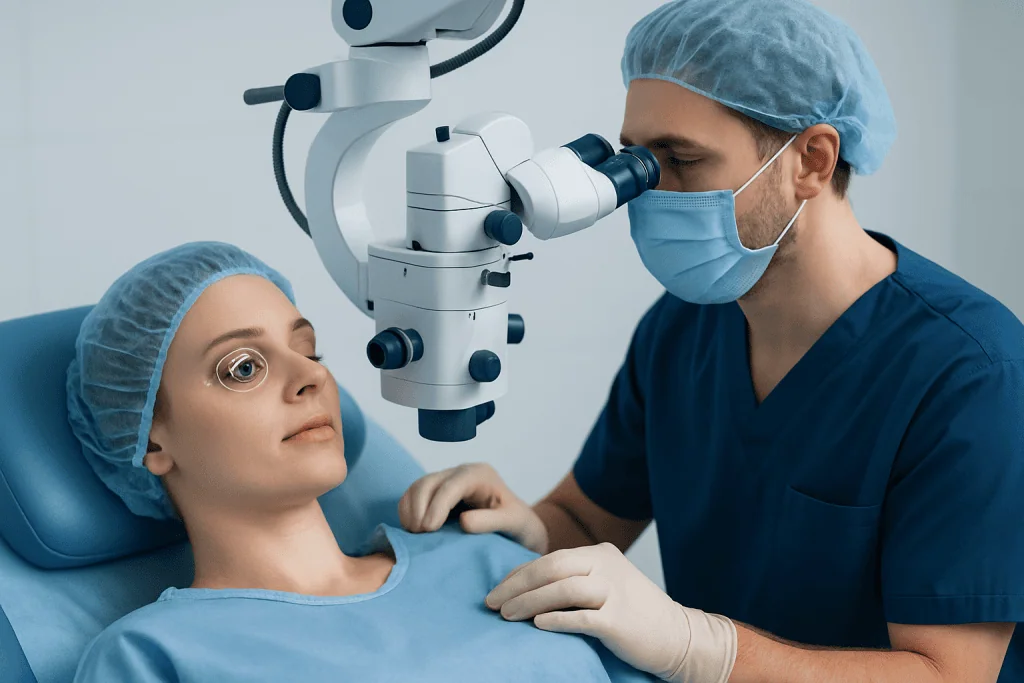
Most retinal systems begin with a miniature camera attached to glasses. The camera captures an image, and a processor converts it into a simplified pattern of electrical information. That pattern is then transmitted to an implanted electrode array, which stimulates selected cells in the visual pathway.
In retinal implants, electrodes may be positioned on or beneath the retina. If enough retinal and optic nerve function remains, the brain may interpret stimulation as visual sensations. Other research approaches stimulate the optic nerve or visual areas of the brain. These approaches may be relevant when the retina is too damaged to use, but they are generally earlier in development and require highly specialized care.
The brain must learn to interpret the new signals. Rehabilitation commonly includes practice with light localization, object detection, contrast recognition, route finding, and daily tasks. Progress is individual, and device settings may need repeated adjustment over time.
- Camera and processor: capture and simplify visual information.
- Implanted electrodes: deliver controlled electrical stimulation.
- Visual pathway: carries signals toward the brain when functional.
- Rehabilitation: helps the person make practical use of the sensations.
Who May Be a Candidate for a Bionic Eye Procedure?

Potential candidates are usually adults with profound vision loss caused by a condition affecting the retina, particularly when some structures behind the retina and the optic nerve are still healthy. Historically, some retinal prostheses were studied in people with advanced retinitis pigmentosa. However, eligibility criteria differ between devices and clinical studies, and an individual diagnosis alone does not confirm suitability.
Specialists consider the cause and duration of vision loss, whether there is any remaining light perception, the condition of the cornea and retina, eye pressure, previous eye operations, and the health of the optic nerve. General health also matters because bionic eye implant surgery requires anesthesia, follow-up visits, and active participation in rehabilitation.
People with active eye infection, uncontrolled inflammation, severe scarring, major optic nerve damage, or medical conditions that make surgery unsafe may not be suitable. Low-vision services, assistive technologies, mobility training, and treatment of the underlying eye condition may remain important regardless of implant eligibility. For background on a retinal disorder that has been studied in this field, see retinitis pigmentosa.
What Happens During Bionic Eye Implant Surgery and Recovery?
The exact bionic eye procedure depends on the device and where stimulation is delivered. Before surgery, the team typically performs detailed retinal imaging, vision testing, eye-pressure assessment, general medical evaluation, and counselling about realistic goals. If a system is available through a clinical study, additional research consent and screening processes may apply.
During retinal implant surgery, an eye surgeon places the internal components on or within the eye and secures an electrode array near the target retinal tissue. The operation may involve small incisions in and around the eye and is performed under anesthesia. After healing, the external camera and processor are fitted, and the implant is activated gradually during specialist appointments.
Recovery includes eye examinations to monitor wound healing, inflammation, pressure changes, and implant position. Activation is not usually the final step: structured visual rehabilitation may continue for months. Early sensations may be unfamiliar, and the care team helps the patient learn what different patterns may represent in everyday settings.
Modern ophthalmic care also addresses related eye-health needs, such as treatment for cataract or retinal complications when appropriate. Retinal detachment surgery is a different procedure and does not create artificial vision, but it illustrates why prompt assessment of sudden retinal symptoms is important.
Benefits, Limitations and Risks
The possible benefit of a bionic eye implant is improved access to simple visual cues. Depending on the device and individual response, this may include locating a bright doorway, identifying the direction of movement, following a line on the floor, or finding high-contrast objects. These gains can be meaningful for some people, particularly when combined with mobility and low-vision rehabilitation.
Current devices do not reliably provide reading vision, facial recognition, color vision, depth perception, or detailed scene understanding. Results vary due to differences in anatomy, the underlying cause of vision loss, device design, training, and how the brain processes stimulation. It is important to regard the technology as an aid that may supplement, rather than replace, established nonvisual skills and assistive tools.
As with other eye surgery, risks can include pain, bleeding, infection, inflammation, retinal detachment, raised or lowered eye pressure, corneal problems, scarring, and loss of remaining vision. Device-specific risks may include movement or failure of components, need for revision surgery, skin irritation from external equipment, or eventual discontinuation of technical support. A specialist should explain the risks relevant to the particular device under consideration.
What Are the Latest Updates on Bionic Eyes?
Research in visual prostheses continues, but the field is evolving rather than moving toward one universally available product. Investigators are improving electrode design, image-processing software, wireless power systems, and methods for stimulating the retina, optic nerve, and visual cortex. Some programs are also exploring combinations of electronic stimulation with gene-based, cell-based, or optogenetic approaches.
At the same time, access to earlier commercial retinal prostheses has changed over the years, and some systems have been withdrawn or are no longer broadly supported. This is one reason patients should ask specifically whether a device is available locally, whether it is offered within a regulated clinical study, and how long-term follow-up and technical support will be managed.
The most reliable source of updates is an ophthalmologist with expertise in inherited retinal disease, retinal surgery, or low vision, together with recognized clinical-trial registries and regulatory authorities. News reports may describe promising early research, but early findings do not establish that a technology is safe, effective, or available for routine care.
Do Bionic Eyes Actually Work, and When Will They Be Available?
Bionic eyes can work in the limited sense that electrical stimulation may produce visual sensations and allow some users to perform selected visual tasks. Their effectiveness should not be measured against normal eyesight. In appropriately selected people, a device may offer useful light, contrast, or movement information; in others, the benefit may be modest or difficult to use in daily life.
There is no single date when bionic eyes will become available for everyone. Availability depends on the specific technology, regulatory approval, clinical evidence, manufacturing support, and the type of vision loss being treated. Some devices and research studies may be available only at selected specialist centers, while others remain in laboratory or early clinical stages.
A discussion with a retinal specialist can clarify whether any established or investigational options may be relevant. The consultation should also cover practical alternatives, including low-vision assessment, orientation and mobility services, magnification or screen-reader technology, and treatment options for any remaining eye disease.
How Much Does a Bionic Eye Cost and When to Seek Medical Care
There is no standard bionic eye cost because availability, device status, country, hospital services, surgery, rehabilitation, and long-term maintenance differ widely. Many technologies are investigational or offered only within research settings, where funding arrangements vary. Anyone considering a device should request a written explanation of what is included, likely follow-up needs, and whether future support is available; a clinical team should never promise a particular result.
Urgent eye care is needed for sudden vision loss, a curtain or shadow across vision, new flashes or a sudden increase in floaters, severe eye pain, marked redness, or vision changes after eye surgery. These symptoms can be caused by conditions that need prompt assessment and should not be attributed to a possible future implant.
For gradual or longstanding vision loss, an appointment with an ophthalmologist is appropriate to identify the cause and discuss treatment, rehabilitation, and assistive options. Acibadem International’s multidisciplinary specialists and JCI-accredited hospitals can assess complex eye conditions and support international patients seeking individualized ophthalmic care.
Frequently asked questions
What is a bionic eye implant?
A bionic eye implant is an electronic system that aims to create visual sensations by stimulating part of the visual pathway. It may include a camera, image processor, and surgically implanted electrodes. It does not replace the natural eye or restore normal vision.
Can a bionic eye restore full eyesight?
Current bionic eye systems cannot restore full, natural eyesight. Some people may detect light, contrast, movement, or large shapes after training. The result depends on the device, the cause of vision loss, and the health of the remaining visual pathway.
Who is eligible for bionic eye implant surgery?
Eligibility is highly individual and depends on the specific device or study. Specialists assess the cause of blindness, retinal and optic nerve health, previous eye surgery, overall health, and ability to participate in rehabilitation. Many people with severe vision loss will not be suitable for currently available systems.
How long is recovery after a bionic eye procedure?
The surgical healing period may take weeks, followed by device activation and repeated programming appointments. Visual rehabilitation can continue for months because the brain needs time and practice to interpret the signals. Follow-up schedules vary according to the implanted system.
How much does a bionic eye cost?
There is no universal price for a bionic eye implant. Costs vary by device availability, country, surgical care, rehabilitation, maintenance, and whether the technology is part of a research study. A specialist center can explain anticipated services and financial arrangements for a specific option.
Are bionic eyes available now?
Availability is limited and differs across countries and devices. Some technologies remain investigational, while access to some earlier systems has changed or ended. A retinal specialist can advise whether a regulated trial or a clinically supported option is relevant to a person's diagnosis.
References
- World Health Organization
- American Academy of Ophthalmology
- National Eye Institute
- U.S. Food and Drug Administration
- ClinicalTrials.gov
This article is for general information only and is not a substitute for professional medical advice. Please consult a qualified doctor about your individual situation.
Explore treatments in Turkey — costs, top hospitals & a free quote
JCI-accredited · board-certified surgeons · reply within 24h
Add us as a Preferred Source to see more of our trusted health content across Google Search, AI Overviews and Discover.