Blood in Infant Poop: What Patients Need to Know

A few bright red streaks in infant stool are often caused by an anal fissure, especially if the baby is constipated or straining. Blood mixed with mucus can sometimes point to food protein allergy, infection, or inflammation in the bowel.
Key Takeaways
- A few bright red streaks in infant stool are often caused by an anal fissure, especially if the baby is constipated or straining.
- Blood mixed with mucus can sometimes point to food protein allergy, infection, or inflammation in the bowel.
- Black, tarry stool or large amounts of blood need urgent medical attention because bleeding may come from higher in the digestive tract.
- Doctors look at the baby's age, feeding pattern, stool appearance, associated symptoms, and growth to find the cause.
- Parents should seek urgent care if blood in infant poop happens with vomiting, severe pain, fever, dehydration, or unusual sleepiness.
Blood in infant poop is not always an emergency, but it should never be ignored. A small streak of bright red blood may come from a minor tear near the anus, while repeated bleeding, black stools, fever, or a sick-looking baby need prompt medical assessment.
Overview: what blood in infant poop can mean
Blood in infant poop can have several causes, ranging from a small skin tear around the anus to bowel infection or an allergy-related irritation of the intestine. In many otherwise well babies, a tiny amount of bright red blood on the surface of the stool or diaper is linked to an anal fissure, which is a small crack in the delicate skin near the baby’s bottom.
The appearance of the blood offers useful clues. Bright red blood usually suggests bleeding from the lower part of the digestive tract or from the anal area. Dark red, maroon, or black tarry stool may mean the blood has come from higher up in the digestive system and has been partly digested before passing out.
Even though some causes are minor, blood in infant poop should be discussed with a healthcare professional, especially if it happens more than once. The doctor will consider the baby’s age, whether the baby is breastfed or formula-fed, how the stools look, and whether there are other signs such as poor feeding, fever, vomiting, diarrhea, or discomfort.
Common signs and stool patterns to notice
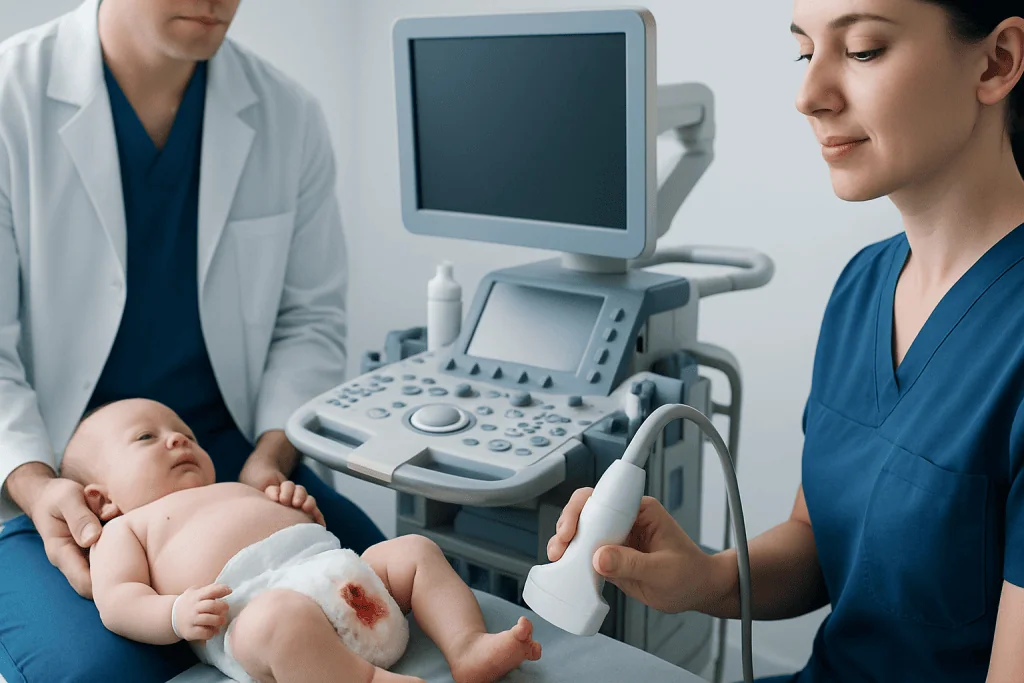
Parents often first notice a few red streaks on the outside of the stool, a small smear of blood in the diaper, or mucus mixed with blood. These details matter because they can help distinguish between a surface tear and bleeding coming from inside the bowel. Taking a photo of the diaper, if possible, can be helpful for the medical visit.
It also helps to observe the baby’s overall condition. A baby with a minor fissure may seem comfortable, feed well, and have normal energy. By contrast, blood in infant poop becomes more concerning if the baby seems unusually fussy, has a swollen belly, refuses feeds, develops repeated vomiting, or appears weak and less responsive than usual.
Parents can note the following features before speaking with a doctor:
- Color of the blood: bright red, dark red, or black
- Amount: a few spots, streaks, or larger amounts
- Whether the blood is on the stool surface or mixed into it
- Presence of mucus or diarrhea
- Any constipation, straining, or hard stools
- Fever, rash, vomiting, or poor weight gain
Possible causes and risk factors

One of the most common causes of blood in infant poop is an anal fissure. This can happen when a baby passes a hard stool or strains with bowel movements. The tear may be tiny, but because the area is sensitive and has a good blood supply, even a small fissure can leave a noticeable streak of bright red blood.
Another possible cause is food protein-induced allergic proctocolitis, often related to cow’s milk protein or, less commonly, soy protein. These babies may otherwise look healthy but can pass stools with mucus and small amounts of blood. In breastfed babies, the trigger may come through the breastfeeding parent’s diet; in formula-fed babies, it may be linked to the formula protein. This differs from lactose intolerance, which is not a common cause of rectal bleeding in young infants.
Infections can also irritate the bowel and cause blood, especially when diarrhea, fever, and poor feeding are present. Less commonly, bleeding may be linked to intestinal conditions such as colitis, bowel polyps, a swallowed amount of maternal blood in newborns, or a structural problem in the digestive tract. Rare but urgent causes include intussusception, in which part of the intestine slides into itself, and necrotizing enterocolitis in vulnerable newborns. Doctors also consider whether certain medications, vitamin K deficiency, or bleeding disorders could contribute.
How doctors diagnose the cause
Diagnosis begins with a careful history and physical examination. The doctor may ask when the bleeding started, what the stool looked like, whether the baby has pain, constipation, diarrhea, or vomiting, and how feeding and growth have been going. They may also ask whether the baby has recently changed formula, started medicines, or had exposure to illness in the family.
The physical exam often includes checking the abdomen, hydration, growth, and the skin around the anus for a fissure. In many cases, this examination provides the main answer. If the baby is otherwise well and the bleeding is mild, more extensive testing may not be needed right away.
When symptoms suggest a deeper bowel problem, the doctor may recommend stool testing, blood tests, or imaging. In selected situations, abdominal ultrasound can help assess problems such as bowel blockage or intussusception. If there is concern for ongoing intestinal inflammation, specialists may evaluate for digestive conditions such as Crohn's disease, although this is uncommon in infants. In more complex cases, assessment by pediatric gastroenterology and gastroenterology care may be appropriate.
Treatment options depend on the cause
Treatment for blood in infant poop is guided by the reason for the bleeding rather than the blood itself. For an anal fissure, care focuses on making stools easier to pass and protecting the skin. A doctor may advise feeding adjustments based on the baby’s age, gentle diaper-area care, and treatment of constipation if it is present.
If a cow’s milk protein allergy is suspected, the doctor may suggest a dietary trial. In breastfed babies, this may involve removing cow’s milk protein from the breastfeeding parent’s diet for a period of time under medical guidance. In formula-fed babies, the clinician may recommend a hypoallergenic formula. Any dietary change should be supervised so the infant continues to receive full nutrition.
Babies with infection-related diarrhea may need monitoring for dehydration and, in some cases, targeted treatment depending on the suspected organism. More serious causes, such as bowel obstruction, significant inflammation, or heavy bleeding, may require hospital care, imaging, or procedures. When structural or surgical problems are suspected, doctors may involve pediatric specialists and pediatric surgery teams. If the bleeding is linked to a chronic digestive disorder, tailored colonoscopy evaluation or further investigation may be considered in selected cases.
What parents can do at home
Parents can help by observing carefully and keeping a simple record of what they see. Useful details include the timing of the bleeding, stool frequency, recent feeding changes, and any symptoms such as vomiting or fever. This information can make the clinical visit more focused and can reduce unnecessary tests.
Good diaper care is also important. Frequent diaper changes and gentle cleaning with water or fragrance-free wipes can reduce irritation around the anus. If constipation seems to be a factor, parents should avoid trying home remedies on their own and instead ask the baby’s doctor for age-appropriate guidance, since infants should not be treated the same way as older children.
It is best not to assume that red color in the diaper is always blood. Certain foods, medicines, and pigments can sometimes stain stool red in older babies who have started solids, but true blood should be assessed. Parents should not give over-the-counter anti-diarrheal medicines, laxatives, or elimination diets without medical advice.
When to seek medical care
Parents should contact a doctor whenever blood in infant poop is seen for the first time, even if the baby seems well. The need for urgency depends on the amount of blood, the baby’s age, and whether there are other symptoms. Calling the pediatrician the same day is a sensible step for most infants with small amounts of blood.
Urgent medical care is needed if the baby has any red-flag signs. These include black or tarry stool, repeated or heavy bleeding, a swollen or tender belly, persistent vomiting, fever, poor feeding, signs of dehydration, pale color, unusual sleepiness, or severe crying that suggests pain. A newborn, premature baby, or medically fragile infant with blood in the stool should be assessed promptly.
If specialized evaluation is needed, multidisciplinary pediatric and digestive specialists can help identify the source of bleeding and plan treatment. Acibadem International’s JCI-accredited hospitals care for international patients with infant digestive concerns through coordinated pediatric and specialist services.
Frequently asked questions
Is blood in infant poop always serious?
No. A small amount of bright red blood is often caused by a minor anal fissure, especially if the baby is constipated or straining. Still, any blood in an infant's stool should be discussed with a healthcare professional because some causes need prompt treatment.
What does bright red blood in a baby's stool usually mean?
Bright red blood usually comes from the lower digestive tract or the anal area. Common causes include an anal fissure or irritation near the anus, but allergy-related bowel inflammation and infections can also cause it.
Can a milk allergy cause blood in infant poop?
Yes. Cow's milk protein allergy can sometimes cause mucus and small amounts of blood in the stool, particularly in otherwise well young infants. A doctor may recommend a supervised diet change to confirm whether this is the cause.
When should parents go to the emergency room?
Emergency care is important if the baby has black stools, large amounts of blood, severe belly pain, swelling, repeated vomiting, fever, dehydration, weakness, or unusual drowsiness. Parents should also seek urgent help if the infant is a newborn, premature, or medically fragile.
Can constipation cause blood in infant poop?
Yes. Hard stools and straining can create a small tear in the skin around the anus, called an anal fissure, which may bleed. The blood is usually bright red and seen on the outside of the stool or diaper.
How do doctors test for the cause of blood in infant poop?
Doctors start with the baby's history and a physical exam, including looking for an anal fissure and signs of illness. Depending on the symptoms, they may order stool tests, blood tests, or imaging such as ultrasound.
This article is for general information only and is not a substitute for professional medical advice. Please consult a qualified doctor about your individual situation.
Explore treatments in Turkey — costs, top hospitals & a free quote
JCI-accredited · board-certified surgeons · reply within 24h
Add us as a Preferred Source to see more of our trusted health content across Google Search, AI Overviews and Discover.

More from the Health Library

Itching at Foot — Explained by Medical Evidence, Not Myths

Health Tips: An Evidence-Based Guide for Patients

4 Stages of Grief: An Evidence-Based Guide for Patients

Over Survival: An Evidence-Based Guide for Patients

Kidney inflammation: A Complete Medical Guide for Patients