Body Acne: An Evidence-Based Guide for Patients

Body acne develops when hair follicles become blocked with oil, dead skin cells, and sometimes bacteria. Sweat, tight clothing, friction, oily products, hormonal changes, and certain medicines can worsen breakouts.
Key Takeaways
- Body acne develops when hair follicles become blocked with oil, dead skin cells, and sometimes bacteria.
- Sweat, tight clothing, friction, oily products, hormonal changes, and certain medicines can worsen breakouts.
- Over-the-counter washes containing benzoyl peroxide or salicylic acid may help mild body acne when used consistently.
- Painful, widespread, scarring, or persistent acne should be assessed by a dermatologist or qualified doctor.
- Avoid squeezing spots, as this can increase inflammation, dark marks, and the risk of scarring.
Body acne is acne that develops on areas such as the back, chest, shoulders, buttocks, neck, or upper arms. It is common, treatable, and often improves with consistent skin care, reducing friction and sweat exposure, and medical treatment when needed.
Body Acne Overview
Body acne is a form of acne vulgaris that occurs below the face, most often on the upper back, chest, shoulders, neck, upper arms, and buttocks. It may appear as blackheads, whiteheads, small red bumps, pus-filled spots, deeper painful lumps, or a mixture of these. The back is a particularly common site because it has many oil-producing glands and can be difficult to wash or treat regularly.
Acne begins inside the hair follicle, where skin cells, natural skin oil called sebum, and debris can form a plug. This environment may allow Cutibacterium acnes, a normal skin bacterium, to contribute to inflammation. Body acne is not caused by poor hygiene, and it is not contagious. However, regular, gentle care can help reduce factors that contribute to blocked follicles.
Breakouts can affect people of all ages. They are especially frequent during adolescence because of hormonal changes, but adult body acne is also common. The condition can be physically uncomfortable and may affect confidence, clothing choices, exercise, sleep, or daily activities. Effective treatment is available, and early care can help reduce the chance of lasting scars or dark marks.
How Body Acne Can Look and Feel
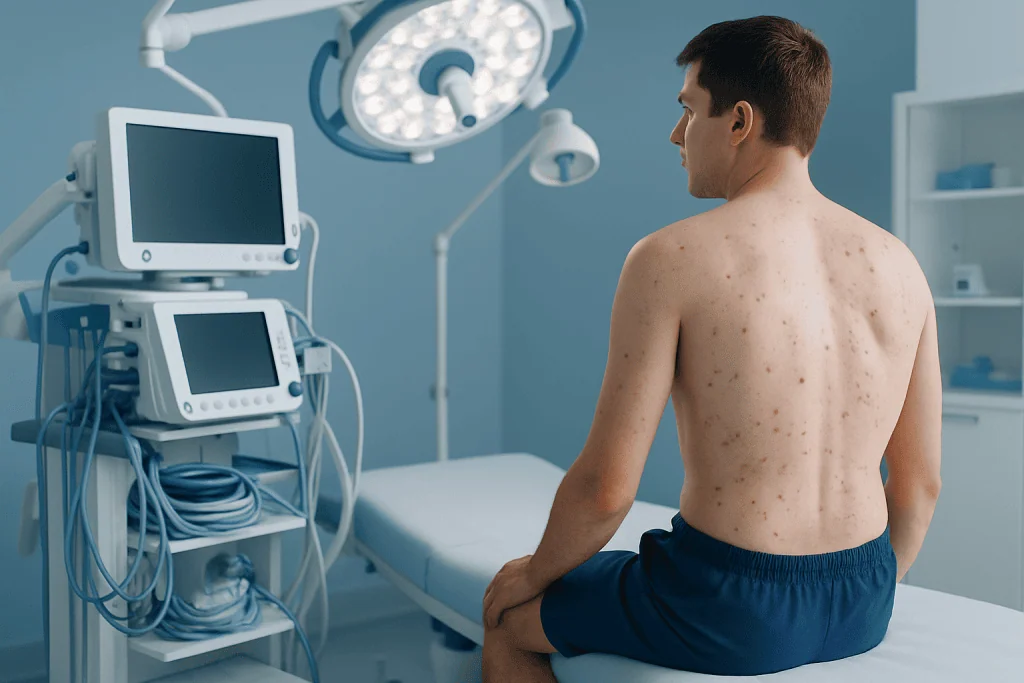
The appearance of body acne varies according to the type and depth of the lesions. Non-inflammatory acne includes blackheads, which are open clogged pores, and whiteheads, which are closed clogged pores. Inflammatory acne may cause tender red papules, pustules with a visible white or yellow center, nodules, or cyst-like lesions deeper in the skin.
Back acne may be noticed as rough skin texture, scattered bumps, or larger inflamed areas under clothing. Chest and shoulder acne can be irritated by straps, sports equipment, or close-fitting garments. Acne on the buttocks is sometimes described as body acne, although bumps in this area may instead be folliculitis, an inflammation of hair follicles, or another skin condition.
After active spots heal, some people develop temporary red, brown, or gray marks. These are called post-inflammatory changes and are not always true scars. They often fade gradually, though this can take time. Depressed scars, raised scars, and persistent pigment changes are more likely after deep inflammation or repeated picking and squeezing.
- Blackheads or whiteheads
- Red, sore, or itchy bumps
- Pus-filled spots
- Deep, painful lumps
- Dark marks or scars after spots resolve
Why Body Acne Develops
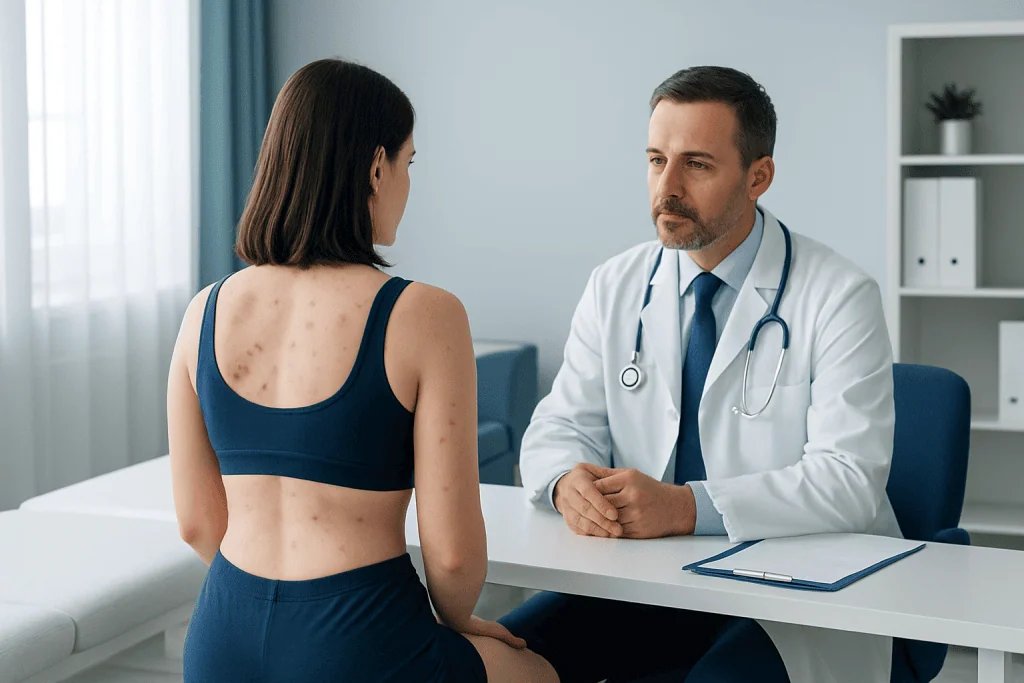
Body acne results from several processes acting together: increased oil production, buildup of dead skin cells within follicles, bacterial activity, and inflammation. Hormones called androgens can increase sebum production, which helps explain why acne often begins during puberty and may flare around menstrual periods. Hormonal conditions or changes can also contribute to adult acne in some people.
Friction and pressure can aggravate acne-prone skin. This is sometimes called acne mechanica and may occur beneath backpacks, helmets, shoulder pads, tight athletic wear, bras, or work uniforms. Heat and sweating can also make breakouts more noticeable, particularly when damp clothing remains against the skin after exercise.
Oil-based lotions, sunscreens, hair products, and cosmetic products may worsen acne for some people if they block follicles. Choosing products labeled non-comedogenic, oil-free, or non-acnegenic may be useful. Hair conditioner can leave residue on the upper back and shoulders, so rinsing the body after conditioning hair may help.
Some medicines can contribute to acne-like eruptions, including certain corticosteroids, testosterone or anabolic steroids, lithium, and some anti-seizure medicines. Dietary patterns may influence acne in some individuals, but the evidence does not support blaming a single food. A clinician can help identify possible triggers while avoiding unnecessarily restrictive diets.
A Practical Skin-Care Approach
Consistent, gentle care is usually more helpful than aggressive scrubbing. The skin should be washed after sweating and at least once daily with lukewarm water and a mild cleanser. A long-handled soft applicator may make it easier to cleanse the back without harsh rubbing. Scrubs, rough loofahs, and frequent exfoliation can irritate the skin and may worsen inflammation.
For mild body acne, a benzoyl peroxide wash can reduce acne-causing bacteria and inflammation. Salicylic acid washes can help unclog pores. These products should be introduced gradually and used as directed on the package, since dryness or irritation can occur. Benzoyl peroxide may bleach towels, bedding, and clothing, so users should rinse thoroughly and use care with fabrics.
After bathing, a fragrance-free, non-comedogenic moisturizer can support the skin barrier, especially when acne treatments cause dryness. People who exercise may find it helpful to shower soon afterward and change out of sweaty clothes. Breathable, looser-fitting fabrics can reduce rubbing and trapped heat.
Spots should not be squeezed, picked, or scraped. This may push inflammation deeper, increase the risk of infection, and make scarring more likely. Acne treatments generally need several weeks of regular use before a clear improvement is visible. If irritation is significant, treatment should be reduced or stopped and discussed with a healthcare professional.
Medical Assessment and Treatment Options
A doctor or dermatologist can often diagnose body acne by examining the skin and asking about symptoms, skin products, medicines, menstrual or hormonal patterns, and family history. Testing is not usually needed. However, an examination is important when lesions are unusually itchy, uniform in appearance, sudden in onset, or do not respond to standard acne care, because folliculitis and other conditions can resemble acne.
Treatment is tailored to the severity and type of acne. Topical retinoids can help prevent clogged pores, while topical benzoyl peroxide and topical antibiotics may be used for inflammatory acne. When topical antibiotics are prescribed, they are generally paired with benzoyl peroxide to limit antibiotic resistance. A clinician may recommend a combination regimen because acne has several contributing mechanisms.
For moderate to severe, widespread, painful, or scarring acne, oral medicines may be considered. These can include antibiotics for a limited period, hormonal treatment for appropriate patients, or oral isotretinoin for severe or treatment-resistant acne. Oral isotretinoin is highly effective for some people but requires close medical supervision because it has important potential side effects and strict pregnancy-prevention requirements.
Acne marks and scars are usually addressed after active acne is controlled. Depending on the scar type and skin tone, a dermatologist may discuss options such as topical treatments, chemical peels, microneedling, laser procedures, or other scar-focused care. The best approach is individualized, and prevention of new deep lesions remains an important first step.
Prevention and Everyday Habits
Body acne cannot always be fully prevented, particularly when hormones or genetics play a major role. Still, a few realistic habits may reduce flare-ups. Wearing clean, breathable clothing, washing sports bras and workout clothing after use, and avoiding prolonged time in damp garments can lower friction and sweat exposure.
Bed linens, towels, and clothing that touch acne-prone areas should be changed regularly. Hair products should be kept away from the upper back where possible, and the body can be rinsed after shampoo and conditioner. Sunscreen is still important for exposed skin; a non-comedogenic sunscreen is usually the preferred choice for acne-prone areas.
A balanced eating pattern, adequate sleep, and stress-management practices support general health, although they are not substitutes for acne treatment. Stress does not cause acne on its own, but it may worsen breakouts for some people. Keeping a simple record of flares, new products, sporting activities, and medicines can help identify personal patterns without assuming that one factor is responsible.
Patience matters. Switching products every few days can irritate the skin and make it difficult to know what is helping. A sensible routine should be followed consistently for several weeks unless it causes significant discomfort. A healthcare professional can help create a plan that fits sensitive skin, pregnancy considerations, other medical conditions, and the severity of acne.
When to Seek Medical Care
Medical advice is appropriate when body acne is painful, widespread, leaves scars or dark marks, affects emotional wellbeing, or does not improve after a consistent trial of non-prescription care. Early assessment is especially valuable for deep nodules or cyst-like lesions, which can scar more easily than superficial spots.
A person should seek prompt medical assessment for a sudden widespread rash, fever, rapidly worsening redness, severe pain, or drainage from the skin. These symptoms may indicate an infection or another condition rather than ordinary acne. People who are pregnant, trying to become pregnant, or breastfeeding should ask a clinician before using acne medicines, as some treatments are not suitable during pregnancy.
People taking prescription medicines who develop a new acne-like eruption should not stop their medication without advice, but should discuss the change with the prescribing clinician. Acibadem International’s multidisciplinary specialists and JCI-accredited hospitals can assess persistent skin concerns and provide individualized acne care for international patients.
Frequently asked questions
What causes body acne?
Body acne develops when hair follicles become blocked with oil and dead skin cells, followed by inflammation. Hormones, genetics, sweat, friction, tight clothing, oily products, and certain medicines can all contribute. It is not a sign of poor hygiene.
How can body acne be treated at home?
Mild body acne may improve with a gentle daily wash and an over-the-counter benzoyl peroxide or salicylic acid body wash. Showering after sweating, wearing breathable clothing, and avoiding picking can also help. Improvement often takes several weeks of consistent use.
Does sweating cause body acne?
Sweat itself does not directly cause acne, but heat, moisture, friction, and leaving sweaty clothing against the skin can aggravate existing breakouts. Showering and changing into clean, dry clothing after exercise may reduce this effect.
Why is my back acne not going away?
Back acne can persist because the area has many oil glands, is exposed to friction from clothing or equipment, and may be difficult to treat consistently. It may also be moderate or severe enough to need prescription treatment. A dermatologist can confirm the diagnosis and recommend an appropriate plan.
Can body acne leave scars?
Yes, deeper inflamed acne lesions can leave permanent scars, particularly if they are squeezed or picked. Acne can also leave temporary dark or red marks after healing. Seeking treatment early for painful or nodular acne can help reduce scarring risk.
Is body acne the same as folliculitis?
No. Folliculitis is inflammation of hair follicles and can resemble acne, especially on the chest, back, or buttocks. It may be caused by bacteria, yeast, irritation, or ingrown hairs. A clinician can distinguish between these conditions when the diagnosis is uncertain or treatment is not working.
This article is for general information only and is not a substitute for professional medical advice. Please consult a qualified doctor about your individual situation.
Acne in Turkey — costs, top hospitals & a free quote
JCI-accredited · board-certified surgeons · reply within 24h
Add us as a Preferred Source to see more of our trusted health content across Google Search, AI Overviews and Discover.

More from the Health Library

Wegovy Generic Name — Explained by Medical Evidence, Not Myths

48 Hour Fast: A Complete Medical Overview

Ingrown Hair Cyst Bikini: An Evidence-Based Guide for Patients

Almond Milk: A Complete Medical Overview

Flow Volume Loop: An Evidence-Based Guide for Patients