Brain Aneurysm Screening: Who Should Consider Preventive Imaging?

Most people do not need routine brain aneurysm screening. Screening is more often considered for people with two or more close relatives who have had a brain aneurysm or subarachnoid hemorrhage.
Key Takeaways
- Most people do not need routine brain aneurysm screening.
- Screening is more often considered for people with two or more close relatives who have had a brain aneurysm or subarachnoid hemorrhage.
- Noninvasive imaging tests such as magnetic resonance angiography (MRA) or computed tomography angiography (CTA) are commonly used.
- The decision to screen should balance personal risk factors, possible findings, and the need for ongoing follow-up.
- Healthy blood pressure control and avoiding smoking are important ways to reduce aneurysm-related risk.
Brain aneurysm screening is not recommended for everyone, but it can be helpful for people with a higher-than-average risk of an unruptured aneurysm. Preventive imaging is usually considered based on family history, certain inherited disorders, and a careful discussion of benefits, limits, and follow-up needs.
Overview: What brain aneurysm screening means
A brain aneurysm is a weak or bulging area in the wall of a blood vessel in the brain. Many aneurysms are small, cause no symptoms, and are discovered only by chance during imaging done for another reason. Screening refers to looking for an unruptured aneurysm before it causes problems, usually in people thought to have a higher-than-average risk.
Preventive imaging can sometimes identify an aneurysm early, but screening is not routinely advised for the general population. This is because most people will never develop a brain aneurysm, and many aneurysms that are found remain stable and never rupture. Imaging can also lead to uncertainty, repeated scans, and decisions about treatment that may not be simple.
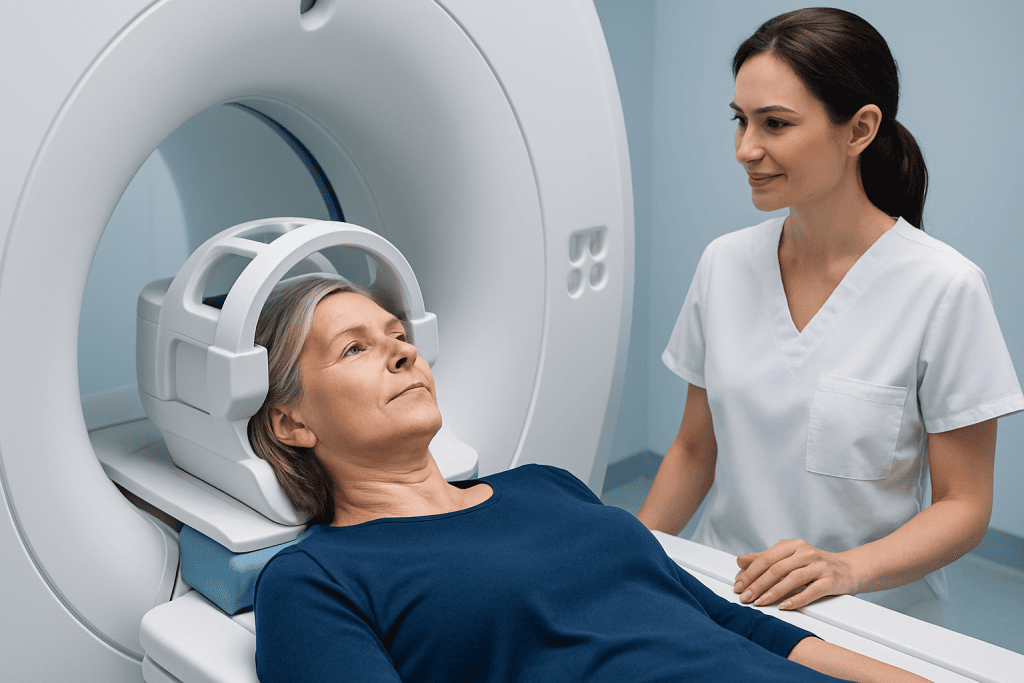
When screening is appropriate, doctors usually use noninvasive tests that show blood vessels in the brain. These include magnetic resonance angiography (MRA) and computed tomography angiography (CTA). In selected situations, a specialist may recommend further evaluation through interventional neuroradiology assessment if a vascular abnormality is suspected or already known.
Who may benefit from preventive imaging
The people most often considered for brain aneurysm screening are those with a strong family history. In general, screening may be discussed if a person has two or more first-degree relatives, such as a parent, sibling, or child, who have had a brain aneurysm or aneurysmal subarachnoid hemorrhage. A first-degree relative with a known aneurysm can be an important clue, but the strongest case for screening is usually when more than one close family member is affected.
Some inherited conditions are also linked to a higher risk of intracranial aneurysms. These may include autosomal dominant polycystic kidney disease, certain connective tissue disorders, and a small number of vascular syndromes. In such settings, doctors may suggest screening even if there has not been more than one aneurysm in the family, especially if the person also has other risk factors.
Screening may also be considered in selected people with a previous aneurysm, a history of treated aneurysm, or another vascular abnormality. For example, someone who has already been evaluated for brain aneurysm may need interval imaging to look for changes over time. Decisions are individualized, with attention to age, health status, and whether a screening result would change medical care.
- Two or more first-degree relatives with brain aneurysm or aneurysmal bleeding
- Inherited disorders associated with aneurysm risk
- Personal history of a previously treated or known aneurysm
- Selected vascular conditions identified by a specialist
Risk factors doctors consider

Family history is one of the clearest reasons to discuss screening, but it is not the only factor. Doctors also consider modifiable risk factors such as smoking and high blood pressure, both of which are associated with aneurysm formation and rupture risk. Age and sex may also play a role, as aneurysms are more often detected in adults and are somewhat more common in women.
Other possible factors include certain genetic or structural conditions affecting blood vessels, previous aneurysm treatment, and a history of disorders involving abnormal vessel walls. Screening may also come up during evaluation for other cerebrovascular conditions, especially when there is overlap in symptoms or family history, such as concern about stroke.
Even when risk factors are present, screening is still a careful decision rather than an automatic one. The goal is not simply to find as many aneurysms as possible, but to identify situations where early detection is more likely to be helpful than burdensome. A specialist can help explain whether the level of risk is high enough to justify imaging and follow-up.
Symptoms and why screening differs from diagnosis
Most unruptured brain aneurysms do not cause symptoms. That is one reason they are difficult to detect without imaging. When symptoms do occur, they may include headache, eye pain, double vision, drooping eyelid, or other nerve-related changes, depending on the aneurysm’s size and location. However, these symptoms are not specific and can have many other causes.
Screening is meant for people without symptoms who may have increased risk. Diagnosis is different: it is the process of finding the cause of symptoms that are already present. A sudden, severe headache, loss of consciousness, weakness, seizure, confusion, or sudden vision change is not a screening situation. These symptoms need urgent medical attention because they can signal bleeding in the brain or another emergency.
Doctors separate screening from urgent diagnosis because the timing, choice of imaging, and next steps are different. A person seeking routine preventive imaging may have time for discussion and planning, while a person with warning symptoms may need immediate evaluation, often in an emergency setting.
How brain aneurysm screening is done
The most common screening test is MRA, which uses magnetic fields to create images of blood vessels. MRA is often preferred for preventive screening because it does not use ionizing radiation, and in some cases it can be performed without contrast dye. It is especially useful when ongoing surveillance may be needed over time.
CTA is another widely used option. It uses computed tomography together with contrast material to show blood vessels in detail. CTA can be very helpful when anatomy needs to be seen clearly, but it does involve radiation and iodinated contrast, which may not be ideal for everyone. The choice between MRA and CTA depends on the person’s age, kidney function, prior imaging, implanted devices, and the reason for screening.
If noninvasive imaging shows a possible aneurysm, a specialist may recommend additional evaluation. In selected cases, cerebral angiography may be used to define the shape, size, and location more precisely, particularly if treatment is being considered through cerebral angiography or a minimally invasive vascular procedure. Imaging results are interpreted together with family history and overall health, not in isolation.
What happens if an aneurysm is found
Finding an unruptured aneurysm does not always mean treatment is needed. Many small aneurysms are monitored rather than treated right away. Doctors look at several features, including aneurysm size, shape, location, growth over time, the person’s age, smoking status, blood pressure, family history, and any previous bleeding history.
When the estimated risk of rupture is higher, treatment may be recommended. Depending on the aneurysm’s anatomy, options can include endovascular approaches such as aneurysm embolization or neurosurgical clipping. Treatment planning is individualized because every aneurysm is different, and the aim is to reduce long-term risk while avoiding unnecessary intervention.
For people who do not need immediate treatment, follow-up imaging may be advised at intervals chosen by the care team. During this time, controlling blood pressure, avoiding tobacco, and keeping regular appointments are important. A multidisciplinary team can help explain the risks and benefits of observation versus intervention in a clear, balanced way.
Prevention, self-care, and when to discuss screening
There is no guaranteed way to prevent a brain aneurysm, but some steps may help lower risk and support vascular health. Not smoking is one of the most important. Good blood pressure control, regular medical checkups, physical activity suited to the person’s health, and management of conditions such as high cholesterol can also be helpful. These measures are valuable whether or not screening is performed.
A person should consider discussing brain aneurysm screening with a doctor if they have two or more first-degree relatives with aneurysm-related bleeding, an inherited condition linked to aneurysms, or a personal history of a known aneurysm. The discussion may include when to start imaging, how often to repeat it, and whether MRA or CTA is the better option. Shared decision-making is especially important because screening can have emotional as well as medical effects.
Urgent medical care is needed for symptoms such as a sudden severe headache, fainting, new weakness, confusion, seizure, or sudden vision changes. For nonurgent concerns, evaluation by neurology, neurosurgery, or interventional neuroradiology can help clarify the best next step. Near the end of the care pathway, patients may also seek opinions from centers such as Acibadem International, where multidisciplinary specialists in JCI-accredited hospitals diagnose and treat cerebrovascular conditions for international patients.
Frequently asked questions
Should everyone get brain aneurysm screening?
No. Routine brain aneurysm screening is not recommended for the general population. It is usually considered only for people with higher risk, such as those with a strong family history or certain inherited conditions.
What family history makes screening more likely to be recommended?
Screening is more often discussed when a person has two or more first-degree relatives with a brain aneurysm or aneurysmal subarachnoid hemorrhage. A doctor may also consider screening in some people with one affected close relative if other important risk factors are present.
Which scan is usually used for preventive screening?
Magnetic resonance angiography, or MRA, is commonly used because it is noninvasive and does not use radiation. Computed tomography angiography, or CTA, may also be used when detailed vessel anatomy is needed or when MRA is not suitable.
If a scan finds an aneurysm, does it always need treatment?
No. Many unruptured aneurysms are monitored rather than treated immediately. The decision depends on factors such as size, location, shape, growth, symptoms, family history, and the person’s overall health.
At what age should screening start?
There is no single age that applies to everyone. The timing depends on family history, inherited conditions, and personal risk factors, so the best approach is to discuss it with a qualified specialist.
Can lifestyle changes help lower aneurysm risk?
Yes, healthy habits matter. Avoiding smoking and controlling high blood pressure are especially important, and regular medical care can help manage other vascular risk factors.
References
- American Heart Association
- American Stroke Association
- National Institute of Neurological Disorders and Stroke
- Brain Aneurysm Foundation
- European Stroke Organisation
This article is for general information only and is not a substitute for professional medical advice. Please consult a qualified doctor about your individual situation.
Explore treatments in Turkey — costs, top hospitals & a free quote
JCI-accredited · board-certified surgeons · reply within 24h
Add us as a Preferred Source to see more of our trusted health content across Google Search, AI Overviews and Discover.
Check your numbers in seconds
BMI, calories, due date, blood pressure and 30+ more clinical calculators — free, instant, doctor-reviewed ranges.

Neurosurgery
Surgical treatment of the brain, spine and nervous system, including minimally invasive and functional procedures.
72 specialists in this unitMore from the Health Library



Related Specialists

Dr. Cenk İlham
Anesthesiology
Prof. Dr. Ayşe Korkmaz Toygar
Neonatal Intensive Care Unit
Dr. Erkan Adnan Kelebek
Coronary Intensive Care Unit
Prof. Dr. Orhan Baransu
Dermatology