Brain Aneurysm Symptoms: When Sudden Headache Needs Urgent Imaging

A sudden, severe "worst headache" can be a sign of a ruptured brain aneurysm and needs emergency care. Some brain aneurysms cause no symptoms, while others may lead to eye pain, double vision, drooping eyelid, or facial numbness.
Key Takeaways
- A sudden, severe "worst headache" can be a sign of a ruptured brain aneurysm and needs emergency care.
- Some brain aneurysms cause no symptoms, while others may lead to eye pain, double vision, drooping eyelid, or facial numbness.
- CT, MRI, and blood vessel imaging help doctors find aneurysms and look for bleeding.
- Treatment depends on whether the aneurysm has ruptured, its size and location, and the person's overall health.
- People should seek urgent medical attention for sudden headache with vomiting, confusion, fainting, seizure, or neurological symptoms.
Brain aneurysm symptoms may be subtle, but a sudden explosive headache can be a medical emergency. Recognizing warning signs and knowing when urgent imaging is needed can help speed diagnosis and treatment.
Overview
A brain aneurysm is a weak or bulging area in the wall of a blood vessel in the brain. It may stay small and never cause symptoms, or it may enlarge and press on nearby nerves or brain structures. In some cases, it can rupture, causing bleeding around the brain. This is called a subarachnoid hemorrhage and is a medical emergency.
Many people are most concerned about brain aneurysm symptoms because they can vary widely. Some aneurysms are found by chance during imaging done for another reason. Others first become noticeable through symptoms such as headache, visual changes, or nerve-related problems. The most important warning sign is a sudden, very severe headache that reaches maximum intensity quickly.
Because symptoms can overlap with migraine, sinus problems, or other headache disorders, it is not always easy to tell the difference at home. What matters most is the pattern: a sudden, unusual, intense headache, especially when combined with vomiting, neck stiffness, confusion, weakness, or loss of consciousness, needs urgent evaluation.
What symptoms can a brain aneurysm cause?
Symptoms depend on whether the aneurysm has ruptured and whether it is pressing on nearby structures. An unruptured aneurysm often causes no symptoms at all. When symptoms do occur, they may develop gradually and can include pain behind or above one eye, a drooping eyelid, double vision, changes in vision, dilated pupil, facial numbness, or headache.
A ruptured aneurysm typically causes a sudden and severe headache that many people describe as the worst headache of their life. This headache often starts instantly or within seconds and may be accompanied by nausea, vomiting, neck stiffness, sensitivity to light, confusion, fainting, seizure, or weakness. These symptoms need emergency medical care right away.
Sometimes there is a “warning” headache before a major rupture. This may happen if a small leak occurs from the aneurysm. Although not everyone has this symptom, a sudden unusual headache that feels very different from previous headaches should never be ignored.
- Sudden severe headache
- Nausea or vomiting
- Neck pain or stiffness
- Blurred or double vision
- Drooping eyelid or eye pain
- Weakness, numbness, or trouble speaking
- Confusion, seizure, or loss of consciousness
When does a sudden headache need urgent imaging?

Not every headache requires emergency scanning, but some patterns strongly suggest the need for urgent imaging. A headache that starts suddenly and peaks within moments is one of the most important red flags. This is especially true when the pain is far more severe than usual or unlike any previous headache.
Urgent imaging is also needed when sudden headache appears together with neurological symptoms. These include weakness on one side of the body, trouble speaking, facial drooping, confusion, severe drowsiness, seizure, fainting, or new visual symptoms. Fever and neck stiffness may have other causes, but they also need prompt assessment because they can overlap with life-threatening conditions.
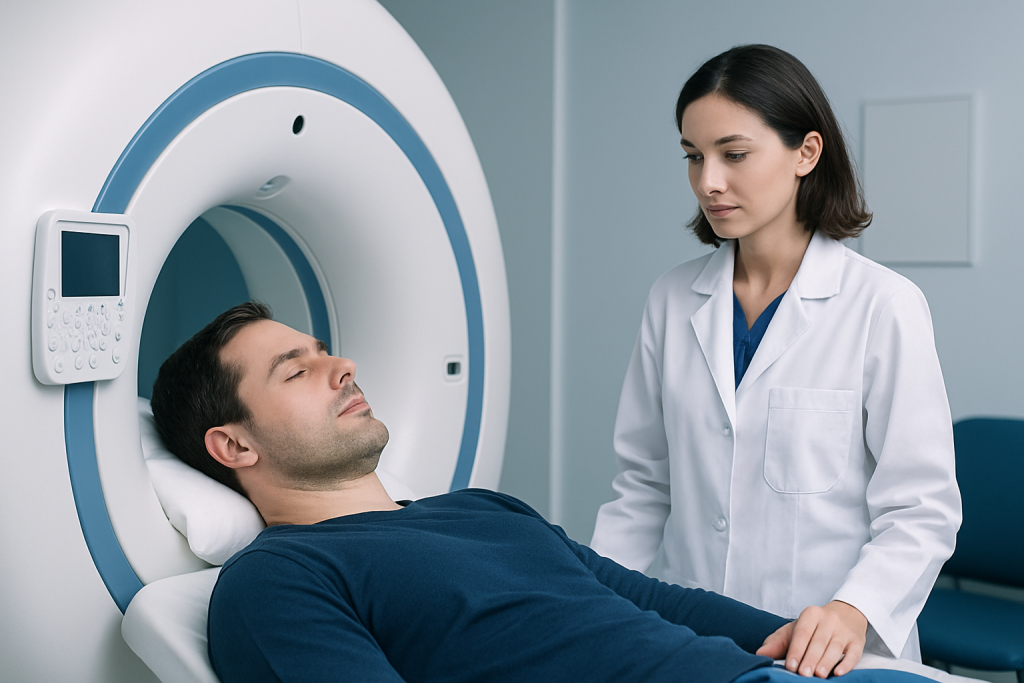
Doctors usually begin with an urgent non-contrast CT scan of the head to look for bleeding. If the CT is normal but suspicion remains high, further tests may include CT angiography, MRI, MR angiography, or in selected cases a lumbar puncture. Early assessment matters because rapid diagnosis can guide lifesaving treatment. Conditions that may present in a similar way include stroke and migraine, but sudden severe headache should not be assumed to be benign without medical evaluation.
Causes and risk factors
Brain aneurysms develop when part of an artery wall becomes weakened. The exact reason is not always clear, but both inherited and acquired factors can contribute. Some aneurysms are linked to blood vessel structure, age-related changes, or longstanding strain on the artery wall.
Several factors increase the chance of developing or rupturing an aneurysm. These include smoking, high blood pressure, increasing age, family history of aneurysm, and certain inherited conditions that affect connective tissue or blood vessels. Heavy alcohol use and stimulant drug use may also raise the risk of rupture.
Having a risk factor does not mean a person will develop an aneurysm, and people without obvious risk factors can still be affected. This is why symptoms remain important. A person with risk factors who develops a sudden severe headache or new neurological symptoms should seek urgent care rather than waiting to see if symptoms improve.
How doctors diagnose a brain aneurysm
Diagnosis starts with the story of the symptoms and a neurological examination. Doctors ask when the headache started, how quickly it reached peak intensity, whether there was vomiting or loss of consciousness, and whether there are any problems with speech, movement, or vision. This helps determine how urgent the situation is and which tests are most appropriate.
Imaging is central to diagnosis. A CT scan is often the first test in emergency settings because it is fast and can detect recent bleeding. To look at the blood vessels themselves, doctors may use CT angiography or MR angiography. In some situations, a catheter angiogram is recommended because it can give very detailed images of the aneurysm’s shape and location.
If an aneurysm is found, the care team also evaluates its size, location, and appearance, along with the person’s age, overall health, and symptoms. These details help estimate rupture risk and guide treatment planning. In centers with advanced neurovascular care, patients may also be assessed by specialists in interventional neuroradiology and neurosurgery to choose the safest approach.
Treatment options
Treatment depends on whether the aneurysm has ruptured. A ruptured aneurysm needs emergency hospital care focused on stabilizing the patient, preventing rebleeding, and managing complications. These complications can include blood vessel spasm, fluid buildup, and effects on brain function. Close monitoring in a specialized unit is often needed.
There are two main ways to treat many aneurysms: endovascular treatment from inside the blood vessel and open surgical treatment. Endovascular options may include coiling or other techniques performed through a catheter, often as part of minimally invasive aneurysm treatment. Surgical clipping places a clip across the aneurysm through an operation to stop blood flow into it. The best option depends on the aneurysm’s anatomy, the patient’s condition, and specialist judgment.
For an unruptured aneurysm, treatment is individualized. Some aneurysms are monitored with repeat imaging, especially if they are small and not causing symptoms. Others are treated because of size, location, shape, growth, symptoms, or patient-specific risk factors. For people with persistent or unexplained headaches, a specialist may also evaluate for other neurological causes and discuss neurology assessment when appropriate.
Prevention and self-care
There is no guaranteed way to prevent every brain aneurysm, but risk can often be reduced by protecting blood vessel health. Stopping smoking and controlling high blood pressure are among the most important steps. Regular medical follow-up is especially useful for people with a family history of aneurysm or known vascular risk factors.
General self-care supports overall brain and cardiovascular health. This includes taking prescribed medicines as directed, limiting alcohol if advised, avoiding illicit stimulant drugs, and discussing any concerning symptoms promptly with a doctor. People who know they have an unruptured aneurysm should follow their imaging schedule carefully and ask which symptoms should trigger urgent medical attention.
Self-care does not replace emergency evaluation. A sudden thunderclap headache should not be managed at home with rest or pain medicine alone. If severe headache starts abruptly or is accompanied by weakness, confusion, seizure, or fainting, emergency care is the safest next step.
When to see a doctor
Emergency care is needed immediately for a sudden severe headache, especially if it is the first of its kind or clearly different from previous headaches. Urgent assessment is also important for headache with vomiting, neck stiffness, fainting, seizure, confusion, slurred speech, new weakness, or vision changes. These symptoms may have several causes, but all require prompt medical evaluation.
A non-emergency medical appointment is appropriate for recurring headaches that are changing in pattern, new eye symptoms, drooping eyelid, or facial numbness, even if they are not severe. People with a strong family history of aneurysm or subarachnoid hemorrhage may wish to discuss personal risk and whether screening is appropriate with a neurologist or neurosurgeon.
Near the end of the care pathway, some patients benefit from treatment in experienced neurovascular centers. Acibadem International’s multidisciplinary specialists in JCI-accredited hospitals diagnose and treat brain aneurysms for international patients, using advanced imaging and coordinated neurological care when needed.
Frequently asked questions
What does a brain aneurysm headache feel like?
A ruptured brain aneurysm often causes a sudden, explosive headache that reaches maximum intensity very quickly. Many people describe it as the worst headache of their life. This kind of headache needs emergency medical evaluation.
Can a brain aneurysm cause symptoms before it ruptures?
Yes, some unruptured aneurysms can cause symptoms if they press on nearby nerves or tissues. These may include eye pain, double vision, drooping eyelid, facial numbness, or changes in vision. However, many unruptured aneurysms cause no symptoms at all.
Should every sudden headache be checked in the emergency department?
A very sudden, severe headache that peaks within seconds or minutes should be assessed urgently, especially if it is different from usual headaches. Emergency care is even more important if there is vomiting, neck stiffness, weakness, confusion, seizure, or fainting. Doctors can decide whether urgent imaging is needed.
How is a brain aneurysm found on imaging?
Doctors often start with a CT scan to look for bleeding in or around the brain. They may then use CT angiography, MRI, or MR angiography to examine the blood vessels more closely. In some cases, a catheter angiogram provides the most detailed view.
Can an unruptured brain aneurysm be left untreated?
Sometimes yes, depending on its size, location, shape, growth, and the person's overall risk. Some aneurysms are monitored over time with repeat imaging rather than treated immediately. The decision should be made with a qualified specialist.
Who is more likely to have a brain aneurysm?
Risk may be higher in people who smoke, have high blood pressure, or have a family history of brain aneurysm. Certain inherited connective tissue or blood vessel disorders can also increase risk. Still, a brain aneurysm can occur in people without obvious risk factors.
This article is for general information only and is not a substitute for professional medical advice. Please consult a qualified doctor about your individual situation.
Explore treatments in Turkey — costs, top hospitals & a free quote
JCI-accredited · board-certified surgeons · reply within 24h
Add us as a Preferred Source to see more of our trusted health content across Google Search, AI Overviews and Discover.
Check your numbers in seconds
BMI, calories, due date, blood pressure and 30+ more clinical calculators — free, instant, doctor-reviewed ranges.

More from the Health Library

Is Palm Oil a Seed Oil? A Doctor-Reviewed Answer

Colon Cancer Symptoms: Possible Causes and When to Seek Care

When Do Babies Get Kneecaps? A Doctor-Reviewed Answer

Can Edema Kill You? Causes, Explanations, and Next Steps

Urine blood sugar levels chart: Common Causes, Warning Signs, and When to See a Doctor