Brain Physiology Basics: How the Brain Sends Signals and Controls the Body

The brain communicates through networks of nerve cells called neurons. Electrical impulses and chemical messengers allow signals to travel quickly and precisely.
Key Takeaways
- The brain communicates through networks of nerve cells called neurons.
- Electrical impulses and chemical messengers allow signals to travel quickly and precisely.
- Different brain regions specialize in movement, sensation, memory, language, and vital automatic functions.
- The brain works closely with the spinal cord and peripheral nerves to control the body.
- Sleep, nutrition, exercise, and medical care all support healthy brain function.
Brain physiology describes how the brain receives information, sends signals, and coordinates nearly every function in the body. Understanding these basic processes can help people better appreciate how movement, memory, emotions, and automatic body functions are controlled.
Overview of Brain Physiology
Brain physiology is the study of how the brain functions. It focuses on the way brain cells communicate, how different brain regions work together, and how the brain regulates thought, behavior, movement, sensation, and automatic processes such as breathing and heart rate. Although the brain weighs only a small part of the body, it acts as a central control system with an enormous number of connections.
The brain is part of the nervous system, which includes the spinal cord and the network of nerves that travel throughout the body. Together, these structures receive information from the senses, interpret that information, and send instructions back to muscles, organs, and glands. This constant communication allows people to react to the environment, maintain balance inside the body, and perform both simple and complex tasks.
Brain activity depends on organized signaling. Messages move between cells in fractions of a second, helping a person speak, walk, remember, feel emotions, and respond to danger. Even during rest or sleep, the brain remains highly active, monitoring body functions and processing information.
How the Brain Sends Signals
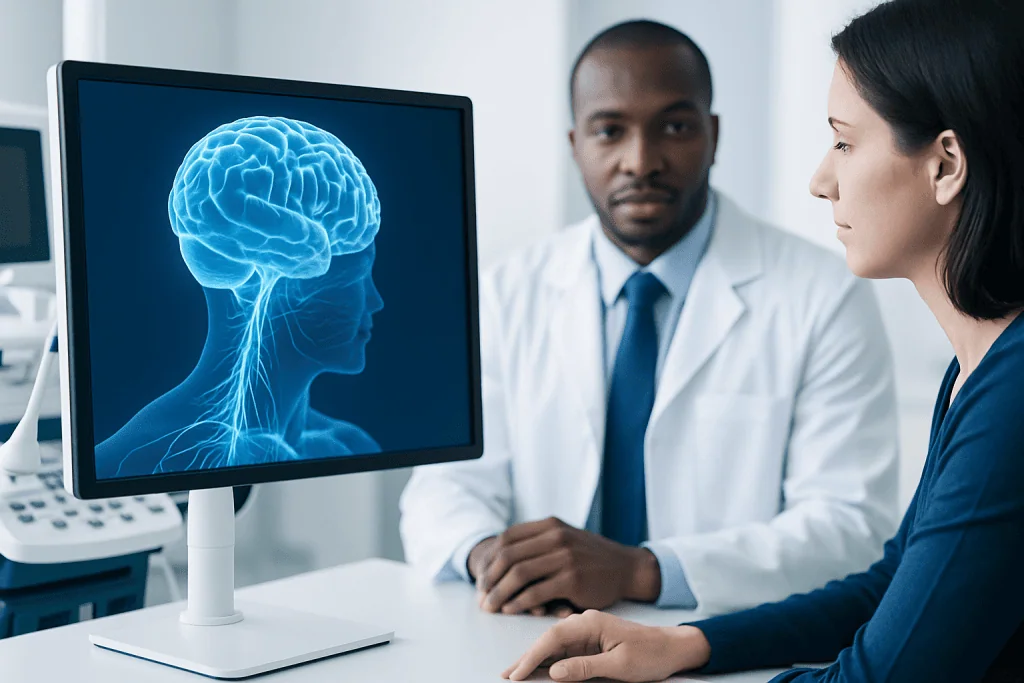
The brain sends signals through specialized cells called neurons. A neuron receives information, processes it, and passes it along to another neuron, muscle, or gland. Signals travel within a neuron as small electrical impulses. When the signal reaches the end of the cell, it triggers the release of chemicals called neurotransmitters.
Neurotransmitters cross a tiny gap between cells known as a synapse. They bind to the next cell and either encourage or reduce its activity. In this way, electrical and chemical communication work together. This system is fast, flexible, and precise, allowing the brain to coordinate everything from reflexes to careful decision-making.
Different neurotransmitters have different roles. Some support alertness, mood, or attention, while others help regulate movement, memory, sleep, and pain signaling. Healthy brain function depends on a careful balance among these chemical messengers. If communication is disrupted, symptoms such as weakness, numbness, seizures, memory problems, or changes in mood may occur.
- Electrical impulses carry signals along neurons.
- Synapses allow one cell to communicate with another.
- Neurotransmitters help control how strong or weak a signal becomes.
- Networks of neurons create coordinated brain functions.
Major Parts of the Brain and What They Do

The brain has several major regions, each with important roles. The cerebrum is the largest part and is responsible for conscious thought, language, memory, sensation, and voluntary movement. Its outer layer, the cerebral cortex, helps with planning, reasoning, and interpretation of sensory input. The right and left hemispheres work together, although some functions are more dominant on one side.
The cerebellum, located at the back of the brain, helps control balance, coordination, posture, and the smooth timing of movements. It does not simply move muscles on its own; instead, it fine-tunes movement so that actions are accurate and efficient. The brainstem connects the brain to the spinal cord and controls essential life-sustaining functions such as breathing, swallowing, blood pressure, and wakefulness.
Deeper brain structures also play major roles. The thalamus acts as a relay center for many incoming signals. The hypothalamus helps regulate temperature, hunger, thirst, sleep, and hormone-related functions. The limbic system contributes to emotion and memory. Because these systems are closely connected, a problem in one area may affect several functions at the same time.
How the Brain Controls the Body
The brain constantly receives information from the eyes, ears, skin, muscles, and internal organs. It compares that information with stored experiences, decides what response is needed, and sends output signals through the spinal cord and nerves. For example, when a person touches a hot surface, sensory receptors send a message to the nervous system, and the body quickly pulls away. In many cases, this response begins in the spinal cord before the brain fully processes the event.
Voluntary movements, such as writing or lifting a cup, begin in the motor areas of the brain. Signals travel from the brain through the spinal cord to muscles. At the same time, the cerebellum and sensory pathways provide feedback to help keep the movement smooth and accurate. This coordinated communication is what makes precise motion possible.
The brain also controls involuntary functions without conscious effort. The autonomic nervous system helps regulate heart rate, digestion, sweating, pupil size, and breathing patterns. Hormonal signaling adds another layer of control, especially through communication between the hypothalamus and the endocrine system. This is why brain physiology is closely linked not only to movement and thought, but also to whole-body health.
Brain Plasticity, Learning, and Memory
One of the most remarkable features of brain physiology is plasticity, the brain’s ability to adapt. The brain can strengthen existing connections, weaken unused ones, and form new pathways in response to learning, experience, or recovery after injury. This is how people develop new skills, store memories, and adjust to changing environments.
Learning involves repeated activation of specific neural circuits. With practice, these circuits become more efficient, which is why tasks often feel easier over time. Memory formation depends on coordinated activity in several regions, including the hippocampus and parts of the cerebral cortex. Attention, sleep, and emotional state can all influence how well information is learned and remembered.
Plasticity also plays a role in rehabilitation. After a neurological illness or injury, some patients can improve function through therapy, repetition, and time as the brain reorganizes. When symptoms suggest a structural or functional nervous system problem, doctors may investigate for conditions such as brain tumors or other neurological disorders that can affect normal signaling.
What Can Affect Brain Signaling
Brain signaling can be influenced by many internal and external factors. Short-term changes may occur with lack of sleep, dehydration, stress, infection, alcohol, or certain medications. These factors can reduce concentration, slow reaction time, and affect mood or coordination. In many cases, the effects improve once the underlying issue is addressed.
Longer-lasting problems may result from injury, reduced blood flow, inflammation, metabolic disorders, degenerative disease, or abnormal electrical activity. For example, a stroke can interrupt blood supply to part of the brain, while epilepsy involves episodes of abnormal signaling between neurons. Head trauma may also disrupt brain communication, sometimes temporarily and sometimes more significantly.
Doctors may use neurological examination and tests to better understand altered brain function. Depending on the symptoms, this can include electroencephalography (EEG) to study electrical activity, magnetic resonance imaging (MRI) to look at brain structure, or computed tomography (CT) in urgent situations. These tools do not explain every symptom by themselves, but they can help identify or rule out important causes.
Supporting Healthy Brain Function
Daily habits can make a meaningful difference to brain health. Regular sleep helps the brain restore energy, process memories, and clear metabolic waste. Physical activity supports circulation and overall cardiovascular health, which in turn helps nourish the brain. A balanced diet, enough fluids, and avoiding tobacco also support normal nervous system function.
Mental and social activity are important as well. Reading, learning new skills, conversation, and problem-solving may help keep neural networks active. Managing long-term conditions such as high blood pressure, diabetes, and high cholesterol is also important, because these can affect blood vessels and brain health over time.
Protecting the head matters too. Using seat belts, wearing helmets when appropriate, and reducing fall risk can lower the chance of brain injury. When medical evaluation is needed, multidisciplinary neurology and neurosurgery teams can guide diagnosis and treatment. Acibadem International’s specialists in JCI-accredited hospitals evaluate and treat neurological conditions for international patients when advanced assessment is required.
When to Seek Medical Advice
Many everyday lapses in attention or mild tiredness do not mean there is a serious brain problem. However, some symptoms deserve medical attention, especially if they are sudden, severe, or getting worse. Persistent headaches, repeated fainting, new weakness, numbness, balance problems, major memory changes, or unexplained seizures should be assessed by a qualified doctor.
Emergency care is especially important for signs of stroke or other urgent neurological conditions. Sudden trouble speaking, facial drooping, weakness on one side, severe confusion, or loss of consciousness should never be ignored. Prompt evaluation can be very important for protecting brain tissue and improving outcomes.
If symptoms are ongoing but not urgent, a neurologist may recommend a structured evaluation. This can include a physical and neurological examination, imaging, and tests of nerve or brain function. In some cases, symptoms may be linked to treatable conditions such as epilepsy, sleep disorders, vitamin deficiencies, or hormonal imbalance, so early assessment is often helpful.
Frequently asked questions
What is brain physiology?
Brain physiology is the study of how the brain functions and communicates. It explains how nerve cells send signals, how brain regions work together, and how the brain controls thought, movement, sensation, and automatic body processes.
How does the brain send messages to the body?
The brain sends messages through neurons, which carry electrical impulses. At connections between cells called synapses, chemical messengers known as neurotransmitters pass the signal onward to other neurons, muscles, or glands.
What part of the brain controls breathing and heartbeat?
The brainstem plays a major role in regulating breathing, heart rate, blood pressure, and wakefulness. These are largely automatic functions, meaning they continue without conscious effort.
Can the brain repair itself?
The brain has some ability to adapt through a process called plasticity. While it may not fully repair every injury, it can reorganize pathways and improve function with time, therapy, and supportive care in some situations.
What affects normal brain signaling?
Brain signaling can be affected by sleep loss, dehydration, stress, medications, alcohol, injury, infections, and many medical conditions. Problems with blood flow, inflammation, or abnormal electrical activity can also interfere with normal communication.
When should someone worry about neurological symptoms?
Urgent medical attention is needed for sudden weakness, facial drooping, trouble speaking, seizures, severe confusion, or loss of consciousness. Ongoing headaches, memory changes, numbness, or balance problems should also be discussed with a doctor.
References
- National Institute of Neurological Disorders and Stroke
- National Institute of Mental Health
- MedlinePlus
- Merck Manual Consumer Version
- World Health Organization
This article is for general information only and is not a substitute for professional medical advice. Please consult a qualified doctor about your individual situation.
Heart care in Turkey — expert evaluation and treatment
JCI-accredited · board-certified surgeons · reply within 24h
Add us as a Preferred Source to see more of our trusted health content across Google Search, AI Overviews and Discover.
Check your numbers in seconds
BMI, calories, due date, blood pressure and 30+ more clinical calculators — free, instant, doctor-reviewed ranges.