Brain Tumors: Symptoms, Imaging, and Treatment Planning

Brain tumors can cause headaches, seizures, weakness, vision changes, speech problems, or subtle changes in thinking and behavior. MRI is the main imaging test used to evaluate most suspected brain tumors, often supported by CT, advanced MRI techniques, PET, or other studies.
Key Takeaways
- Brain tumors can cause headaches, seizures, weakness, vision changes, speech problems, or subtle changes in thinking and behavior.
- MRI is the main imaging test used to evaluate most suspected brain tumors, often supported by CT, advanced MRI techniques, PET, or other studies.
- Treatment planning depends on tumor type, grade, location, genetic markers, symptoms, and the person’s overall health.
- Surgery, radiation therapy, systemic medications, and active monitoring may be used alone or in combination.
- Early medical evaluation is important for new seizures, progressive neurological symptoms, or persistent headaches with concerning features.
Brain tumors are abnormal growths in or near the brain that may be benign or malignant, and their symptoms depend on size, type, and location. Careful imaging, tissue diagnosis when needed, and multidisciplinary treatment planning help doctors choose the safest and most effective approach for each patient.
Overview
Brain tumors are abnormal growths that develop within the brain or in nearby structures such as the meninges, cranial nerves, pituitary gland, or skull base. Some brain tumors are benign, meaning they usually grow slowly and do not spread to distant parts of the body. Others are malignant, meaning they can grow more aggressively and invade nearby brain tissue. Even a benign tumor can cause important symptoms if it presses on sensitive brain areas or blocks the normal flow of cerebrospinal fluid.
Brain tumors are often grouped as primary or secondary. Primary brain tumors begin in the brain or surrounding tissues. Examples include gliomas, meningiomas, pituitary adenomas, vestibular schwannomas, and medulloblastomas. Secondary brain tumors, also called brain metastases, start elsewhere in the body and spread to the brain. Common primary cancers that can spread to the brain include lung cancer, breast cancer, melanoma, kidney cancer, and colorectal cancer.
Because the brain controls movement, sensation, language, memory, vision, balance, hormones, and personality, symptoms can vary widely. Diagnosis usually involves neurological examination and imaging, especially magnetic resonance imaging, followed by careful review by specialists. Treatment planning is individualized and may involve neurosurgery, radiation oncology, medical oncology, neurology, neuroradiology, pathology, rehabilitation, and supportive care.
Symptoms of Brain Tumors
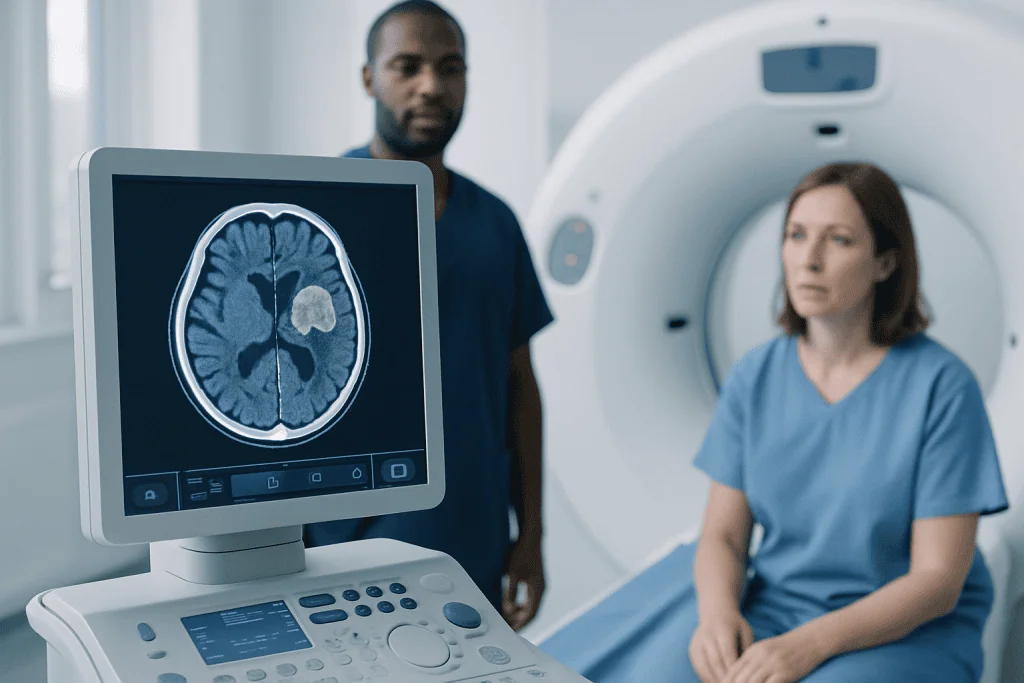
Brain tumor symptoms depend more on the tumor’s location, size, and growth rate than on whether it is benign or malignant. Slowly growing tumors may cause mild or gradual changes that are easy to overlook at first. Faster-growing tumors may cause symptoms that appear over days or weeks. Some tumors are found incidentally when imaging is performed for another reason.
Headache is a common reason people seek medical advice, but most headaches are not caused by brain tumors. A headache related to a brain tumor may be new, persistent, progressively worsening, or associated with vomiting, visual changes, confusion, or neurological symptoms. Seizures are another important possible symptom, particularly when a seizure occurs for the first time in an adult. Seizures may involve full-body shaking, brief staring spells, unusual smells or sensations, speech arrest, or temporary confusion.
Other symptoms can reflect the brain area affected. These may include weakness or numbness on one side of the body, balance problems, double vision, hearing changes, difficulty speaking or understanding words, memory changes, personality changes, sleepiness, or changes in hormone function. Tumors near the pituitary gland may cause menstrual changes, fertility problems, changes in weight, unusual thirst, or vision loss at the sides of the visual field.
Because these symptoms can also occur with stroke, migraine, infections, epilepsy, metabolic problems, and other conditions, medical assessment is needed to identify the cause. The goal is not only to detect a tumor if present, but also to rule out other treatable neurological conditions.
Causes and Risk Factors
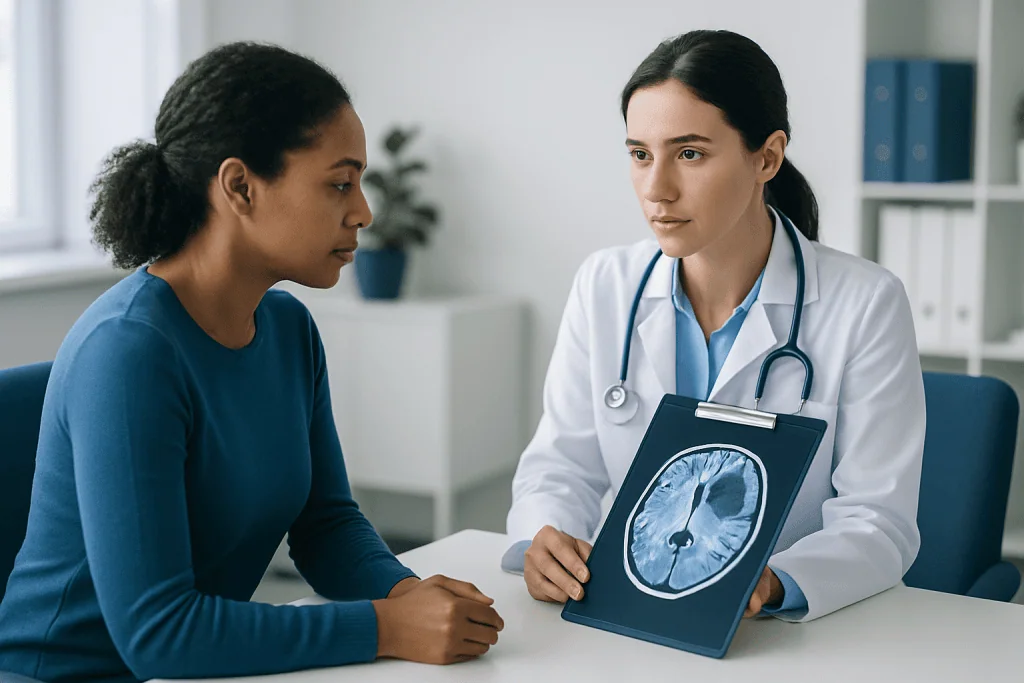
For most primary brain tumors, the exact cause is not known. Tumors develop when cells acquire changes that allow them to grow in an uncontrolled way. These changes may occur by chance during normal cell division or, less commonly, as part of an inherited condition. A person cannot usually identify a specific lifestyle event that caused a brain tumor.
Known risk factors include previous exposure to ionizing radiation to the head, especially at a young age, and certain rare genetic syndromes. These include neurofibromatosis, tuberous sclerosis complex, Li-Fraumeni syndrome, von Hippel-Lindau disease, and some inherited cancer predisposition syndromes. Family history is important in these situations, but most people diagnosed with a brain tumor do not have a strong family history.
Brain metastases have different risk patterns because they are related to cancers that begin elsewhere in the body. In these cases, the biology of the original cancer, its stage, and its response to treatment influence the chance of spread to the brain. People with known cancer who develop new neurological symptoms should promptly discuss them with their oncology team.
There is ongoing research into environmental, occupational, immune, and molecular factors that may influence brain tumor development. Patients should be cautious about unsupported claims that everyday habits or common technologies have been proven to cause brain tumors. Reliable guidance should come from qualified clinicians and authoritative cancer organizations.
Diagnosis and Imaging
Diagnosis begins with a medical history and neurological examination. The doctor asks about symptoms, timing, past medical problems, medications, cancer history, and family history. A neurological exam may assess strength, sensation, reflexes, coordination, walking, eye movements, vision, speech, memory, and mental status. These findings help determine which imaging tests are needed and how urgently they should be performed.
Magnetic resonance imaging, or MRI, is the main imaging method for most suspected brain tumors. MRI provides detailed pictures of the brain and can show tumor location, size, swelling, relationship to important structures, and patterns of contrast enhancement. Different MRI sequences help distinguish tumor tissue from edema, bleeding, cysts, infection, demyelination, or stroke. When MRI cannot be performed, computed tomography, or CT, may be used, especially in emergency settings or to detect bleeding, calcification, or bone involvement.
Advanced imaging may support treatment planning. Functional MRI can help identify brain areas involved in language or movement before surgery. Diffusion tensor imaging can map important white matter pathways. MR spectroscopy, perfusion MRI, and positron emission tomography may provide additional information about tumor activity, although they do not always replace tissue diagnosis. For some tumors, imaging of the spine or the rest of the body may be recommended.
A biopsy or surgical removal is often needed to confirm the exact diagnosis. Pathologists examine the tissue under a microscope and may perform molecular testing. Modern brain tumor classification increasingly uses genetic and molecular markers, such as IDH mutation status or other tumor-specific features, because these markers can influence prognosis and treatment choices.
Treatment Planning
Treatment planning for a brain tumor is highly individualized. Doctors consider the tumor type, grade, molecular features, size, location, number of lesions, growth pattern, symptoms, and whether the tumor is primary or metastatic. They also consider the patient’s age, general health, neurological function, personal goals, and previous treatments. The aim is to control the tumor while preserving brain function and quality of life as much as possible.
A multidisciplinary tumor board may review imaging, pathology, and clinical details to recommend a coordinated plan. In many cases, the first key decision is whether immediate treatment is needed or whether careful monitoring is appropriate. Some small, slow-growing, asymptomatic tumors, such as certain meningiomas or vestibular schwannomas, may be followed with scheduled MRI scans before intervention is considered.
When treatment is needed, planning includes weighing potential benefits and risks. For a tumor near areas that control speech, movement, vision, or memory, preserving function is central to decision-making. Techniques such as neuronavigation, intraoperative monitoring, awake brain mapping, stereotactic radiosurgery, and highly focused radiation may be considered depending on the case.
Patients are encouraged to ask what is known about the diagnosis, what remains uncertain, what treatment options exist, and how each option may affect daily life. A clear plan should also include symptom control, rehabilitation if needed, seizure management when appropriate, follow-up imaging, and support for emotional and practical concerns.
Treatment Options
Surgery is often considered when a tumor can be safely removed or when tissue is needed for diagnosis. The goals may include removing as much tumor as safely possible, relieving pressure, improving symptoms, and obtaining tissue for pathology and molecular testing. In some cases, complete removal is possible. In others, a partial removal or biopsy is safer because the tumor is close to critical brain areas.
Radiation therapy may be used after surgery, instead of surgery, or for tumors that cannot be removed safely. External beam radiation treats a defined area over multiple sessions, while stereotactic radiosurgery delivers highly focused radiation to selected small targets. The choice depends on tumor type, size, number, location, and prior treatments. Radiation planning is carefully designed to protect healthy brain tissue as much as possible.
Systemic treatments include chemotherapy, targeted therapy, immunotherapy, hormone-related therapy for selected pituitary tumors, or other medicines depending on the tumor type. For some gliomas, chemotherapy may be combined with radiation. For brain metastases, treatment may depend on the original cancer and whether effective targeted or immune-based therapies are available. Supportive medicines may be used to reduce swelling, control seizures, treat nausea, or manage pain, but they should be taken only as directed by a doctor.
Rehabilitation and supportive care are important parts of treatment. Physical therapy, occupational therapy, speech and language therapy, neuropsychology, nutrition support, and counseling can help patients maintain independence and adapt to changes. Follow-up care typically includes regular neurological assessment and repeat imaging to monitor response or detect recurrence.
Prevention, Self-Care, and Living With a Diagnosis
There is no proven way to prevent most primary brain tumors. General cancer-prevention habits remain valuable for overall health, such as avoiding tobacco, limiting alcohol, maintaining a balanced diet, staying physically active when possible, and following recommended cancer screening for other organs. People with inherited syndromes or a strong family history may benefit from genetic counseling and individualized surveillance plans.
Self-care after diagnosis focuses on safety, symptom control, and maintaining daily function. Patients should discuss driving, work, exercise, travel, and seizure precautions with their care team. They should keep a current medication list, report new symptoms promptly, attend follow-up imaging appointments, and avoid stopping prescribed medicines suddenly without medical advice.
Helpful practical steps may include:
- Keeping a symptom diary, including headaches, seizures, vision changes, or weakness.
- Bringing a family member or trusted person to appointments to help remember information.
- Preparing questions before each visit and asking for explanations in plain language.
- Discussing fertility, pregnancy, work duties, or travel plans before treatment begins when relevant.
- Seeking emotional support through counseling, patient support groups, or social work services.
International patients may need coordinated scheduling for imaging, specialist consultations, surgery, radiation, or follow-up care. Acibadem International’s multidisciplinary specialists and JCI-accredited hospitals diagnose and treat brain tumors for international patients, with care plans coordinated according to individual medical needs.
When to See a Doctor
Medical evaluation is recommended for new, persistent, or progressively worsening neurological symptoms. These include first-time seizure, weakness or numbness on one side of the body, ongoing balance problems, double vision, speech difficulty, new confusion, personality change, or significant memory problems. Prompt assessment is also important for a new type of headache that is worsening over time or associated with vomiting, fever, drowsiness, vision changes, or neurological signs.
People already diagnosed with cancer should inform their oncology team about any new neurological symptom, even if it seems mild. Early evaluation can help determine whether symptoms are due to brain involvement, treatment side effects, infection, blood clots, metabolic changes, or another cause. Imaging may be recommended depending on the clinical situation.
Emergency care is needed for sudden severe headache, seizure that does not stop, repeated seizures, sudden weakness, loss of consciousness, severe confusion, or symptoms suggestive of stroke. These situations require urgent assessment because rapid treatment may protect brain function and overall health.
Frequently asked questions
Are all brain tumors cancer?
No. Some brain tumors are benign and may grow slowly, while others are malignant and more aggressive. However, even benign tumors can cause symptoms if they press on important brain structures or block fluid pathways. A doctor uses imaging and, when needed, tissue testing to determine the exact type.
What is the best imaging test for a brain tumor?
MRI is usually the preferred test because it provides detailed images of brain tissue and tumor characteristics. CT may be used in emergencies, when MRI is not possible, or to evaluate bleeding, calcification, or bone changes. Advanced MRI techniques can also support surgical and radiation planning.
Does a headache mean someone has a brain tumor?
Most headaches are not caused by brain tumors. A headache is more concerning when it is new, persistent, progressively worsening, or linked with vomiting, seizures, vision changes, confusion, or weakness. A qualified doctor can decide whether neurological examination and imaging are needed.
Is surgery always required for a brain tumor?
Not always. Some small, slow-growing tumors may be monitored with regular MRI scans if they are not causing symptoms. Surgery may be recommended to remove the tumor, relieve pressure, or obtain tissue for diagnosis when the expected benefits outweigh the risks.
How do doctors choose between surgery, radiation, and medication?
Doctors consider the tumor type, grade, molecular markers, location, size, symptoms, and the patient’s overall health. Some tumors are treated with one method, while others require a combination of surgery, radiation therapy, and systemic treatment. A multidisciplinary review helps align treatment with safety and long-term goals.
Can people return to normal activities after brain tumor treatment?
Many people return to daily activities, but recovery varies depending on the tumor, treatment, and neurological effects. Rehabilitation, seizure control, follow-up imaging, and gradual activity planning can support recovery. Patients should ask their care team about driving, work, exercise, and travel before resuming them.
References
- World Health Organization
- National Cancer Institute
- European Association of Neuro-Oncology
- American Society of Clinical Oncology
- National Comprehensive Cancer Network
This article is for general information only and is not a substitute for professional medical advice. Please consult a qualified doctor about your individual situation.
Brain Tumors in Turkey — costs, top hospitals & a free quote
JCI-accredited · board-certified surgeons · reply within 24h
Add us as a Preferred Source to see more of our trusted health content across Google Search, AI Overviews and Discover.

Medical Oncology Department
Medical treatment of cancer with chemotherapy, immunotherapy and targeted therapies under a multidisciplinary tumor board.
60 specialists in this unit