

Bruxism and Tooth Wear: Early Signs, Causes, and When to Seek Care

Bruxism can happen while awake or during sleep, and many people do not realize they are doing it. Early signs include tooth sensitivity, jaw soreness, headaches, flattened teeth, and cracked dental work.
Key Takeaways
- Bruxism can happen while awake or during sleep, and many people do not realize they are doing it.
- Early signs include tooth sensitivity, jaw soreness, headaches, flattened teeth, and cracked dental work.
- Stress, sleep problems, bite issues, certain medicines, and lifestyle factors may contribute to grinding or clenching.
- Treatment focuses on protecting teeth, reducing triggers, and addressing related dental, muscle, or sleep problems.
- A dentist should assess persistent jaw pain, visible tooth damage, or frequent morning headaches.
Bruxism is the repeated grinding or clenching of the teeth, often during sleep, and it can gradually wear teeth down. Recognizing early signs and getting timely dental advice can help relieve symptoms and protect the teeth, jaw joints, and surrounding muscles.
Overview
Bruxism means grinding, gnashing, or clenching the teeth. It may happen during the day while a person is awake or at night during sleep. Some people notice that they clench when concentrating, stressed, or anxious, while others only learn about it after a dentist sees wear on the teeth or a sleep partner hears grinding sounds.
Tooth wear is one of the most common effects of bruxism. Over time, repeated pressure can flatten the biting surfaces, chip enamel, crack fillings or crowns, and make teeth more sensitive. In some cases, the strain also affects the jaw muscles and the temporomandibular joints, often called the TMJ.
Bruxism is common and can affect children, teens, and adults. It is not always a sign of a serious disease, but it should not be ignored when it causes pain, disturbed sleep, or progressive tooth damage. Early care is helpful because enamel does not grow back once it is lost.
A dental evaluation can identify whether the wear pattern looks consistent with grinding and whether other problems are contributing. In many cases, the most helpful plan combines tooth protection, trigger management, and regular monitoring through general dentistry care.
Early Signs and Symptoms
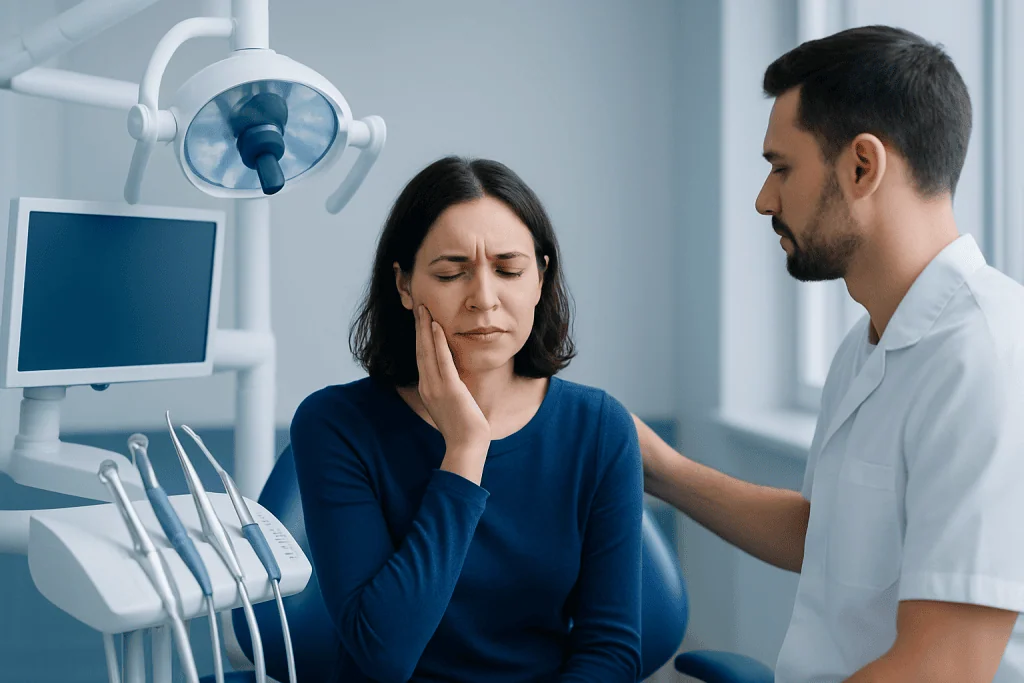
The early signs of bruxism can be subtle. A person may wake with tight jaw muscles, dull headaches near the temples, or a feeling that the teeth do not rest comfortably together. Some people notice clicking in the jaw, mild facial pain, or increased sensitivity to hot, cold, or sweet foods as the enamel thins.
Tooth changes may appear gradually. The edges of the teeth can become flatter, shorter, or more translucent. Small chips may develop, and fillings, veneers, or crowns may loosen or crack under repeated pressure. In more advanced cases, grooves, fractures, or exposed dentin may be visible.
Common symptoms and clues include:
- Morning jaw soreness or stiffness
- Headaches, especially after waking
- Tooth sensitivity without obvious decay
- Flattened, worn, or chipped teeth
- Tight neck or shoulder muscles
- Grinding noises during sleep reported by a partner
- Indentations along the tongue or inside of the cheeks from clenching
Not every case causes pain. Some people feel well but have clear dental wear that only a dentist can detect during a routine exam. That is one reason regular checkups are important, even when symptoms seem mild.
Causes and Risk Factors

Bruxism does not have one single cause. It is usually linked to a combination of physical, emotional, and sleep-related factors. Stress and anxiety are well-known triggers, especially for awake bruxism. During periods of pressure or poor sleep, some people clench their jaws without realizing it.
Sleep bruxism is often considered a sleep-related movement activity. It may occur more often in people who snore, have obstructive sleep apnea, or have restless sleep. Certain lifestyle habits, such as excess caffeine, alcohol, tobacco, and stimulant use, may increase the likelihood of grinding in some individuals.
Other factors can include:
- Misaligned teeth or a bite that does not feel balanced
- Missing teeth or unstable dental restorations
- Some medicines, especially those that affect the nervous system
- Neurological conditions, though these are less common causes
- Family history of teeth grinding
- Emotional tension, frustration, or intense concentration
Tooth wear can also happen for reasons other than bruxism, including acid erosion from reflux, frequent acidic drinks, or aggressive brushing. A dentist may need to distinguish between grinding wear and other causes, because the treatment approach can differ. If grinding is confirmed, a targeted assessment for bruxism treatment may be recommended.
How Dentists Diagnose Bruxism and Tooth Wear
Diagnosis usually begins with a detailed history and dental examination. The dentist may ask about jaw pain, headaches, sleep quality, stress, and whether a partner has heard grinding at night. They will also look closely at the teeth, gums, tongue, cheek lining, and jaw movement.
Typical exam findings include flattened tooth surfaces, enamel cracks, broken restorations, muscle tenderness, and signs of pressure along the jaw joints. Photographs, dental impressions, or digital scans may be used to track changes over time and compare wear patterns from one visit to the next.
Sometimes, additional tests are needed. Dental X-rays can help assess cracks, bone support, and problems below the surface. If symptoms suggest a sleep disorder, the patient may be referred for sleep evaluation. If facial pain is complex, the dentist may also consider other causes such as tooth infection, sinus issues, or TMJ disorders.
Diagnosis is not only about confirming grinding. It also involves measuring how much damage has already occurred and planning how to prevent more. In some cases, worn or broken areas may need repair with dental fillings or other restorative care, depending on the tooth structure that remains.
Treatment Options
Treatment depends on the severity of symptoms, the amount of tooth wear, and the likely triggers. The first goal is to protect the teeth. A custom-made night guard or occlusal splint is often used for sleep bruxism. These devices do not always stop grinding completely, but they can reduce direct tooth-on-tooth damage and lessen strain on restorations.
Managing contributing factors is equally important. Stress reduction, sleep hygiene, and awareness techniques for daytime clenching may help. A person with awake bruxism may be encouraged to check their jaw position during the day and relax the muscles so the lips are together while the teeth are apart. If a medicine may be contributing, the prescribing clinician can review options.
When teeth are already damaged, restorative treatment may be needed to rebuild shape and function. Depending on the situation, options can range from bonding and fillings to more extensive repair with dental crowns. If missing or severely damaged teeth affect the bite, broader treatment planning may be necessary.
Jaw muscle discomfort can sometimes improve with warm compresses, gentle stretching, a soft-food period, and guidance from a dentist or physician. If there is suspicion of sleep apnea, specialist care is important because treating the sleep disorder may also help the bruxism. Treatment is most effective when it addresses both the dental damage and the underlying triggers.
Prevention and Self-care
Bruxism cannot always be fully prevented, but simple habits may reduce its impact. Good sleep routines, regular dental visits, and awareness of jaw tension can make a meaningful difference. During the day, many people benefit from checking whether they are clenching while working, driving, or using screens.
Helpful self-care measures include:
- Limiting caffeine later in the day
- Reducing alcohol and tobacco use
- Practicing relaxation techniques before bed
- Avoiding chewing gum or very hard foods if the jaw is sore
- Using any prescribed night guard consistently
- Keeping follow-up appointments to monitor wear
Protecting enamel is also important. Brushing gently with a soft toothbrush, using fluoride toothpaste, and managing acid exposure from soft drinks or reflux can help reduce additional tooth damage. If sensitivity develops, a dentist may suggest desensitizing products or protective dental treatments.
For people with recurring tooth wear, routine care through dental hygiene visits and examinations can help spot small changes before they become larger problems. Prevention is often more comfortable, simpler, and less costly than rebuilding teeth after significant wear has occurred.
When to Seek Care
A person should seek dental care if they have ongoing jaw pain, regular morning headaches, noticeable tooth sensitivity, or visible flattening, chipping, or cracking of the teeth. It is also sensible to book an appointment if a partner reports frequent nighttime grinding or if old fillings and crowns keep breaking.
Prompt evaluation is especially important when symptoms interfere with eating, speaking, or sleep, or when the jaw locks or is difficult to open. Severe tooth pain is not always caused by cavities; sometimes a crack related to grinding may be responsible. Early assessment can help preserve more of the natural tooth.
Urgent care may be needed for sudden tooth fracture, swelling, severe pain, or trauma to the mouth. In these situations, a dentist can determine whether emergency treatment is required and whether problems such as pulp injury or infection are present.
International patients seeking assessment may benefit from centers with coordinated dental services. Near the end of the care pathway, it may be reassuring to know that Acibadem International’s multidisciplinary specialists and JCI-accredited hospitals evaluate and treat dental conditions for international patients, from diagnosis to restorative planning when appropriate.
Frequently asked questions
What is the difference between bruxism and normal tooth wear?
Some tooth wear happens naturally with age, but bruxism usually causes a more noticeable pattern of flattening, chipping, cracking, or sensitivity. It may also be linked with jaw soreness, headaches, and muscle tension. A dentist can tell whether the wear looks typical or suggests grinding or clenching.
Can bruxism happen without pain?
Yes. Many people with bruxism do not feel pain, especially in the early stages. The first signs may be visible tooth wear, broken dental work, or grinding sounds during sleep rather than discomfort.
Does a night guard stop grinding completely?
A night guard mainly protects the teeth and may reduce strain on the jaw muscles and dental restorations. It does not always stop the grinding itself. That is why dentists often combine it with stress management, sleep assessment, and treatment of any related dental problems.
Can stress really cause teeth grinding?
Stress and anxiety are common contributors, especially for daytime clenching. They are not the only causes, but emotional tension can increase muscle activity in the jaw. Learning relaxation techniques and becoming aware of clenching habits can be helpful.
Is tooth wear from bruxism reversible?
Lost enamel does not grow back on its own. However, dentists can often protect worn teeth and restore shape or function when needed. Early care is important because smaller problems are usually easier to manage than advanced wear.
Should children be checked for bruxism too?
Yes, children can grind their teeth, especially during sleep. In many cases it improves with time, but a dental check is worthwhile if there is pain, tooth damage, poor sleep, or concerns about the bite. A dentist can advise whether monitoring or treatment is needed.
References
- American Dental Association
- National Institute of Dental and Craniofacial Research
- Mayo Clinic
- National Health Service
- American Academy of Sleep Medicine
This article is for general information only and is not a substitute for professional medical advice. Please consult a qualified doctor about your individual situation.
Bruxism in Turkey — costs, top hospitals & a free quote
JCI-accredited · board-certified surgeons · reply within 24h
Add us as a Preferred Source to see more of our trusted health content across Google Search, AI Overviews and Discover.

Dental & Oral Health
Full-scope dental care from implants and aesthetics to oral and maxillofacial surgery.
158 specialists in this unitRelated Treatments
More from the Health Library



Related Specialists

Assoc. Prof. Dr. Ferit Bayram
Oral & Dental Health
Assoc. Prof. Dr. Yeliz Çavuşoğlu Yüce
Oral & Dental Health
Assoc. Prof. Dr. Mutlu Keskin
Oral & Dental Health
Prof. Dr. Ülkü Noyan
Oral & Dental Health