Bulging Disc: A Complete Medical Overview

A bulging disc is not the same as a herniated disc, although the two conditions can overlap. Many bulging discs cause no symptoms and are found incidentally on imaging.
Key Takeaways
- A bulging disc is not the same as a herniated disc, although the two conditions can overlap.
- Many bulging discs cause no symptoms and are found incidentally on imaging.
- Conservative treatment such as activity modification, physical therapy, and pain relief is often effective.
- Urgent medical assessment is important for severe weakness, loss of bladder or bowel control, or numbness around the groin.
- Posture, regular movement, core strength, and safe lifting habits may help reduce strain on the spine.
A bulging disc happens when a spinal disc extends beyond its usual boundary, often as part of age-related wear and tear. It may cause no symptoms at all, or it can lead to back or neck pain and, if nearby nerves are irritated, arm or leg symptoms that may need medical evaluation.
Overview
A bulging disc is a spinal disc that extends outward beyond its normal edge. Discs sit between the bones of the spine and act as cushions, helping absorb shock and support movement. A bulging disc often develops gradually as part of aging or repeated strain, and in many people it does not cause symptoms.
The term can sound concerning, but a bulging disc does not always mean serious damage. Some people learn they have one only after imaging done for another reason. Symptoms depend less on the disc shape itself and more on whether nearby nerves, the spinal canal, or surrounding tissues become irritated.
A bulging disc is different from a herniated disc. With a bulge, the disc broadly extends outward while the outer layer remains relatively intact. In a herniation, part of the inner disc material pushes further through a weaker area. If a person is also comparing related spinal conditions, herniated disc may be discussed separately during medical evaluation.
Symptoms of a Bulging Disc
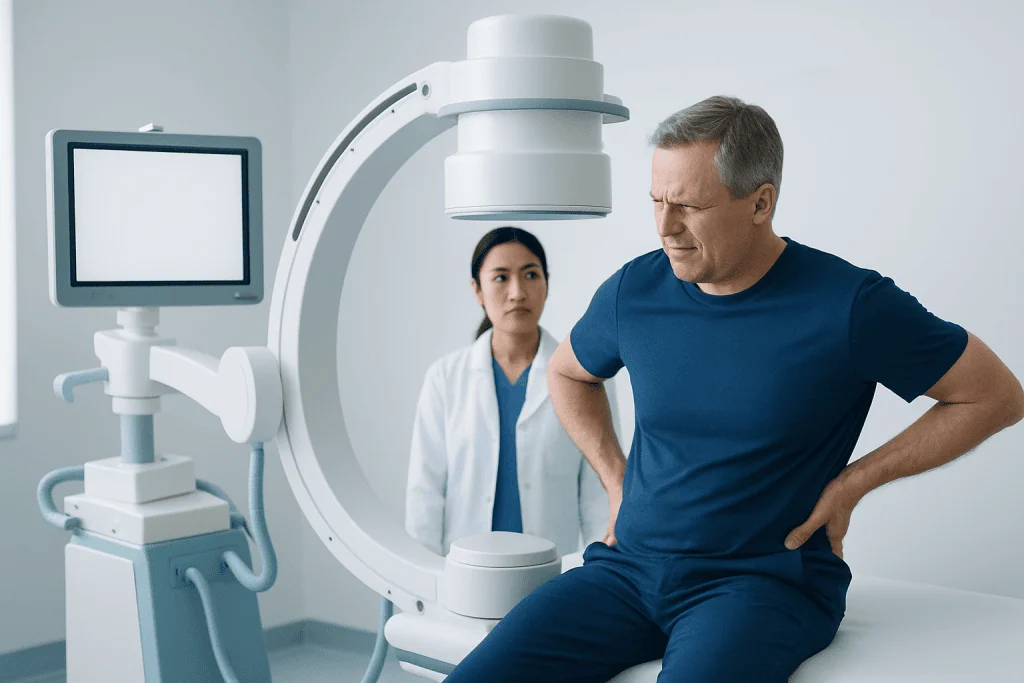
Many bulging discs cause no symptoms. When symptoms do occur, they often depend on the location of the disc. A bulging disc in the lower back may cause low back pain, buttock pain, or pain that travels into the leg. A bulging disc in the neck may cause neck pain, shoulder discomfort, or symptoms that move into the arm or hand.
Common symptoms can include aching, stiffness, reduced flexibility, muscle spasm, and pain that worsens with sitting, bending, coughing, or lifting. If a nearby nerve is irritated, there may also be numbness, tingling, burning pain, or weakness in an arm or leg. Some people notice symptoms on only one side of the body.
The severity of symptoms does not always match the appearance on a scan. A small bulge in a sensitive location can cause significant discomfort, while a larger bulge may cause very little. Persistent or changing symptoms should be assessed by a qualified clinician, especially if walking, sleep, work, or daily function becomes difficult.
Why Bulging Discs Happen
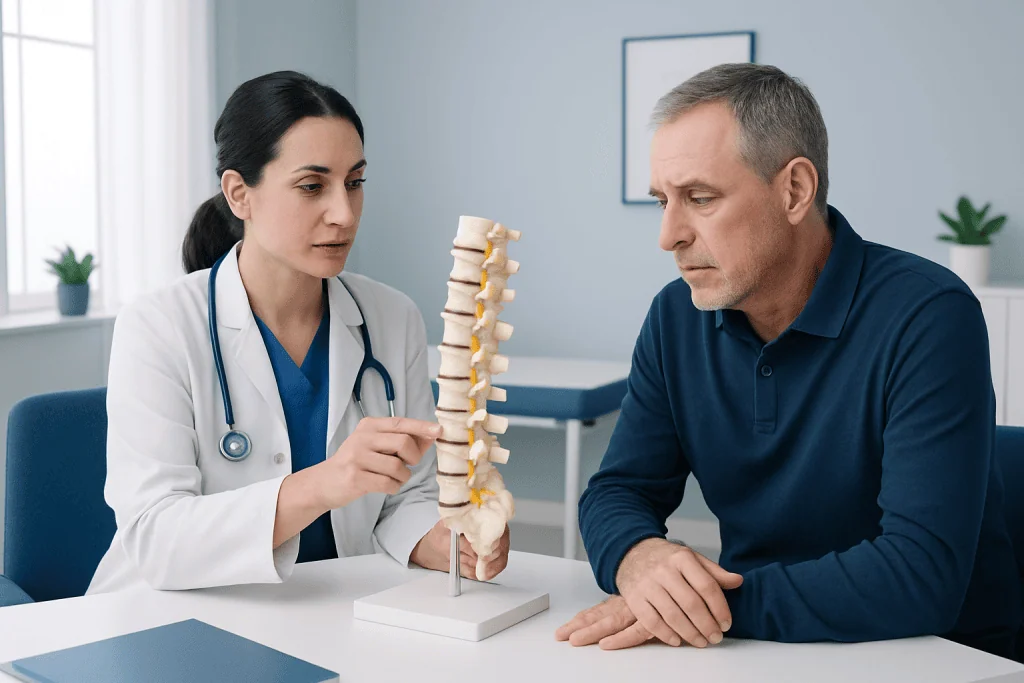
Spinal discs naturally change over time. With age, they tend to lose water content and become less flexible, making them more likely to flatten or bulge. This age-related wear is often called disc degeneration and is one of the most common reasons a bulging disc is seen on imaging.
Other factors can place extra stress on the spine. These include repetitive bending or twisting, heavy lifting with poor technique, prolonged sitting, deconditioning, smoking, excess body weight, and certain physically demanding occupations. Sudden strain may also trigger symptoms in a disc that has already weakened over time.
Not everyone with these risk factors develops symptoms, and not all back or neck pain comes from a bulging disc. Other spinal problems can cause similar complaints, including muscle strain, arthritis, spinal narrowing, or scoliosis in some patients. A careful medical assessment helps identify the most likely cause.
How Doctors Diagnose a Bulging Disc
Diagnosis usually begins with a medical history and physical examination. The clinician asks about the location of pain, what makes it better or worse, whether symptoms travel into an arm or leg, and whether there is numbness or weakness. The examination may include checking posture, range of motion, strength, reflexes, sensation, and walking pattern.
Imaging is not always needed right away, especially if symptoms are mild and there are no warning signs. If symptoms are severe, persistent, recurrent, or suggest nerve compression, a doctor may recommend imaging. MRI is often the most useful test because it shows discs, nerves, and soft tissues clearly. In some situations, CT scans or X-rays may also be used to assess the spine.
It is important to interpret imaging results in context. Many healthy adults have disc bulges on scans without pain. For that reason, treatment decisions are usually based on the full clinical picture rather than on imaging alone. If diagnosis is uncertain or a procedure is being considered, additional neurological or specialist evaluation may be recommended.
Treatment Options
Most people with a bulging disc improve with conservative care. Early treatment often focuses on relative rest rather than complete bed rest, gentle movement, and avoiding activities that sharply worsen symptoms. A doctor may suggest short-term pain relief strategies, heat or cold therapy, and a gradual return to normal activity as tolerated.
Physical therapy is a common part of treatment. Therapy may help improve posture, flexibility, core strength, and movement patterns that reduce stress on the spine. Guided exercises can also support recovery and lower the risk of future flare-ups. In some patients, a doctor may consider image-guided injections to help manage inflammation and pain.
If symptoms continue despite nonsurgical care, or if there is significant nerve compression, specialist treatment may be needed. Depending on the underlying problem, options can include physical therapy and rehabilitation, pain management, or evaluation by a spine team for spine surgery. Surgery is usually reserved for selected cases, such as persistent disabling pain, progressive weakness, or specific structural compression seen on imaging.
Prevention and Self-care
Although not every bulging disc can be prevented, healthy habits may reduce strain on the spine. Regular physical activity helps maintain flexibility and muscle support, especially in the core and back. Walking, swimming, and structured exercise programs are often well tolerated, though any activity plan should match a person’s symptoms and overall health.
Spine-friendly body mechanics are also important. Lifting with the legs rather than the back, avoiding sudden twisting while carrying weight, and changing position regularly during prolonged sitting can help. A workstation that supports neutral posture may be useful for people who spend long hours at a desk.
Other practical steps include maintaining a healthy weight, not smoking, and building gradual strength rather than doing too much too quickly after a period of inactivity. People with recurring symptoms may benefit from professional guidance on exercise technique and ergonomics to help prevent repeated flare-ups.
When to Seek Medical Care
Medical advice is recommended if back or neck pain lasts more than a few weeks, keeps returning, or interferes with sleep, work, walking, or usual activities. Care is also important if pain travels into an arm or leg, or if there is numbness, tingling, or weakness. These symptoms may suggest irritation or compression of a nerve.
Urgent medical attention is needed for warning signs such as loss of bladder or bowel control, numbness in the groin or saddle area, rapidly worsening weakness, severe trouble walking, or pain after major trauma. Fever, unexplained weight loss, or a history of cancer are also reasons for prompt evaluation because they may point to causes other than a disc problem.
If symptoms are ongoing, specialists in spine health, neurology, orthopedics, rehabilitation, and pain medicine may work together to guide diagnosis and treatment. Acibadem International’s multidisciplinary specialists and JCI-accredited hospitals diagnose and treat spinal conditions for international patients when advanced evaluation is needed.
Frequently asked questions
Is a bulging disc the same as a herniated disc?
No. A bulging disc generally means the disc extends outward more broadly, while a herniated disc usually involves a more focal protrusion of inner disc material through a weaker area. The terms are sometimes used loosely in everyday conversation, but doctors distinguish them because they can behave differently.
Can a bulging disc heal on its own?
Symptoms from a bulging disc often improve over time, especially with conservative care such as activity modification and exercise-based rehabilitation. The disc may not return completely to its earlier shape, but pain and nerve irritation can settle. Recovery varies depending on the disc location, symptom severity, and overall spine health.
How long does recovery from a bulging disc usually take?
Many people start to feel better within days to weeks, though some need longer for symptoms to ease. Recovery can be slower when nerve irritation is present or when symptoms have been ongoing for a long time. A clinician can give more individualized guidance based on examination findings and imaging, if performed.
What activities should be avoided with a bulging disc?
Activities that sharply worsen pain should usually be limited for a time, especially heavy lifting, repetitive bending, twisting, or prolonged sitting in poor posture. Complete bed rest is generally not advised because gentle movement often supports recovery. A physical therapist can help identify safer ways to stay active.
Does every bulging disc need surgery?
No. Most bulging discs are treated without surgery. Surgery is typically considered only when symptoms remain severe despite conservative care, or when there is progressive weakness, major nerve compression, or certain urgent neurological warning signs.
Can a bulging disc cause leg or arm pain?
Yes. If the bulging disc irritates or compresses a nearby nerve, pain may travel into the leg from the lower back or into the arm from the neck. Tingling, numbness, or weakness can occur along the same nerve pathway.
References
- National Institute of Arthritis and Musculoskeletal and Skin Diseases
- American Academy of Orthopaedic Surgeons
- National Institute of Neurological Disorders and Stroke
- Mayo Clinic
- North American Spine Society
This article is for general information only and is not a substitute for professional medical advice. Please consult a qualified doctor about your individual situation.
Joint and spine care in Turkey — expert assessment & treatment
JCI-accredited · board-certified surgeons · reply within 24h
Add us as a Preferred Source to see more of our trusted health content across Google Search, AI Overviews and Discover.

More from the Health Library

Hell’s itch: Symptoms, Causes, and Treatment — Complete Patient Guide
Prostate: What Patients Need to Know

Cat Allergies: An Evidence-Based Guide for Patients

Vastus Lateralis: A Complete Medical Overview

Heat Intolerance: A Complete Medical Overview