At Home Flu Test: An Evidence-Based Guide for Patients

An at home flu test can provide quick results, but it does not detect every case of influenza. Testing works best when done exactly as directed and early in the illness window recommended by the manufacturer.
Key Takeaways
- An at home flu test can provide quick results, but it does not detect every case of influenza.
- Testing works best when done exactly as directed and early in the illness window recommended by the manufacturer.
- A negative result does not always rule out flu, especially if symptoms strongly suggest infection.
- People at higher risk for complications may need medical advice quickly, even if a home test is negative.
- Emergency warning signs such as breathing difficulty, confusion, or chest pain need urgent medical care.
An at home flu test can be a useful way to check for influenza when symptoms begin, especially in the first few days of illness. It may help people decide when to isolate, contact a clinician, or seek prompt treatment, but results should always be interpreted in context.
Overview: what an at home flu test can tell patients
An at home flu test is designed to detect influenza viruses from a nasal sample without visiting a clinic or laboratory. For many patients, the main benefit is speed: it may provide an answer within minutes and help guide early decisions about staying home, limiting contact with others, and contacting a healthcare professional if symptoms are significant.
These tests are most helpful when a person has symptoms that fit influenza, such as sudden fever, cough, body aches, tiredness, headache, chills, or sore throat. Some products detect influenza A and influenza B, while some combination tests may also check for other respiratory infections. The exact performance of a test can vary by brand, by how early the sample is collected, and by whether instructions are followed closely.
Importantly, an at home flu test is a screening tool, not a complete medical evaluation. A positive result can support a diagnosis of flu, but a negative result does not always exclude it. When symptoms are severe, when someone is at higher risk for complications, or when there is uncertainty about the result, a clinician may recommend further assessment or confirmatory testing.
How home flu tests work and when to use one

Most home flu tests use a swab from the front of the nose or deeper inside the nostrils, depending on the product. The sample is placed into a solution or test device that looks for pieces of the influenza virus. Some tests use rapid antigen methods, while others may use molecular technology. Molecular tests can be more sensitive, but all home tests have limitations.
In general, testing is most useful when symptoms have started recently, especially within the time frame listed on the package insert. Viral levels are often higher early in the illness, which may improve the chance of detection. If a person waits too long, the test may be less likely to pick up the virus even if flu is the true cause of symptoms.
Home testing may be especially practical for people who cannot easily get same-day care, who want early guidance about isolation, or who live with people at higher risk from respiratory infections. However, a home test should not delay medical advice for someone who may benefit from prompt antiviral treatment, including older adults, pregnant people, very young children, and patients with chronic heart, lung, kidney, or immune-related conditions.
Because flu symptoms can overlap with other infections, a home test does not replace a broader clinical assessment. If symptoms raise concern for a lower respiratory infection or another condition, a clinician may consider related evaluations such as pneumonia assessment or additional respiratory testing.
How accurate is an at home flu test?
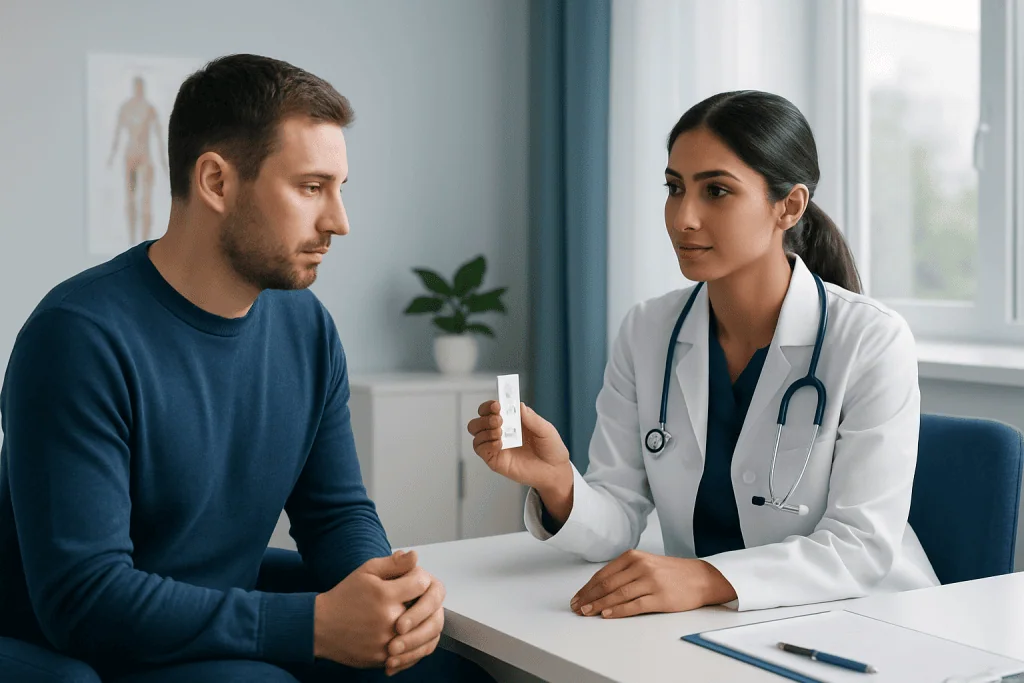
The accuracy of an at home flu test depends on several factors: the type of test, the quality of the sample, the timing of the test, and how common influenza is in the community at that moment. In general, a positive result in someone with typical flu symptoms during flu season is more likely to reflect true infection. A negative result is more complicated and may occur even when the person actually has influenza.
False-negative results can happen if the swab does not collect enough material, if testing is done too early or too late, or if the amount of virus in the nose is low. False-positive results are less common but can also occur. For that reason, patients should not rely only on the test strip or app result; they should also consider how they feel, whether they have been exposed to influenza, and whether they are in a higher-risk group.
It can help to think of a home flu test as one piece of evidence. A positive result may support practical steps such as resting, staying hydrated, avoiding close contact with others, and speaking to a doctor about whether treatment is appropriate. A negative result should be interpreted more cautiously if flu symptoms are strong or worsening, since clinical judgment remains important.
If respiratory symptoms are severe or a clinician suspects another cause, formal evaluation may be needed. Depending on the situation, this could include office-based testing, imaging, or specialist review in fields related to respiratory diseases.
How to use a home flu test correctly
Careful technique improves the chance of getting a meaningful result. Patients should begin by checking that the test has not expired, reading the instructions fully before opening the kit, and washing their hands. If the test requires a smartphone app or timer, it helps to set that up in advance so that the sample can be processed without delay.
When taking the sample, the swab should be used exactly as directed. Some kits require swabbing both nostrils for a set number of rotations. Others specify how long the swab should remain in place. Pressing too lightly, stopping too early, or contaminating the swab can affect the result.
After collecting the sample, the patient should place it into the solution or cartridge as instructed and read the result only within the recommended time window. Looking too early or too late can lead to confusion. If the test shows an invalid result, the safest approach is to repeat it with a new kit if possible or contact a healthcare professional for advice.
- Check the expiration date and storage instructions.
- Follow the timing exactly, including how long to swab and when to read the result.
- Do not share swabs or test components.
- Wash hands before and after testing.
- Repeat or seek medical advice if the result is invalid or does not fit the symptoms.
What to do after a positive or negative result
If the at home flu test is positive, many patients can focus on supportive care at home unless they have risk factors for complications or severe symptoms. Supportive care generally includes rest, fluids, and using over-the-counter medicines as appropriate for fever or body aches, following package directions and personal medical advice. Patients should also take steps to reduce spread, such as staying home when ill, covering coughs, and improving ventilation.
Some people may be candidates for prescription antiviral medication, especially if symptoms started recently and they are at higher risk of complications. This decision depends on age, pregnancy status, medical history, symptom severity, and timing. If symptoms are persistent, severe, or involve breathing problems, a clinician may also evaluate for conditions such as acute bronchitis or other infections.
If the result is negative, the next steps depend on the overall picture. A person with mild symptoms may continue home care, reduce exposure to others, and consider repeating the test if the instructions allow or if symptoms evolve. If symptoms strongly suggest flu, if there has been a known exposure, or if the patient is vulnerable to complications, it is wise to contact a doctor rather than assuming the illness is not influenza.
When in-person care is needed, clinicians may confirm influenza with office-based testing and decide whether other evaluations are needed. In selected cases with ongoing respiratory concerns, further assessment may include chest diseases evaluation or imaging such as computed tomography (CT) if another diagnosis is being considered.
Prevention, self-care, and reducing spread at home
Whether or not a home test confirms influenza, prevention remains important. The seasonal flu vaccine is one of the most effective tools for lowering the risk of serious illness. Good hand hygiene, cough etiquette, cleaning frequently touched surfaces, and staying home when feverish or unwell can also reduce transmission to family members and coworkers.
For self-care, patients should prioritize hydration, rest, and nutrition as tolerated. Warm fluids may soothe the throat, and a cool-mist humidifier can sometimes ease dryness. It is best to avoid smoking and secondhand smoke, which can irritate the airways and worsen cough.
Patients should be cautious about returning to work, school, or social activities too soon. Even when symptoms begin to improve, fatigue can persist for several days. A gradual return to routine, combined with attention to lingering symptoms such as shortness of breath, can support a safer recovery.
If a person frequently experiences severe respiratory infections or has underlying health concerns, preventive planning with a clinician may be helpful before the next flu season. Near the end of the care pathway, some international patients may also seek evaluation through Acibadem International, where multidisciplinary specialists in JCI-accredited hospitals diagnose and treat respiratory and infectious conditions.
When to seek medical care
Patients should seek medical advice promptly if they are at higher risk for flu complications. This includes infants, adults aged 65 and older, pregnant people, individuals with weakened immune systems, and those with chronic conditions such as asthma, heart disease, diabetes, or kidney disease. In these groups, early treatment decisions may matter even if a home test is negative.
Medical evaluation is also important if symptoms are not improving, if high fever persists, or if cough and weakness become more pronounced after initial improvement. Sometimes influenza can lead to dehydration, worsening of chronic illnesses, or secondary infections that need professional care.
Urgent or emergency care is needed for warning signs such as trouble breathing, chest pain, bluish lips, severe dehydration, confusion, seizures, or a child who is difficult to wake. People should also seek immediate help if they feel faint, cannot keep fluids down, or develop rapidly worsening symptoms. A home test result should never override clear signs that urgent assessment is needed.
Frequently asked questions
Can an at home flu test tell the difference between influenza and a cold?
It may help identify influenza, but it does not diagnose every possible cause of cold-like symptoms. Many respiratory viruses can cause fever, cough, sore throat, and body aches, so symptoms can overlap. A negative result does not prove the illness is just a common cold.
When is the best time to take an at home flu test?
Testing is usually most helpful early in the illness, often within the first few days after symptoms begin, depending on the test instructions. That is when the amount of virus in the nose may be higher. Patients should always follow the timing guidance provided with the specific kit.
What does it mean if the home flu test is negative but symptoms feel severe?
A negative result does not always rule out influenza. If symptoms strongly suggest flu, are worsening, or the person is at higher risk for complications, they should contact a healthcare professional. Clinical evaluation may be needed even when the home test is negative.
Should a person still isolate if the at home flu test is positive?
Yes. A positive result suggests influenza may be present, so it is sensible to stay home while sick, avoid close contact with others, and practice cough and hand hygiene. Local public health advice and workplace or school policies may also apply.
Can children use an at home flu test?
Some home flu tests are authorized for children of certain ages, often with adult assistance or supervision. Parents and caregivers should check the product labeling carefully. If a child seems very unwell, has breathing difficulty, or is hard to wake, urgent medical care is needed regardless of test results.
Do home flu tests replace a doctor visit?
Not always. They can be useful for quick information at home, but they do not replace medical assessment when symptoms are severe, unusual, or prolonged. A doctor can evaluate complications, rule out other illnesses, and decide whether antiviral treatment or further testing is needed.
References
- Centers for Disease Control and Prevention
- U.S. Food and Drug Administration
- World Health Organization
- National Institutes of Health
This article is for general information only and is not a substitute for professional medical advice. Please consult a qualified doctor about your individual situation.
Explore treatments in Turkey — costs, top hospitals & a free quote
JCI-accredited · board-certified surgeons · reply within 24h
Add us as a Preferred Source to see more of our trusted health content across Google Search, AI Overviews and Discover.

More from the Health Library

W Sitting: An Evidence-Based Guide for Patients

Black Gums: What Patients Need to Know

Cyst Removal: A Complete Medical Overview
Somogyi Effect: A Complete Medical Overview

Voyeurism: A Complete Medical Overview
Cheese Human Milk — Explained by Medical Evidence, Not Myths
Infectious Diseases & Clinical Microbiology Specialists at Acibadem

Prof. Dr. A. Çağrı Büke
Infectious Diseases & Clinical Microbiology
Dr. Ahmad Nejat Ghaffarı
Infectious Diseases & Clinical Microbiology
Assoc. Prof. Dr. Aslıhan Demirel
Infectious Diseases & Clinical Microbiology
Dr. Aytan Seydalıyeva
Infectious Diseases & Clinical Microbiology