Bulging Eardrum: A Complete Medical Overview

A bulging eardrum most commonly suggests pressure or infection in the middle ear. Symptoms may include ear pain, fever, muffled hearing, fullness, and irritability in children.
Key Takeaways
- A bulging eardrum most commonly suggests pressure or infection in the middle ear.
- Symptoms may include ear pain, fever, muffled hearing, fullness, and irritability in children.
- Doctors diagnose it by examining the ear and sometimes checking hearing or middle ear pressure.
- Treatment may involve observation, pain relief, antibiotics in selected cases, or specialist care if symptoms persist.
- Prompt medical review is important if there is severe pain, ear drainage, high fever, dizziness, or worsening hearing loss.
A bulging eardrum usually happens when fluid, inflammation, or pressure builds up behind the eardrum, most often during a middle ear infection. It is a sign rather than a diagnosis itself, and treatment depends on the cause, the severity of symptoms, and the person’s age and overall health.
What a Bulging Eardrum Means
A bulging eardrum means the thin membrane separating the outer ear from the middle ear is pushed outward. This usually happens because fluid, pus, or air pressure has built up behind it. In many cases, the most likely reason is a middle ear infection, also called otitis media, but other problems can also create pressure in the same space.
This finding matters because the eardrum is not just a barrier; it also plays an important role in hearing. When it becomes swollen or pushed outward, sound may not travel normally, which can cause muffled hearing, a blocked sensation, or discomfort. Some people notice symptoms suddenly, while others feel a gradual increase in pressure over several days.
A bulging eardrum is a clinical sign rather than a condition on its own. In other words, it tells a doctor that something is happening behind the eardrum and that the underlying cause should be identified. Many causes are treatable, and most people recover well with timely and appropriate care.
Common Symptoms and How They Can Feel
The symptoms linked with a bulging eardrum often reflect inflammation or trapped fluid in the middle ear. Ear pain is one of the most common complaints and may range from mild pressure to sharp or throbbing discomfort. Some people also notice hearing that sounds muffled, as if the ear is clogged.
Other symptoms can include a sense of fullness in the ear, popping, ringing, fever, and general unwellness. Young children may not be able to describe ear pressure clearly, so they may tug at the ear, cry more than usual, have trouble sleeping, or seem less interested in feeding. In infants and small children, irritability may be the main sign.
If pressure increases enough, the eardrum can occasionally tear, leading to fluid or pus draining from the ear. Although this can sometimes relieve pain, it still needs medical attention. A person may also feel off balance or briefly dizzy, especially if inflammation affects how the ear handles pressure and sound.
- Ear pain or pressure
- Muffled hearing or reduced hearing
- Fever
- Ear fullness or popping
- Irritability in children
- Drainage from the ear
Why the Eardrum Bulges: Causes and Risk Factors

The most common cause of a bulging eardrum is a middle ear infection. After a cold, flu, sinus infection, or allergy flare, the Eustachian tube can become swollen and stop draining properly. This tube normally helps equalize pressure between the middle ear and the back of the nose. When it is blocked, fluid can collect behind the eardrum, creating pressure and sometimes allowing bacteria or viruses to grow.
Not every bulging eardrum is caused by infection. Sudden pressure changes, severe nasal congestion, and persistent sinusitis can also affect middle ear ventilation. In some cases, fluid remains behind the eardrum without an active infection, especially after a recent illness. This may still make the eardrum look full or outwardly tense on examination.
Children are more prone to this problem because their Eustachian tubes are shorter and more horizontal, which makes drainage less efficient. Other risk factors include exposure to tobacco smoke, frequent upper respiratory infections, seasonal allergies, enlarged adenoids, bottle-feeding while lying flat, and attending daycare where infections spread more easily. Adults can also develop a bulging eardrum, especially during respiratory illnesses or when underlying nasal or throat conditions interfere with pressure balance.
How Doctors Diagnose a Bulging Eardrum
Diagnosis begins with a medical history and an ear examination. A doctor will ask about pain, fever, hearing changes, recent colds, allergies, pressure changes during flying or diving, and whether symptoms began suddenly or have been recurring. In children, questions may focus on sleep disruption, feeding changes, and behavior.
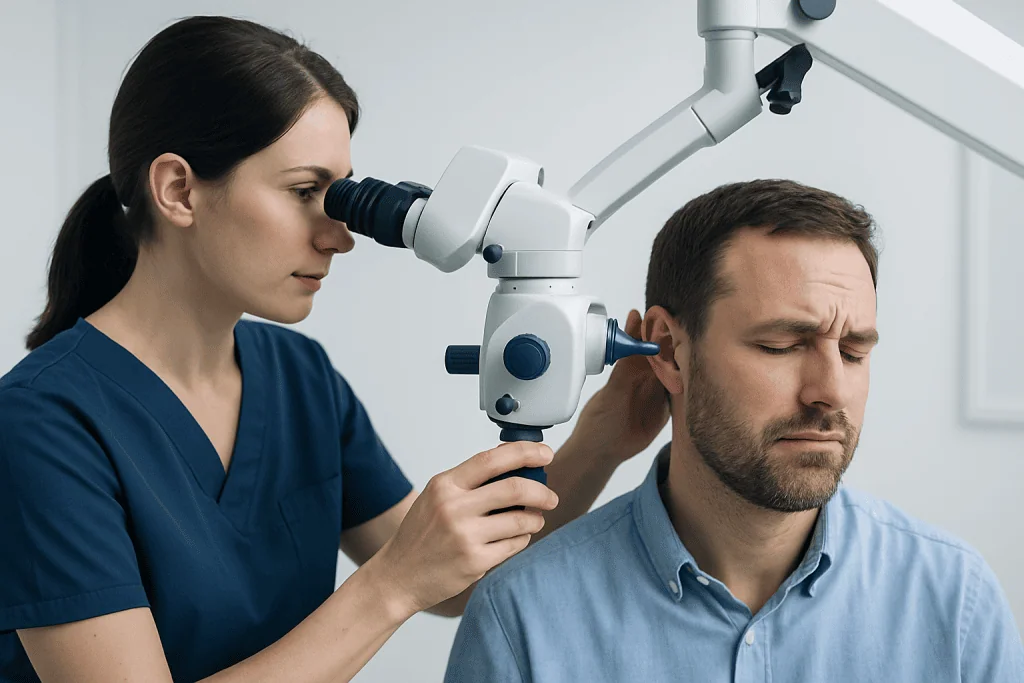
The main tool used is an otoscope, which lets the doctor look at the eardrum. A healthy eardrum is usually pearly gray and moves slightly when pressure changes. A bulging eardrum may look red, cloudy, thickened, or outwardly swollen. Some clinics also use pneumatic otoscopy or tympanometry to see how well the eardrum moves and whether fluid is present behind it.
If symptoms are severe, unusual, or persistent, further assessment may be needed. Hearing tests can help when hearing does not return to normal after the illness settles. In recurrent or complicated cases, referral to an ear, nose, and throat specialist may be recommended, especially if there is repeated infection, suspected structural problems, or concern for a condition affecting the eardrum itself.
Treatment Options and What Recovery Often Looks Like
Treatment depends on the cause. If the bulging eardrum is due to a straightforward middle ear infection, some people improve with time, symptom control, and close observation, while others may need antibiotics. Decisions are based on age, symptom severity, duration, fever, whether one or both ears are involved, and the likelihood of bacterial infection. Pain relief is an important part of care, especially in the first day or two.
If fluid remains behind the eardrum without an active infection, the focus may be on monitoring and treating contributing problems such as nasal congestion or allergies. Doctors may also look for patterns of repeated infections or chronic poor drainage. If infections are frequent or fluid persists and affects hearing, a specialist may discuss procedures such as ear tube surgery to ventilate the middle ear.
When the eardrum has torn or there is recurrent damage, care may include protecting the ear from water, follow-up hearing checks, and specialist review. In selected cases, a repair procedure such as tympanoplasty may be considered once infection and inflammation have settled. If enlarged adenoids are contributing to repeated blockage in a child, adenoidectomy may sometimes be part of the treatment plan.
Most people recover without lasting problems, particularly when the cause is identified early and managed appropriately. Hearing commonly improves as the inflammation and fluid resolve, although it can take some time for the ear to feel fully normal again. Persistent hearing loss, repeated infections, or ongoing ear fullness should be reassessed rather than ignored.
Self-Care, Prevention, and Everyday Ear Protection
Self-care for a bulging eardrum should focus on comfort and safe habits, not on trying to treat the ear directly. It is best not to put cotton swabs, oils, or other home remedies into the ear canal, as these can irritate the ear or worsen an unrecognized tear in the eardrum. Rest, hydration, and using medications exactly as advised by a doctor can support recovery.
Reducing the chances of future ear problems often means addressing the conditions that block the Eustachian tube. Managing allergies, washing hands regularly, limiting exposure to respiratory infections, and avoiding tobacco smoke can all help. Keeping routine vaccinations up to date may also reduce illnesses that can lead to ear infections.
People who are prone to ear pressure changes may benefit from practical steps during flights or altitude changes, such as swallowing, yawning, or chewing if appropriate. During active infection or significant congestion, diving or forceful pressure-equalizing maneuvers should be avoided unless a clinician has advised otherwise. For recurrent cases, an ENT evaluation can help identify whether ongoing nasal, sinus, throat, or structural issues are contributing.
When to Seek Medical Care
Medical care should be sought if ear pain is severe, if there is fever, if hearing drops suddenly, or if fluid drains from the ear. Infants, very young children, older adults, and people with weakened immune systems may need earlier assessment because symptoms can be harder to interpret or complications may develop more easily.
Prompt review is also important if symptoms last more than a few days, keep coming back, or are paired with dizziness, significant headache, swelling around the ear, or marked irritability in a child. Ongoing muffled hearing after an infection deserves follow-up, especially if it affects speech development, school performance, or day-to-day communication.
Although many cases are straightforward, a professional examination is the only reliable way to confirm whether a bulging eardrum is due to infection, trapped fluid, pressure dysfunction, or another problem. Near the end of the care pathway, some patients may benefit from specialist evaluation; Acibadem International’s multidisciplinary specialists in JCI-accredited hospitals diagnose and treat ear conditions for international patients when further assessment or procedural care is needed.
Frequently asked questions
Is a bulging eardrum always an ear infection?
No. A bulging eardrum often points to a middle ear infection, but it can also happen because of trapped fluid, blocked pressure equalization, or inflammation after a cold or allergies. A doctor can tell the difference by examining the ear and reviewing symptoms.
Can a bulging eardrum heal on its own?
Sometimes it can, especially if the problem is mild and related to temporary congestion or a viral illness. However, symptoms should still be monitored because some cases need treatment, especially when pain, fever, or hearing loss is significant.
What does a bulging eardrum feel like?
Many people describe pressure, fullness, aching, or throbbing in the ear. Hearing may seem muffled, and some people notice popping, ringing, or discomfort when swallowing.
Is it dangerous if fluid comes out of the ear?
Ear drainage can mean the eardrum has torn or that there is active infection, so it should be medically assessed. It is best not to insert anything into the ear, and the ear should be kept as dry as possible until a clinician gives advice.
How long does hearing stay muffled after a bulging eardrum?
Hearing often improves as inflammation settles and fluid clears, but this may take days to weeks. If hearing remains reduced or the blocked sensation does not improve, follow-up is important to check for persistent fluid or other causes.
Should someone fly with a bulging eardrum?
Flying may worsen discomfort because cabin pressure changes can increase ear pressure problems. If travel is necessary, a doctor should advise on whether it is safe and how to reduce discomfort, especially if there is active infection or severe congestion.
References
- American Academy of Otolaryngology–Head and Neck Surgery
- American Academy of Pediatrics
- National Institute on Deafness and Other Communication Disorders
- Centers for Disease Control and Prevention
- NHS
This article is for general information only and is not a substitute for professional medical advice. Please consult a qualified doctor about your individual situation.
Explore treatments in Turkey — costs, top hospitals & a free quote
JCI-accredited · board-certified surgeons · reply within 24h
Add us as a Preferred Source to see more of our trusted health content across Google Search, AI Overviews and Discover.

More from the Health Library

Pomegranate Seeds: Nutrition, Safety, and Precautions

Smooth Brain: What Patients Need to Know

Anbesol — Explained by Medical Evidence, Not Myths

Androphobia: A Complete Medical Overview

Inattentive ADHD: A Complete Medical Overview