Burn Scars: An Evidence-Based Guide for Patients

Burn scars can be flat, raised, thickened, darker or lighter than surrounding skin, or tight enough to limit movement. Scar type often depends on burn depth, wound healing time, infection risk, and the body area affected.
Key Takeaways
- Burn scars can be flat, raised, thickened, darker or lighter than surrounding skin, or tight enough to limit movement.
- Scar type often depends on burn depth, wound healing time, infection risk, and the body area affected.
- Early scar care may include moisturizing, sun protection, pressure therapy, silicone products, stretching, and follow-up with a clinician.
- Medical treatment options include rehabilitation, injections, laser therapy, and reconstructive procedures when needed.
- Prompt medical review is important for scars that are painful, itchy, infected, rapidly changing, or restricting movement.
Burn scars are changes in the skin that develop as the body repairs a burn injury. Many scars improve gradually, and a range of treatments can help reduce tightness, discomfort, and visible changes while supporting healthy function.
Overview: what burn scars are and why they form
Burn scars are areas of skin that look or feel different after a burn has healed. They form because the body repairs damaged tissue by producing new collagen, and that repair process is not always identical to the original skin structure. As a result, healed skin may become raised, thick, firm, discolored, dry, sensitive, or tight.
Not every burn leaves a noticeable scar. Superficial burns that affect only the top layer of skin may heal with little or no long-term marking. Deeper burns, burns that take longer to heal, and burns complicated by infection are more likely to leave scars. The location of the burn also matters, especially over joints, the face, hands, feet, and chest.
Burn scars are not only a cosmetic concern. Some can itch, ache, become sensitive to temperature, or limit motion if they tighten across a joint. This is why scar management focuses on both appearance and function. A personalized plan can often improve comfort, mobility, and confidence over time.
Types of burn scars and how they may look
Burn scars can develop in different ways. A common type is a hypertrophic scar, which becomes raised, red or pink, and thick within the boundaries of the original burn. These scars may gradually flatten over months to years, but they can remain itchy or uncomfortable during healing.
Another important type is a contracture scar. This happens when scar tissue tightens and pulls the skin inward as it matures. Contractures are especially relevant when a burn crosses a joint or affects the neck, hand, elbow, shoulder, or knee. They can restrict everyday movements such as bending, reaching, walking, or opening the mouth.
Burns may also leave color and texture changes even when the scar is not raised. The healed skin may be darker, lighter, shinier, smoother, or drier than nearby skin. Some people develop mixed patterns, including flat areas next to thickened scars. In more complex cases, doctors may assess whether scar symptoms overlap with related skin-healing problems such as keloid scarring.
- Hypertrophic scars: raised, firm, often red or pink
- Contracture scars: tight scars that can limit movement
- Pigment changes: skin becomes darker or lighter
- Texture changes: skin may feel dry, fragile, shiny, or uneven
Symptoms and longer-term effects of burn scars

The symptoms of burn scars vary widely. Some people notice mainly a visible mark, while others experience persistent itching, tenderness, burning sensations, numbness, or sensitivity to clothing and temperature. Scar tissue may also sweat less, making the area feel different from the surrounding skin.
Tightness is one of the most important symptoms to watch for. A scar that feels increasingly stiff may interfere with movement, posture, sleep, exercise, or work tasks. On the face, scars can affect blinking, lip movement, eating, or speech. On the chest or limbs, they may pull the skin in a way that limits normal function.
Burn scars can also affect emotional well-being. Changes in visible areas such as the face, neck, or hands may lead to self-consciousness, anxiety, or social discomfort. A balanced care plan may therefore include both physical treatment and support for confidence, coping, and daily quality of life.
Causes and risk factors for more noticeable scarring
The main factor influencing burn scars is the depth of the burn. Deeper burns damage more of the skin’s structure and usually require a longer healing period, which increases the chance of abnormal scar formation. Burns that take more than a few weeks to heal often carry a higher risk of raised or tight scars.
Other factors can also play a role. Infection, repeated friction, delayed wound care, and poor nutrition may interfere with healing. Burns over joints or areas under tension are more likely to cause contractures. Larger burns also tend to scar more than small, localized injuries.
Individual biology matters too. Age, skin type, genetic tendency toward thicker scars, and certain medical conditions can affect the way collagen is produced during healing. Because scar behavior differs from person to person, clinicians usually assess the scar over time rather than making assumptions based on appearance alone.
How burn scars are diagnosed and monitored
Burn scars are usually diagnosed through a clinical examination. A doctor will ask how the burn happened, how deep it was believed to be, how long it took to heal, and whether there were wound-care problems such as infection. They will then examine the scar’s thickness, color, texture, flexibility, tenderness, and effect on nearby movement.
In many cases, diagnosis does not require special testing. However, careful follow-up is important because scars change as they mature. A scar that is red, raised, and active in the early months may later soften and flatten. The opposite can also happen if tightening becomes more noticeable as healing progresses.
Doctors may also assess range of motion, skin elasticity, and the need for rehabilitation or procedural treatment. If the scar significantly affects appearance or function, referral to specialists in dermatology, rehabilitation, or plastic and reconstructive surgery may be appropriate. Documenting changes with photos and movement checks can help guide treatment decisions.
Treatment options for burn scars
Treatment depends on the scar type, symptoms, body location, and the person’s goals. Many scars improve with time and conservative care, especially when managed early. Basic strategies may include regular moisturizing, gentle massage when advised by a clinician, silicone gels or sheets, pressure garments, and exercises to reduce stiffness. When a burn affects movement, rehabilitation can be central to recovery.
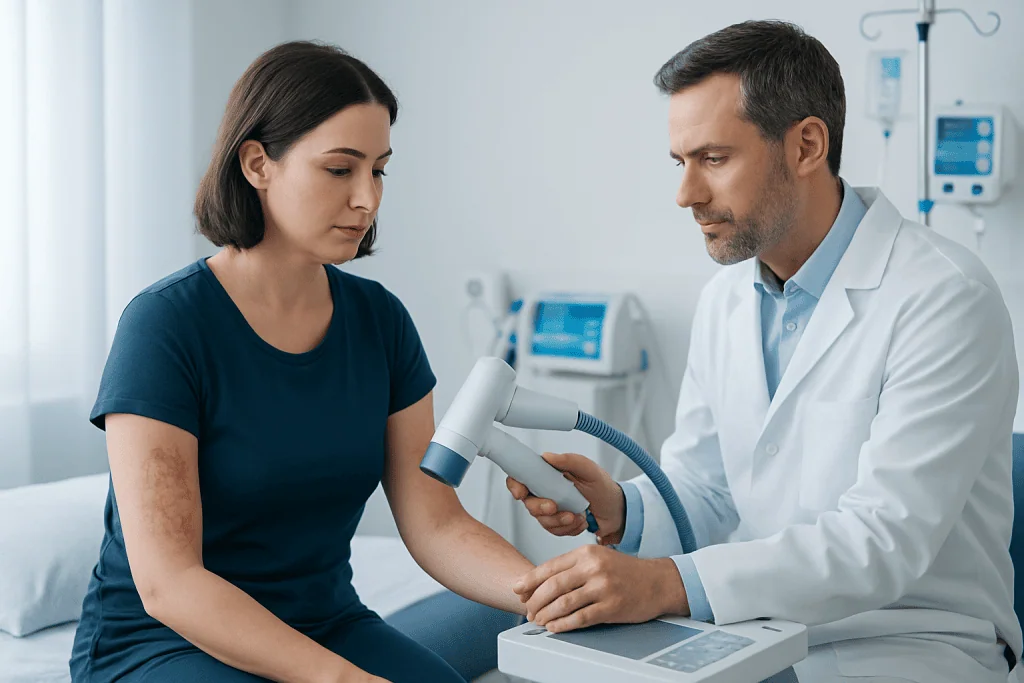
Physical and occupational therapy are often recommended for scars that cross joints or interfere with daily activities. Stretching, splinting, and guided exercises can help preserve or restore function. In selected cases, doctors may suggest physical therapy and rehabilitation as part of a broader scar-management plan.
For raised, symptomatic scars, medical treatment may include steroid injections, other scar-modulating injections, laser therapy, or specialized dressings. Laser-based care can improve redness, thickness, texture, and symptoms in some patients, although several sessions may be needed and results vary. If a scar causes major contracture or functional problems, surgery may be considered to release tight tissue, improve contour, or place skin grafts or flaps where needed.
When treatment is being considered, realistic expectations are important. The aim is usually improvement rather than complete removal of a scar. In complex cases, multidisciplinary review offers the best chance of balancing appearance, comfort, and movement. Some patients may benefit from evaluation by teams experienced in burn aftercare and skin laser treatment.
Self-care, prevention, and day-to-day scar support
Good wound care early in the healing process can lower the risk of problematic scarring. Following medical advice, keeping the wound clean, avoiding picking, and attending follow-up visits all support better healing. Once the skin is closed, clinicians often recommend fragrance-free moisturizers and measures that protect the fragile new skin barrier.
Sun protection is especially important. Freshly healed skin is more vulnerable to darkening and color mismatch after sun exposure. Covering the area and using appropriate sunscreen on healed skin can reduce long-term pigment changes. People should also avoid unnecessary friction from rough fabrics or repetitive pressure if the scar is sensitive.
Staying consistent with rehabilitation matters when a scar lies near a joint. Gentle stretching, splints, or pressure garments should be used exactly as instructed, because incorrect use may be ineffective or irritating. Supportive care may also include discussing appearance-related concerns with a clinician, particularly if visible scars are affecting social confidence or mental well-being.
When to seek medical care
Medical review is a good idea if a burn scar becomes increasingly raised, painful, very itchy, or tight. Care is also important if the scar starts to limit movement, pulls on the eyelid or mouth, or affects the hand, foot, neck, or a major joint. These changes can benefit from early treatment before stiffness becomes harder to correct.
People should seek prompt care if there are signs of infection or skin breakdown, such as increasing redness, warmth, swelling, discharge, bleeding, or an open area within the scar. A scar that changes rapidly in color or texture should also be checked, even though many changes are part of normal healing. A doctor can help distinguish expected scar maturation from problems that need treatment.
For patients who need specialist support, Acibadem International’s multidisciplinary teams in JCI-accredited hospitals evaluate and treat burn scars for international patients, including reconstructive and rehabilitation needs when appropriate.
Frequently asked questions
Do burn scars go away completely?
Many burn scars improve over time, but they do not always disappear completely. They may become flatter, softer, and less noticeable with natural healing and treatment. The goal of care is often to reduce symptoms and improve function and appearance rather than erase the scar entirely.
How long does it take for burn scars to mature?
Burn scars often change for many months and sometimes longer than a year. Early scars may look redder, thicker, or more active before they gradually soften and fade. The timeline depends on burn depth, healing time, body area, and the person's skin response.
What is the difference between a hypertrophic scar and a contracture?
A hypertrophic scar is a raised, thick scar that stays within the borders of the original burn. A contracture is a scar that tightens and pulls the skin, sometimes restricting movement. A person can have features of both at the same time.
Can massage help burn scars?
Scar massage may help some people with comfort, softness, and sensitivity once the skin has healed, but it should be started only when a clinician says it is safe. Massage is not suitable for open wounds or fragile skin. It works best as part of a broader scar-care plan rather than as the only treatment.
Are laser treatments effective for burn scars?
Laser treatment can help selected burn scars by improving redness, thickness, texture, and symptoms such as itching. Results vary, and several sessions may be needed. A specialist can advise whether the scar type and skin condition are suitable for this approach.
When should a child with a burn scar see a specialist?
A child should be assessed if the scar is thickening quickly, causing distress, or limiting movement as they grow. Scars over joints, the face, hands, and feet deserve particular attention. Early specialist care may help protect normal development and function.
This article is for general information only and is not a substitute for professional medical advice. Please consult a qualified doctor about your individual situation.
Explore treatments in Turkey — costs, top hospitals & a free quote
JCI-accredited · board-certified surgeons · reply within 24h
Add us as a Preferred Source to see more of our trusted health content across Google Search, AI Overviews and Discover.

More from the Health Library

Postictal: An Evidence-Based Guide for Patients

Pomelo Fruit: What Patients Need to Know

COPD — Explained by Medical Evidence, Not Myths

Albendazole — Explained by Medical Evidence, Not Myths

Calquence: A Complete Medical Overview